The Science-Backed Curly Hair Routine: Care, Styling, and Fibre Protection
9 min read ·
Master the science-backed Curly Hair Routine. Learn how to hydrate, detangle, protect, and style your curls to prevent breakage and maintain definition.
Quick answer: A successful Curly Hair Routine balances hydration, gentle cleansing, protein structure, and mechanical protection to preserve the hair fibre's natural curvature. Because elliptical follicles produce hair shafts with uneven lipid distribution and exposed cuticle edges, curls are inherently vulnerable to moisture loss and mechanical breakage. An effective regimen replaces harsh detergents with mild surfactants, incorporates film-forming humectants, and minimises friction during styling. However, no cosmetic routine alters your follicle shape permanently or speeds up biological hair growth rates.
Key takeaways
- Curly hair fibres possess an elliptical cross-section, which creates structural stress points along every twist and bend.
- Sebum cannot travel easily down a spiral shaft, leaving mid-lengths and ends chronically prone to dryness and friction.
- A balanced regimen focuses on moisture retention, slip for detangling, and cuticle smoothing to prevent mechanical breakage.
- Protein treatments temporarily patch damaged cortex sites, but excessive protein makes curls rigid and brittle.
- Night protection using silk or satin significantly reduces friction-induced fibre fracture and preserves curl definition between washes.
Curly Hair Routine: what the science and evidence show
Formulating an evidence-based Curly Hair Routine requires understanding the biophysics of curly and coily hair. Research published in the International Journal of Cosmetic Science demonstrates that curly fibres have an asymmetrical hair follicle and an elliptical shaft geometry. Unlike straight hair, which has a round cross-section and uniform cortical cell distribution, curly hair exhibits distinct orthocortical and paracortical cell arrangements.
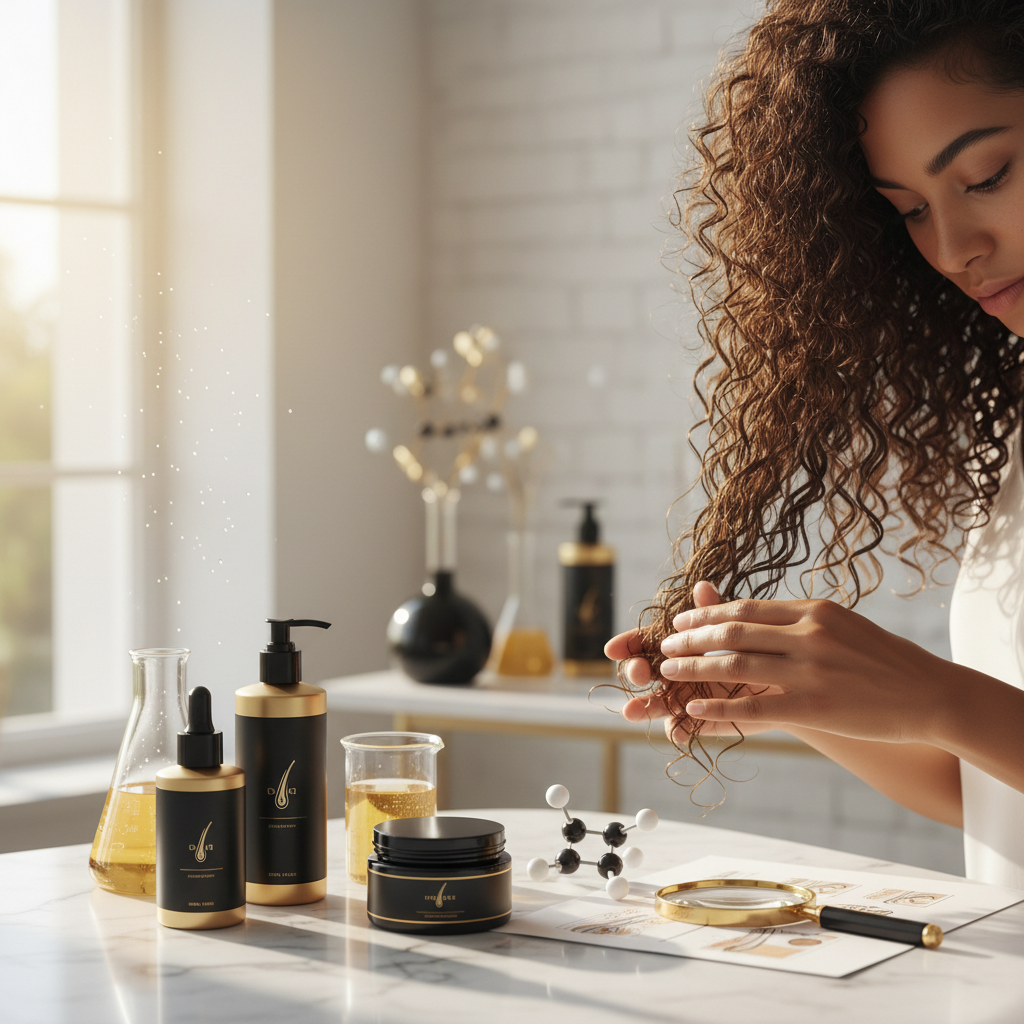
This curvature creates two major cosmetic challenges:
- Impaired sebum transit: Natural scalp lipids struggle to navigate the twists, loops, and bends of the shaft. Consequently, the cuticle scales further down the fibre remain unoiled, leading to higher friction and static charge.
- Structural stress points: Every twist in a curl represents an area where the cuticle layers are thinner, flared, or under tension. These sites are prone to tensile failure (fibre fracture) under standard combing forces.
A scientifically grounded Curly Hair Routine addresses these physical vulnerabilities. The primary goal is reducing surface friction, sealing moisture inside the cortex with non-stripping formulations, and supporting the internal keratin bonds through balanced lipid and protein deposition.
Straight Hair Fibre: Round Cross-Section --> Even sebum flow
Curly / Coily Fibre: Elliptical Cross-Section --> Uneven sebum flow + High-stress twist points
Step-by-step structure of a Curly Hair Routine
Building a dependable regimen comes down to five distinct phases, carried out with careful technique and appropriate product pH.
1. Gentle cleansing (scalp care)
Curls require cleansing agents that lift excess sebum, environmental grime, and product residue without removing the lipid barrier of the hair cuticle. Shampoos formulated around pH 4.5 to 5.5 help keep the cuticle flat. Cleansing once or twice weekly with sulphate-free surfactants (such as sodium cocoyl isethionate or cocamidopropyl betaine) prevents chronic dryness. If you use styling butters or heavy silicones, a clarifying wash every three to four weeks prevents mineral and polymer build-up that blocks water absorption.
2. Conditioning and wet detangling
Conditioners introduce cationic surfactants (such as behentrimonium chloride or cetrimonium chloride) that bind to the negatively charged, damaged sites on the hair shaft. This neutralises static and dramatically lowers wet combing forces. Detangle exclusively while the hair is saturated with conditioner, using either your fingers or a flexible, wide-spaced detangling tool. Never dry brush curly hair; doing so tears through the cuticle and fractures the cortex at structural curve points.
3. Hydration layering (leave-in conditioners)
Because water evaporates quickly from exposed cuticles, a leave-in conditioner containing humectants (glycerin, aloe vera, panthenol) draws ambient moisture into the fibre. In low humidity environments, however, humectants should always be sealed with emollient plant oils or fatty alcohols to prevent water from being drawn back out of the cortex into dry air.
4. Definition and styling
Film-forming polymers (such as polyquaternium compounds, flaxseed extract, or pectin) create a light, flexible cast around individual curl clumps. Applying stylers to soaking wet hair encourages capillary adhesion, allowing fibres to group together cleanly. To dry, diffuse on low heat and low airflow, or air dry without disturbing the cast until the hair is completely dry. Once dry, gently scrunch out the crisp cast using clean, dry hands.
5. Mechanical protection between wash days
Preserving curls between washes depends almost entirely on reducing night-time friction. Cotton pillowcases act like tiny abrasive sheets, stripping moisture and catching cuticle scales. Sleeping on a mulberry silk or satin pillowcase, or wrapping curls in a silk bonnet, prevents overnight tangling and preserves the curl pattern for several days without re-wetting.
Comparing curl types and regimen adjustments
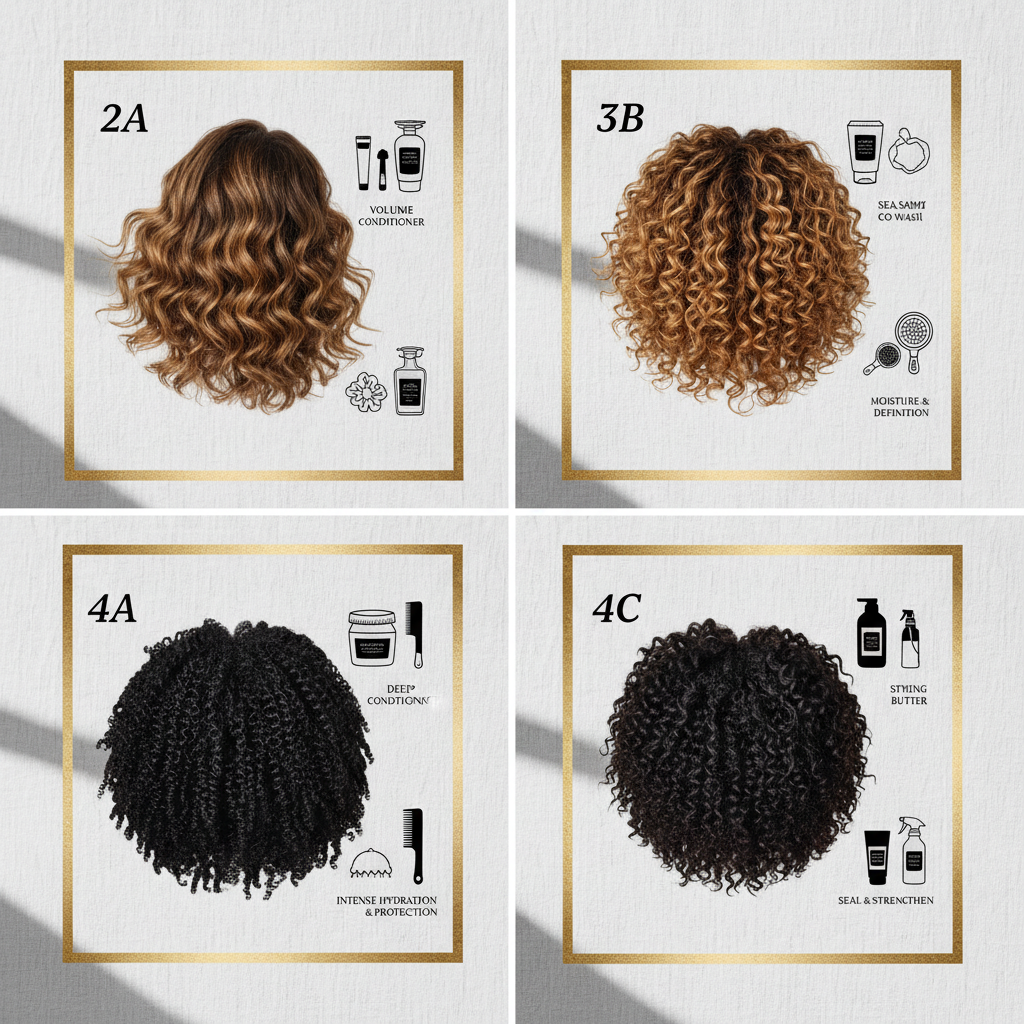
Different curl patterns face different mechanical challenges. Adjusting your Curly Hair Routine according to your hair's diameter and curl density prevents either product overload or chronic dryness.
| Curl Category | Fibre Characteristics | Primary Risk Factor | Recommended Regimen Focus |
|---|---|---|---|
| Wavy (Type 2) | Loose S-shape; moderate cross-section asymmetry | Product weigh-down; oily roots with dry ends | Lightweight humectants, low-residue gels, regular gentle cleansing |
| Curly (Type 3) | Definite loops and corkscrews; clear elliptical shape | High surface friction, mid-shaft breakage | Cationic conditioning, leave-in creams, film-forming gels |
| Coily / Zig-Zag (Type 4) | Tight coils or sharp angles; extreme elliptical shaft | Extreme moisture loss, high mechanical fragility | Deep conditioning, rich plant lipids (e.g., shea butter), protective styling |
What the evidence does not show
Popular hair forums often promote techniques that lack empirical scientific support. Understanding these limitations protects both hair health and scalp hygiene.
- "No-Poo" cleansing does not cure scalp issues: Completely eliminating shampoo in favour of water or co-washing (conditioner-only washing) can cause build-up of scalp lipids, dead skin, and the yeast Malassezia. This often triggers seborrhoeic dermatitis. The scalp is living skin and requires regular hygiene.
- Cosmetics cannot alter genetic curl pattern: No leave-in product, technique, or chemical-free treatment can change the shape of your hair follicle. Any product claiming to "train" your hair to grow curlier permanently is biologically inaccurate.
- Hydration does not equal water immersion: Submerging hair in water indefinitely causes hygral fatigue, a state where the hair fibre swells and contracts repeatedly, damaging the cell membrane complex. True moisturisation is the balanced retention of water molecules regulated by hydrophobic lipids.
Signs your routine is out of balance
Hair communicates its condition through texture, elasticity, and behaviour during styling. Watch for these diagnostic signals:
- Hygral fatigue / moisture overload: The hair feels mushy, excessively soft, or limp when wet, and stretches out without snapping back into its curl pattern. It requires hydrolysed proteins to restore tensile strength.
- Protein overload: The hair feels stiff, straw-like, raspy, and snaps easily when stretched lightly. It requires intensive conditioning with protein-free emollient formulas and gentle heat.
- Product build-up: The hair looks dull, resists absorbing water, feels coated or greasy, and curls refuse to clump cleanly. It requires a clarifying shampoo.
- Mechanical damage: Frequent white dots along the hair shaft (trichorrhexis nodosa) or split ends indicate rough detangling, high heat, or friction from rough fabrics.
When hair issues are something else
It is vital to distinguish between cosmetic curl behaviour and physiological scalp or follicle conditions:
- Hair breakage vs. hair shedding: Breakage consists of short, snapped pieces of hair with no white bulb attached. This is purely mechanical or chemical fibre damage addressed by styling routines. Shedding involves full-length strands displaying a small, white keratin bulb at the root end.
- Telogen effluvium: Sudden, diffuse shedding where you lose more than 100 hairs per day across the scalp is usually triggered by stress, nutritional deficiencies (such as iron or ferritin), illness, or hormonal shifts. No topical curl styling routine stops this systemic shift.
- Scalp inflammation: Itching, yellow flakes, red patches, or burning are medical dermatological conditions (such as seborrhoeic dermatitis or psoriasis) that require targeted medicated treatments rather than cosmetic curl creams.
Incorporating Watermans into your curly regimen
When designing an effective haircare rotation, scalp health must remain the foundation. Watermans Grow Me Shampoo and Condition Me Conditioner provide a gentle, targeted cleansing and conditioning pair that respects the curl cuticle while maintaining scalp vitality.
Grow Me utilizes mild surfactants alongside biotin, rosemary, caffeine, and argan oil to refresh the scalp without aggressively stripping essential surface lipids. Condition Me follows with cholesterol, hydrolysed lupin protein, and vitamins that provide slip for gentle wet detangling and support the hair's structural integrity. Using this pair once or twice weekly helps maintain clean, buoyant roots while keeping delicate mid-lengths protected against everyday styling wear and tear.
Frequently asked questions about Curly Hair Routine
How often should I wash my hair in a Curly Hair Routine?
Most people with curly hair benefit from washing one to two times per week. Cleansing frequency depends on your scalp's oil production, your workout schedule, and product use. If your scalp feels itchy or looks flaky, wash immediately rather than stretching days between washes, as scalp health directly supports healthy hair growth.
Should I apply styling products to wet or damp hair?
Applying styling products to soaking wet hair yields the best results for most curls. Wet application allows the water and styling polymers to distribute evenly, trapping moisture and forming smooth curl clumps with minimal frizz. Damp styling can work well for finer waves that get easily weighed down.
Can a Curly Hair Routine stop hair shedding?
No, a cosmetic styling routine cannot stop biological hair shedding from the follicle. It can, however, significantly reduce hair breakage along the shaft. When your hair is properly conditioned, detangled gently, and protected at night, fewer strands fracture, making your hair appear denser and healthier over time.
Why do my curls go frizzy as soon as they dry?
Frizz occurs when individual hair fibres separate from their curl clump and search for moisture in the surrounding air. This usually happens if you touch your hair while it dries, skip film-forming styling products (like gels or mousses), or lack sufficient leave-in hydration to seal the cuticle before drying.
What is the difference between hair hydration and hair moisture?
Hydration refers to water molecules penetrating the inner cortex of the hair strand, which gives the fibre flexibility. Moisture in haircare generally refers to the emollient oils, fatty alcohols, and lipids that coat the exterior cuticle, sealing that water inside and preventing rapid evaporation.
Final thoughts on maintaining healthy curls
Creating a dependable Curly Hair Routine is about working with your natural fibre architecture rather than fighting it. Curls flourish when you treat their structural stress points with patience, provide consistent moisture, detangle gently with adequate slip, and keep the scalp clean and balanced. By tailoring your routine to your hair's specific density, porosity, and lifestyle, you can maintain strong, resilient, and beautifully defined curls over the long term.
Sources and references
- International Journal of Cosmetic Science: The structural and biochemical characteristics of human curly hair, 2017.
- Journal of the American Academy of Dermatology: Hair cosmetics: An overview, 2015.
- British Association of Dermatologists: Hair breakage and structural hair shaft disorders, 2021.
- Clinical, Cosmetic and Investigational Dermatology: Hair shaft damage from cosmetic procedures and environmental factors, 2019.
Find these ingredients in Watermans products
- Biotin: you will find this ingredient in our Hair Growth Shampoo.
- Panthenol (Provitamin B5): you will find this ingredient in our Heat Protection Spray.
- Aloe Vera: you will find this ingredient in our Curly Hair Conditioner.