Curly Hair Breakage: Causes, Structural Mechanics, and Prevention
9 min read ·
Understand the causes of curly hair breakage, the structural science behind fragile curls, and how to protect hair fibres from friction and mechanical damage.
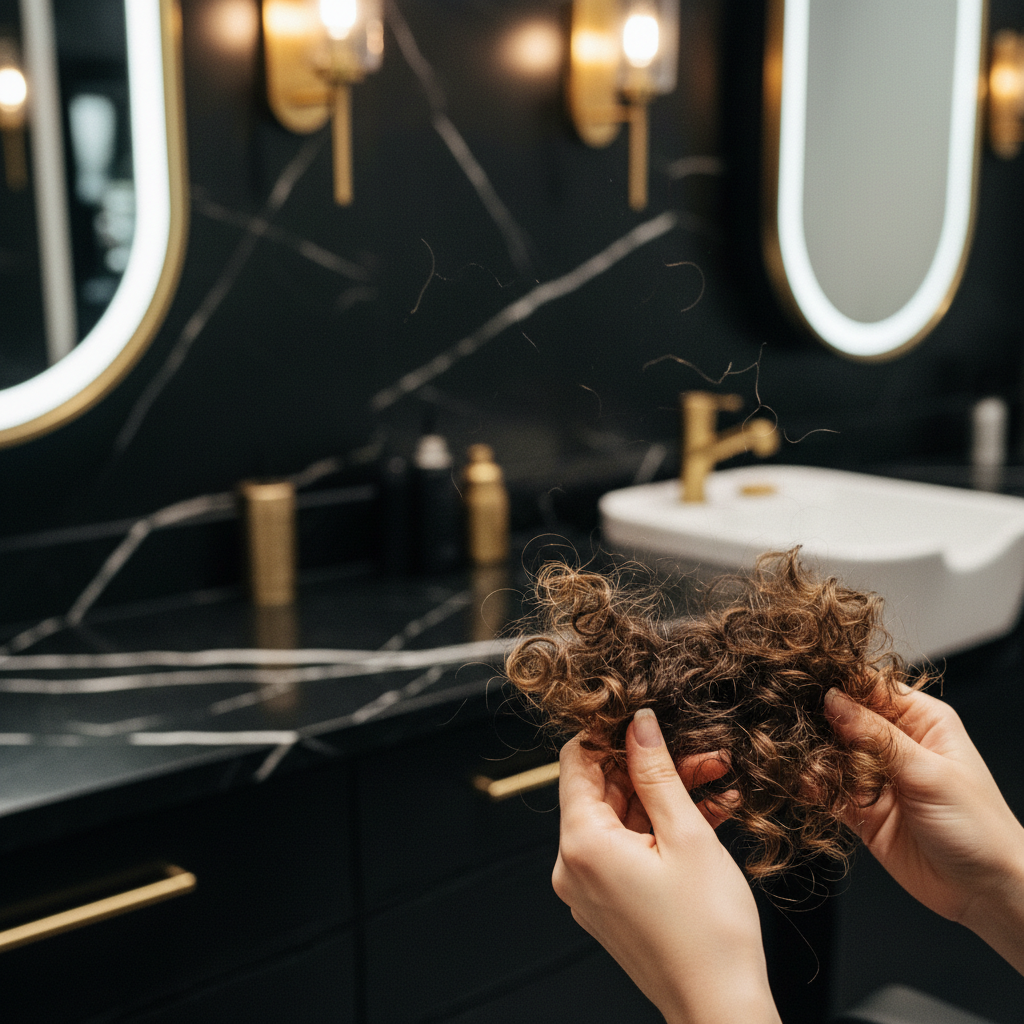
Quick answer: Curly Hair Breakage is the mechanical or structural snapping of curly hair fibres along the shaft, rather than shedding from the follicle. Because curly fibres grow with elliptical cross-sections, variable curvature, and uneven cuticle distribution, they have inherent points of structural weakness. Breakage accelerates when friction, moisture depletion, heat, or chemical processes degrade the protective cuticle layer and cortex. While targeted conditioning and careful handling significantly reduce fibre fracture, cosmetic interventions cannot permanently fuse fractured keratin once a complete break occurs.
Key takeaways
- Curly hair is structurally more vulnerable to mechanical fracture than straight hair due to its elliptical cross-section and uneven cuticle distribution along twists and turns.
- Breakage is physical fibre snapping along the hair shaft; it is fundamentally different from follicular shedding (such as telogen effluvium) or genetic hair loss (androgenetic alopecia).
- Natural sebum travels much slower along a coiled fibre, leaving mid-lengths and ends vulnerable to lipid depletion and dehydration.
- Excessive manipulation, dry detangling, heat styling, and chemical treatments (such as bleaching or relaxers) are the leading triggers of fibre failure.
- Protective handling, detangling only when lubricated, maintaining lipid balance, and regular micro-trims help prevent further shaft degradation.
Curly Hair Breakage: what the evidence shows
Research published in cosmetic and dermatological literature demonstrates that the natural geometry of curly hair creates mechanical stress points that straight fibres simply do not have. Straight hair fibres tend to be circular or slightly oval in cross-section, with an even distribution of protective cuticle scales around the cortex. Curly and coily fibres, by contrast, are distinctly elliptical.
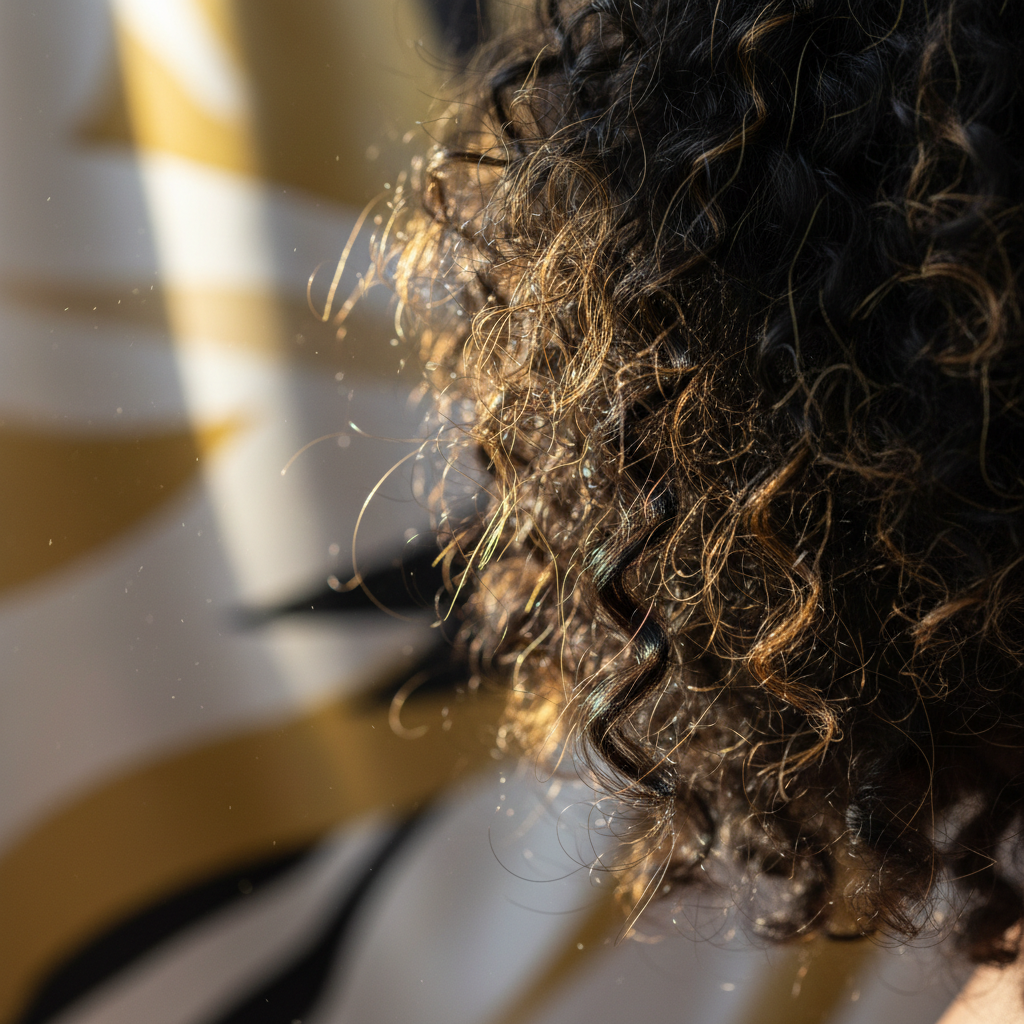
As a curl twists and bends along its growth axis, the outer edge of each curve stretches thin. Scanning electron microscopy studies reveal that cuticle scales along these high-curvature areas often lift, thin out, or wear away much faster than along straight sections. This exposes the inner cortex to environmental stress, mechanical friction, and moisture loss. When you apply tension during styling or brushing, the stress does not distribute evenly across the fibre. Instead, it concentrates directly at these thin, curved points, leading directly to Curly Hair Breakage.
Furthermore, curly hair displays lower tensile strength under mechanical strain when dry. A study in the Journal of Cosmetic Science noted that while virgin curly hair has comparable tensile properties to straight hair on a per-protein basis, its geometry makes it significantly more susceptible to shear stress and torsion. When curly strands knot or wrap around neighbouring fibres, comb friction multiplies exponentially.
What the evidence does not show
It is critical to dismantle common misconceptions surrounding curly hair weakness:
- Curly hair is not "inherently dead or diseased": The structural predisposition to breakage is a geometric reality of follicle orientation, not a biological defect or nutritional failure.
- Breakage does not equal follicular hair loss: Snapped fibres on your bathroom counter or brush do not mean your follicles are failing. If the strand lacks a white bulb at the end, it snapped along the shaft.
- No cosmetic product can "repair" broken bonds permanently: Shampoos, masks, and bonding treatments can temporarily reinforce the fibre, seal lifted cuticles, and increase elasticity, but they cannot weld a fully fractured hair shaft back together. Trimming remains the only permanent fix for split or fractured ends.
The biological and physical mechanisms of breakage
Understanding why curly hair snaps requires a look at its internal architecture. Every hair fibre consists of three main zones: the outer protective cuticle (overlapping keratin scales), the cortex (the protein core providing strength, moisture, and elasticity), and occasionally an inner medulla.
The elliptical cross-section and torsion stress
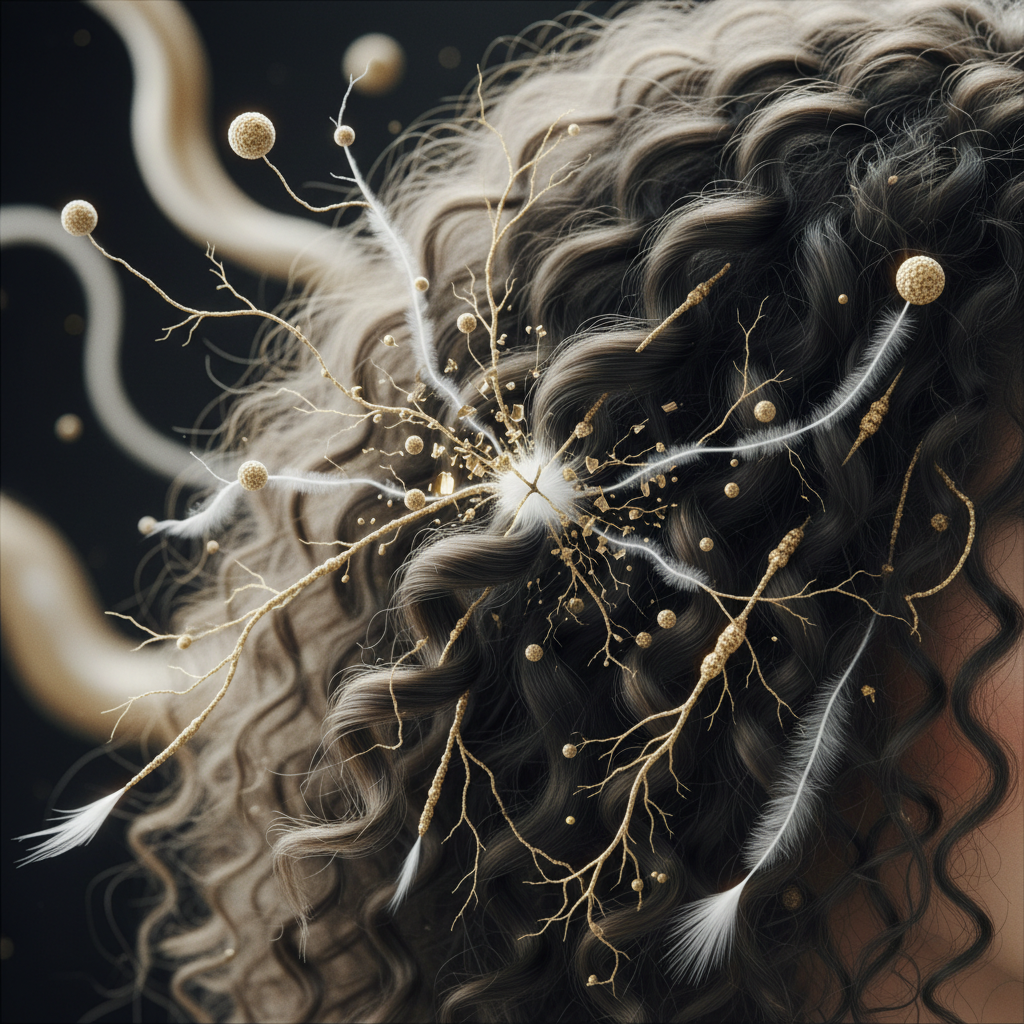
Curly hair follicles sit at an oblique angle beneath the scalp. As keratinocytes keratinise and emerge, they form an asymmetrical, ribbon-like structure. When you bend a flat ribbon, it resists twisting in some directions and buckles easily in others. This uneven resistance to twisting means that everyday actions, like detangling or sleeping on a rough surface, exert intense torsional stress on the weakest axis of the strand.
The sebum migration barrier
The scalp produces natural lipids (sebum) designed to coat the cuticle, lubricate fibres, and prevent moisture evaporation. On straight hair, sebum moves readily down the smooth, linear shaft. On curly hair, the physical curves, coils, and lifted cuticle scales impede this migration. As a result, the mid-lengths and ends of curly hair operate in a persistent state of surface lipid deficiency, raising surface friction and static charge.
| Factor | Straight Hair Profile | Curly Hair Profile |
|---|---|---|
| Cross-sectional shape | Circular to round-oval | Flat-elliptical to irregular |
| Cuticle wear pattern | Uniform wear along the perimeter | Concentrated wear at twist/bend apex |
| Sebum distribution | Fast, reaches ends naturally | Slow, leaves mid-lengths and ends dry |
| Detangling resistance | Low friction, strands glide | High friction, strands interlock and knot |
| Susceptibility to shear stress | Moderate | High |
The signs: distinguishing breakage from shedding
To address hair concerns effectively, you must identify whether your hair is breaking or shedding from the root:
- Check for the bulb: Shed hairs feature a small, white or translucent keratin bulb at the tip, indicating that the hair has completed its telogen phase and separated from the dermal papilla. Broken hairs have blunt, frayed, or jagged ends with no bulb.
- Strand length: If you notice short, irregular fragments (1 to 5 cm) falling onto your shoulders, clothing, or sink when styling, you are witnessing active fibre breakage.
- Texture changes: Run a strand between your fingertips. If you feel rough nodules, tiny knots (trichorrhexis nodosa or "fairy knots"), or split tips (trichoptilosis), the structural integrity of the fibre has fractured.
What you can do to prevent fibre breakage
Preventing mechanical failure involves minimising friction, supporting fibre elasticity, and preserving the cuticle sheath.
1. Adopt low-friction detangling protocols
Never dry-brush curly hair. Dry detangling places unyielding tension on weak curvature points, causing the cuticle to chip and the cortex to snap. Always detangle damp hair that has been coated with a high-slip conditioner. Use your fingers or a wide-toothed, seamless comb, working patiently from the ends upward toward the roots.
2. Balance moisture and protein
Healthy curls require both hydration (water retained inside the cortex) and structural protein. Conditioning agents with fatty alcohols (such as cetyl or stearyl alcohol), plant oils, and hydrolysed proteins help coat lifted cuticle scales, reduce surface friction, and temporarily fill microscopic voids in the shaft. Maintain a healthy wash routine with a gentle, sulphate-free cleanser to remove debris without stripping critical surface lipids.
3. Eliminate excessive heat and chemical strain
High heat from straighteners and curling irons breaks hydrogen and disulphide bonds within the cortex, vaporising moisture and causing microscopic bubbling inside the fibre (bubble hair deformity). If using a diffuser, keep the setting on low or medium heat. Limit chemical treatments such as permanent hair colour, bleaches, and chemical straighteners, all of which strip the protective 18-methyleicosanoic acid (18-MEA) lipid layer from the cuticle.
4. Reduce sleep friction
Cotton pillowcases absorb natural oils and generate substantial friction as you turn during sleep. Switching to a silk or satin pillowcase, or wrapping your curls in a satin bonnet, allows strands to glide smoothly, preventing nocturnal tangles and mid-shaft fractures.
Premium topical support: Watermans
When managing hair prone to snapping, maintaining an optimal scalp environment and supporting fibre vitality is essential. Watermans offers revitalising, sulphate-free formulations designed to gently cleanse and condition without depleting delicate natural oils. By infusing the scalp and strands with nutrient-rich botanical extracts, biotin, and restorative ingredients, Watermans haircare products help nurture stronger-feeling hair from the root, providing an ideal foundation to minimise the daily wear and tear that leads to fibre breakage.
When the cause may be something else
If your hair is thinning globally across the scalp, if you notice widening part lines, or if hair is falling out in large clumps with white bulbs attached, the issue is not mechanical breakage.
Excessive follicular shedding is often driven by:
- Telogen effluvium: Triggered by acute physical stress, illness, high fever, severe psychological shock, or rapid weight loss, causing large numbers of growing hairs to enter the resting phase prematurely.
- Nutritional deficiencies: Inadequate ferritin (stored iron), vitamin D, zinc, or protein intake can compromise the follicle's ability to produce robust hair fibres.
- Thyroid dysfunction: Both hypothyroidism and hyperthyroidism disrupt the hair growth cycle and alter fibre texture, leaving strands brittle.
- Androgenetic alopecia: Pattern hair loss driven by genetic sensitivity to dihydrotestosterone (DHT), leading to progressive miniaturisation of hair follicles.
When to get professional advice
If you observe sudden, patchy hair loss, scalp redness, scaling, burning, or pain, consult a registered trichologist or a consultant dermatologist immediately. These symptoms may point to cicatricial (scarring) alopecia or underlying scalp dermatoses requiring medical treatment. For mechanical issues, a professional stylist specialising in curl textures can assess your hair's porosity and elasticity, trim damaged ends, and recommend a bespoke maintenance plan.
Frequently asked questions about Curly Hair Breakage
How can I tell if my curly hair is breaking or shedding?
Inspect the fallen strands carefully under good lighting. Hair shed naturally from the scalp will be full-length and feature a tiny white or translucent bulb at the root end. In contrast, broken hair consists of shorter, irregular pieces with blunt, jagged, or split ends and no visible bulb.
Can deep conditioners repair Curly Hair Breakage permanently?
No cosmetic treatment can permanently mend a completely fractured hair shaft. Deep conditioners, protein treatments, and bond builders can temporarily patch damaged areas of the cuticle, restore elasticity, and reduce friction to prevent future damage. However, the only way to eliminate existing split and broken ends is to trim them away.
Why does curly hair snap more easily when it is dry?
Curly hair has higher surface friction and an irregular shape that causes individual fibres to interlock. When dry, curly hair has lower elasticity and cannot stretch easily under mechanical tension. Brushing or combing dry curls concentrates force at the curved apex of the strand, causing immediate snapping.
Does protective styling stop curly hair from breaking?
Protective styles such as twists, braids, and buns can reduce daily friction, environmental exposure, and manipulation. However, if installed too tightly, left in for too long, or styled without adequate moisture, protective styles can cause severe tension breakage or traction alopecia along the hairline.
How often should curly hair be trimmed to avoid breakage?
Most stylists and trichologists recommend trimming curly hair every 8 to 12 weeks. Regular micro-trims remove frayed tips before splits travel upward along the cortex, preserving the overall density and health of your lengths.
Conclusion
Curly Hair Breakage is primarily the result of geometry, mechanical stress, and surface lipid depletion. The elliptical cross-section and twisted path of curly strands create natural vulnerabilities that straight fibres do not share. By modifying daily habits, detangling only when wet and conditioned, using silk or satin protection, limiting intense heat, and scheduling regular trims, you can safeguard your cuticle layer, preserve fibre elasticity, and maintain strong, resilient curls.
Sources and references
- Robbins, C. R. (2012). Chemical and Physical Behavior of Human Hair. 5th ed. Springer-Verlag.
- Cruz, C. F., et al. (2016). "Human hair characteristics: A review." International Journal of Cosmetic Science, 38(3), 209-223.
- Kamath, Y. K., & Hornby, S. B. (1984). "Mechanical and cosmetic properties of curly hair." Journal of Cosmetic Science, 35(1), 33-43.
- British Association of Dermatologists. (2021). "Telogen Effluvium." Patient Information Leaflet.
- Sinclair, R. D. (2007). "Healthy hair: what is it?" Journal of Investigative Dermatology Symposium Proceedings, 12(2), 2-5.
Find these ingredients in Watermans products
- Biotin: you will find this ingredient in our Hair Growth Shampoo.
- Zinc: you will find this ingredient in our Hair Vitamins.