Curl Porosity and Moisture Retention: The Complete Science Guide
7 min read ·
Understand Curl Porosity and Moisture Retention. Discover how cuticles regulate hydration, test your porosity type, and protect curls from breakage.
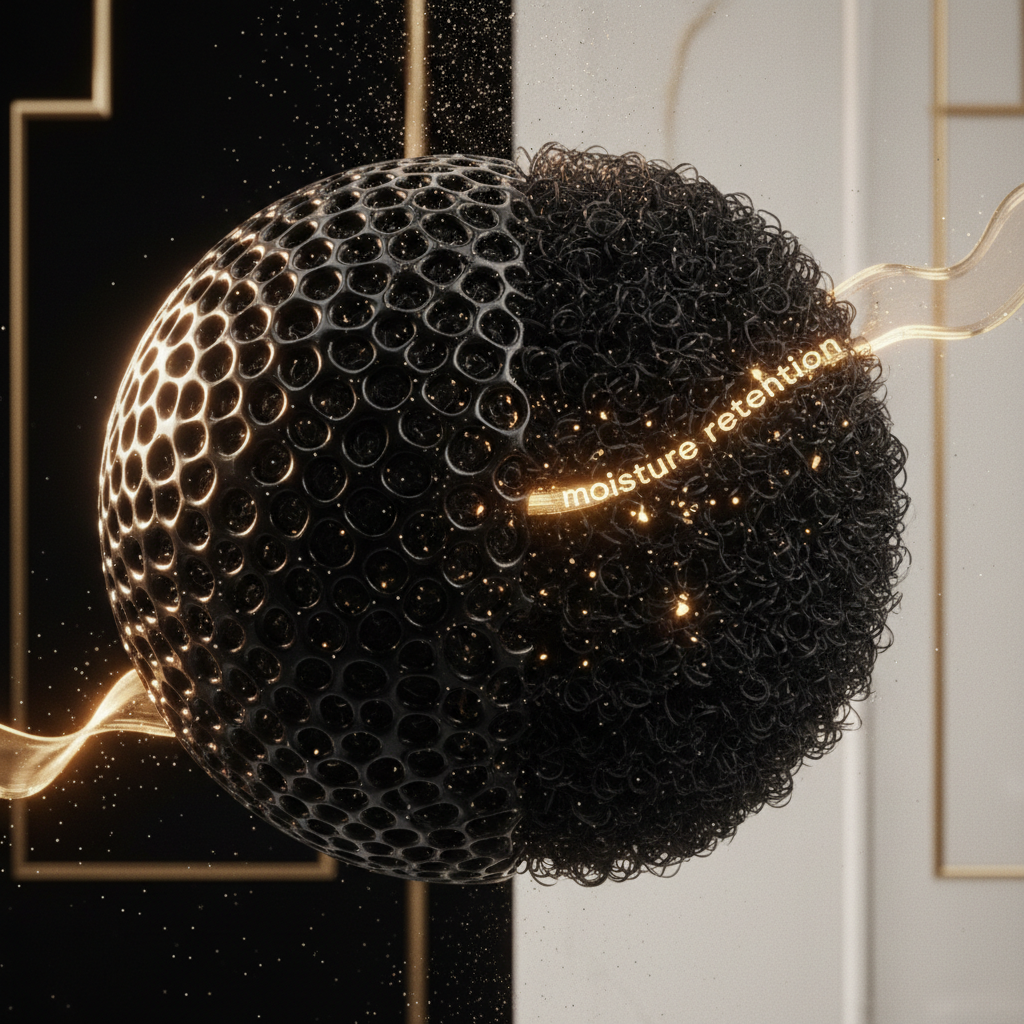
Quick answer: Understanding Curl Porosity and Moisture Retention comes down to how your hair cuticles control water intake and evaporation. Porosity describes the cuticle layer's ability to absorb and hold moisture within the hair cortex. While high porosity curls absorb water rapidly through lifted cuticles, they lose it just as fast, leading to dryness and breakage. Low porosity curls resist water intake entirely. Porosity dictates hair care techniques, though cosmetic products alter fibre condition, not genetic follicle structure.
Key takeaways
- Hair porosity is determined by the condition and alignment of the protective outer cuticle scales.
- Low porosity curls have tightly overlapping cuticles that resist water penetration, while high porosity cuticles are raised or chipped, allowing moisture to escape rapidly.
- True hydration requires water inside the cortex, while moisture retention requires an intact lipid layer and film-forming sealants to slow evaporation.
- Chemical processing, heat styling, and mechanical abrasion degrade cuticles, converting medium porosity hair into high porosity hair over time.
- The "float test" in a glass of water is scientifically unreliable due to surface tension; physical assessment and drying times provide far better insights.
Curl Porosity and Moisture Retention: what the evidence shows
Research into hair science shows that hair fibre hydration is fundamentally dynamic. Water continually moves between the cortex and the surrounding atmosphere based on relative humidity and cuticle integrity. The relationship between Curl Porosity and Moisture Retention governs how resilient a curl pattern remains under environmental stress.
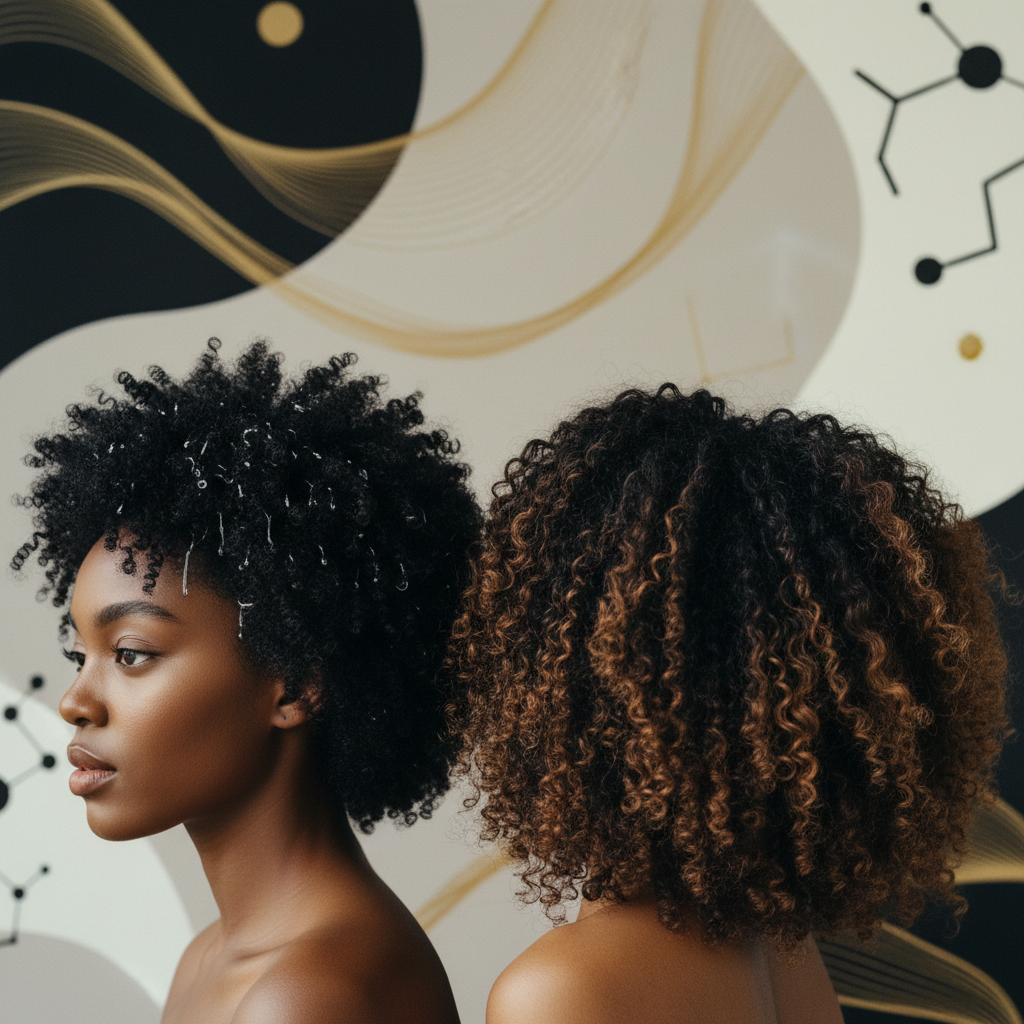
The human hair cuticle consists of 5 to 10 overlapping cellular layers. In healthy, unprocessed hair, these scales lie flat, bonded by a lipid-rich cell membrane complex that includes 18-methyleicosanoic acid (18-MEA). This natural fatty acid layer provides hydrophobic (water-repelling) properties.
When curls have low porosity, this hydrophobic barrier is exceptionally tight. Water droplets bead up on the hair surface rather than absorbing. Conversely, high porosity hair has lost portions of its 18-MEA lipid layer and exhibits raised, chipped, or missing cuticle scales. Cosmetic science demonstrates that while high porosity fibres can absorb up to 30 to 35 percent of their dry weight in water, their moisture retention capacity is severely compromised because water evaporates just as quickly as it enters.
+------------------+-----------------------------+-----------------------------+-----------------------------+
| Characteristic | Low Porosity Curls | Medium Porosity Curls | High Porosity Curls |
+------------------+-----------------------------+-----------------------------+-----------------------------+
| Cuticle State | Tightly bound, overlapping | Smooth, moderately open | Raised, chipped, or missing |
| Water Absorption | Very slow; beads on surface | Balanced and steady | Rapid and immediate |
| Drying Time | Very long (often 6+ hours) | Moderate (2 to 4 hours) | Fast (under 1 to 2 hours) |
| Moisture Loss | Very slow once hydrated | Normal, steady evaporation | Extremely fast; feels dry |
| Protein Need | Low; prone to stiffness | Moderate maintenance | High; requires film-formers |
| Product Build-up | High risk; sits on surface | Low to moderate risk | Absorbs rapidly, low build |
+------------------+-----------------------------+-----------------------------+-----------------------------+
What the evidence does not show
Porosity research does not show that hair can be permanently sealed or that cuticles act like biological doors that open and close at will. Cuticles do not have muscles. Heat and alkaline solutions (pH above 7.0) cause the hair shaft to swell, which naturally lifts the cuticle scales. Cool water and acidic solutions (pH 4.0 to 5.5) contract the fibre, allowing the cuticles to settle flatter against the cortex. However, severely damaged, broken cuticles cannot be permanently regenerated because hair is non-living tissue.
Furthermore, laboratory studies show that the popular at-home "cup of water float test" is widely inaccurate. Water has a high surface tension, and natural sebum or styling product residue on a shed hair strand will cause it to float regardless of its internal porosity.
The physical mechanisms of moisture retention in curly hair
Curly and coily hair types (Type 3 and Type 4) face inherent mechanical challenges that straight hair does not. The elliptical cross-section of a curl means the cuticle scales do not wrap uniformly around the cortex. At every bend, twist, and turn along the curl spiral, cuticles are naturally lifted and vulnerable to friction.
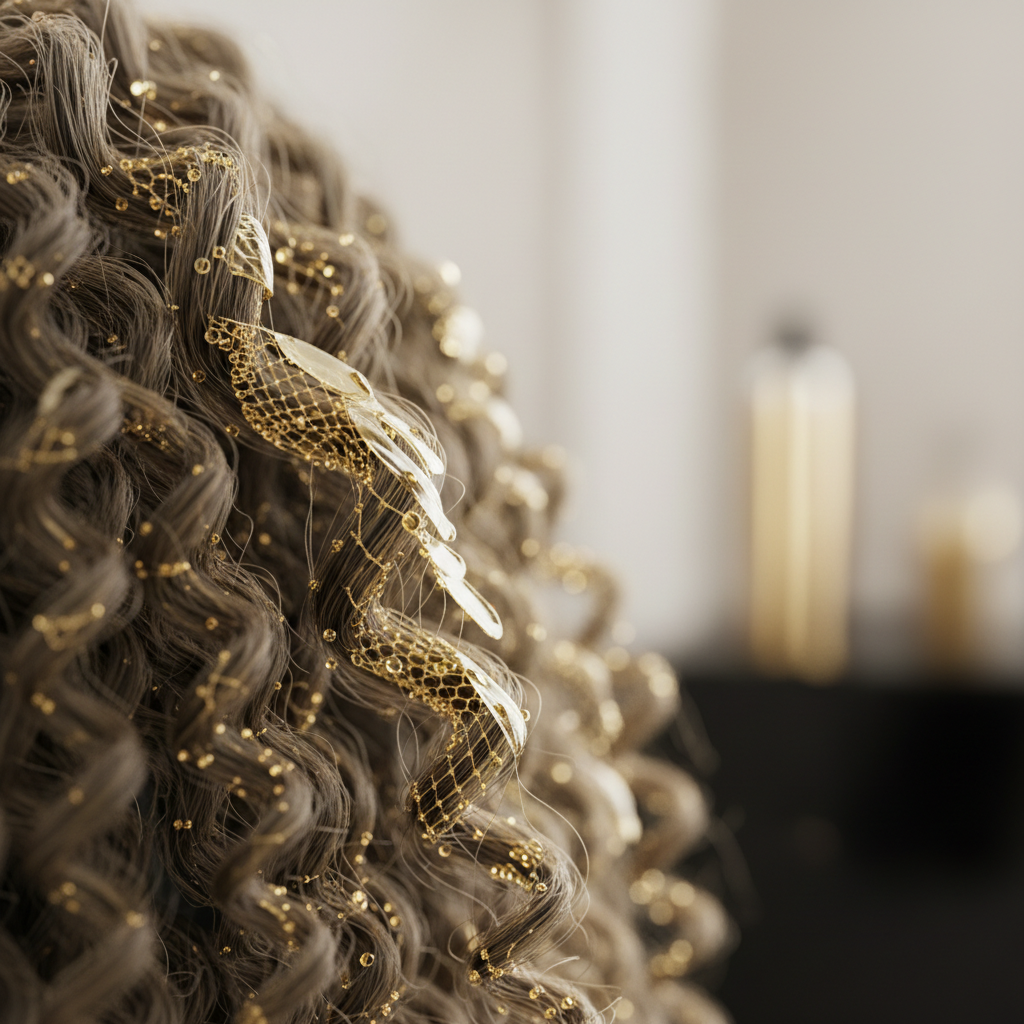
Moisture retention depends on two sequential physical actions:
- Diffusion: Water molecules penetrating past the cuticle into the hydrophilic (water-loving) cortex.
- Occlusion: A surface coating that slows down desorption, which is the evaporation of water back into the atmosphere.
Without a surface barrier, hair reaches equilibrium with the relative humidity of its environment. In dry air, high porosity curls desorb water rapidly, leading to brittleness and breakage. In humid air, they absorb excess ambient moisture, which causes uneven cortex swelling and structural frizz.
Signs and diagnostics: identifying your porosity level
Rather than relying on water float tests, assess how your curls behave during washing, styling, and drying:
Signs of low porosity
- Water beads on clean hair before soaking in during a shower.
- Products sit visibly on the surface of your hair rather than absorbing.
- Hair takes several hours, or even an entire day, to air-dry completely.
- Curls are easily weighed down and suffer from rapid product build-up.
Signs of high porosity
- Hair becomes instantly saturated the second it touches water.
- Conditioners and leave-in treatments absorb immediately without trace.
- Hair dries unnaturally fast after washing.
- Curls tangle easily, feel rough like paper, and experience chronic breakage.
What you can do: tailored strategies for curl health
Managing Curl Porosity and Moisture Retention requires distinct strategies tailored to your hair's cuticle condition.
Routines for low porosity curls
- Use gentle warmth: Apply deep conditioning treatments using a heated cap or warm towel. Gentle heat swells the shaft slightly, facilitating moisture entry.
- Prioritise lightweight humectants: Look for glycerin, propylene glycol, or aloe vera that draw hydration into the fibre without coating it in heavy wax.
- Clarify regularly: Use an effective, clarifying shampoo every 2 to 3 weeks to strip away surface residue that blocks hydration.
Routines for high porosity curls
- Incorporate hydrolysed proteins: Small-chain hydrolysed keratin, wheat protein, or silk amino acids temporarily fill structural gaps in the cuticle layer.
- Layer with the LOC/LCO method: Apply a liquid (water or leave-in conditioner), followed by an oil or butter to provide an occlusive seal that blocks rapid evaporation.
- Maintain an acidic pH balance: Use conditioners and rinses formulated within a pH range of 4.5 to 5.5 to smooth cuticle margins. For textured hair routines, specialised formulations such as those developed by Frojus cater directly to high porosity curl management.
When the cause is something else
If your curls remain unmanageable despite targeted care, porosity may not be the primary driver.
Hard water is a common culprit. Water containing high concentrations of calcium and magnesium (above 180 mg/L) forms insoluble salts that coat the hair shaft, mimicking low porosity resistance while causing the dry, brittle feel of high porosity hair. Similarly, over-processed hair suffering from hygral fatigue (damage caused by repetitive excessive swelling and contracting of the cortex) will feel mushy and weak when wet, irrespective of regular conditioning.
When to seek professional advice
Consult a certified trichologist or experienced curl specialist if you notice sudden changes in hair texture, significant fibre snapping along the mid-shaft, or hair shedding that exceeds 100 hairs daily. Sudden changes in porosity across newly grown hair can point to systemic health shifts, nutritional deficiencies, or scalp barrier disorders that topical curl styling cannot fix.
Supporting hair health from the roots
While cuticle care protects the existing hair fibre, optimal curl density and resilience begin at the scalp. Watermans provides targeted, nutrient-rich scalp formulations designed to support an optimal growth environment, ensuring new curls emerge strong and healthy before facing daily environmental and mechanical stress.
Frequently asked questions about Curl Porosity and Moisture Retention
What is the most accurate way to test curl porosity?
The most reliable method is assessing dry time and product absorption on freshly washed, bare hair. If hair takes several minutes to saturate under running water and 6 to 8 hours to dry, it is low porosity. If it wets instantly and dries in under 2 hours, it has high porosity.
Can you change your hair's porosity permanently?
You can increase porosity permanently through chemical treatments (like bleaching or relaxers), excessive heat, and UV exposure that degrade the cuticle. However, you cannot permanently decrease high porosity back to low porosity, as cuticles cannot biologically regrow. You can only manage it cosmetically with protein treatments and occlusive sealants.
Why is moisture retention so difficult for high porosity curls?
High porosity curls lack an intact outer cuticle and lipid barrier. Although water easily enters the hair shaft, there are no protective layers to slow down evaporation. Environmental humidity strips the water out quickly, leaving the inner cortex dehydrated and prone to snap fractures.
How does the balance of Curl Porosity and Moisture Retention affect styling products?
Understanding Curl Porosity and Moisture Retention determines product weight and formulation choice. Low porosity curls require lightweight, water-based formulations that penetrate without suffocating cuticles. High porosity curls require richer creams, hydrolysed proteins, and sealing oils to physically plug gaps and trap moisture within the hair shaft.
Summary
Mastering Curl Porosity and Moisture Retention removes the guesswork from curl care. By identifying whether your cuticles are tightly sealed, balanced, or lifted and damaged, you can select the precise balance of humectants, proteins, and occlusive oils your hair needs. Focus on protecting the delicate cuticle layer, minimising thermal and chemical damage, and supporting the scalp foundation to keep your curls defined, hydrated, and resilient.
Sources and references
- Journal of Cosmetic Science, "The Effects of Water and Humidity on the Properties of Human Hair", 2009.
- International Journal of Trichology, "Hair Cosmetics: An Overview", 2015.
- Society of Cosmetic Chemists, "Chemical and Physical Behavior of Human Hair", Clarence R. Robbins, 5th Edition, 2012.
- British Association of Dermatologists, "Hair Structure and Disorders", 2021.
Find these ingredients in Watermans products
- Aloe Vera: you will find this ingredient in our Curly Hair Conditioner.