The Cortex Structure of Hair: Biology, Chemistry, and Resilience
9 min read ·
Understand the Cortex Structure of Hair: its keratin matrix, disulphide bonds, melanin content, and why cortical integrity determines tensile strength and elasticity.
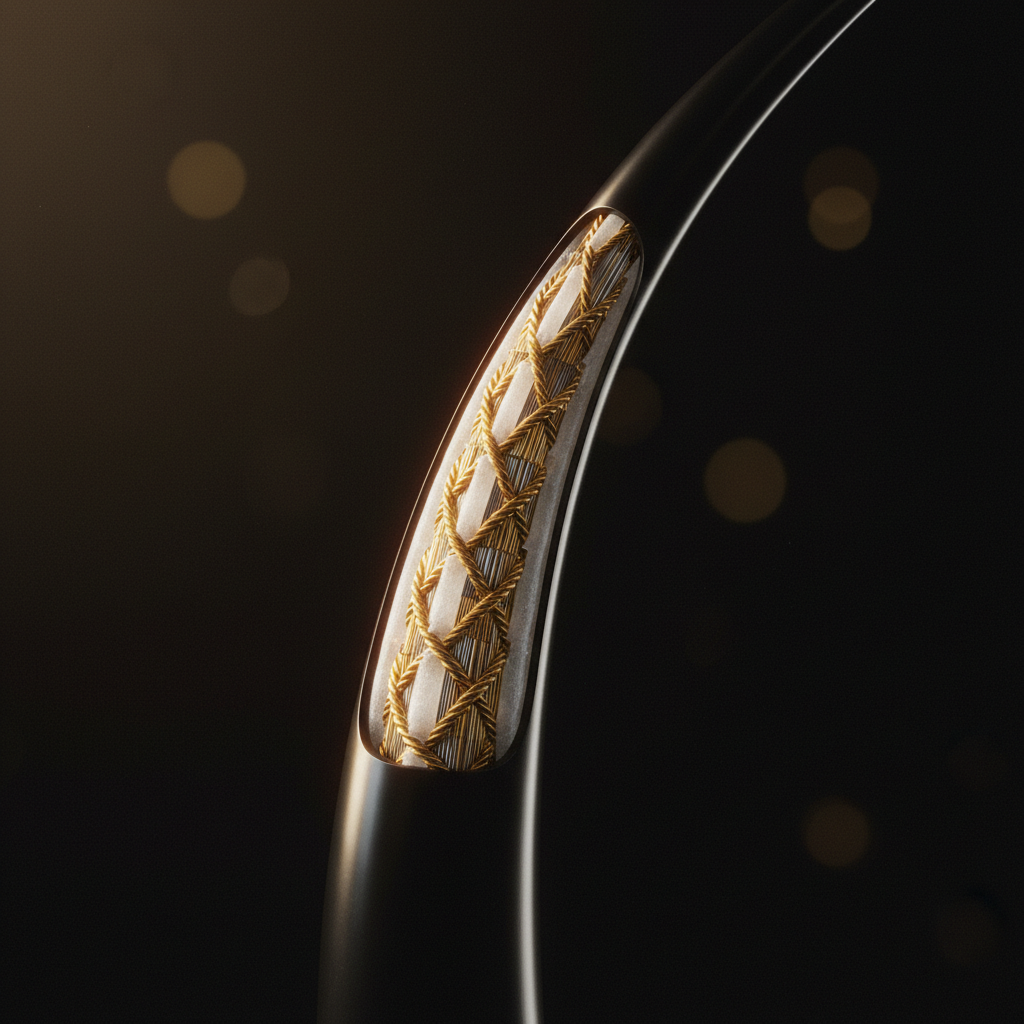
Quick answer: The Cortex Structure of Hair represents the thick intermediate layer of the hair fibre, making up approximately 75% to 90% of its total mass. Composed of tightly packed keratin intermediate filaments embedded in an amorphous, sulphur-rich protein matrix, the cortex dictates the hair's mechanical strength, elasticity, shape, and natural pigmentation. However, topical cosmetic products cannot permanently rebuild severed cortical bonds, meaning that structural integrity relies fundamentally on preventive care and ongoing protective routines.
Key takeaways
- The cortex accounts for the vast majority of hair bulk, providing tensile strength and flexibility.
- Keratin macrofibrils within the cortex are linked by disulphide, salt, and hydrogen bonds.
- Natural melanin granules reside entirely within cortical cells, determining hair colour.
- Chemical treatments like bleaching and relaxing target the cortex directly by breaking internal bonds.
- Cosmetic products can coat or temporarily cross-link damaged fibres, but they cannot truly regenerate lost cortical matrix.
Cortex Structure of Hair: what the evidence shows
The Cortex Structure of Hair sits between the external protective cuticle and the central, often discontinuous medulla. Microscopically, the cortex is composed of elongated, spindle-shaped cortical cells that run parallel to the long axis of the hair shaft. Each cortical cell measures roughly 1 to 6 micrometres in diameter and up to 100 micrometres in length.
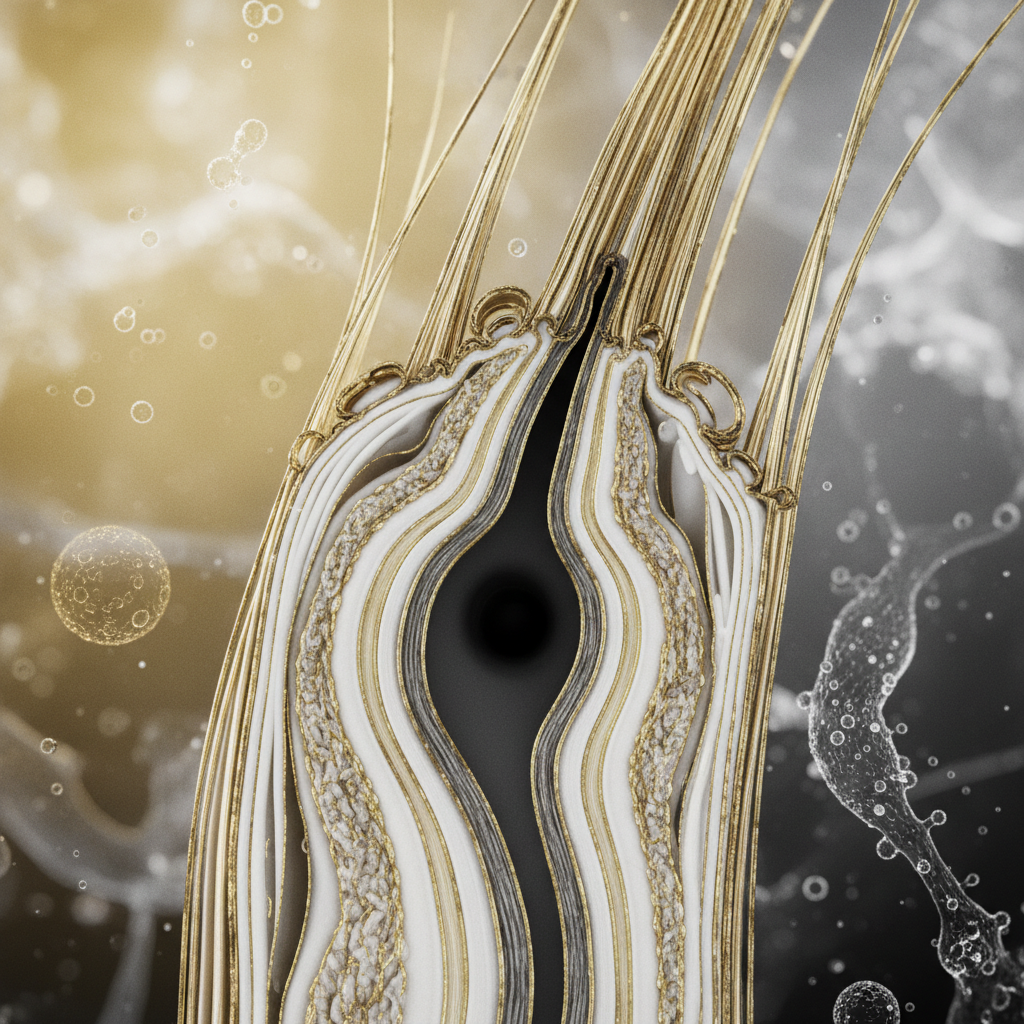
Within these cells lies a highly organised hierarchy of structural proteins. The basic building blocks are alpha-helical polypeptide chains, which twist together into protofilaments and protofibrils, eventually assembling into intermediate filaments (also called microfibrils). Bundles of these microfibrils gather into larger units known as macrofibrils.
Between and around these macrofibrils sits an amorphous, non-filamentous protein ground substance known as the interfilamentous matrix. This matrix is exceptionally rich in high-sulphur and high-glycine-tyrosine proteins, providing the chemical glue that holds the fibrous network together.
Three main types of chemical bonds stabilise the cortex:
- Disulphide bonds: Strong covalent links formed between pairs of cysteine amino acid residues. They resist water, heat, and mechanical stretching, providing the hair with permanent structural memory.
- Salt bonds (ionic links): Electrostatic bonds between acidic and basic amino acid side chains. These are susceptible to changes in pH, weakening when hair enters acidic extremes below pH 3.5 or alkaline environments above pH 5.5.
- Hydrogen bonds: Abundant, weak bonds between hydrogen and oxygen atoms across protein chains. They break readily in the presence of water, which explains why hair stretches more easily when wet and resets into new shapes upon drying.
Hair Shaft Cross-Section
+--------------------------------------------------------+
| Cuticle: 5 to 10 overlapping protective layers |
| +--------------------------------------------------+ |
| | Cortex Structure of Hair: 75% to 90% total mass | |
| | - Macrofibrils & Keratin Intermediate Filaments | |
| | - Interfilamentous Sulphur-Rich Matrix | |
| | - Melanin Pigment Granules (Eumelanin/Pheo) | |
| | +------------------------------------------+ | |
| | | Medulla: Central core (intermittent/air) | | |
| | +------------------------------------------+ | |
| +--------------------------------------------------+ |
+--------------------------------------------------------+
Biological organisation and cell types
Research into human hair fibre biology identifies structural variations within the cortical layer itself, particularly in textured hair. In mammalian wool and, to a varying extent, human hair, cortical cells differentiate into distinct categories:
- Orthocortical cells: Lower in cystine content, containing macrofibrils with a distinct spiral arrangement.
- Paracortical cells: Densely packed, sulphur-rich cells with a relatively parallel arrangement of microfibrils.
- Mesocortical cells: An intermediate subtype displaying features of both ortho- and paracortical tissue.
The asymmetrical distribution of these cell types across the diameter of the hair fibre influences fibre curvature. In highly curled and coiled hair, the uneven mechanical tension generated between orthocortical and paracortical segments contributes significantly to natural curl formation, crimp, and twisting along the fibre axis.
Melanin distribution in the cortex
Beyond mechanical durability, the cortex serves as the biological storehouse for hair pigmentation. Melanin granules, synthesised by melanocytes in the hair bulb, are transferred into cortical keratinocytes during anagen (the active growth phase).
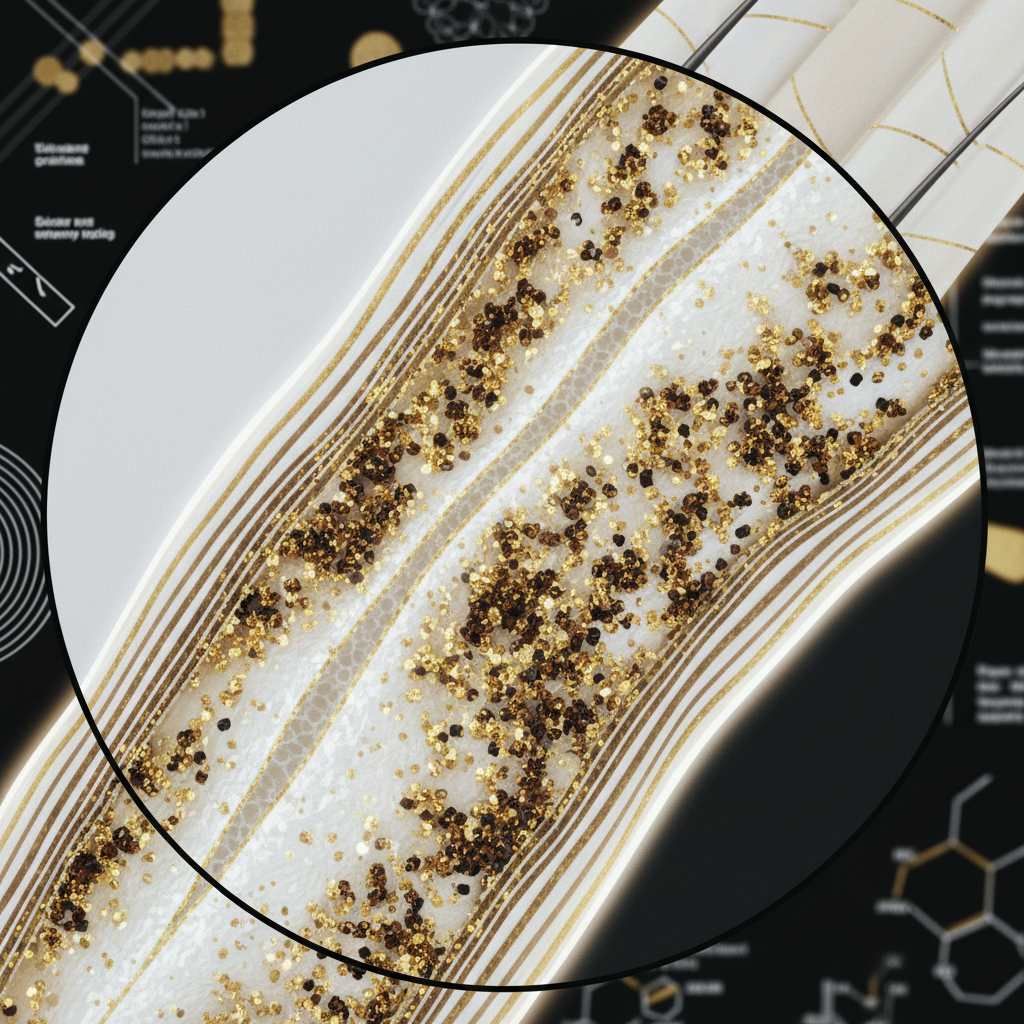
Two primary classes of melanin reside in the interfilamentous matrix:
- Eumelanin: Insoluble, brown-to-black pigments featuring dense, rod-shaped granules.
- Pheomelanin: Soluble, yellow-to-reddish pigments featuring smaller, elliptical granules with high sulphur content.
The ratio, density, and physical distribution of these granules determine your natural shade. When hair fibres encounter oxidative bleaching chemicals like hydrogen peroxide, the reactive oxygen species penetrate the cuticle to oxidise and solubilise these cortical melanin granules, which lightens the hair while unavoidably degrading the surrounding protein matrix.
Structural comparison: hair fibre layers
| Structural layer | Proportion of fibre | Primary components | Dominant functional role |
|---|---|---|---|
| Cuticle | 10% to 15% | Keratinised flat scales (5 to 10 layers), 18-MEA lipid layer | Physical barrier, barrier against moisture loss, shine, porosity control |
| Cortex | 75% to 90% | Keratin microfibrils, macrofibrils, high-sulphur matrix, melanin | Tensile strength, elasticity, shape, bend recovery, colour |
| Medulla | 0% to 10% | Amorphous proteins, internal lipid spaces, air-filled cavities | Thermal insulation (minimal role in fine human hair; frequently absent) |
What the evidence does not show
The science does not support several common marketing narratives regarding cortical repair:
- Cosmetic formulations cannot permanently "re-glue" severed cortical chains. Hydrolysed proteins, amino acids, and bond builders can temporarily penetrate micro-fissures or create external cross-links. However, they do not reconstitute native keratin macrofibrils.
- Cortex strength does not depend on hydration alone. While moisture is vital for elasticity, water actually weakens cortical hydrogen bonds. Dry hair can typically withstand roughly 30% elongation before breaking, whereas wet hair may stretch 50% but fractures under significantly lower absolute tension.
- Topical vitamins do not feed the cortical matrix. Once the hair fibre emerges from the scalp surface, it is biologically dead (non-living keratinised tissue). No topical serum or shampoo can deliver metabolic nutrition to modify the existing cortex.
How cortical damage occurs
The cortex relies on an intact cuticle sheath to shield it from environmental and chemical degradation. When the cuticle is lifted, worn down, or stripped away by alkaline processing, mechanical abrasion, or ultraviolet exposure, the vulnerable cortical matrix is directly exposed.
Chemical perm solutions (alkaline thioglycolates) work by cleaving up to 30% of cortical disulphide bonds, allowing the hair to be re-formed around a curler before neutralising oxidisers reform the bonds in their new positions. Incomplete neutralisation leaves permanent internal voids.
Bleaching agents cause extensive oxidative cleavage of cystine into cystic acid, decreasing mechanical strength and turning the cortex porous and spongy. Similarly, thermal tools exceeding 185°C cause the alpha-helical keratin intermediate filaments to unfold into a disordered beta-sheet configuration, resulting in irreversible loss of elasticity, surface cracking, and brittle breakage.
Signs of cortical degradation
Because the cortex provides the structural core of the hair shaft, damage to this layer produces distinct functional signs:
- Loss of elasticity: Wet hair snaps instantly under light tension without bouncing back.
- Split ends (trichoptilosis): Complete disintegration of the cuticle exposing raw, frayed cortical macrofibrils resembling tiny brooms.
- Sponginess and swelling: Hair absorbs excessive water rapidly, swells disproportionately, and takes hours to dry.
- Severe tangling: Microscopic fissures allow cortical fibrils to snag against neighbouring hairs.
- Mid-shaft breakage: Snapping along the length of the shaft, distinct from natural shedding at the root.
Supporting the hair shaft
Maintaining the cortex requires protective habits that defend the exterior cuticle and reduce internal physical stress:
- Keep the cuticle closed by using rinse-off conditioners formulated around the natural hair and scalp pH (pH 4.5 to 5.5).
- Minimise the frequency and overlap of oxidative processes such as high-lift bleaches and high-volume developer tints.
- Always apply thermal protectants containing film-forming polymers before using heated styling tools to buffer thermal degradation.
- Reduce mechanical stress during wet styling by detangling with wide-toothed tools, beginning at the tips and working upward.
- Use balanced protein and conditioning treatments to temporarily fill microscopic cortical porosity, reinforcing fibre resilience until the next wash.
At Watermans, our research focuses on creating optimised hair and scalp environments. Our formulas utilise nutrient-dense botanicals and physiological pH profiles designed to support scalp vitality and protect the external surface of the hair shaft from environmental wear and tear.
When breakage stems from internal health
Breakage along the hair shaft indicates cortical weakness, but changes in hair texture, sudden thinning, or shedding from the scalp represent entirely different issues.
If you notice hairs falling out with a white bulb attached at the root, you are experiencing hair shedding (such as telogen effluvium) or follicle miniaturisation (androgenetic alopecia), not mechanical breakage. Nutritional deficiencies (such as iron, zinc, or protein restriction), thyroid disorders, and hormonal shifts can alter follicle development during anagen, resulting in newly produced hair fibres that possess an intrinsically thinner, structurally weaker cortex.
Consult a trichologist, dermatologist, or GP if shedding exceeds 100 hairs daily for more than six to eight weeks, or if you develop patchy bald areas.
Frequently asked questions about Cortex Structure of Hair
What is the primary role of the cortex in human hair?
The primary role of the cortex is to provide the hair shaft with tensile strength, elasticity, and shape. It contains nearly 90% of the fibre's mass, consisting of keratin macrofibrils and an amorphous protein matrix that allows the hair to bend, stretch, and return to its original form without snapping.
Where is natural colour stored within the hair?
Natural hair colour is stored entirely within the cortex. Melanocyte cells in the hair follicle deposit microscopic granules of eumelanin and pheomelanin into the cortical cells during hair synthesis. The specific mix, volume, and arrangement of these pigments determine whether hair appears black, brown, blonde, or red.
Can products permanently repair the Cortex Structure of Hair?
No cosmetic product can permanently repair the Cortex Structure of Hair once native disulphide bonds and polypeptide backbones have been severed. Certain treatments and bond builders create temporary synthetic cross-links or deposit hydrolysed proteins into porous voids, but these wash out over time and do not regenerate natural keratin.
Why does chemical bleaching make hair break easily?
Bleaching agents require an alkaline pH to open the cuticle, allowing oxidisers to reach the cortex and dismantle melanin. In doing so, the chemical reaction non-selectively breaks disulphide bonds, converting cystine into cysteic acid. This compromises the cortex structure, leaving the inner shaft weak, porous, and prone to snapping.
How does wet hair affect cortical bonds?
Water disrupts the weak hydrogen bonds that connect protein chains within the cortex, temporarily increasing flexibility while significantly reducing tensile strength. Because wet hair stretches up to 50% under lower force, aggressive brushing or pulling while wet easily leads to cortical fracture and breakage.
Preserving your hair's structural core
The Cortex Structure of Hair serves as the structural engine of every hair strand, managing structural elasticity, internal colour, and resistance to physical tension. While cosmetic products offer meaningful temporary reinforcement and cuticle smoothing, they cannot undo fundamental cortical degradation once it takes place. By understanding the sensitive chemistry of the inner cortex, treating wet hair with care, and limiting harsh chemical and thermal stressors, you can protect this biological foundation and maintain resilient, strong-feeling hair throughout its lifespan.
Sources and references
- Robbins, C. R. (2012). Chemical and Physical Behavior of Human Hair. 5th ed. Springer-Verlag.
- Cruz, C. F., et al. (2016). "Human Hair Keratin: Analysis of Structure and Damage." Journal of Cosmetic Science, 67(3), 189-198.
- Feughelman, M. (1997). Mechanical Properties and Structure of Alpha-keratin Fibres. UNSW Press.
- Dawber, R. (1996). "Hair: Its Structure and Response to Cosmetic Preparations." Clinics in Dermatology, 14(1), 105-112.
- Swift, J. A. (1999). "The Mechanics of Fracture of Human Hair." International Journal of Cosmetic Science, 21(4), 227-239.
Find these ingredients in Watermans products
- Zinc: you will find this ingredient in our Hair Vitamins.