Common Hair Conditions
4 min read ·
Understand the most prevalent hair and scalp conditions, their causes, and general approaches to management.
Introduction
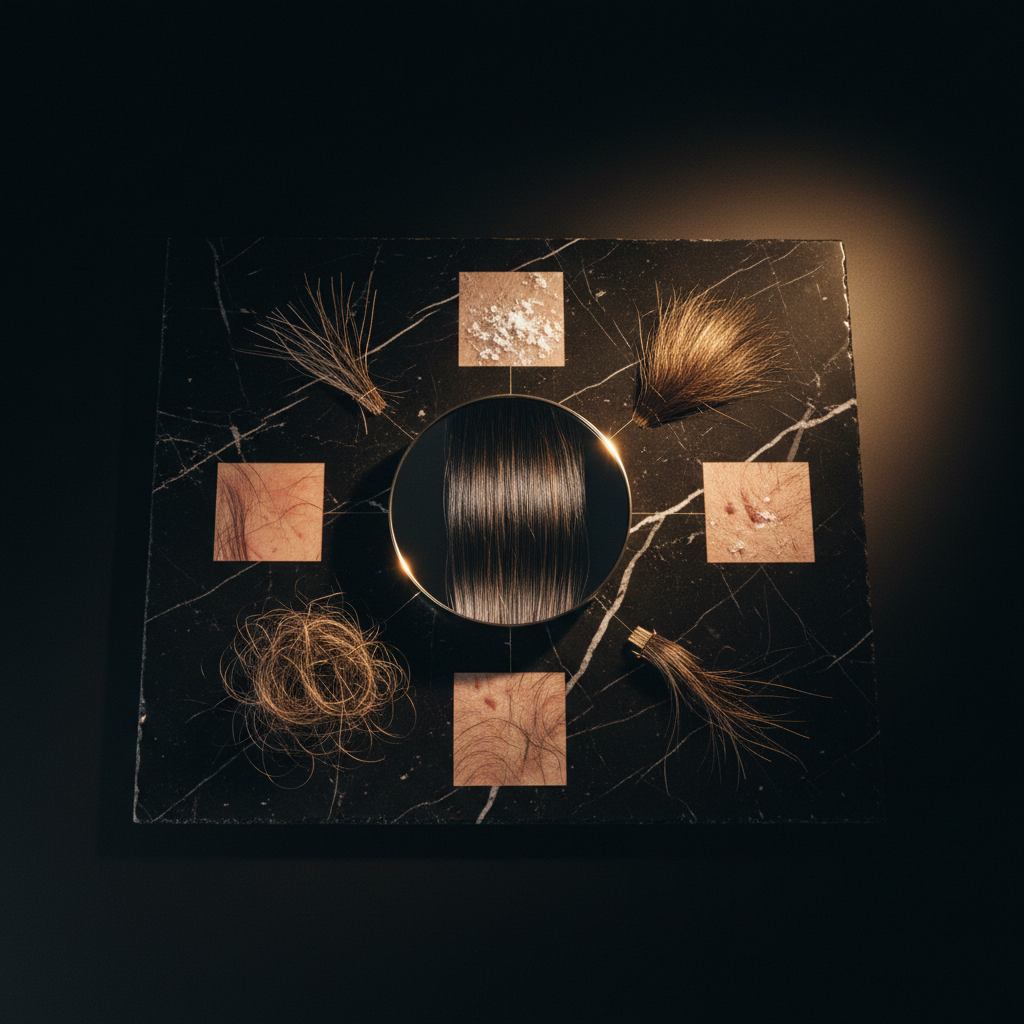
Hair and scalp conditions encompass a broad range of issues that can affect hair health, appearance, and growth. These conditions can arise from various factors, including genetics, environmental influences, lifestyle choices, and underlying health issues. Understanding the common types of hair conditions is crucial for effective management and maintaining optimal hair and scalp health.
Androgenetic Alopecia
Androgenetic alopecia, commonly known as male-pattern baldness or female-pattern hair loss, is the most prevalent form of hair loss, affecting millions worldwide. It is characterized by a gradual thinning of hair, primarily caused by a genetic predisposition and the action of androgens (male hormones). In men, it typically manifests as a receding hairline and thinning at the crown. In women, it often appears as diffuse thinning over the top of the scalp, with the frontal hairline usually remaining intact.
Mechanism
Dihydrotestosterone (DHT), a derivative of testosterone, plays a significant role in androgenetic alopecia. Hair follicles that are genetically susceptible to DHT will miniaturize, leading to shorter, finer hair strands with each growth cycle, eventually ceasing to produce hair.
Management
Management strategies often involve topical treatments, oral medications, and in some cases, hair transplantation. Early intervention is generally recommended to slow progression.
Telogen Effluvium
Telogen effluvium is a temporary form of hair loss that occurs when a significant number of hair follicles prematurely enter the resting (telogen) phase of the hair growth cycle. This results in sudden, widespread shedding, often occurring several months after a triggering event.
Causes
Common triggers include:
- Major physiological stress (e.g., childbirth, surgery, severe illness)
- Significant psychological stress
- Nutritional deficiencies (e.g., iron, zinc, vitamin D)
- Sudden weight loss or restrictive diets
- Certain medications
- Thyroid imbalances
Management
Identifying and addressing the underlying cause is key. Once the trigger is resolved, hair growth typically resumes within a few months, though full recovery can take up to a year.
Alopecia Areata
Alopecia areata is an autoimmune condition where the immune system mistakenly attacks hair follicles, leading to sudden, patchy hair loss on the scalp or other parts of the body. It can affect individuals of any age and gender.
Characteristics
- Typically presents as smooth, round, coin-sized patches of hair loss.
- Can range from a single patch to complete hair loss on the scalp (alopecia totalis) or entire body (alopecia universalis).
- Hair often regrows, though new patches can develop.
Management
Treatment options vary depending on the extent of hair loss and may include topical corticosteroids, immunotherapy, or other medications prescribed by a specialist.
Seborrheic Dermatitis
Seborrheic dermatitis is a common, chronic inflammatory skin condition primarily affecting areas rich in sebaceous (oil-producing) glands, including the scalp. When it affects the scalp, it is often referred to as "dandruff" in its milder form, or a more severe scaling condition.
Symptoms
- Flaky, white or yellowish scales on the scalp
- Redness and itching
- Greasy patches of skin
Causes
While the exact cause is not fully understood, it is believed to involve a combination of factors, including the overgrowth of a yeast called Malassezia globosa (which naturally lives on the skin), genetic predisposition, and immune system response.
Management
Management typically involves using specialized shampoos containing active ingredients such as zinc pyrithione, selenium sulfide, ketoconazole, or salicylic acid. Regular washing and avoiding harsh hair products can also help.
Psoriasis of the Scalp
Scalp psoriasis is an autoimmune condition that causes thick, silvery-scaling patches to form on the scalp. It can be mild, with fine, dry scales, or severe, with thick, crusted plaques that can be itchy and sometimes painful.
Symptoms
- Red, inflamed patches covered with silvery scales
- Dry scalp that may crack and bleed
- Itching, burning, or soreness
- Temporary hair loss in affected areas due to scratching or removal of scales.
Management
Treatment options include topical corticosteroids, medicated shampoos containing coal tar or salicylic acid, light therapy, and in severe cases, oral medications or biologics. Avoiding triggers like stress and certain medications can also be beneficial.
Folliculitis
Folliculitis is an inflammation of the hair follicles, often caused by bacterial or fungal infection. It can appear as small, red bumps or pus-filled pimples around the base of hair shafts.
Causes
- Bacterial infections (e.g., Staphylococcus aureus)
- Fungal infections (e.g., Malassezia)
- Irritation from shaving, tight clothing, or certain hair products
- Blocked follicles from sweat and oils
Management
Mild cases may clear on their own or with good hygiene. More persistent or severe cases may require topical or oral antibiotics or antifungals. Maintaining cleanliness and avoiding irritants are important preventative measures. In cases of "hot tub folliculitis," Pseudomonas aeruginosa bacteria is often the culprit, requiring specific treatment.
Hair Breakage and Damage
Hair breakage and damage, while not a disease, are common conditions that significantly impact hair health and appearance. They result from structural weakening of the hair shaft.
Causes
- Chemical processing: Perms, relaxers, bleaching, and colouring can severely weaken the hair's protein structure.
- Heat styling: Excessive use of blow dryers, flat irons, and curling irons at high temperatures without heat protection.
- Mechanical stress: Vigorous brushing, tight hairstyles, and rough towel-drying.
- Environmental factors: UV radiation, chlorinated water, and pollution.
- Nutritional deficiencies: Lack of essential vitamins and minerals can compromise hair strength.
Management
Management focuses on minimizing further damage and restoring hair strength. This includes using gentle hair care practices, reducing heat styling, incorporating strengthening and conditioning treatments, and ensuring a balanced diet. Products formulated to repair and protect the hair cuticle are beneficial.
Find these ingredients in Watermans products
- Zinc, you will find this ingredient in our Hair Vitamins.