A Guide to Cleansing Routines for Coily Hair
8 min read ·
Discover evidence-based cleansing routines for coily hair. Learn how to protect fragile curl patterns, balance scalp health, and prevent breakage effectively.

Quick answer: Effective Cleansing Routines for Coily Hair balance thorough scalp hygiene with the preservation of natural cuticular lipids. Because tightly coiled fibres feature an elliptical cross-section and frequent torsion twists, sebum struggles to travel down the shaft, leaving the lengths prone to dehydration while the scalp collects product residue. The ideal routine pairs a gentle, low-pH shampoo weekly or fortnightly with periodic clarifying washes, thorough water saturation, and systematic sectioning to minimise mechanical breakage while protecting the acid mantle.
Key takeaways
- Coily hair (typically classified as type 4 curl patterns) is structurally distinct, featuring uneven cuticle distribution along tight twists that make the fibre uniquely vulnerable to drying detergents.
- Cleansing frequencies should balance scalp health and fibre hydration; washing every 7 to 10 days prevents Malassezia yeast overgrowth without stripping lipid reserves.
- Co-washing (cleansing with conditioner alone) offers mild surface refreshing but fails to remove heavy waxes and butter buildups, requiring periodic surfactant-based intervention.
- Applying shampoos in 4 to 8 detangled sections significantly reduces tangling, friction, and subsequent tensile breakage during the wash process.
- Water temperature matters: warm water dissolves solidified oils, while a cooler final rinse helps smooth the cuticle layers.
Cleansing Routines for Coily Hair: what the evidence shows
Research into afro-textured and tightly coiled hair highlights specific biochemical and structural challenges that dictate how cleansing should occur. Cleansing Routines for Coily Hair must account for the cross-sectional geometry of the hair fibre. Unlike straight hair, which is circular in cross-section, coily hair is distinctly elliptical and twists sharply along its longitudinal axis.
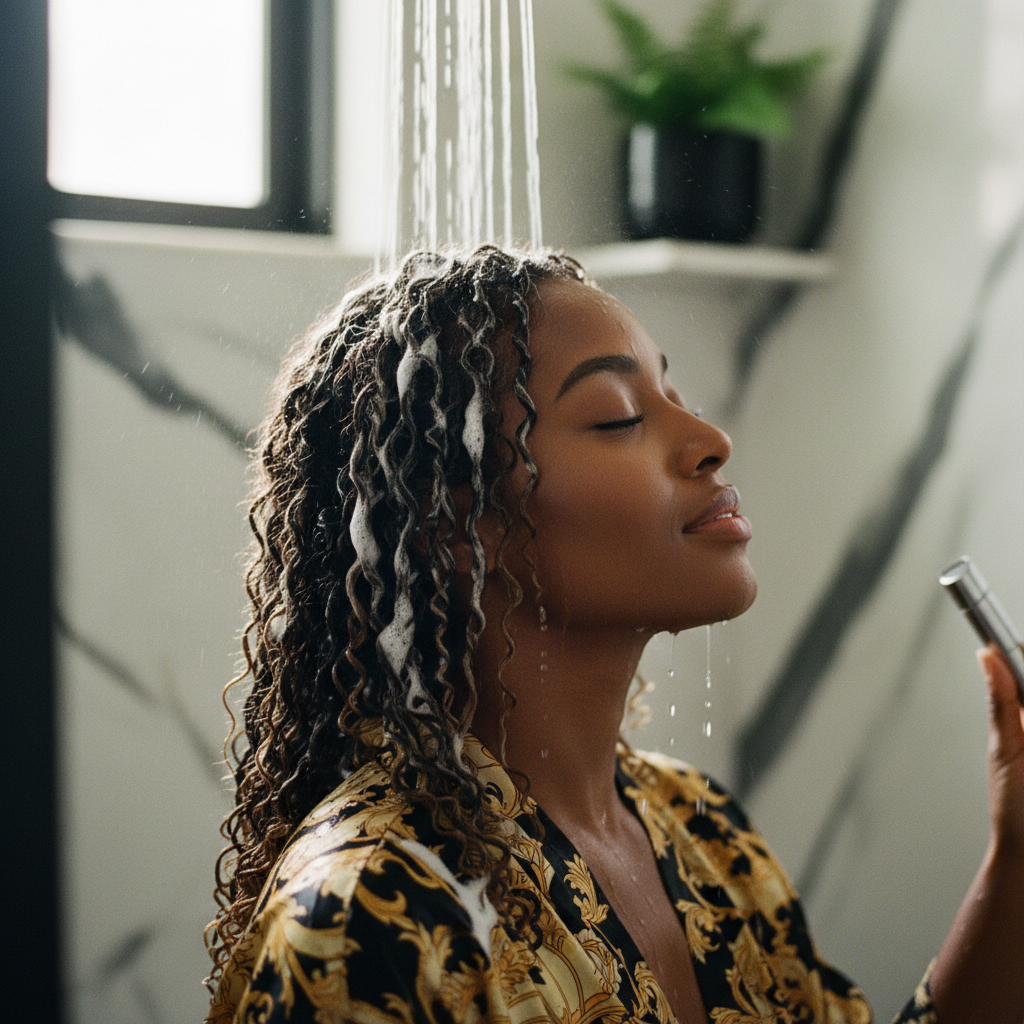
According to research published in the International Journal of Cosmetic Science, these torsion twists create mechanical stress points where cuticle scales are naturally thinner, uplifted, or partially missing. Strong, alkaline anionic surfactants (such as unbuffered sodium lauryl sulphate) swell the hair shaft by raising its pH above the natural range of 4.5 to 5.5. When coily hair swells excessively during washing, the uplifted cuticles interlock with adjacent fibres. This leads to matting, severe friction, and breakage along weak twist points.
Furthermore, sebum production on the scalp may be completely normal, but the coiled geometry acts as a physical barrier. Studies show that sebum travels down straight hair with ease, yet rarely moves past the first few centimetres of a tight coil. Washing protocols must therefore treat the scalp and the lengths as two entirely different ecosystems: the scalp requires sebum regulation and follicle clearing, while the fibre lengths demand lipid conservation and lubricity.
What the evidence does not show
There is no scientific proof that skipping shampoo altogether benefit the scalp or prevents hair loss. The popular "no-poo" movement claims that the scalp naturally self-cleanses once synthetic detergents are removed. Clinical dermatology does not support this. Failing to lift sebum, dead corneocytes, and styling products creates an ideal breeding ground for Malassezia globosa, a yeast implicated in seborrhoeic dermatitis. When untreated, scalp inflammation can impair follicular anchoring, accelerating hair shedding (telogen effluvium).
Additionally, evidence does not show that co-washing alone can replace surfactant-based shampoos indefinitely. Conditioners contain cationic surfactants (such as behentrimonium chloride) designed to smooth the hair, not dissolve stubborn film-forming polyquats or heavy vegetable butters. Over weeks, unremoved buildup chokes moisture absorption, making hair paradoxically brittle.
The mechanical challenge: understanding hygral fatigue and wet-state fragility
Hair fibre swells by roughly 15 to 20% in diameter when saturated with water, weakening its internal hydrogen bonds. For coily hair, which naturally possesses lower tensile strength than straight or wavy hair, the transition to a wet state makes the fibre exceptionally fragile.
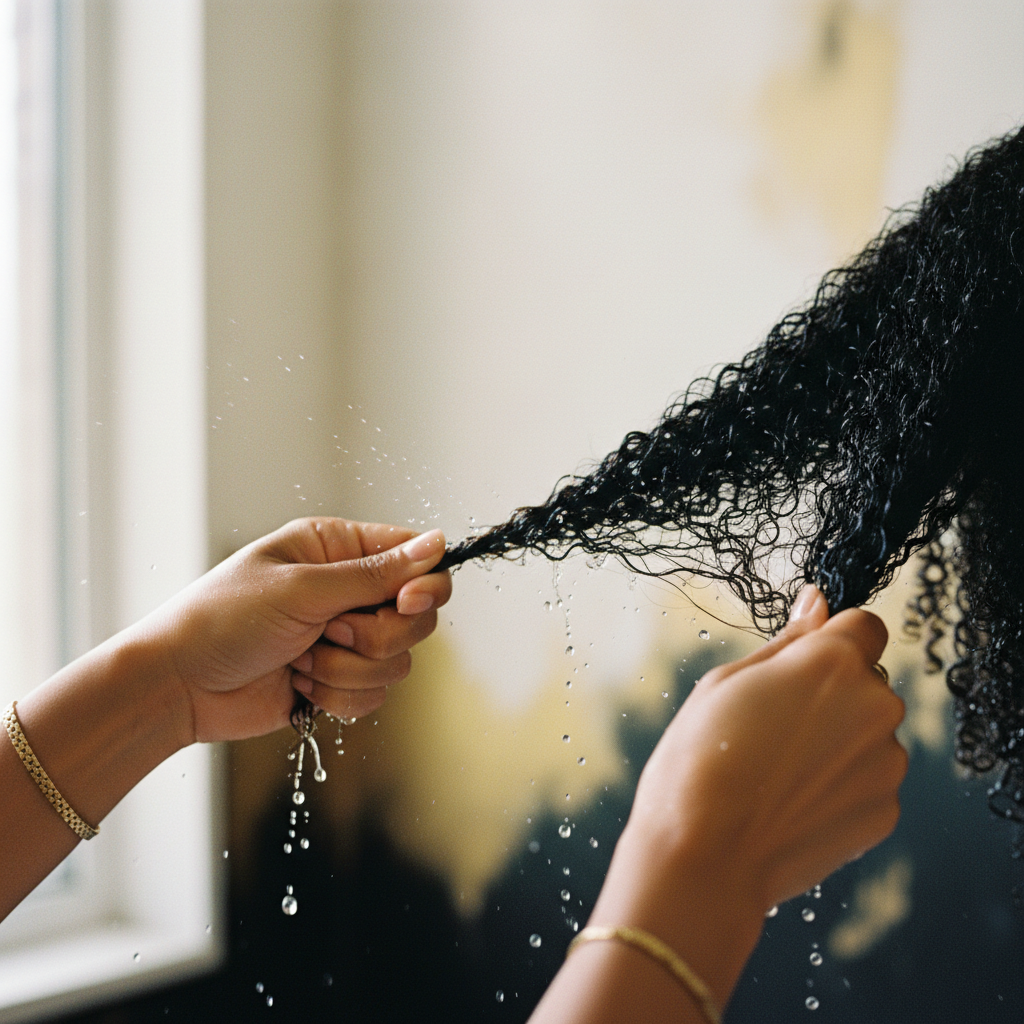
Repeated cycles of excessive swelling and rapid deswelling are known as hygral fatigue. If a cleansing routine involves prolonged water immersion without pre-cleansing emollients, the fibre sustains internal structural stress. Proper washing practices use lubricating surfactants, low-friction handling, and pre-wash oils to preserve internal cortex integrity.
Signs your current cleansing routine needs adjusting
Your hair and scalp will provide distinct signals when your cleansing balance is tilted too far toward either product buildup or excessive lipid stripping:
- Persistent scalp itching or flakes: Indicates either microbial overgrowth from under-cleansing or contact irritant dermatitis from harsh, unrinsed surfactants.
- Dull, coated, or "greasy dry" strands: Hair that feels simultaneously oily to the touch and brittle on the inside has accumulated cosmetic buildup that repels hydrating water.
- Excessive single-strand knots (trichonodosis): Cleansing hair freely without sectioning allows loose, swelling coils to wrap around each other, forming permanent knots.
- Absence of curl definition: Hair that refuses to clump into its natural coils when wet often suffers from product film or cuticle degradation.
- Friction and snagging during lathering: A sign that your chosen cleanser has stripped the essential 18-methyleicosanoic acid (18-MEA) lipid layer from the cuticle.
Step-by-step practical implementation
To establish a successful routine, stylists and dermatologists recommend a structured, methodical protocol:
- Pre-cleanse preparation (pre-poo): Apply a light plant-derived oil or rich detangler to dry hair 20 to 30 minutes before washing. This shields the cortex from rapid water uptake and reduces cuticle friction.
- Sectioning: Divide the hair into 4, 6, or 8 manageable twists or braids using non-snag clips. Working in sections prevents the mass of curls from shrinking and knotting into a single block.
- Targeted scalp cleansing: Thoroughly drench the hair with lukewarm water. Apply a gentle, sulphate-free, low-pH shampoo directly to the scalp. Use your fingertips (never your fingernails) to massage the skin in small circles, lifting buildup from the follicle openings.
- Downward rinsing: Release one section at a time to rinse. Allow the soapy runoff to travel down the shaft of the hair to clean the lengths without scrubbing the fibres vigorously against one another.
- Periodic clarifying: Every 3 to 4 weeks, swap your gentle shampoo for a dedicated clarifying formula to strip mineral deposits from hard water and heavy styling waxes.
| Cleanser Type | Primary Surfactants | Scalp Benefit | Fibre Impact | Ideal Frequency |
|---|---|---|---|---|
| Gentle / Moisture Shampoo | Coco-betaine, Decyl Glucoside, Disodium Laureth Sulfosuccinate | Clears light daily sebum; maintains pH 5.0 | Preserves cuticle lipids; reduces friction | Every 7 to 10 days |
| Clarifying Shampoo | Sodium C14-16 Olefin Sulfonate, Chelating agents (EDTA) | Completely removes stubborn sebum and hard water minerals | Strips protective oils; requires heavy post-wash conditioning | Every 3 to 5 weeks |
| Co-Wash / Cleansing Conditioner | Behentrimonium Methosulfate, Cetrimonium Chloride | Provides light surface refreshing; minimal scalp degreasing | Extremely lubricating; maximum moisture retention | Mid-week between washes |
When the cause may be something else
If your scalp remains persistently tender, severely flaky, or inflamed despite adjusting your cleansing routine, the problem is rarely just your choice of shampoo. Conditions like seborrhoeic dermatitis, scalp psoriasis, and lichen planopilaris can mimic simple dry scalp but require active medical management.
Furthermore, if you are experiencing hair leaving the follicle in diffuse amounts (shedding) rather than small snapping fragments along the lengths (breakage), review internal factors. Telogen effluvium from nutritional deficiencies (such as iron, ferritin, or vitamin D), hormonal shifts, or severe physiological stress cannot be cleansed away.
When to seek professional advice
Consult a qualified trichologist or dermatologist if you notice:
- Red, raised, burning, or painful plaques on the scalp.
- Localised circular patches of smooth baldness (which may indicate alopecia areata).
- Shedding exceeding 100 to 150 hairs daily that persists for more than two months.
- Severe scaling that adheres firmly to the hair shafts or produces weeping lesions.
For cosmetic guidance, seek out a certified curl specialist or stylist trained in textured hair care to help refine your sectioning and manipulation techniques.
Supporting coily hair vitality: the Watermans approach
For individuals seeking to optimise their scalp environment while supporting overall hair condition, integrating dedicated care products into your regimen can make a measurable difference. Watermans products are formulated to foster a clean, revitalised scalp foundation that helps fragile, breakage-prone hair feel stronger and look visibly fuller. By keeping follicles free of disruptive debris while supporting external strand resilience, a targeted regimen complements the protective mechanics required for coily textures.
Frequently asked questions about Cleansing Routines for Coily Hair
How often should Cleansing Routines for Coily Hair include a wash day?
Most individuals find an optimal cadence between 7 and 10 days. Cleansing more frequently can dry out the fragile hair shaft, while waiting longer than two weeks allows sebum, sweat, and styling products to accumulate, creating an inflammatory environment for the scalp microbiome.
Can I wash my hair in twists or braids?
Yes, washing in loose twists or braids is one of the most effective mechanical protective strategies for coily hair. It holds the fibres elongated, preventing shrinkage-induced tangling and single-strand knots while still giving you direct access to cleanse the scalp.
Is hard water damaging to coily hair routines?
Hard water contains calcium and magnesium ions that bind to the hair shaft, forming a brittle, insoluble film. In coily hair, which is already prone to stiffness, this mineral coating accelerates breakage. Incorporating a chelating shampoo once a month removes these mineral bonds.
Should I cleanse with hot or cold water?
Lukewarm water (around 37 to 39 degrees Celsius) is best for the cleansing phase because it dissolves sebum and loosens styling products. Follow with a cool or lukewarm rinse when conditioning to minimise swelling and help smooth the cuticular scales.
Summary
Optimising your Cleansing Routines for Coily Hair requires understanding the delicate structural balance between scalp hygiene and fibre preservation. By respecting the hair's unique elliptical morphology, reducing mechanical friction through sectioning, and selecting pH-balanced cleansers that clear debris without eroding natural lipids, you maintain a healthy scalp environment and preserve the long-term tensile strength of your curls.
Sources and references
- British Association of Dermatologists. Seborrhoeic Dermatitis Guidelines.
- International Journal of Cosmetic Science. "Afro-textured hair: Characteristics and cosmetic treatments", 2007.
- Journal of the American Academy of Dermatology. "Hair breakage in normal and weathered hair", 2011.
- World Congress of Hair Research. Structural investigations into curl geometry and tensile resilience, 2018.
Find these ingredients in Watermans products
- Vitamin D: you will find this ingredient in our Hair Vitamins.