Choosing the Right Conditioner: A Guide to Hair Health and Manageability
11 min read ·
Choosing the Right Conditioner is essential for maintaining hair health, improving manageability, and addressing specific concerns like dryness, damage, or frizz.
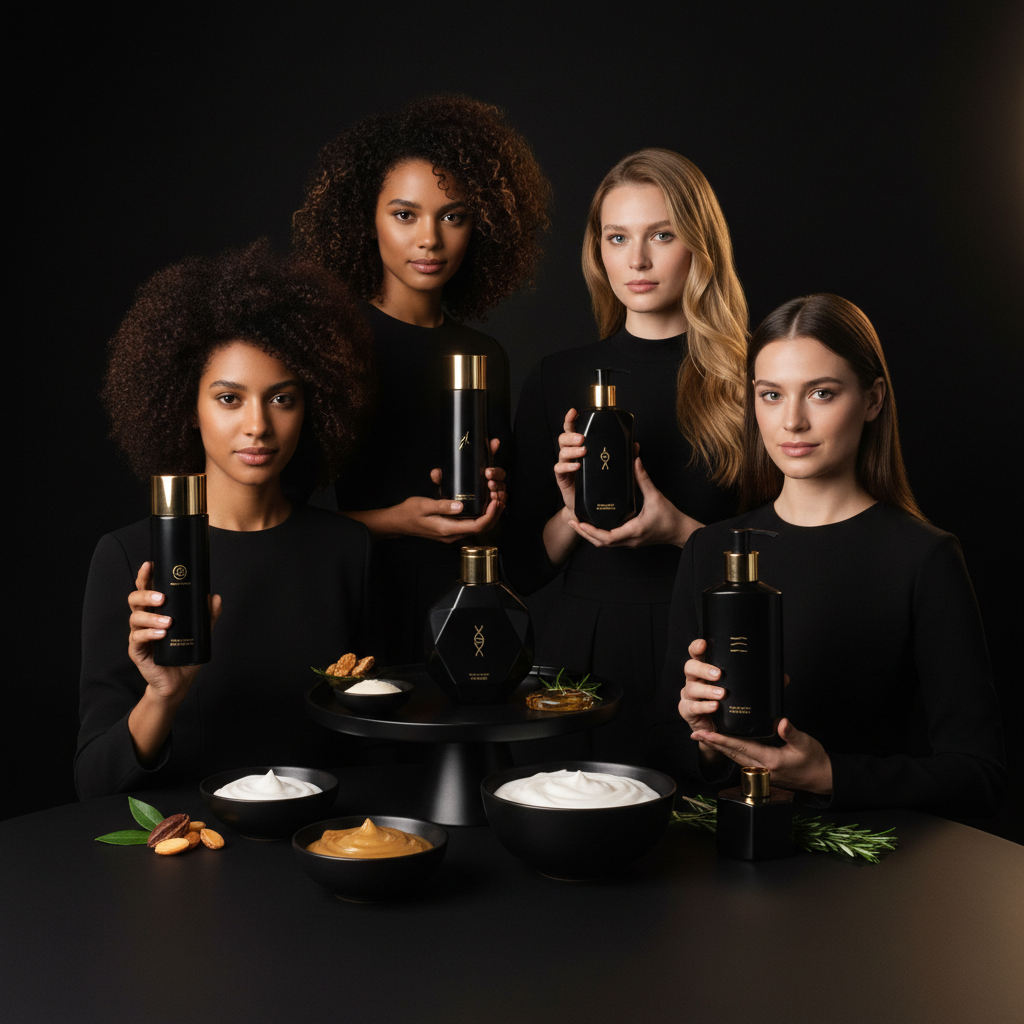
Quick answer: Choosing the Right Conditioner involves understanding your hair's unique needs, including its texture, porosity, and any specific concerns like dryness or damage. Conditioners work by smoothing the hair's outer layer, providing moisture, and reducing friction, ultimately improving its appearance and manageability. However, the "right" conditioner is highly individual and depends on your hair's current condition and desired outcomes, and there's no one-size-fits-all solution.
Key takeaways
- Conditioners smooth the hair cuticle, reduce static, and improve manageability by depositing beneficial ingredients onto the hair shaft.
- Identifying your hair's porosity (its ability to absorb and retain moisture) is crucial for Choosing the Right Conditioner.
- Different hair types (fine, medium, thick, curly, coily, straight) benefit from specific conditioner formulations.
- Common hair concerns like dryness, damage, frizz, or colour-treated hair require targeted conditioner ingredients.
- Proper application, focusing on mid-lengths and ends, maximises conditioner efficacy and prevents weighing down hair.
- Regular use of an appropriate conditioner can significantly improve hair feel, appearance, and resistance to breakage.
Choosing the Right Conditioner: what the evidence shows
Choosing the Right Conditioner is a foundational step in maintaining hair health and improving its appearance after cleansing. Conditioners work by depositing ingredients onto the hair shaft that address common issues caused by shampooing or environmental factors. These ingredients primarily aim to smooth the hair's outer layer (the cuticle), neutralise static electricity, and replenish lost moisture and lipids, leading to easier detangling, reduced friction, and a softer feel.
Research into hair conditioners identifies several key mechanisms. When hair is wet, especially after shampooing, it can become negatively charged, causing the cuticles to lift and individual strands to repel each other, leading to tangles and frizz. Conditioners typically contain positively charged (cationic) ingredients, such as cationic surfactants or polymers, which are attracted to these negatively charged areas. They coat the hair surface, neutralising the charge, smoothing the cuticle, and forming a protective film. This film reduces friction between hair fibres, making detangling easier and preventing mechanical damage.
Beyond surface smoothing, many conditioners also deliver moisturising agents (emollients, humectants), proteins, and other beneficial compounds. Emollients, like natural oils and fatty alcohols, help to seal the hair's surface, reducing water loss and imparting shine. Humectants, such as glycerin or hyaluronic acid, draw moisture from the environment or deeper within the hair shaft, contributing to hydration. Proteins, often hydrolysed for better penetration, can temporarily fill microscopic gaps on the hair surface, offering a temporary strengthening effect and improving elasticity, particularly for chemically treated or damaged hair. The pH of conditioners, typically acidic (around pH 3.5 to 5.0), also plays a role by helping to flatten the cuticle, further enhancing smoothness and shine.
Hair texture and porosity: key considerations for Choosing the Right Conditioner
Your hair's natural characteristics are the primary indicators for Choosing the Right Conditioner. Hair texture refers to the diameter of individual hair strands, while porosity describes its ability to absorb and retain moisture, which is largely determined by the condition of the cuticle layer.
- Fine hair: With a small diameter, fine hair is easily weighed down by heavy products. It benefits from lightweight conditioners that provide hydration and detangling without excessive emollients. Look for formulations described as "volumising" or "lightweight", often containing fewer oils and silicones.
- Medium hair: This hair type generally tolerates a wider range of conditioners. The focus is usually on maintaining moisture balance and improving manageability without specific concerns about volume or excessive dryness.
- Thick or coarse hair: Having a larger diameter, this hair type often requires more intense moisturisation and frizz control. Richer, creamier conditioners with a higher concentration of emollients, such as shea butter or argan oil, are often effective. For more on managing this hair type, see 'Caring for Curly Hair' or 'How to Care for Afro Hair'.
Hair porosity is a critical factor for Choosing the Right Conditioner because it dictates how effectively your hair absorbs and retains ingredients. You can gain more insight into this by reading 'Understanding Hair Porosity'.
- Low porosity hair: Hair with tightly bound cuticles resists moisture penetration. Products can build up on the surface, making hair feel greasy or weighed down. Conditioners for low porosity hair should be lightweight, contain humectants to attract moisture, and have a thinner consistency to penetrate more easily. Applying to damp, not soaking wet, hair can also help.
- Medium porosity hair: This hair type has balanced cuticles, allowing for good moisture absorption and retention. Most conditioners work well, and the focus can be on maintaining this balance and addressing specific concerns.
- High porosity hair: Often a result of damage from chemical treatments (see 'Chemical Hair Treatments') or heat styling (see 'Heat Styling'), high porosity hair has raised or damaged cuticles. It absorbs moisture quickly but loses it just as fast, leading to dryness and frizz. This hair type benefits from rich, emollient-heavy conditioners that help to seal the cuticle and lock in moisture. Ingredients like proteins, ceramides, and heavier oils can be particularly helpful.
Addressing specific hair concerns
Beyond texture and porosity, your conditioner choice should also target any specific hair concerns:
- Dryness: Hair lacking moisture needs rich, hydrating conditioners. Look for ingredients like shea butter, coconut oil, argan oil, jojoba oil, hyaluronic acid, and glycerin. These help to replenish lipids and humectants that attract water.
- Damage (chemical or heat): Hair weakened by chemical processes (colouring, perming) or heat styling (see 'Heat Styling Safety Best Practices') benefits from reparative ingredients. Hydrolysed proteins (e.g., wheat, rice, soy), amino acids, and ceramides can temporarily fortify the hair structure and improve elasticity, reducing breakage. For more on this, see 'Understanding Hair Damage'.
- Frizz: Frizzy hair often has a raised cuticle, allowing moisture to enter and swell the hair shaft unevenly. Conditioners containing smoothing silicones (like dimethicone or cyclomethicone), natural oils, or film-forming polymers can help to smooth the cuticle, seal in moisture, and reduce the appearance of frizz (see 'Dealing with Frizzy Hair').
- Colour-treated hair: To protect hair colour from fading, look for conditioners formulated specifically for colour-treated hair. These often contain UV filters, antioxidants, and gentle, sulfate-free ingredients to minimise stripping of colour pigments. (See 'Maintaining Colour-Treated Hair').
- Oily scalp with dry ends: If your scalp is oily but your ends are dry, apply conditioner primarily to the mid-lengths and ends, avoiding the scalp to prevent further oiliness or product build-up. For more on managing an oily scalp, see 'Oily Scalp Care'.
- Lack of volume: Fine or limp hair can be weighed down by heavy conditioners. Opt for lightweight or "volumising" formulations that provide hydration without rich oils or butters. Some volumising conditioners contain polymers that create a fuller feel without adding significant weight.
Types of conditioners and their uses
Different formulations serve distinct purposes, influencing how you approach Choosing the Right Conditioner.
| Conditioner Type | Primary Benefit | Application | Frequency | Best For |
|---|---|---|---|---|
| Rinse-Out Conditioner | Daily hydration, detangling, cuticle smoothing | Applied after shampoo, left for 1-3 minutes, then rinsed thoroughly. | Daily or every wash | Most hair types for general maintenance. |
| Leave-In Conditioner | Continuous moisture, detangling, heat protection, frizz control | Applied to damp hair after washing, not rinsed out. Can be a cream, spray, or serum. | Daily or as needed | Dry, damaged, frizzy, curly, or fine hair needing extra protection/moisture. |
| Deep Conditioner/Mask | Intensive repair, deep hydration, strengthening | Applied after shampoo, left for 5-20 minutes (as directed), then rinsed thoroughly. | Weekly to bi-weekly | Damaged, very dry, chemically treated, or high porosity hair needing intensive care. |
| Co-Wash (Cleansing Conditioner) | Gentle cleansing, maximum moisture retention, minimal stripping | Used in place of shampoo; massaged into scalp and hair, then rinsed. | As needed, between traditional shampoos | Very dry, curly, coily, or afro hair types that benefit from minimal cleansing. |
Rinse-out conditioners are the most common type, providing daily benefits. Leave-in conditioners offer sustained benefits, particularly useful for detangling, controlling frizz, and providing an additional layer of protection against environmental stressors or heat styling. For more information, you can read 'Hair Moisturizers: What They Are and How They Work'. Deep conditioners and hair masks are formulated with higher concentrations of active ingredients to provide intensive treatments, especially for hair that needs significant hydration, repair, or strengthening. Co-washing, or conditioner-only washing, is an alternative cleansing method that prioritises moisture retention, especially beneficial for very dry or textured hair types that can be sensitive to traditional shampoos. For afro hair, consider a co-wash specifically formulated for your hair type (see 'How to Care for Afro Hair').
Proper application for maximum benefit
Even with the perfect conditioner, improper application can limit its effectiveness. To make the most of Choosing the Right Conditioner:
- Remove excess water: After shampooing, gently squeeze or blot out as much excess water as possible from your hair. This prevents the conditioner from being diluted and allows its active ingredients to coat the hair shaft more effectively.
- Focus on mid-lengths and ends: The oldest parts of your hair, the mid-lengths and ends, are typically the driest and most prone to damage. Apply conditioner generously here. Unless specifically designed for scalp treatment, avoid applying heavy conditioners directly to the scalp, especially if you have an oily scalp, as it can contribute to greasiness or weigh down fine hair.
- Distribute evenly: Use your fingers or a wide-tooth comb to distribute the conditioner through your hair. This also aids in detangling.
- Allow processing time: Most rinse-out conditioners benefit from being left on for 1 to 3 minutes to allow ingredients to absorb and interact with the hair. Deep conditioners require longer, typically 5 to 20 minutes, as directed by the product.
- Rinse thoroughly: Rinse rinse-out and deep conditioners thoroughly with cool or lukewarm water until the hair feels smooth and clean, but not stripped. Cooler water can help to flatten the cuticle further, enhancing shine.
What the evidence does not show
While conditioners are highly effective at improving the cosmetic appearance and manageability of hair, there is currently no robust scientific evidence to suggest that they can stimulate hair growth, reverse genetic hair loss (alopecia), or cure underlying scalp conditions that require medical intervention. Their primary role is in improving the external condition of the hair fibre itself, reducing breakage, and enhancing its feel and look. Claims about "hair growth conditioners" should be viewed with caution; any effect on growth is likely indirect, by reducing breakage and creating a healthier environment for existing hair.
Frequently asked questions about Choosing the Right Conditioner
How often should I use conditioner?
Most people benefit from conditioning every time they shampoo. If your hair is very dry, damaged, or curly, you might even consider co-washing on alternate days or using a leave-in conditioner daily. Conversely, if your hair is very fine or prone to oiliness, you might condition less frequently or focus only on the ends to avoid weighing it down.
Can I use a conditioner that isn't designed for my hair type?
While you can, it might not yield the best results. For instance, a very rich conditioner on fine hair could leave it greasy or limp, while a lightweight conditioner on coarse, dry hair might not provide enough moisture. Choosing the Right Conditioner that matches your hair's specific needs will always be more effective.
What's the difference between a conditioner and a hair mask?
A hair mask is essentially a more intensive form of conditioner. Masks typically contain higher concentrations of active ingredients and are designed to be left on the hair for a longer period (5 to 20 minutes) to allow for deeper penetration and more profound treatment. Conditioners are for daily use, offering quicker, lighter benefits.
Do conditioners cause product build-up?
Yes, over time, especially with frequent use of rich, silicone-heavy conditioners or improper rinsing, product build-up can occur. This can make hair feel dull, heavy, or greasy. Regular use of a clarifying wash (see 'How to Do a Clarifying Wash') can help remove build-up. Choosing the Right Conditioner for your hair type and rinsing thoroughly minimises this risk.
Should I use conditioner if I have an oily scalp?
Yes, even with an oily scalp, your hair strands can still be dry, especially the ends. Apply conditioner only to the mid-lengths and ends of your hair, avoiding the scalp. This provides necessary moisture and detangling to the hair fibre without contributing to scalp oiliness. For tips on managing oily scalps, see 'Sebum Regulation' or 'Oily Scalp: Causes, Management, and When to Seek Help'.
The importance of Choosing the Right Conditioner
Choosing the Right Conditioner is a critical component of an effective hair care routine. By understanding your hair's unique characteristics and needs, you can select a product that not only improves its immediate appearance but also contributes to its long-term health and resilience against environmental and mechanical damage. A well-chosen conditioner can transform dull, tangled, or frizzy hair into hair that feels soft, looks shiny, and is much easier to manage. Consider your hair's texture, porosity, and specific concerns as your guide to finding the perfect match.
Discover Watermans Conditioners
Watermans offers a range of conditioners designed to complement various hair care needs. The formulas are developed with ingredients that aim to nourish the hair and support a healthy-looking scalp. For example, Watermans Condition Me includes hydrolysed lupin protein, which can help to improve the hair's tensile strength and reduce breakage. Our conditioners are designed to provide moisture, improve detangling, and leave hair feeling softer and looking shinier. Our formulas cater to those seeking to enhance their hair's condition and manageability. For afro and curly hair types, Frojus offers a specialised conditioner formulated with ingredients to provide intense hydration and detangling, helping to reduce breakage and enhance curl definition.
Sources and references
- Cosmetic Science and Technology, Volume 25: Hair and Hair Care. Chapter: Hair Conditioners. Marcel Dekker, Inc., 2005.
- Gavazzoni Dias, M. F. R. (2015). Hair Cosmetics: An Overview. International Journal of Trichology, 7(1), 2 to 15. PubMed.
- Robbins, C. R. (2012). Chemical and Physical Behavior of Human Hair (5th ed.). Springer. Chapter: Conditioners and Conditioning.
- American Academy of Dermatology Association. Hair care products: What to look for. Aad.org.
- British Association of Dermatologists. Hair and Scalp Conditions. Bad.org.uk.
- Journal of Cosmetic Science. Various articles on hair conditioning ingredients and mechanisms. Cosmeticsandtoiletries.com.
Find these ingredients in Watermans products
- Argan Oil: you will find this ingredient in our Hair Growth Shampoo.
- Shea Butter: you will find this ingredient in our Curly Hair Conditioner.