The Chemistry of Bleaching Hair: The Science Behind Lightening
9 min read ·
Explore the chemistry of bleaching hair: how alkaline oxidation alters melanin, degrades keratin disulphide bonds, and strips protective lipids.
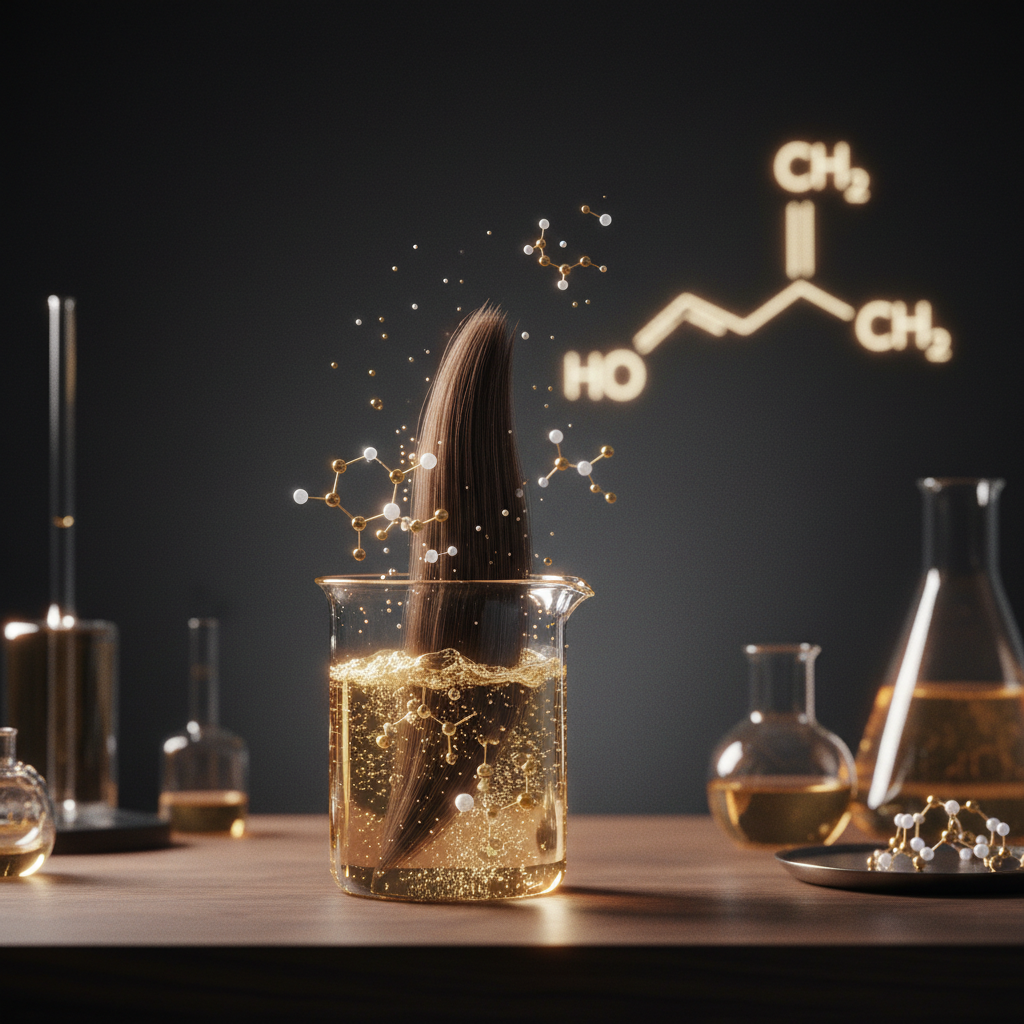
Quick answer: The chemistry of bleaching hair relies on an alkaline oxidative reaction that penetrates the protective cuticle to permanently degrade natural melanin pigment. Hydrogen peroxide oxidises eumelanin and pheomelanin inside the cortex, while persulphate boosters accelerate the lift. However, this same oxidation unavoidably cleaves cystine disulphide bonds within keratin, permanently weakening tensile strength and stripping the protective 18-methyleicosanoic acid (18-MEA) lipid layer, which increases porosity and makes the fibre vulnerable to structural breakage.
Key takeaways
- Hair bleach operates at an alkaline pH between 9.0 and 11.0 to swell the cuticle scale structure and grant active oxidants entry into the cortex.
- Hydrogen peroxide generates reactive oxygen species that chemically degrade dark eumelanin and red-yellow pheomelanin into colourless fragments.
- Alkaline persulphate salts (ammonium, potassium, sodium) act as oxidising boosters to lift hair past dark underlying pigment stages.
- The reaction is non-selective: it breaks structural disulphide bonds within keratin, creating cysteic acid and reducing fibre elasticity.
- Bleaching removes the hydrophobic f-layer (18-MEA), causing rapid moisture loss, increased friction, and mechanical breakage.
The Chemistry of Bleaching Hair: what the evidence shows
The chemistry of bleaching hair is governed by a two-stage process: alkaline swelling followed by aggressive oxidative degradation. Natural hair colour originates from melanin granules packed inside the proteinaceous cortex. Because melanin molecules are large, dense, and naturally stable, removing them requires chemical agents capable of dissolving complex organic polymers.
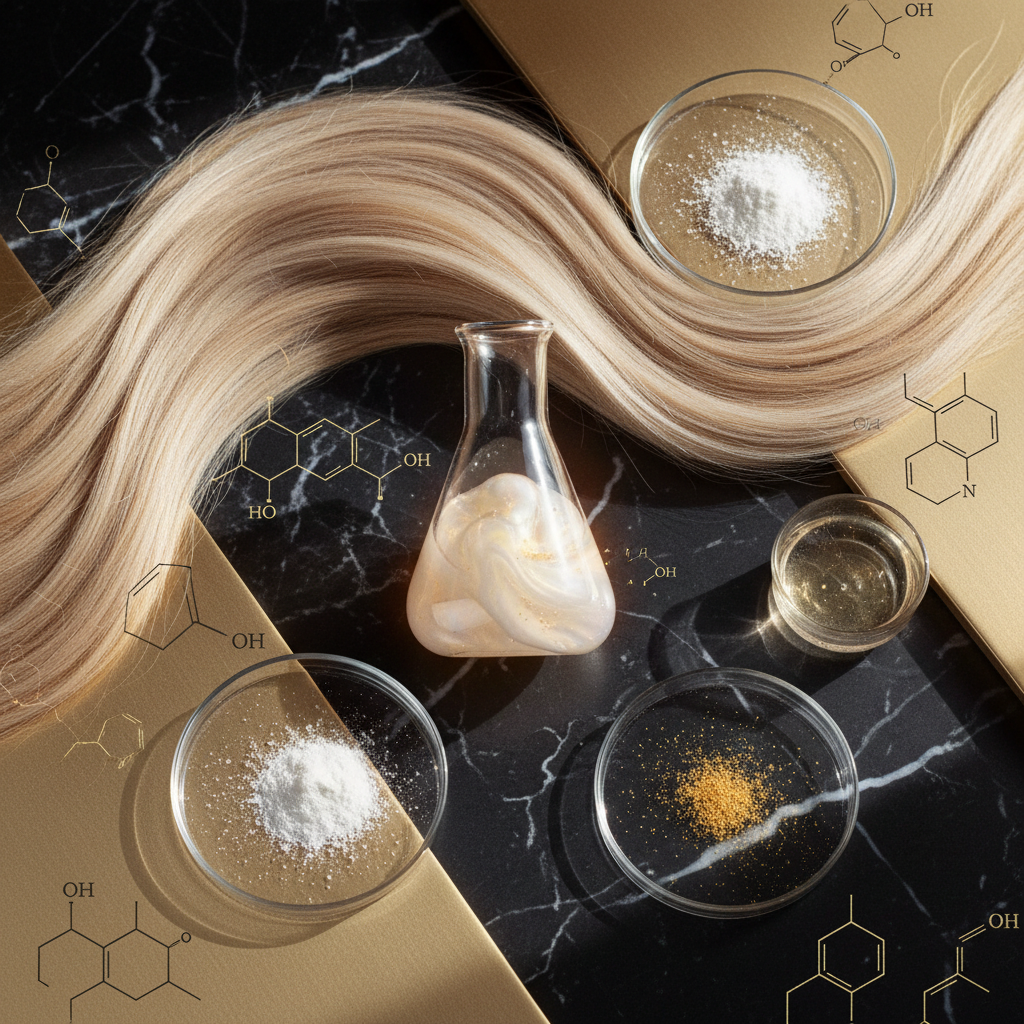
Cosmetic bleaching systems achieve this by combining an alkaline agent (historically ammonium hydroxide, or modern ethanolamine substitutes) with an oxidising agent (aqueous hydrogen peroxide, typically 6% to 12% concentration or 20 to 40 volume) and persulphate salts. When mixed, the alkaline base shifts the pH of the mixture from acidic peroxide (pH 3.0 to 4.0) up to an alkaline bracket of pH 9.0 to 11.0.
This drastic pH shift forces the tightly overlapping scales of the outer cuticle to swell and flare outward. Once the physical barrier opens, perhydroxyl ions (HOO-) and free radicals flood the cortex. These oxidants break the conjugated double bonds within melanin granules. Because conjugated double bonds absorb visible light, fracturing them converts the pigment into light-reflecting, colourless compounds.
Research published in the Journal of Cosmetic Science confirms that bleaching does not extract melanin physically from the shaft. Instead, it dissolves the pigment granules in situ, leaving tiny microscopic voids within the structural matrix of the cortex.
How the reaction degrades melanin and protein
The chemical action of bleach cannot differentiate between the pigment you want to dissolve and the structural proteins you need to preserve. Melanin degradation and keratin damage happen concurrently during the reaction.
Melanin oxidation
Human hair contains two main classes of pigment:
- Eumelanin: Responsible for brown and black tones, eumelanin breaks down relatively quickly through oxidative ring opening.
- Pheomelanin: Responsible for yellow, orange, and red tones, pheomelanin contains sulphur (benzothiazine and benzothiazole rings) and resists oxidation far longer.
Because pheomelanin takes significantly more time and oxidative energy to degrade, hair reveals warm, brassy undertones as it lifts. Bleaching past this stage requires persulphate boosters (potassium persulphate, ammonium persulphate) which release highly reactive sulphate radical anions (SO4•-).
Keratin and disulphide bond destruction
The main load-bearing component of hair fibre is alpha-keratin, held together by high concentrations of cystine. Cystine contains covalent disulphide bonds (-S-S-) that grant hair its natural elasticity, curl retention, and wet tensile strength.
During the bleaching reaction, the oxidants attack these sulphur bridges. Each ruptured disulphide bond undergoes oxidation to yield cystic acid residues:
R-S-S-R + 3[O] + H2O → 2 R-SO3H (Cysteic Acid)
Cysteic acid carries a negative electrical charge. As its concentration climbs, the interior of the hair shaft accumulates negative charges that repel one another. This internal electrostatic repulsion softens the cortex, causes wet hair to feel gummy or elastic, and permanently reduces dry tensile strength.
Stripping the 18-MEA lipid layer
The outer face of the hair cuticle is coated with an ultra-thin lipid envelope known as the f-layer, made primarily of 18-methyleicosanoic acid (18-MEA). This fatty acid is chemically bonded to the protein cuticle through thioester linkages.
Bleaching strips 18-MEA within the first few minutes of application. The loss of this lipid layer transforms the hair from naturally hydrophobic (water-repelling) to hydrophilic (water-absorbing). Deprived of its lubricious coat, the cuticle suffers high surface friction, static electricity, and progressive physical erosion.
| Hair Parameter | Virgin Hair | Bleached Hair (Single Process) | Repeatedly Bleached Hair |
|---|---|---|---|
| Cuticle Condition | Flat, smooth, compact scales | Flared, notched, missing scale edges | Heavily eroded, exposed cortex |
| Surface Hydration | Hydrophobic (repels water) | Moderately hydrophilic | Extremely hydrophilic (rapid water uptake) |
| Cysteic Acid Content | Low (under 2%) | Moderate (4% to 8%) | High (exceeding 10% to 15%) |
| Disulphide Bond Loss | Baseline (0%) | 15% to 25% reduction | 40% to 60% reduction |
| Tensile Strength | High elasticity; returns to shape | Reduced elasticity; snaps under tension | Very low; breaks easily when wet |
| Porosity | Normal (low to medium) | High | Extreme (sponge-like behaviour) |
What the evidence does not show
It is common to hear marketing claims that modern bleaching additives completely protect hair from chemical damage. Cosmetic chemistry does not support these claims.
While dicarboxylic acids, maleic acid derivatives, and polymeric bond builders can shield certain chemical sites or temporarily bridge broken keratin chains, they cannot block the oxidation of cystine without also halting the oxidation of melanin. If a formula completely blocked protein oxidation, the hair would not lighten.
Furthermore, bleaching does not directly cause follicular hair loss (such as androgenetic alopecia or telogen effluvium) unless high-strength bleach touches the scalp and causes severe chemical burns. Bleach damage is almost entirely a matter of fibre breakage along the shaft, not an interruption of the follicular growth cycle.
Signs of chemical over-processing
When the chemistry of bleaching hair goes too far, the hair fibre exhibits distinct physical symptoms:
- The wet stretch test: Healthy wet hair stretches roughly 30% of its length and bounces back. Over-bleached hair stretches like elastic bands, fails to bounce back, or disintegrates between your fingers.
- Rapid dry time / excessive wetting time: Damaged hair absorbs water instantly like a sponge, yet dries rapidly because the porous cortex cannot hold onto bound hydration.
- Tangling and matting: With the 18-MEA layer dissolved, cuticle scales catch against neighbouring strands, causing persistent knots.
- Mid-shaft snapping: White specks (trichorrhexis nodosa) appear along the length where the cortex has collapsed internally, leading to sudden transverse breakage.
What you can do to manage bleached hair
You cannot recreate the biological 18-MEA layer once it has been chemically oxidised, but targeted cosmetic care can restore tensile strength and reduce daily friction.
- Lower the pH after bleaching: Bleaching leaves hair in an open, alkaline state. Acidic rinses or conditioning treatments formulated at pH 3.5 to 4.5 help seal the cuticle scales down flat.
- Apply biomimetic conditioning agents: Quaternary ammonium compounds (such as behentrimonium chloride) electrostatically bind to the negatively charged cysteic acid sites on damaged hair, replacing the lost hydrophobic barrier.
- Use hydrolysed proteins: Small-chain peptides can enter the porous cuticle and fill voids in the cortex, temporarily increasing mechanical strength.
- Minimise thermal and mechanical stress: Use wide-tooth combs, detangle only when coated with a slippery conditioner, and keep heat tools below 175°C to avoid scorching fragile, de-lipidated keratin.
When the cause may be something else
If you are experiencing true hair loss from the scalp rather than fibre breakage, bleaching may be an incidental factor rather than the root cause.
If you notice excessive shedding where full-length hairs fall out with a white bulb attached at the root, you are dealing with telogen effluvium or natural shedding, not bleach breakage. Similarly, patchy thinning at the crown or hairline usually points to hormonal, nutritional, or genetic factors. Keep shed hairs to check for roots: a root indicates follicular shedding, while a sharp, broken end indicates chemical degradation.
Supporting hair vitality with Watermans
When chemical processing leaves your hair vulnerable to mechanical breakage, supporting both the scalp and the remaining fibre strength is essential. Watermans focuses on non-invasive, nutrient-rich cosmetic formulas that improve the overall resilience and appearance of fragile hair.
Using gentle, sulphate-free cleansers like Watermans Grow Me Shampoo cleanses the scalp without stripping residual moisture from porous, bleached mid-lengths. Pairing this with Watermans Condition Me Conditioner introduces cholesterol, hydrolysed lupin protein, and deeply moisturising botanicals that coat frayed cuticle layers. These formulas help reduce surface friction and restore body, giving structurally compromised hair the external protection it needs to resist snapping.
Frequently asked questions about The Chemistry of Bleaching Hair
How long does the chemistry of bleaching hair take to degrade melanin?
The primary lifting phase takes between 30 and 50 minutes depending on developer strength, starting hair colour, and ambient temperature. Leaving bleach on beyond 50 minutes yields diminishing colour lift while exponentially increasing structural keratin degradation, as peroxide exhausts its lift on melanin and consumes structural proteins instead.
Can broken disulphide bonds be permanently repaired?
No chemical treatment permanently restores the hair fibre to its virgin state. Bond-building cosmetics create temporary ionic or covalent cross-links across damaged protein chains, which helps preserve tensile strength. However, these connections gradually break down through washing, environmental weathering, and styling, requiring ongoing maintenance.
Why does hair turn orange or yellow when bleached?
Eumelanin (black and brown pigment) breaks down much faster under alkaline oxidation than pheomelanin (red and yellow pigment). As eumelanin degrades, the deeper, sulphur-rich pheomelanin molecules remain intact, exposing underlying warm tones. Achieving cool platinum tones requires continued processing to partially oxidise the pheomelanin, followed by corrective toning.
Does bleach always ruin the cuticle layer?
Yes, some degree of cuticle degradation is chemically unavoidable. The alkaline pH required to swell the cuticle inevitably alters its keratin structure and dissolves the lipid f-layer (18-MEA). While controlled processing keeps the cuticle intact enough to lie smooth with conditioners, all bleaching increases hair porosity.
A balanced perspective on hair bleaching
Understanding the chemistry of bleaching hair gives you the knowledge to lighten hair safely without pushing structural integrity past its breaking point. Bleaching remains one of the most transformative procedures in cosmetic science, but its aggressive alkaline oxidation irreversibly changes hair biology. By respecting processing limits, monitoring disulphide bond integrity, and supporting chemically stressed fibres with restorative conditioning care, you can achieve your desired colour while preserving hair that stays strong, manageable, and resilient.
Sources and references
- Journal of Cosmetic Science: Chemical and Physical Changes in Hair Associated with Bleaching (Robbins, C. R., 2002)
- International Journal of Trichology: Hair Cosmetics: An Overview (Gavazzoni Dias, M. F., 2015)
- Society of Cosmetic Chemists: The Effect of Bleaching on the Structure and Mechanical Properties of Human Hair (Tate, M. L. Et al., 1993)
- Journal of the Society of Cosmetic Chemists: Changes in the Surface Properties of Human Hair Caused by Bleaching (Wortmann, F. J. Et al., 2004)
- Chemical and Physical Behavior of Human Hair (Robbins, C. R., Springer-Verlag, 5th Edition, 2012)