Chemical Relaxers and Hair Health: The Complete Science and Care Guide
9 min read ·
Explore the scientific impact of chemical relaxers and hair health, covering lye versus no-lye formulas, structural changes, breakage risks, and optimal hair care.
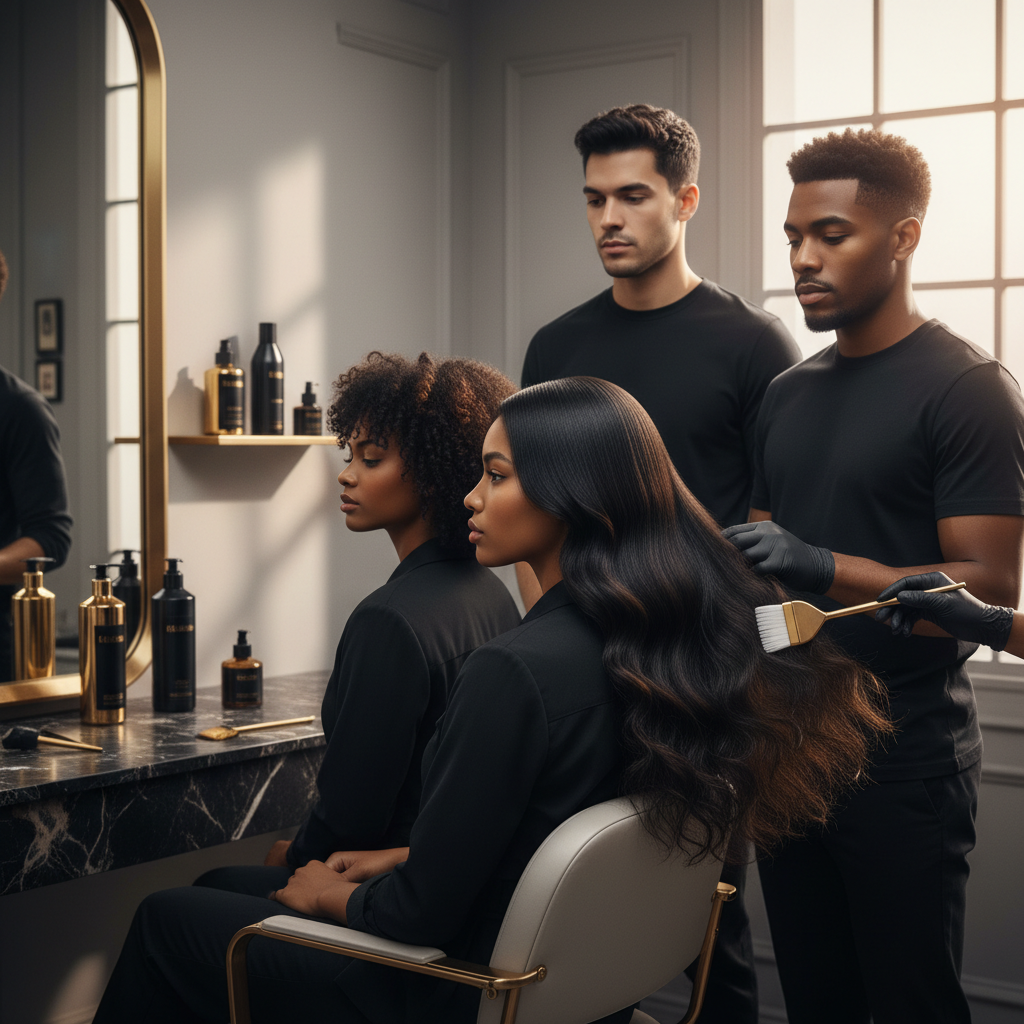
Quick answer: The relationship between chemical relaxers and hair health centres on an irreversible structural trade-off. Chemical relaxers straighten coiled fibre patterns by cleaving strong disulphide bonds within the hair cortex using high-pH alkaline chemicals. While this permanently alters curl geometry, it unavoidably weakens the tensile strength of the fibre, degrades protein integrity, and increases vulnerability to breakage and scalp irritation. Managing hair health requires strict chemical neutralisation, avoiding overlapping applications, and supporting the external lipid barrier with targeted conditioning treatments.
Key takeaways
- Chemical relaxers work by permanently converting cystine disulphide bonds into lanthionine bonds, permanently altering hair shape at the expense of tensile strength.
- The typical working pH of lye relaxers sits between 12 and 14, while "no-lye" formulas operate between 11.5 and 12.5. Both are aggressively alkaline.
- Overlapping relaxer onto previously treated hair is the primary technical cause of severe mechanical breakage and chemical haircutting.
- Hair breakage snaps along the fibre shaft and must not be confused with follicular hair loss or shedding from the root.
- Recent epidemiological research investigates potential links between endocrine-disrupting chemicals in relaxers and systemic health, prompting closer scrutiny from regulatory bodies.
Chemical Relaxers and Hair Health: what the evidence shows
When assessing chemical relaxers and hair health, dermatological and cosmetic science confirms that chemical straightening permanently diminishes the physical strength of the hair fibre.
Studies published in cosmetic dermatology journals show that relaxing hair reduces its tensile strength by roughly 30 to 50 percent compared to untreated virgin hair. Keratinised hair fibres rely on disulphide bonds for structural resilience. Relaxers break up to one-third of these cystine cross-links through an alkaline process called lanthionisation. Because the newly formed lanthionine bonds provide fewer structural anchor points, the cortex becomes more brittle and porous.
The high alkalinity also strips away 18-methyleicosanoic acid (18-MEA), the naturally occurring hydrophobic lipid layer coating the cuticle. Without this lipid layer, hair becomes hydrophilic, swelling easily when wet and losing moisture rapidly when dry. The result is heightened friction between strands, increased susceptibility to tangling, and elevated rates of mechanical breakage during combing.
At the scalp level, clinical observations routinely identify chemical burns, acute contact dermatitis, and transient follicular inflammation from alkaline exposure. If deep chemical burns occur and scar the underlying tissue, they can cause permanent cicatricial (scarring) alopecia, destroying the follicles entirely.
The biochemical mechanism: lye versus no-lye formulas
All traditional chemical relaxers rely on high pH to lift the tightly closed cuticle scales and penetrate the inner cortex.
Lye relaxers (sodium hydroxide)
Sodium hydroxide formulas feature a very high pH, typically between 12 and 14. They process rapidly and effectively break disulphide bonds. Because the sodium hydroxide molecule is small, it penetrates the cortex quickly. While highly efficient, it carries a high risk of chemical scalp burns if left in contact with skin for too long. Stylists often prefer it for coarse hair because it washes out cleanly without leaving mineral precipitates.
No-lye relaxers (calcium hydroxide and guanidine carbonate)
Often marketed as gentler alternatives, no-lye relaxers mix calcium hydroxide with guanidine carbonate to create guanidine hydroxide, operating at a pH of 11.5 to 12.5. Although guanidine hydroxide produces fewer acute scalp burns, research indicates it is not necessarily gentler on the hair fibre itself. It frequently deposits insoluble calcium salts (chalky mineral residue) on the cuticle. These deposits leave the hair feeling stiff, dry, and prone to breakage unless chelating shampoos are used.
| Attribute | Lye Relaxers (Sodium Hydroxide) | No-Lye Relaxers (Guanidine Hydroxide) |
|---|---|---|
| Operating pH | 12.0 to 14.0 | 11.5 to 12.5 |
| Active Chemical Agent | Sodium hydroxide | Guanidine hydroxide (formed via mixture) |
| Processing Speed | Very fast | Moderate to fast |
| Scalp Irritation Risk | Higher risk of acute chemical burns | Lower risk of acute chemical burns |
| Fibre Dryness Risk | Moderate | Higher (calcium salt deposits) |
| Removal Process | Rinses away cleanly | Requires chelating agents to clear residue |
What the evidence does not show
It is critical to separate verified cosmetic and dermatological effects from unsubstantiated claims.
First, chemical relaxers do not inherently stop hair growth from the follicle unless severe chemical trauma causes deep tissue scarring. The common complaint that hair stops growing after relaxing usually stems from severe shaft breakage. The hair emerges from the scalp at a normal rate (roughly 1 to 1.25 cm per month), but snaps off at the ends just as quickly, creating the illusion of stalled growth.
Second, cosmetic products cannot completely rebuild broken disulphide bonds once lanthionisation has taken place. Bond-building and deep conditioning treatments temporarily reinforce ionic and hydrogen bonds or patch porous cuticle gaps with hydrolysed proteins. They do not reverse the permanent conversion of cystine to lanthionine.
Third, while recent cohort studies (such as the US National Institute of Environmental Health Sciences Sister Study) have identified statistical associations between frequent relaxer use and reproductive conditions like uterine fibroids or hormone-sensitive cancers, causal mechanisms remain under active investigation. Regulatory bodies such as the US FDA and the UK Office for Product Safety and Standards continue to review phthalate and endocrine-disrupting exposures, but blanket causal conclusions across all formulations have not been definitively established.
Signs of relaxer damage to watch for
Monitoring the balance between chemical alteration and fibre integrity involves watching for distinct signs of distress:
- Tender scalp and chemical scabbing: Burning sensations during processing followed by flaking or raw patches indicate epidermal damage and breach of the scalp barrier.
- Mid-shaft snapping (trichorrhexis nodosa): Small white dots appearing along the strand where the cortex has collapsed and fragmented, snapping under gentle tension.
- Loss of elasticity: Wet hair snaps immediately when gently stretched rather than returning to its relaxed length.
- Severe demarcation breakage: Snapping precisely at the line where newly grown virgin hair meets previously relaxed hair.
- Excessive porosity: Hair absorbs water instantly, takes hours to dry, and feels rough or spongy when wet.
Maintaining hair health with chemically relaxed hair
If you choose to relax your hair, specific practices significantly minimise structural damage:
- Strictly limit application to new growth: Never pull relaxer through previously straightened lengths. Overlapping chemical treatments causes compound degradation of cortex proteins, guaranteeing breakage.
- Protect the scalp and hairline: Apply a petrolatum-based base cream across the entire scalp, hairline, and previously relaxed lengths before application to form an inert protective buffer.
- Time and neutralise precisely: Never leave relaxers on longer than the manufacturer states. Follow immediately with a low-pH neutralising shampoo (pH 4.5 to 5.5) using an acid-base colour indicator to bring the hair back to its physiological isoelectric point.
- Space appointments sensibly: Allow at least 8 to 12 weeks between touch-ups. Attempting to relax new growth shorter than 2 cm drastically raises the chance of accidentally overlapping the chemicals onto old hair.
- Integrate regular protein and moisture cycles: Alternate between light hydrolysed protein treatments (which temporarily fill structural cortex voids) and rich emollient conditioning to mimic the lost 18-MEA lipid layer. For curly and afro textures, the Frojus range provides exceptional moisture support without heavy mineral buildup.
When hair issues are caused by something else
Not all breakage or shedding in relaxed individuals stems from the relaxer chemical itself:
- Telogen effluvium: Sudden shedding from the root (characterised by white bulbs on fallen hairs) is triggered by physiological stressors, childbirth, high fevers, or rapid weight loss, not relaxers.
- Traction alopecia: Persistent pulling from tight braids, tight ponytails, or heavy weaves attached to relaxed hair places extreme physical tension on fragile follicles, leading to gradual thinning at the temples and hairline.
- Central centrifugal cicatricial alopecia (CCCA): A progressive scarring alopecia seen predominantly in women of African descent. While chemical relaxers were historically suspected as the sole cause, modern dermatological consensus views CCCA as multifactorial, involving genetic variants (such as PADI3 gene mutations), chronic inflammation, and physical styling stress.
When to seek professional advice
Consult a registered trichologist or a consultant dermatologist if you experience persistent scalp tenderness, pus-filled lesions, burning that lasts days after an appointment, or round bald patches showing smooth, shiny skin. These symptoms indicate chemical burns, infection, or scarring alopecia that require clinical intervention, such as topical corticosteroids or antimicrobial therapy, before permanent hair loss occurs.
Supporting relaxed hair with Watermans
Chemically altered hair benefits from clean, non-stripping scalp care to keep the growth environment healthy. Watermans products focus on supporting the condition of hair and scalp without aggressive detergents. The Watermans Grow Me shampoo provides a gentle, sulphate-free wash that cleanses without disturbing delicate scalp barriers, while Watermans Condition Me offers restorative conditioning agents, cholesterol, and natural oils that coat porous fibres, reduce combing friction, and help defend fragile relaxed strands against mechanical breakage.
Frequently asked questions about Chemical Relaxers and Hair Health
Do chemical relaxers cause permanent hair loss?
Relaxers do not directly cause permanent hair loss unless they cause deep chemical burns that scar the scalp and destroy underlying follicles (cicatricial alopecia). Most hair problems associated with relaxers involve hair breakage, where the damaged shaft snaps, leaving the follicle intact and capable of growing new hair.
How do chemical relaxers affect hair health over years of use?
Years of continuous chemical treatments compound cuticle erosion and permanent protein loss. When assessing long-term chemical relaxers and hair health, repeated processing makes the fibre increasingly porous and fragile. Without meticulous maintenance, protective styling, and avoidance of overlap, the older lengths inevitably succumb to cumulative mechanical fatigue and breakage.
Can you reverse the damage caused by a chemical relaxer?
No. The chemical conversion of disulphide bonds to lanthionine bonds is permanent and irreversible. While bond-building products, deep conditioners, and protein treatments can temporarily coat and reinforce the remaining fibre structure, the only way to eliminate relaxer damage entirely is to allow new hair to grow and trim away the treated ends.
Is a no-lye relaxer healthier for your hair than a lye relaxer?
A no-lye relaxer is gentler on the scalp because it causes fewer acute chemical burns, but it is not inherently healthier for the hair fibre. No-lye formulas still process at an alkaline pH of 11.5 to 12.5 and often leave behind drying calcium deposits that lead to brittle hair if not removed with chelating shampoos.
How long should you wait between relaxer touch-ups?
You should wait at least 8 to 12 weeks between touch-up treatments. This timeframe allows approximately 2 to 3 centimetres of new hair to emerge, giving your stylist a clear, workable margin of virgin hair to apply product to without accidentally overlapping chemicals onto previously relaxed sections.
Summary of Chemical Relaxers and Hair Health
Navigating chemical relaxers and hair health requires understanding the trade-off between straight styling and structural tensile strength. Alkaline straightening permanently modifies the inner keratin structure, leaves fibres more porous, and demands rigorous, gentle maintenance. By using adequate scalp protection, resisting the urge to overlap applications, maintaining 8 to 12 week touch-up intervals, and using targeted protein and moisture care, you can preserve fibre integrity and keep relaxed hair looking and feeling its best.
Sources and references
- American Academy of Dermatology (AAD). "African American Hair: Tips for Everyday Care."
- British Association of Dermatologists (BAD). "Central Centrifugal Cicatricial Alopecia."
- Journal of the American Academy of Dermatology (JAAD). "Hair cosmetics: An overview." 2015.
- International Journal of Cosmetic Science. "Structural and mechanical changes in human hair induced by chemical relaxing." 2008.
- National Institute of Environmental Health Sciences (NIEHS). "Sister Study: Hair Product Use and Reproductive Health Outcomes." 2022.