Chemical Damage in Hair: Biological Causes, Fibre Science, and Management
9 min read ·
Understand Chemical Damage in Hair: the science of bond breakage, surface lipid loss, how to prevent snapping, and what evidence-based haircare can realistically achieve.
Quick answer: Chemical Damage in Hair occurs when alkaline processing, oxidation, or reducing agents permanently alter the structural proteins and protective lipid barrier of the hair fibre. Bleaching, permanent colour, perming, and chemical relaxers strip the outermost 18-methyleicosanoic acid (18-MEA) layer and break internal disulphide bonds. While cosmetic treatments, bond builders, and deep conditioners can temporarily improve tensile strength, manageability, and surface smoothness, they cannot genuinely reverse the physical loss of internal keratin or rebuild native cuticle architecture.
Key takeaways
- Chemical damage alters the cuticle and cortex at a molecular level by breaking disulphide bonds and stripping surface lipids.
- Bleach and high-lift colours oxidise melanin but also degrade cystine, converting it to cysteic acid and leaving the hair porous.
- Alkaline relaxers and perms disrupt the keratin matrix by breaking and reforming structural bonds under high pH conditions.
- True chemical damage is permanent fibre degradation; it causes breakage along the shaft rather than follicular hair loss at the scalp.
- Targeted conditioning, pH-balancing care, and bond-building additives reduce breakage risk, but severed cuticles cannot regrow.
Chemical Damage in Hair: what the evidence shows
Scientific analysis of human hair shows that chemical processing fundamentally shifts both the physical and biochemical properties of the hair shaft. Healthy hair possesses a natural lipid layer composed predominantly of 18-methyleicosanoic acid (18-MEA), which covalently binds to the cuticle surface. This lipid envelope gives hair its natural hydrophobicity, causing water to bead off and preventing excessive moisture absorption.
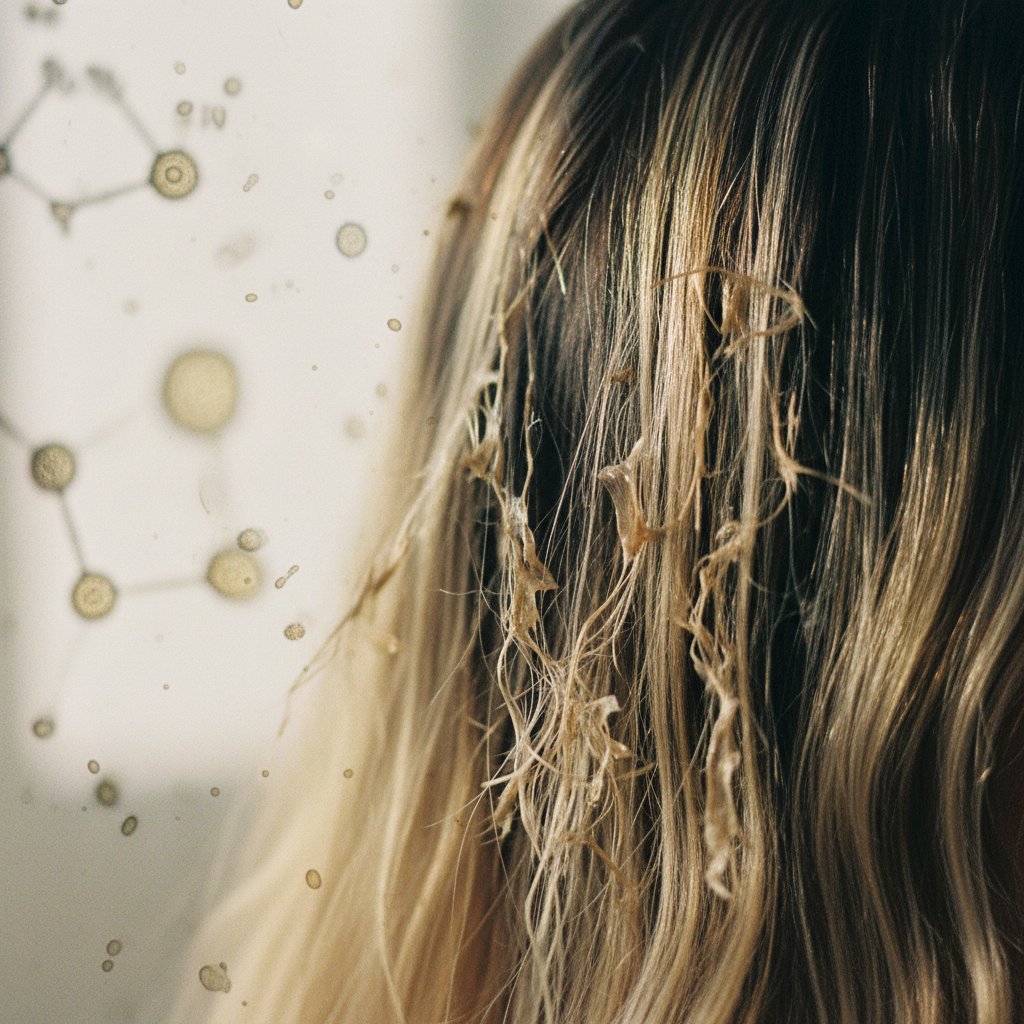
When hair undergoes alkaline chemical processing, such as bleaching, permanent dyeing, or chemical straightening, this protective lipid layer is rapidly degraded. Once 18-MEA is lost, the hair turns hydrophilic (water-loving). Hydrophilic hair swells excessively when wet, causing the cuticle scales to lift, chip, and break away.
Beneath the cuticle lies the cortex, which accounts for roughly 85 percent of the fibre's total mass and provides structural strength via keratin protein chains held together by disulphide bonds. Cosmetic chemists measure chemical damage primarily through cystine degradation. Bleaching agents (typically hydrogen peroxide combined with persulphate salts) oxidise cystine into cysteic acid. Research published in cosmetic science literature indicates that heavily bleached hair can lose over 40 percent of its native disulphide bonds, resulting in a dramatic drop in tensile strength, elasticity, and resistance to everyday grooming.
Intact Hair (Hydrophobic) --> Chemical Processing (pH 9.0 to 14.0)
 --> Removal of 18-MEA Layer
 --> Oxidation / Cleavage of Disulphide Bonds
 --> Formation of Cysteic Acid
 --> Damaged Hair (Hydrophilic, Porous, Brittle)
The mechanisms behind different chemical treatments
Not all chemical services degrade the hair fibre through the exact same pathway. Understanding the distinct biochemical reactions helps clarify why different treatments cause unique structural vulnerabilities.
Bleaching and high-lift oxidation
Bleach must penetrate the cuticle to oxidise melanin granules located within the cortex. To achieve this, formulations use an alkaline agent (such as ammonium hydroxide or monoethanolamine) to raise the pH to between 9.0 and 11.0. This swelling lifts the cuticle scales. Hydrogen peroxide then generates reactive oxygen species that oxidise both the colour pigments and the cystine cross-links in keratin. The end result is hollowed, porous hair that snaps easily when stretched.
Chemical relaxers and permanent straighteners
Lye relaxers (sodium hydroxide, running at a harsh pH of 12.0 to 14.0) and "no-lye" relaxers (calcium hydroxide mixed with guanidine carbonate, operating around pH 11.5 to 12.5) straighten Afro-textured hair by converting disulphide bonds into lanthionine bonds. This process, called lanthionisation, permanently alters the protein matrix. The fibre loses significant elasticity, making it vulnerable to catastrophic snapping if over-processed or subjected to repeated overlaps.
Permanent waving and curling
Perming relies on reducing agents, most commonly ammonium thioglycolate (running at pH 8.5 to 9.5). The lotion reduces roughly 20 to 30 percent of the cystine disulphide bonds to cysteine thiol groups. The hair is reshaped on curlers, and an oxidising neutraliser (usually dilute hydrogen peroxide) reforms the bonds in their new positions. Incomplete neutralisation leaves unbound thiols, leading to internal weakness, while over-neutralisation causes oxidative damage similar to bleaching.
Comparison of chemical treatments and their structural impact
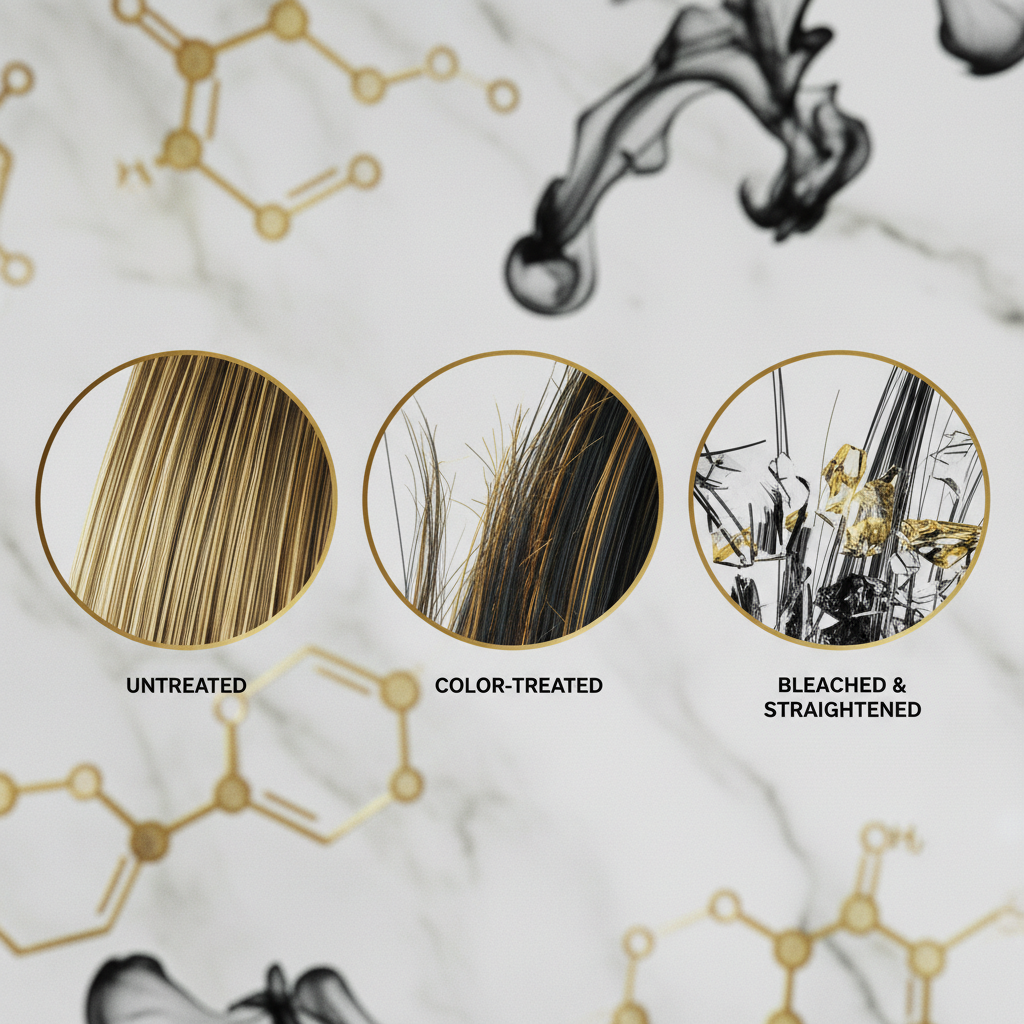
The table below outlines how common salon chemical processes affect the structural integrity of the hair shaft.
| Treatment Type | Operating pH Range | Primary Bond Affected | Impact on Surface Lipids | Tensile Strength Loss |
|---|---|---|---|---|
| Bleaching / Lightening | 9.0 to 11.0 | Disulphide (oxidised to cysteic acid) | Near-total loss of 18-MEA | High (up to 40% or more) |
| Permanent Hair Colour | 8.5 to 10.5 | Disulphide (mild to moderate oxidation) | Significant depletion | Moderate (10% to 25%) |
| Thio Perms / Straightening | 8.0 to 9.5 | Disulphide (cleaved and re-oxidised) | Moderate depletion | Moderate to High |
| Hydroxide Relaxers | 12.0 to 14.0 | Disulphide (converted to lanthionine) | Severe depletion | Very High (up to 50%) |
| Semi-Permanent Gloss | 6.0 to 8.0 | Minimal bond disruption | Low to negligible | Negligible (under 5%) |
Visible signs of chemically damaged hair
Recognising chemical trauma early allows you to adjust styling habits before fibres snap entirely. The most common signs include:
- Altered wet behaviour: The hair feels gummy, mushy, or spongy when wet, stretching excessively before snapping without snapping back.
- Extreme porosity: Strands absorb water immediately upon contact, take an unusually long time to dry, or absorb hair dye unevenly.
- Tricorrhexis nodosa: The formation of microscopic, paintbrush-like nodes along the hair shaft where the cortex has split apart internally.
- Cuticle loss and roughness: Running fingers upward along a single strand produces intense friction, catching, and tangling.
- Lack of shine and dullness: Light scatters irregularly across chipped, raised cuticle plates instead of reflecting smoothly.
What the evidence does not show: myths versus reality
Misinformation is common when discussing chemical treatments. It is critical to separate marketing claims from biological facts:
- Cosmetics cannot "repair" broken disulphide bonds back to original status. Bond-building formulations utilise bis-aminopropyl diglycol dimaleate, maleic acid, or similar cross-linking chemistries to form artificial bridges between broken protein fragments. While these agents improve tensile strength in lab tests, they do not recreate the native biological keratin structure.
- Chemical hair damage does not cause pattern baldness or genetic thinning. The living hair follicle resides approximately 4 millimetres beneath the skin surface. Chemical treatments applied to the hair shaft degrade the non-living fibre. Unless a harsh chemical causes an acute chemical burn on the scalp that results in scarring, it does not induce androgenetic alopecia or alter the follicular growth cycle.
- Natural oils do not rebuild hair protein. Plant oils like argan, jojoba, and coconut can lubricate the fibre surface and reduce friction. Some penetrating oils, like coconut oil, can limit water absorption and hygral fatigue. However, oils contain no protein and cannot replace lost cystine or rebuild broken cross-links.
What you can do to manage and support compromised hair
Once the hair fibre is chemically altered, your primary focus shifts to preservation, friction reduction, and cuticle reinforcement.
Optimise your wash routine
Use mildly acidic shampoos formulated between pH 4.5 and 5.5. Acidic formulas help keep remaining cuticle scales flat and prevent excessive swelling in water. Avoid clarifying shampoos with high surfactant loads, which strip remaining protective surface lipids.
Incorporate targeted conditioning agents
Look for ingredients that coat and protect the porous cortex:
- Hydrolysed proteins: Low-molecular-weight proteins (wheat, soy, silk, or keratin) can temporarily deposit within cuticle gaps to provide structural support.
- Quaternary ammonium compounds (quats): Ingredients such as behentrimonium chloride deposit positively charged molecules onto the negatively charged, damaged sites of the fibre, drastically cutting comb-through friction.
- Fatty alcohols and silicones: Cetyl alcohol, dimethicone, and amodimethicone provide hydrophobic slip, protecting fragile strands from mechanical stress during brushing.
Minimise mechanical and thermal stress
Chemically processed hair has a significantly lower thermal degradation threshold. Reduce heat styling tool temperatures (keep irons below 175 degrees Celsius) and always apply a heat protectant. Detangle strictly with wide-tooth combs or flexible-bristled brushes, starting from the tips and working upward toward the roots.
The role of Watermans haircare in your routine
While no topical cosmetic can reverse severe structural cortex loss, maintaining optimal scalp vitality and minimising unnecessary mechanical breakage is essential when growing out damaged lengths.
Watermans focuses on gentle, fortifying formulations designed to support the scalp environment while nurturing stressed hair. Products like Watermans Grow Me shampoo offer an enriching blend of biotin, rosemary, caffeine, and hydrolysed lupin protein that cleanses gently without stripping moisture. Pairing this with a moisturising, protein-rich conditioner helps provide the slip and surface conditioning needed to keep fragile, chemically processed fibres from breaking during daily washing and styling.
When breakage indicates a different underlying issue
It is essential to distinguish between chemical shaft breakage and actual follicular hair loss:
- Breakage along the shaft: Small pieces of hair snap off without a white bulb at the root. This is mechanical failure caused by chemical structural degradation, heat, or friction.
- Hair shedding (Telogen Effluvium): Full-length hairs fall out with a distinct white bulb (the keratinised root) attached at one end. This reflects a disturbance in the follicular cycle, typically triggered by physiological stress, illness, hormonal shifts, or nutritional deficiencies.
- Follicular inflammation or burns: If you experienced intense burning, blistering, or oozing during your chemical service followed by bald patches, consult a dermatologist or trichologist immediately. Severe chemical burns can cause scarring alopecia, which requires clinical intervention.
Frequently asked questions about Chemical Damage in Hair
Can Chemical Damage in Hair ever be reversed naturally?
No, Chemical Damage in Hair cannot be reversed naturally. Hair is non-living biological tissue once it exits the scalp follicle. The hair shaft lacks living cells and blood vessels, meaning it cannot regenerate lost keratin or rebuild destroyed 18-MEA lipid layers. While bond builders and protein masks temporarily patch structural weak points, cutting off the damaged sections is the only way to eliminate the damage entirely.
How do I know if my hair is breaking or shedding?
Examine the hairs that fall out on your brush or floor. If the strand is shorter than your overall hair length and lacks a white bulb at the end, it is breakage caused by physical or chemical damage. If the hair is full length with a distinct tiny white bulb at the root, it is normal or excessive shedding originating from the follicle.
How long does it take for chemically damaged hair to recover?
The damaged hair itself does not recover; instead, you must wait for healthy, untreated hair to grow in from the roots. On average, human scalp hair grows at a rate of approximately 1 to 1.25 centimetres per month (roughly 12 to 15 centimetres per year). Growing out damaged lengths typically takes anywhere from 12 to 36 months depending on your target hair length.
Can I colour my hair again if it already has chemical damage?
You should proceed with extreme caution. Applying permanent colour or lightener over previously bleached or relaxed hair causes severe cumulative cortex breakdown, often leading to sudden breakage. If you must adjust your colour, consult a professional colourist about using non-alkaline, deposit-only acidic glosses or demi-permanent shades that do not lift the cuticle.
Final thoughts on Chemical Damage in Hair
Navigating Chemical Damage in Hair requires a clear understanding of hair biology and honest expectations about cosmetic products. Alkaline lighteners, straighteners, and permanent colours irrevocably alter the physical chemistry of the hair shaft by depleting lipids and breaking cystine disulphide bonds. While you cannot truly regenerate dead keratin fibres, an evidence-based care strategy focused on low-friction styling, mild pH formulations, and deep conditioning will minimise breakage while your healthy virgin hair grows in.
Sources and references
- Robbins, C. R. (2012). Chemical and Physical Behavior of Human Hair. 5th ed. Springer Science & Business Media.
- Cruz, C. F., et al. (2016). "Human Hair Keratin after Chemical Treatments: Structural and Molecular Level Changes." Journal of Cosmetic Science, 67(4), 227-238.
- British Association of Dermatologists. "Hair Loss and Hair Breakage: Overview and Clinical Distinctions."
- Evans, T., & Wickett, R. R. (2012). Practical Modern Hair Science. Allured Business Media.
- Society of Cosmetic Scientists (SCS). "The Mechanism of Bleaching and Permanent Waving on Human Hair Keratin."