Central Centrifugal Cicatricial Alopecia Care
8 min read ·
Central Centrifugal Cicatricial Alopecia Care combines clinical anti-inflammatory treatments with low-tension styling to stop permanent scarring hair loss.
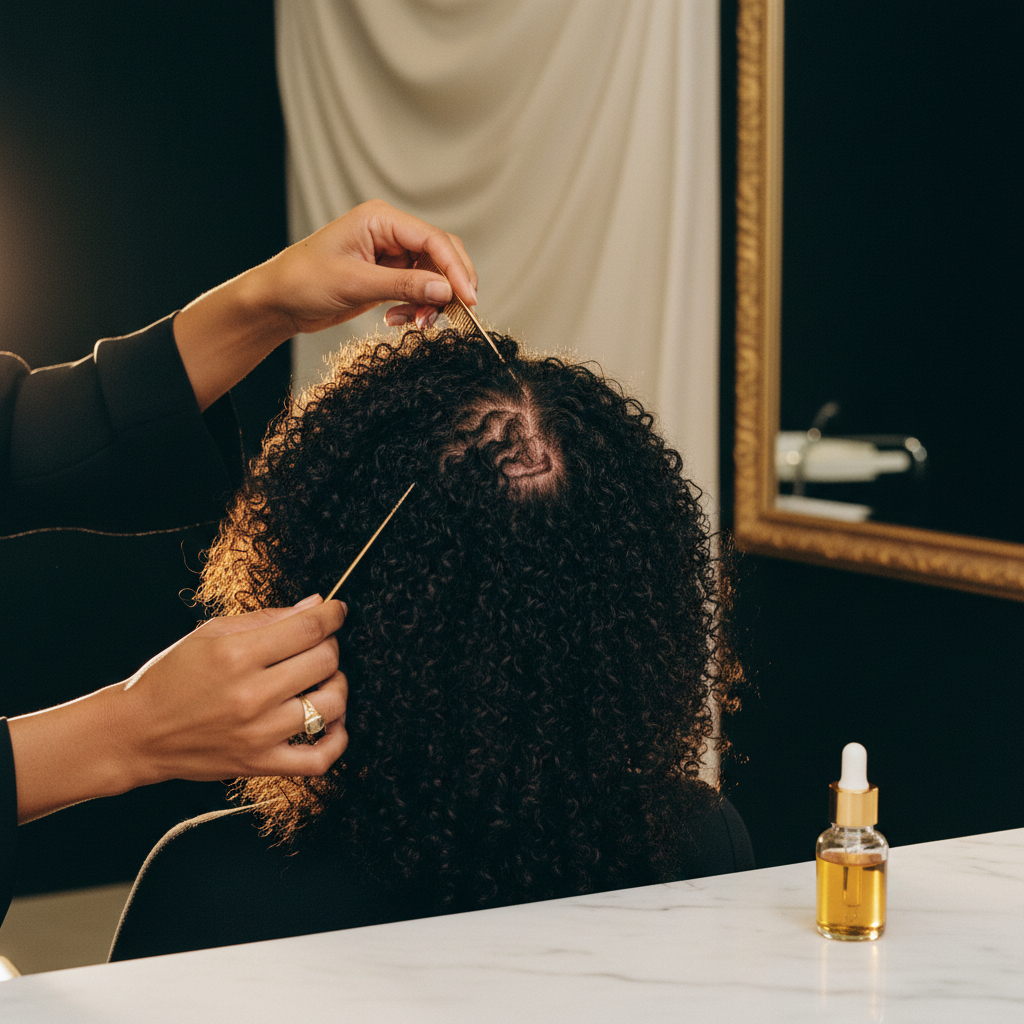
Quick answer: Effective Central Centrifugal Cicatricial Alopecia Care focuses on arresting permanent follicular scarring, controlling inflammation, and preserving remaining hair through early medical intervention and low-tension styling. Central centrifugal cicatricial alopecia (CCCA) is a progressive scarring alopecia that primarily affects women of African ancestry, spreading outward from the crown. Because destroyed follicles are replaced by fibrotic tissue, cosmetic care cannot regrow lost hair in scarred zones. Medical diagnosis by a dermatologist is essential alongside gentle, supportive haircare practices.
Key takeaways
- CCCA is a primary scarring (cicatricial) alopecia causing permanent hair follicle destruction and fibrosis starting at the vertex or crown.
- Early medical intervention with topical, intralesional, or oral anti-inflammatory therapies is critical to stop progression before scarring becomes irreversible.
- Haircare practices that reduce mechanical tension, chemical injury, and heat damage are foundational to supportive daily maintenance.
- Cosmetic products and supportive topicals cannot regenerate destroyed follicles, but they can soothe scalp irritation and protect remaining hair fibres from breakage.
- Scalp biopsy and dermoscopy (trichoscopy) are the clinical gold standards for confirming diagnosis and distinguishing CCCA from non-scarring hair loss.
Central Centrifugal Cicatricial Alopecia Care: what the evidence shows
Central Centrifugal Cicatricial Alopecia Care combines dermatological medical treatments with careful styling and scalp hygiene. CCCA was previously referred to as "hot comb alopecia" or "follicular degeneration syndrome", but contemporary dermatological research has clarified that it is a complex, multifactorial inflammatory disease. Research published in peer-reviewed dermatology literature, including the New England Journal of Medicine (2019), identified mutations in the PADI3 gene (which encodes peptidylarginine deiminase 3) in a significant subset of affected individuals. This finding proved that genetic vulnerability plays a major role in how hair shaft proteins are modified and how the follicle responds to internal stress.
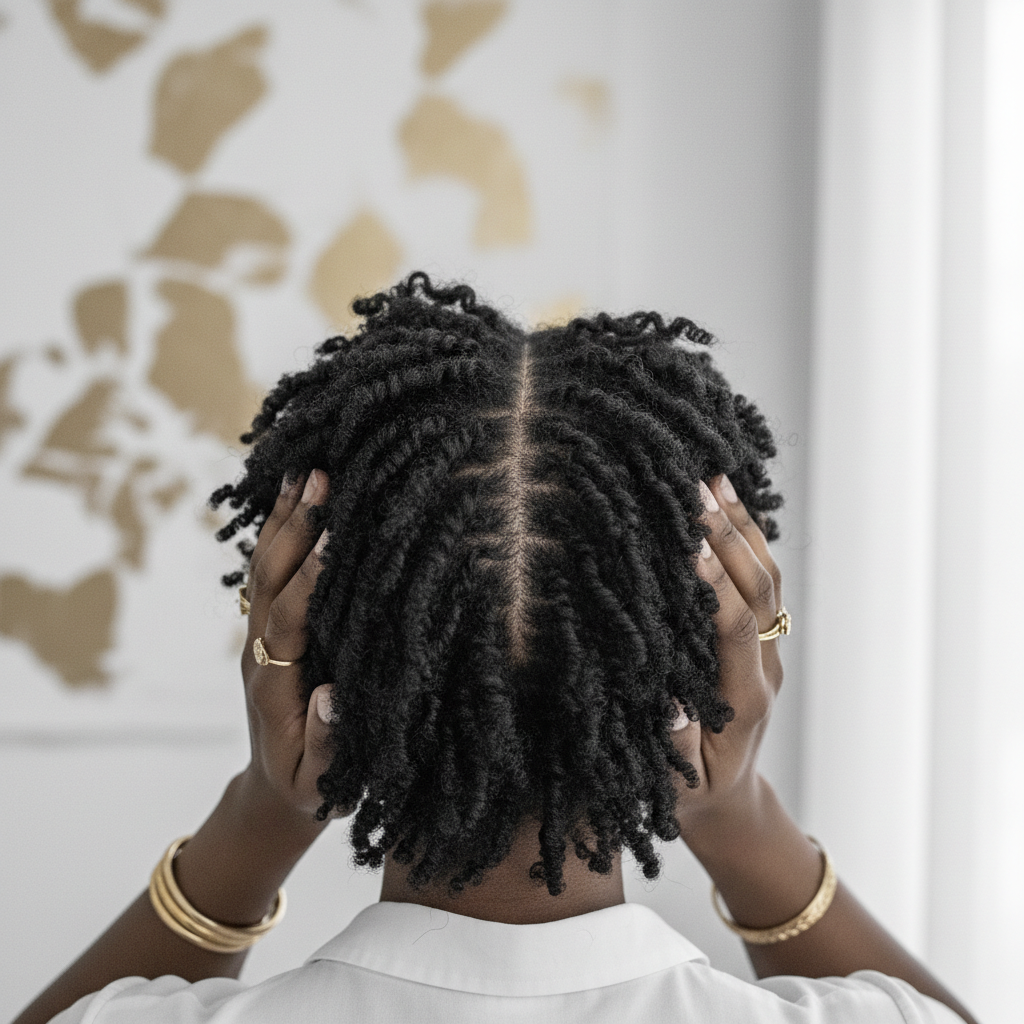
Because the underlying driver is inflammatory, peer-reviewed clinical guidelines prioritise halting active inflammation over aesthetic styling. Dermatologists typically employ high-potency topical corticosteroids (such as clobetasol propionate 0.05%), intralesional triamcinolone acetonide injections, and oral anti-inflammatory antibiotics such as doxycycline. In progressive cases, systemic immunomodulators like hydroxychloroquine or topical calcineurin inhibitors are used.
Supportive care at home focuses on maintaining a clean, balanced scalp environment (maintaining a slightly acidic scalp pH between 4.5 and 5.5) and minimising physical friction. Studies demonstrate that patients who combine medical treatment with low-manipulation styling experience significantly slower progression rates than those relying on styling changes or cosmetics alone.
What the evidence does not show
There is no scientific evidence that cosmetic oils, deep conditioners, herbal pastes, or natural butters can reverse or cure CCCA. While social media platforms frequently promote natural remedies as cures for crown thinning, a scarred hair follicle lacks the stem cell reservoir in the follicular bulge required to produce a new hair shaft. Once fibrosis occurs, that specific follicle cannot be revived by any cosmetic formula.
Furthermore, evidence does not show that hair-grooming practices are the sole cause of CCCA. While harsh relaxers, excessive heat, and tight traction styles accelerate follicular stress and inflammation, they act primarily as exacerbating triggers in genetically predisposed individuals rather than the solitary root cause. Eliminating chemical relaxers without seeking medical treatment will not halt the autoimmune and inflammatory cascades that drive the condition.
The biological mechanism of CCCA
The pathogenesis of CCCA centres on premature desquamation (shedding) of the inner root sheath, followed by a persistent lymphocytic inflammatory infiltrate around the upper portion of the hair follicle (the infundibulum and isthmus).
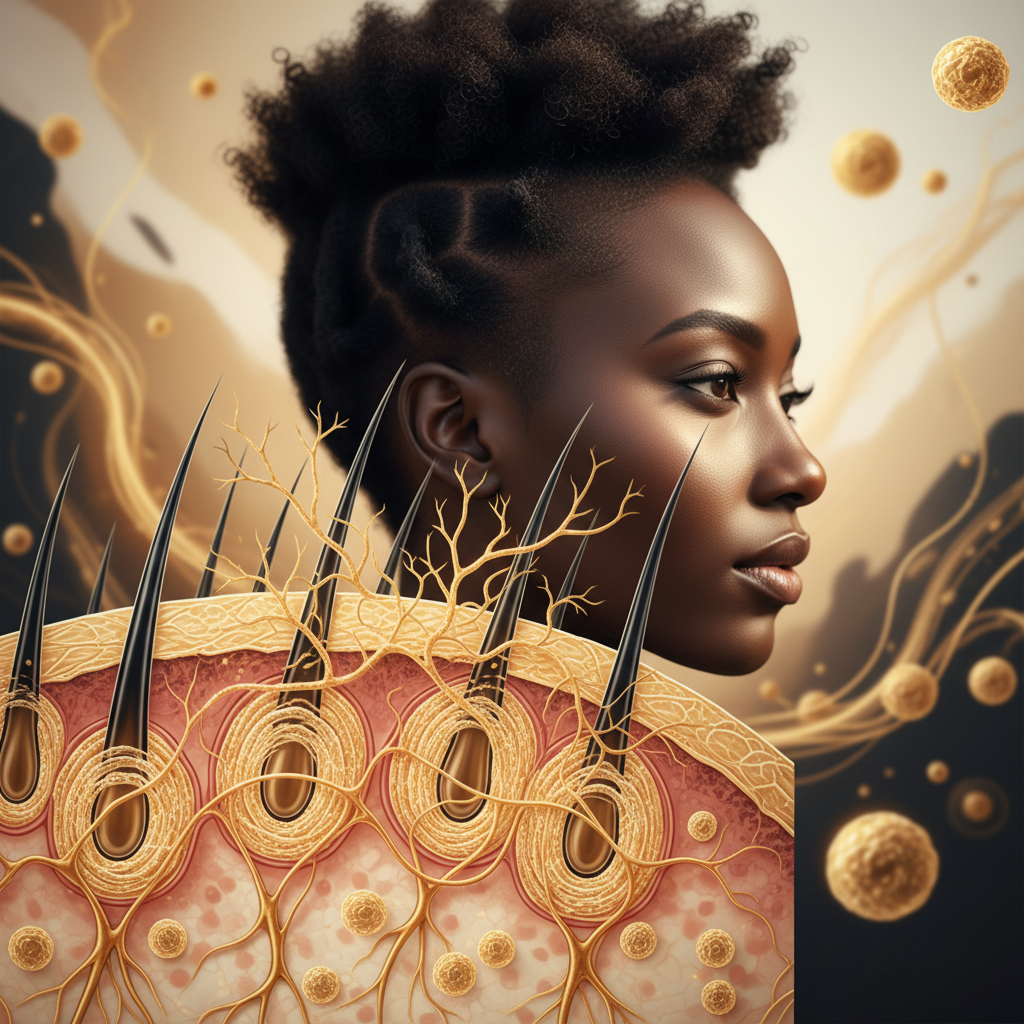
- Inner root sheath disintegration: The inner root sheath destabilises prematurely below the level of the sebaceous gland, leaving the hair shaft unsupported.
- Perifollicular inflammation: Lymphocytes and macrophages cluster around the follicular bulge. This region houses the multipotent epithelial stem cells responsible for follicular regeneration.
- Apoptosis and destruction: Inflammatory mediators trigger programmed cell death within the follicular epithelium.
- Fibroplasia (scarring): The ruined follicular structure is gradually replaced by dense collagenous fibrous tracts. The opening of the follicle (the ostium) disappears completely, leaving behind smooth, shiny scalp skin.
Because this process progresses outward in a centrifugal pattern from the crown, active disease is usually found at the expanding borders, while the centre represents "burnt-out" end-stage scarring.
Signs to look for
Recognising the early symptoms of CCCA is critical to saving follicles before fibrosis sets in. Clinical signs include:
- Sensory symptoms: Pruritus (itching), burning sensations, tenderness, or a feeling of "crawling" on the crown of the scalp.
- Loss of follicular ostia: Scalp areas where the tiny pores of the follicles are no longer visible, appearing glassy or shiny.
- Peripilar signs: Erythema (redness or violet discoloration on darker skin), peripilar white halos, or scale clinging to the base of hair shafts.
- Centrifugal expansion: A widening oval or circular patch of thinning on the vertex that slowly spreads outward over months or years.
- Hair breakage and variation: Short, brittle broken fibres mixed with thin, fragile hairs across the crown.
Differentiating CCCA from other hair conditions
Because crown thinning can result from several distinct mechanisms, establishing the correct diagnosis prevents inappropriate treatment.
| Feature | Central Centrifugal Cicatricial Alopecia | Traction Alopecia | Female Pattern Hair Loss (Androgenetic) | Telogen Effluvium |
|---|---|---|---|---|
| Follicle Status | Scarring (irreversible loss of ostia) | Non-scarring initially (can become scarring) | Non-scarring (follicles miniaturise) | Non-scarring (follicles intact) |
| Primary Location | Vertex / crown spreading outward | Hairline, temples, and perimeter | Crown and midline parting (retains hairline) | Diffuse shedding across entire scalp |
| Scalp Symptoms | Burning, itching, soreness common | Mild tenderness during styling | None to minimal | None |
| Key Mechanism | Lymphocytic inflammation and fibrosis | Mechanical tension on root sheath | Androgen sensitivity causing miniaturisation | Premature shift from anagen to telogen phase |
| Reversibility | Irreversible in scarred areas; arrestable | Fully reversible if caught before scarring | Manageable with minoxidil / anti-androgens | Fully reversible once trigger resolves |
Practical steps for supportive scalp and hair care
Managing CCCA requires a daily regimen that protects the vulnerable follicular zone while medical treatments do their work:
- Adopt protective, low-tension styling: Eliminate tight braids, heavy extensions, tight ponytails, and sew-in weaves that exert continuous traction on the scalp. Choose loose styles, silk wraps, or free-hanging cuts.
- Minimise thermal and chemical stress: Avoid direct scalp contact with chemical relaxers or texturisers. Keep flat irons and hot combs away from the roots, and always use thermal protectants on lengths.
- Cleanse frequently and gently: Wash the scalp every 7 to 10 days using a gentle, sulphate-free shampoo to remove sebum, sweat, and topical medication residue. A clean scalp discourages microbial overgrowth that can heighten inflammation.
- Moisturise the hair fibre: The natural curl pattern of afro-textured hair limits sebum distribution along the shaft. Hydrate the mid-lengths and ends with lightweight water-based leave-in conditioners and natural plant oils, keeping heavy occlusives off actively inflamed scalp patches.
- Handle wet hair with care: Afro-textured hair is most fragile when saturated. Detangle gently using a wide-tooth comb or fingers, starting at the tips and working upward toward the root.
Watermans supportive haircare
While medical therapies prescribed by a dermatologist target the inflammatory destruction within the follicle, cosmetic haircare plays a helpful secondary role in preserving hair fibre integrity and supporting scalp hygiene. Watermans products are formulated to foster a healthy, refreshed scalp environment and fortify vulnerable hair strands against mechanical breakage.
A clean, revitalised scalp base allows medical topicals to penetrate without obstruction from excess sebum, while topical botanical ingredients help condition brittle strands surrounding the affected crown area. Cosmetic shampoos and lotions do not treat or reverse scarring alopecia, but maintaining an optimal scalp environment and reducing mechanical fibre snap is a practical element of total hair wellness.
When to seek professional medical advice
If you notice persistent burning, itching, or tenderness on your crown, or if you spot a patch where hair appears thinner and scalp skin looks smooth, consult a board-certified dermatologist immediately. Ideally, seek a specialist experienced in skin of colour and cicatricial alopecias.
A dermatologist will perform dermoscopy to examine peripilar signs and may conduct a 4-millimetre punch biopsy taken from the active border of hair loss. Early biopsy provides definitive histological confirmation, allowing targeted anti-inflammatory therapy to begin before permanent hair loss spreads.
Frequently asked questions about Central Centrifugal Cicatricial Alopecia Care
Can hair regrow with Central Centrifugal Cicatricial Alopecia Care?
Hair cannot regrow in areas where the follicle has already been replaced by fibrous scar tissue. However, with appropriate Central Centrifugal Cicatricial Alopecia Care and early medical treatment, active inflammation can be stopped. This protects surrounding follicles that are not yet scarred, allowing partially damaged follicles to recover and preserving the remainder of your hair.
How often should I wash my hair if I have CCCA?
You should wash your hair every 7 to 10 days using a mild, hydrating shampoo. While traditional routines for afro-textured hair sometimes extend washing intervals to several weeks, frequent gentle cleansing is vital in CCCA to clear away cellular debris, bacteria, and topical medication buildup that can aggravate scalp inflammation.
Can I still wear protective styles with CCCA?
You can wear protective styles only if they are genuinely loose and exert zero tension on your scalp. Heavy braids, tight cornrows, and glued weaves pull on the follicles, triggering mechanical inflammation that accelerates CCCA progression. Choose soft twists, loose headwraps, or natural wash-and-go styles instead.
Is a scalp biopsy always required to diagnose CCCA?
While an experienced dermatologist can often suspect CCCA through clinical examination and dermoscopy, a 4-millimetre punch biopsy remains the gold standard for confirmation. A biopsy distinguishes CCCA from conditions like female pattern hair loss or lichen planopilaris, ensuring you receive the correct targeted medications.
Does diet affect CCCA progression?
There is no direct evidence that a specific diet causes or cures CCCA. However, eating a balanced diet rich in micronutrients, antioxidants, and anti-inflammatory foods supports overall skin barrier health and general wellness, complementing the primary dermatological treatment plan prescribed by your doctor.
Caring for your scalp with confidence
Navigating Central Centrifugal Cicatricial Alopecia Care requires patience, professional clinical guidance, and gentle daily habits. While learning that hair follicles have scarred can be distressing, prompt action halts further loss in the vast majority of individuals. By partnering with a knowledgeable dermatologist, stepping away from high-tension grooming practices, and maintaining a calm, clean scalp environment, you can protect your remaining hair and take control of your scalp health for years to come.
Sources and references
- Aguh, C., & McMichael, A. (2020). Central Centrifugal Cicatricial Alopecia: A Clinical Review. Journal of the American Academy of Dermatology, 83(2), 527-536.
- Malki, L., et al. (2019). Variant PADI3 in Central Centrifugal Cicatricial Alopecia. New England Journal of Medicine, 380(9), 833-841.
- British Association of Dermatologists. (2021). Cicatricial (Scarring) Alopecia Guidelines.
- American Academy of Dermatology. (2022). Central Centrifugal Cicatricial Alopecia: Diagnosis and Management.