The Real Causes of Trichorrhexis Nodosa and How to Prevent It
7 min read ·
Understand the primary causes of trichorrhexis nodosa, from mechanical trauma and chemical damage to rare metabolic conditions, and learn how to prevent it.
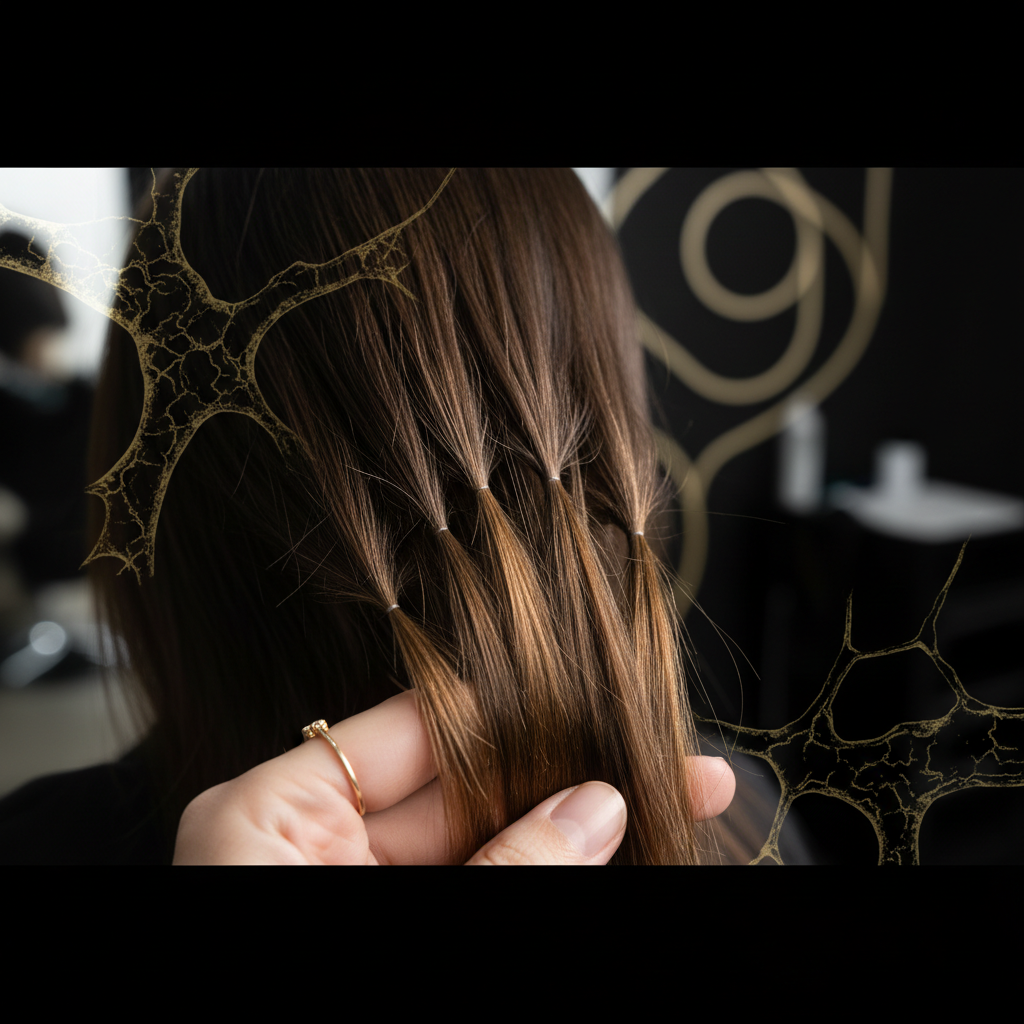
Quick answer: The primary causes of trichorrhexis nodosa involve structural disruption to the hair cuticle, exposing the inner cortex and causing fragile nodes that snap easily. Most commonly, acquired causes stem from physical friction, excessive thermal styling, and chemical treatments such as bleaching or relaxing. In rarer congenital cases, metabolic disorders or genetic syndromes weaken fibre assembly. While topical care can reduce surface friction and prevent further damage, it cannot mend existing microscopic fractures, which must be cut away.
Key takeaways
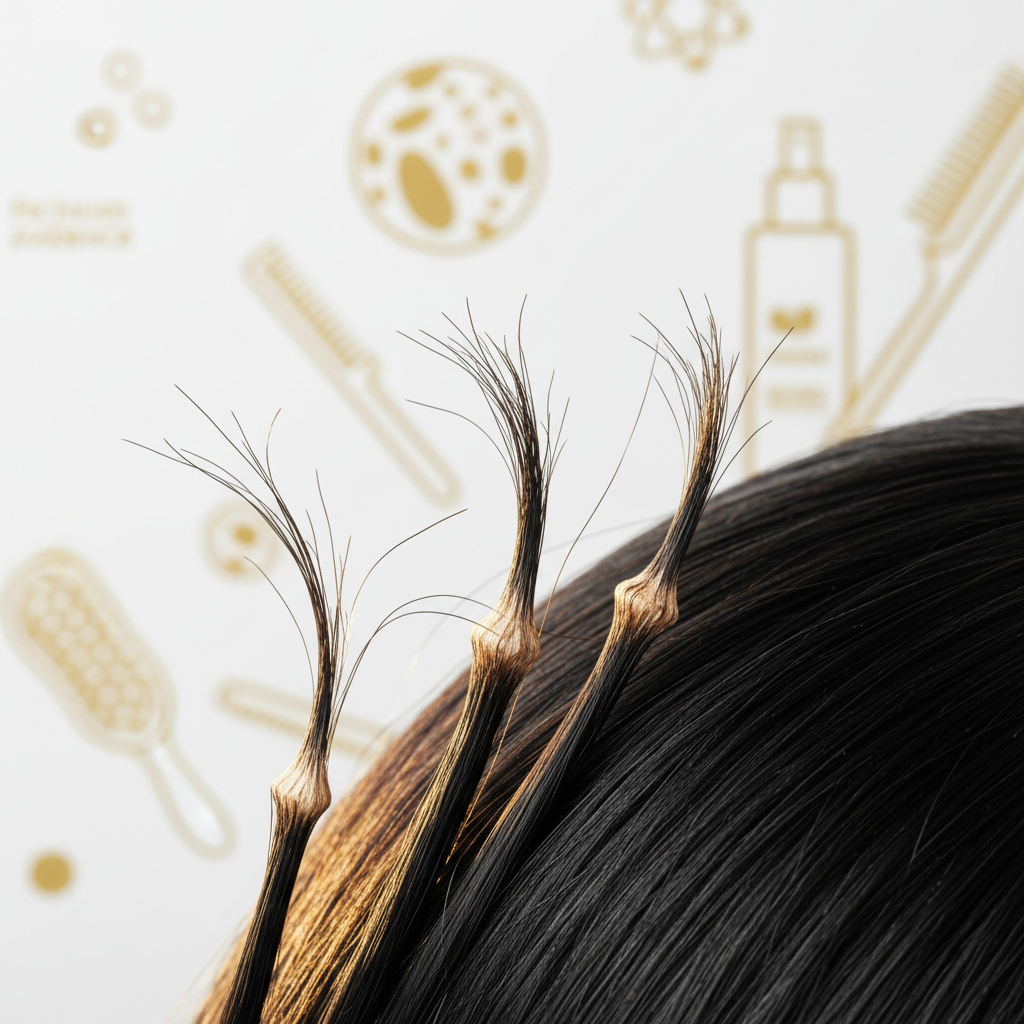
- Trichorrhexis nodosa is a distinct hair shaft defect characterised by microscopic swelling resembling two paintbrushes pressed together.
- Mechanical and chemical trauma account for the vast majority of acquired presentations seen in salons and clinics.
- Congenital or metabolic forms, though rare, can arise from conditions such as argininosuccinic aciduria, Menkes disease, or trichothiodystrophy.
- This condition represents physical hair breakage along the shaft rather than follicular hair loss or shedding.
- Once a node forms, the structural integrity of that fibre segment is permanently compromised and requires trimming.
Causes of Trichorrhexis Nodosa: what the evidence shows
The underlying causes of trichorrhexis nodosa fall into two distinct clinical categories: acquired and congenital. The acquired form is overwhelmingly more prevalent and is driven by external physical and chemical insults to the hair fibre.
External Cuticle Erosion (Heat / Chemicals / Friction)
 │
 ▼
 Loss of Protective 18-MEA Layer
 │
 ▼
 Cortical Swelling & Fraying
 │
 ▼
 Node Formation (Trichorrhexis Nodosa)
 │
 ▼
 Mid-Shaft Fibre Breakage
Physical and mechanical trauma
Vigorous mechanical habits represent the most frequent triggers for acquired trichorrhexis nodosa. Aggressive daily backcombing, rough towel drying, tight elastic hairbands, and dry brushing strip away the outermost protective layer of the cuticle. The cuticle consists of flat, overlapping cells cemented by lipids, predominantly 18-methyleicosanoic acid (18-MEA). When heavy friction abrades these protective shingles, the underlying cortex becomes vulnerable.
Habitual scratching of the scalp or unconscious twisting of hair strands (trichotillomania-related behaviours) can also cause localised clusters of nodes.
Chemical processing
Alkaline treatments disrupt the natural isoelectric point of hair, which sits around pH 3.67. Professional chemical processes lift the cuticle scales to alter internal bonds:
- Permanent hair dyes and bleaches: High-pH developers (often pH 9.0 to 10.5) swell the fibre, while hydrogen peroxide oxidises melanin and degrades structural cystine bonds within the cortex.
- Chemical relaxers: Sodium hydroxide, potassium hydroxide, or guanidine hydroxide operate at extreme pH levels (often pH 12 to 14). They break disulphide bonds, leaving the fibre porous and susceptible to transverse cortical splitting.
- Overlapping treatments: Applying lighteners or relaxers over previously processed sections multiplies the structural deficits, directly inciting node development.
Thermal damage
Exposing wet or damp hair to styling tools exceeding 180°C generates internal steam pressure. This creates microscopic vacuoles (bubble hair) and shatters cortical keratin filaments. Repeated use of straighteners, curling wands, and high-heat blow dryers strips essential moisture and lipid cohesion, predisposing the shaft to nodular swelling.
Congenital and metabolic disorders
Congenital causes of trichorrhexis nodosa typically present in early infancy or childhood. These rare presentations involve defective keratinisation or impaired amino acid metabolism:
- Argininosuccinic aciduria: An inherited urea cycle defect leading to an accumulation of argininosuccinic acid in the blood and urine. Arginine deficiency weakens keratin synthesis, producing fragile fibres that develop nodes under minimal friction.
- Trichothiodystrophy: A group of disorders characterised by low-sulphur hair fibres. The deficiency of cystine-rich matrix proteins leaves the cortex inherently unstable.
- Menkes disease: An X-linked recessive disorder of copper metabolism that affects lysyl oxidase, an enzyme essential for cross-linking collagen and keratin.
- Netherton syndrome: Primarily linked to trichorrhexis invaginata (bamboo hair), this condition can occasionally present with secondary nodes due to extreme cuticle fragility.
Acquired vs congenital presentations
| Feature | Acquired Trichorrhexis Nodosa | Congenital / Metabolic Forms |
|---|---|---|
| Typical Onset | Adolescence to adulthood | Infancy to early childhood |
| Primary Trigger | Chemical, thermal, or physical trauma | Genetic mutation or enzyme deficiency |
| Associated Symptoms | Confined strictly to hair fibres | Systemic signs (skin scaling, neurodevelopmental delays, failure to thrive) |
| Microscopic Findings | Brush-like nodes on processed hair | Brush-like nodes alongside low-sulphur patterns or structural twists |
| Prognosis | Reversible with gentle haircare and trimming | Chronic; requires medical and nutritional management |
What the evidence does not show
There is no clinical evidence to suggest that everyday atmospheric conditions, standard tap water hardness, or ordinary, unmanipulated environmental factors alone cause trichorrhexis nodosa. While hard water deposits minerals on the fibre surface, it does not mechanically split the cortex into brush-like fractures without severe mechanical or chemical co-factors.
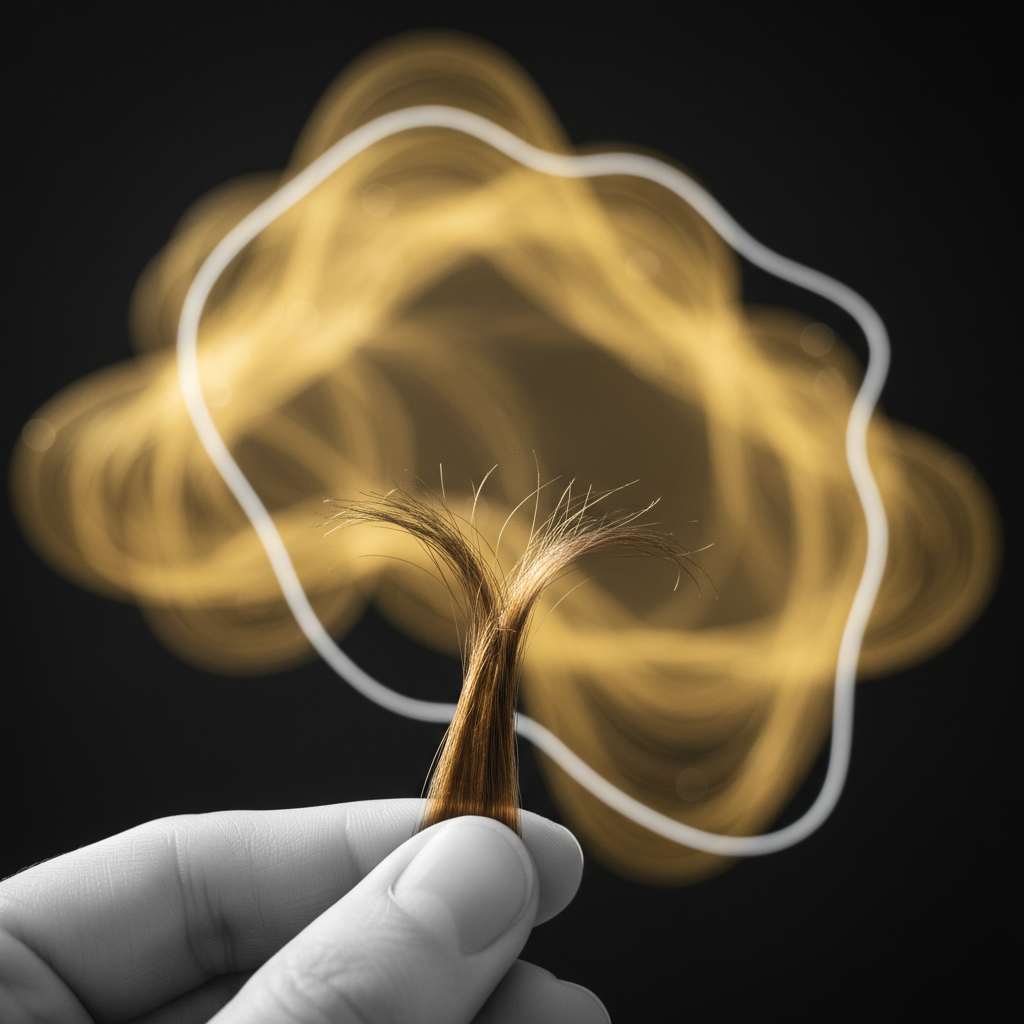
Crucially, trichorrhexis nodosa is not follicular hair loss. The hair follicle in an acquired case remains healthy and actively produces new fibres. The issue is purely structural breakage along the exposed shaft. Blaming typical hormonal factors like dihydrotestosterone (DHT) for node formation misdiagnoses a shaft fracture as androgenetic alopecia.
Identifying the signs: what to look for
Under naked-eye observation, trichorrhexis nodosa often mimics small white flecks, leading people to mistake it for head lice nits, dandruff flakes, or product buildup. However, these white specks are integral to the hair shaft and cannot be slid off like a nit.
When viewed under light microscopy or a trichoscope:
- The node appears as two paintbrushes jammed head-to-head.
- The cuticle is completely absent at the focal point of the fracture.
- Cortical fibres are splayed outwards transversely.
- Hair snaps cleanly at the node site, leaving a brush-like distal tip.
Clients typically notice uneven lengths, thin ends that never seem to gain length, and a distinct lack of elasticity where strands snap under low tension.
Managing the condition and preventing damage
Because a formed node is an irreversible structural break, the only definitive solution for affected lengths is to trim them above the fracture point. Once the damaged segments are removed, management focuses on reducing mechanical and chemical friction on new growth.
- Re-evaluate styling routines: Lower heat tools below 150°C and eliminate daily heat styling entirely while the hair recovers.
- Adjust chemical exposure: Avoid overlapping bleach or chemical relaxers on previously processed hair.
- Minimise friction: Sleep on smooth pillowcases, detangle gently starting from the ends using a wide-toothed comb, and avoid vigorous towel rubbing.
- Incorporate conditioning agents: Use deep conditioners formulated with cetyl alcohol, behentrimonium methosulphate, and hydrolysed proteins. These ingredients coat the fibre, lubricate the remaining cuticle scales, and reduce the comb force required during detangling.
Supporting hair resilience with Watermans
When managing hair prone to physical breakage, protecting new growth as it emerges from the follicle is essential. Watermans Grow Me Shampoo and Condition Me Conditioner provide a gentle, sulphate-free cleansing and conditioning routine that respects fragile fibres. Formulated with hydrolysed lupin protein, biotin, and rosemary extract, this routine helps moisturise the scalp and soften hair lengths, reducing surface friction and comb resistance to help protect vulnerable strands from excessive styling damage.
When to seek professional advice
If white nodes appear on the hair of infants or young children without an obvious history of heat or chemical styling, seek assessment from a dermatologist or paediatrician immediately. Congenital hair shaft disorders can be the first identifiable sign of an underlying metabolic or genetic issue.
For adults, consult a trichologist or dermatologist if breakage continues despite stopping all heat and chemical processes, or if you notice patchy hair loss accompanied by scalp inflammation, pain, or shedding at the root.
Frequently asked questions about Causes of Trichorrhexis Nodosa
Can nutrient deficiencies trigger the causes of trichorrhexis nodosa?
Severe nutritional deficits, particularly protein-energy malnutrition and iron deficiency, can compromise initial fibre formation, making hair structurally weaker. In rare instances, systemic deficiencies in zinc or copper affect enzyme function and keratinisation, lowering the threshold of physical trauma required to induce node fractures.
Is trichorrhexis nodosa permanent?
No, the acquired form is not permanent. Although existing nodes cannot be repaired and must be trimmed off, the hair follicle beneath the scalp is unharmed. Once external mechanical and chemical causes are stopped, new hair emerges with intact cuticles.
How does trichorrhexis nodosa differ from trichorrhexis invaginata?
Trichorrhexis nodosa features fibres swelling and fraying outward like interlocked paintbrushes. In contrast, trichorrhexis invaginata (bamboo hair) involves the softer proximal hair shaft telescoping inward into the harder distal shaft, creating a ball-and-socket defect commonly seen in Netherton syndrome.
Does washing hair too often cause nodes to form?
Frequent washing does not directly fracture the hair cortex, but repeated wet-to-dry cycles (hygral fatigue) and rough friction during washing can accelerate cuticle wear. Wet hair swells and weakens, making it vulnerable to fracturing if brushed or dried roughly with a cotton towel.
Protecting hair fibre integrity
Recognising the causes of trichorrhexis nodosa is the first step toward restoring hair strength. By addressing aggressive styling practices, avoiding harsh overlapping chemicals, and adopting a protective care regimen, you can prevent structural nodes and allow your hair to grow to its full potential without snapping.
Sources and references
- British Association of Dermatologists. Hair Shaft Disorders Clinical Guidelines, 2021.
- Dawber, R. (1996). Hair and Scalp Disorders: Common Presenting Signs, Differential Diagnosis and Management. Dermatologic Clinics, 14(4), 703-712.
- National Center for Biotechnology Information (NCBI). Trichorrhexis Nodosa. StatPearls Publishing, 2023.
- Sinclair, R. D., & Banfield, C. C. (1999). Handbook of Diseases of the Hair and Scalp. Blackwell Science.
Find these ingredients in Watermans products
- Zinc: you will find this ingredient in our Hair Vitamins.