Hair Porosity and Breakage: Scientific Mechanisms and Protective Care
10 min read ·
Understand the connection between Hair Porosity and Breakage, explore cuticle anatomy, and discover practical techniques to strengthen fragile strands.
Quick answer: Hair Porosity and Breakage are fundamentally linked because porosity measures how easily your hair fibre absorbs and loses moisture through its outer cuticle layer. When hair develops high porosity through chemical processing, thermal styling, or mechanical friction, the cuticle scales lift, chip, or erode completely. This structural compromise leaves the inner cortex exposed and brittle, vastly increasing the risk of mechanical snapping. While balancing porosity helps reinforce fibre integrity, it cannot permanently rebuild destroyed cuticle layers.
Key takeaways
- Hair porosity describes your hair fibre's capacity to absorb and retain water, which is determined by the condition of the overlapping cuticle scales.
- High porosity hair is significantly more vulnerable to mechanical breakage because stripped or lifted cuticles leave the structural cortex unprotected.
- Low porosity hair resists water absorption, but excessive product accumulation and lack of internal plasticisation can make it stiff and prone to snapping.
- True breakage occurs when the hair shaft fractures along its length, which is entirely distinct from shedding at the root.
- Cuticle damage cannot be biologically healed, but targeted conditioning agents, lipids, and acidic pH rinses can temporarily patch defects and reduce friction.
Hair Porosity and Breakage: what the evidence shows
Scientific research on cosmetic trichology demonstrates that Hair Porosity and Breakage share a direct causal link driven by cuticle degradation. The human hair fibre consists of an outer protective shield (the cuticle), a load-bearing protein core (the cortex), and, in thicker hairs, a central canal (the medulla). The cuticle comprises 5 to 10 overlapping layers of keratinised cells, sealed together by the cell membrane complex (CMC) and coated with a thin lipid layer containing 18-methyleicosanoic acid (18-MEA).
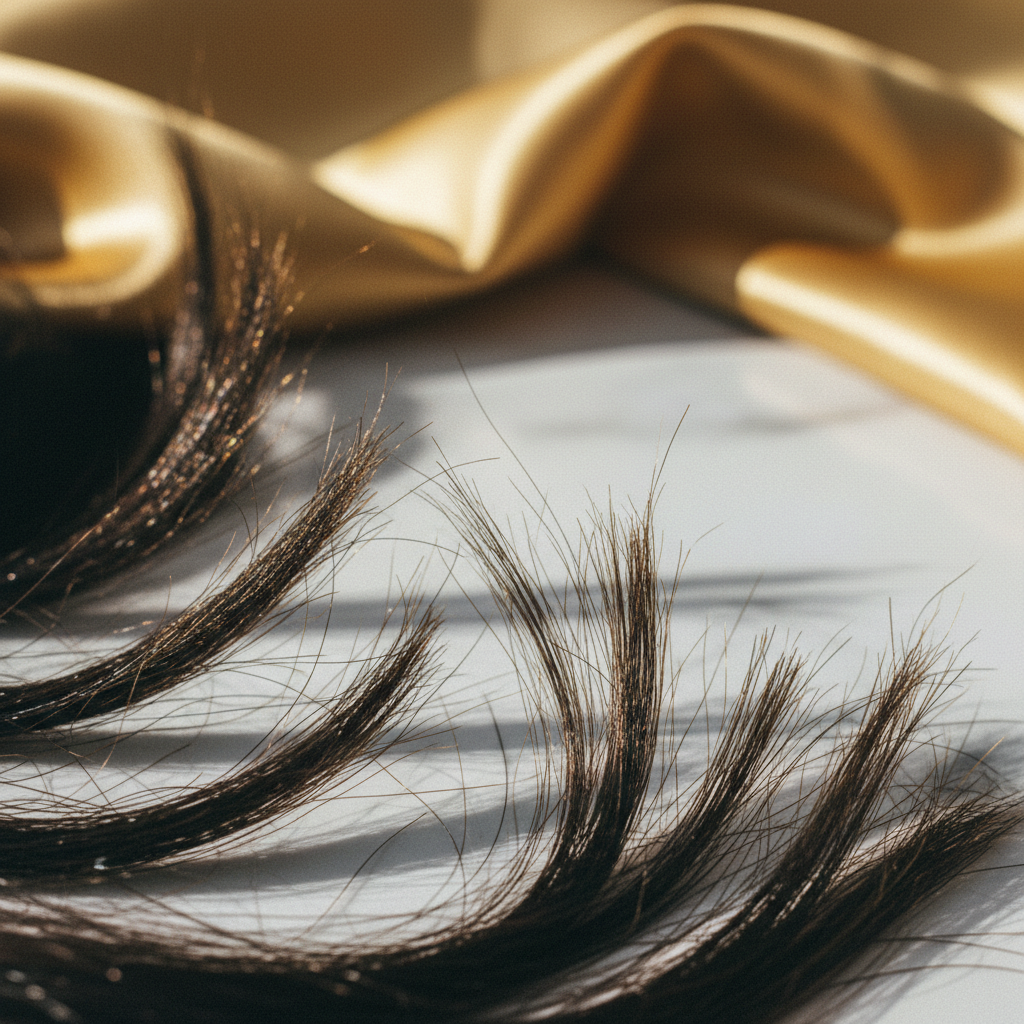
When hair has low porosity, these cuticle scales lie flat and tight. The hydrophobic 18-MEA layer repels water, slowing down moisture absorption but preserving the core proteins.
In contrast, high porosity hair exhibits raised, missing, or fragmented cuticle tiles. When external stressors strip the protective lipid layer, water enters the cortex rapidly. This causes the fibre to swell when wet and shrink as it dries, a continuous cycle known as hygral fatigue. Repeated swelling weakens the structural hydrogen and disulphide bonds within the cortical keratin. Consequently, high porosity strands demonstrate dramatically lower tensile strength under mechanical tension, leading directly to premature breakage during detangling, brushing, or everyday handling.
Low Porosity: [========= Flat Cuticle Scales =========] -> High Tensile Strength
High Porosity: [/ / / / Raised / Missing Cuticles / / /] -> Cortex Exposed -> Fibre Fractures
Porosity states compared
Understanding where your hair falls on the porosity spectrum reveals its structural strengths and fracture risks.
| Characteristic | Low Porosity | Medium Porosity | High Porosity |
|---|---|---|---|
| Cuticle Condition | Tightly bound, flat, intact 18-MEA layer | Slightly raised, uniform, healthy lipid barrier | Lifted, chipped, or completely eroded |
| Water Absorption | Very slow; water beads on the surface | Moderate, absorbs and retains evenly | Rapid uptake, rapid evaporation |
| Primary Breakage Trigger | Brittleness from protein overload or dryness | Normal grooming friction | Hygral fatigue, tangling, combing friction |
| Fibre Elasticity | High, but can become stiff | Balanced stretch and recovery | Low elasticity; snaps quickly when stretched |
| Best Regimen Approach | Light humectants, mild heat during conditioning | Balanced moisture and maintenance | Cationic conditioning, hydrolysed proteins, emollients |
What the evidence does not show
Controlled cosmetic trials do not support the idea that hair porosity can be permanently altered or "cured." Once the chemical bonds of the cuticle are broken or the 18-MEA layer is stripped by alkaline bleaching agents, the living follicle cannot regenerate the damaged dead fibre hanging outside your scalp.
Furthermore, evidence does not show that the popular "float test" (dropping a strand of hair into a glass of water to observe whether it sinks) is a reliable indicator of porosity. Surface tension, residual hair oils, and styling product residues routinely cause high porosity hair to float, producing false results. Accurate porosity assessment in laboratory settings relies on gas sorption, liquid uptake rates, or scanning electron microscopy (SEM).
Finally, studies do not show that low porosity hair is inherently immune to breakage. While low porosity strands retain their structural cortex intact, applying heavy, film-forming products without adequate cleansing leads to build-up. This prevents internal hydration, leaving the fibre inflexible and prone to sudden structural fracture under mechanical stress.
The mechanical mechanism of porosity-induced breakage
Hair breakage occurs when mechanical stress exceeds the tensile strength of the hair fibre. The cortex provides roughly 85% of hair's tensile strength, but the cuticle provides the protective casing that prevents external friction from chewing into those inner fibres.

When chemical treatments such as permanent hair colour, relaxers, or bleaching lift the cuticle at an alkaline pH (often between pH 9.0 and 11.0), the cell membrane complex is degraded. When the cuticle is damaged, inter-fibre friction skyrockets. As you comb or brush, individual strands catch on neighbouring lifted cuticles instead of gliding past one another.
This elevated friction creates focal points of stress along the hair shaft. Micro-cracks develop in the cuticle sheath, propagating inward into the cortex. Eventually, the strand fractures, leading to trichorrhexis nodosa (node-like swellings where the cortex splits) or longitudinal fraying, commonly recognized as split ends.
Recognizing the signs: breakage versus shedding
It is critical to distinguish between natural hair shedding and mechanical breakage. Conflating the two leads to incorrect treatments and unnecessary anxiety.
- Shedding: A physiological process where a hair fibre naturally exits the follicle at the end of the telogen phase. A shed hair typically measures your full strand length and features a tiny, white keratinised bulb at one end. Normal shedding ranges from 50 to 100 hairs per day.
- Breakage: A mechanical structural failure where the hair snaps along the shaft. Broken hairs are shorter than your full strand length, lack a white root bulb, and frequently display jagged, frayed, or white fractured ends.
If you notice short pieces of hair on your shoulders, bathroom sink, or pillowcase after styling, your hair is breaking. If hairs that fall out consistently feature a root bulb, you are experiencing shedding, which requires an evaluation of follicular health rather than hair shaft condition.
Practical steps to reduce porosity-related breakage
You cannot regrow damaged hair cuticle, but you can alter the physical and chemical environment around the fibre to prevent snapping.
1. Optimize formulation pH
Hair fibre has an isoelectric point around pH 3.67, while the overall cuticle surface remains most stable and closed in a mildly acidic environment (pH 4.5 to 5.5). Using acidic cleansers and conditioning rinses lowers cuticle swelling, flattening the scales and reducing inter-fibre friction.
2. Introduce hydrolysed proteins and biomimetic lipids
High porosity hair benefits from hydrolysed keratin, wheat, or silk proteins. These short-chain peptides possess low molecular weights that allow them to temporarily lodge in the gaps of a damaged cuticle, temporarily reinforcing tensile strength. Follow protein applications with emollients to coat the strand and recreate the lost hydrophobic barrier.
3. Minimize wet manipulation
Hair is at its most fragile when wet because water molecules disrupt temporary hydrogen bonds within the cortex, reducing tensile strength by up to one-third. High porosity hair absorbs excess water, making it especially susceptible. Detangle hair gently using wide-tooth combs or specialized flexible brushes only after applying a slippery conditioning agent.
4. Moderate heat styling
Direct heat tools operating above 180 degrees Celsius degrade keratin proteins and boil internal moisture within high-porosity fibres, causing irreversible bubble hair deformity. Keep thermal tools on lower settings and always apply a heat protectant containing heat-stable silicones or conditioning polymers.
Supporting hair condition with Watermans
When managing hair fibre integrity, keeping both the emerging strand and the scalp environment balanced is vital. Watermans approaches hair condition through targeted cosmetic care designed to support healthy-feeling, resilient hair. Products like Watermans GrowMe Shampoo provide an invigorating scalp cleanse alongside nourishing ingredients, while ConditionMe Conditioner utilizes hydrolysed lupin protein and natural oils to coat the hair shaft, smoothing lifted cuticles, reducing combing friction, and improving overall softness. While no topical cosmetic can reverse structural damage, incorporating a conditioning formula with film-forming agents provides the slip needed to defend against mechanical snapping.
When breakage indicates another issue
Not all breakage stems from high porosity or grooming habits. Underlying systemic or environmental factors can alter the hair fibre before it even leaves the scalp.
Severe nutritional deficiencies, particularly low levels of ferritin (iron storage), vitamin D, or zinc, can alter the keratinisation process within the follicle, producing structurally weaker fibres. Thyroid imbalances (both hypothyroidism and hyperthyroidism) alter the dry, brittle nature of hair strands, rendering them brittle even in the absence of chemical processing.
Furthermore, genetic shaft disorders such as trichorrhexis invaginata (bamboo hair) or monilethrix cause congenital fragility along the shaft that mimics severe environmental breakage.
When to seek professional advice
Consult a qualified trichologist or dermatologist if you observe:
- Sudden, diffuse thinning across the scalp accompanied by short, broken hairs.
- Extensive breakage occurring close to the scalp surface without a history of chemical or severe heat damage.
- Scalp symptoms such as persistent redness, itching, burning, scaling, or pain.
- Patchy hair loss or signs of scarring around the follicles.
Frequently asked questions about Hair Porosity and Breakage
How does hair porosity cause breakage during daily styling?
Hair Porosity and Breakage intersect during styling because high porosity hair has lifted, missing cuticle scales that create significant surface friction. When you brush or detangle, the strands snag against each other rather than sliding freely. This friction focuses mechanical strain on weak points along the shaft, causing the exposed cortex to fracture and snap prematurely.
Can low porosity hair break easily?
Yes. Although low porosity hair has a tightly closed cuticle that protects the cortex, it can become brittle if products accumulate on the surface. When low porosity strands cannot absorb sufficient water to remain pliable, or when they are subjected to excessive protein treatments without balancing moisture, the fibre stiffens and fractures under mechanical stress.
Can coconut oil help high porosity hair prone to breakage?
Coconut oil has a unique triglyceride structure with a low molecular weight and linear chain, allowing it to penetrate the hair cortex. Evidence demonstrates that applying coconut oil as a pre-wash treatment can reduce protein loss in both undamaged and chemically treated high porosity hair, helping prevent hygral fatigue and subsequent breakage.
Does cutting off damaged ends stop breakage from travelling?
Yes. Trimming split ends removes longitudinal fractures before they travel up the hair shaft. Because a split end represents an exposed, unravelled cortex, leaving it unaddressed allows the damage to extend higher, eventually breaking off large sections of the hair strand.
How often should you use protein treatments on high porosity hair?
Most high porosity hair benefits from hydrolysed protein applications every 2 to 4 weeks, depending on the severity of damage. Overusing protein without adequate conditioning softens can leave hair stiff and brittle, so it is essential to balance protein treatments with hydrating, emollient-rich formulas.
Addressing hair porosity and breakage for healthier hair
Understanding the mechanical relationship between Hair Porosity and Breakage shifts haircare from guesswork into structural maintenance. By respecting the delicate nature of the hair cuticle, using pH-balanced formulations, replenishing lost lipids, and reducing rough physical manipulation, you can protect the integrity of the hair cortex. While existing cuticle loss cannot be permanently rebuilt, tailored cosmetic practices shield the fibre, reduce snapping, and help your hair reach its full visual length.
Sources and references
- Robbins, C. R. (2012). Chemical and Physical Behavior of Human Hair (5th ed.). Springer-Verlag.
- Dawber, R. (1996). Hair: Its structure and response to cosmetic preparations. Clinics in Dermatology, 14(1), 105-112.
- Ruetsch, S. B., Yang, B. Q., & Kamath, Y. K. (2001). Cuticle damage and its effect on hair properties. Journal of Cosmetic Science, 52(3), 169-184.
- Gavazzoni Dias, M. F. (2015). Hair cosmetics: An overview. International Journal of Trichology, 7(1), 2-15.
- Evans, A., & Wickett, R. R. (2012). Practical Modern Hair Science. Allured Business Media.
- Rele, A. S., & Mohile, R. B. (2003). Effect of mineral oil, sunflower oil, and coconut oil on prevention of hair damage. Journal of Cosmetic Science, 54(2), 175-192.
Find these ingredients in Watermans products
- Zinc: you will find this ingredient in our Hair Vitamins.