Caffeine Shampoo for Hair Density: Clinical Evidence, Mechanisms, and Real-World Results
9 min read ·
Explore the clinical evidence, biological mechanisms, and realistic results of using a Caffeine Shampoo for Hair Density to support fuller, healthier-looking hair.
Quick answer: Using a Caffeine Shampoo for Hair Density can help support a fuller-looking head of hair by delivering topical stimulants directly to the scalp during washing. Laboratory models show that caffeine counteracts dihydrotestosterone (DHT) activity and extends the anagen (growth) phase of hair follicles. However, a shampoo is a cosmetic, rinse-off product. While it improves scalp vitality, hair fibre strength, and perceived volume, it cannot reverse genetic pattern baldness or replace medical treatments for progressive follicular miniaturisation.
Key takeaways
- Caffeine easily penetrates the skin barrier via hair follicles, remaining detectable in follicular tissue even after the product is rinsed away.
- Laboratory research demonstrates that caffeine stimulates human hair follicle proliferation and counters the suppressive effects of DHT.
- Cosmetic shampoos improve hair density primarily by reducing breakage along the fibre and boosting structural volume at the root.
- You need consistent application, leaving the lather on the scalp for at least two minutes to permit adequate transfollicular absorption.
- Progressive, genetic thinning or sudden patchiness requires clinical evaluation from a GP or dermatologist rather than cosmetic solutions alone.
Caffeine Shampoo for Hair Density: what the evidence shows
Research into topical caffeine focuses primarily on follicular biology and skin absorption. Hair density refers to the number of individual strands growing per square centimetre of scalp, alongside the physical thickness of each shaft. When strands miniaturise under the influence of androgens, overall visual density declines.
Laboratory studies published in dermatology journals (such as the International Journal of Dermatology) revealed that caffeine stimulates the elongation of the hair shaft and prolongs anagen duration in isolated hair follicles. In these in vitro models, caffeine demonstrated an ability to neutralise the growth-suppressing properties of testosterone and DHT. Mechanistically, caffeine functions as a phosphodiesterase inhibitor. By preventing the breakdown of cyclic adenosine monophosphate (cAMP), it increases intracellular energy levels within the dermal papilla cells, encouraging cellular proliferation.
Clinical absorption trials carried out by the Center of Experimental and Applied Cutaneous Physiology at Charité University Hospital in Berlin confirmed that caffeine penetrates through the follicular pathway remarkably fast. Researchers observed that caffeine formulated in a rinse-off shampoo permeated the skin barrier within two minutes of application. It remained detectable in the follicular infundibulum for up to 24 hours. This finding provides the foundation for using topical caffeine in daily wash routines to foster a scalp environment supportive of healthy hair density.
What the evidence does not show
It is critical to separate laboratory findings from marketing exaggerations. Isolated follicular cells in a culture dish behave differently from complex, living scalps influenced by genetics, systemic hormones, immune responses, and age.
A cosmetic shampoo cannot:
- Alter your genetically determined follicle count (the absolute number of follicles set at birth).
- Cure androgenetic alopecia (male or female pattern hair loss).
- Revive completely fibrosed, dormant follicles that have ceased producing terminal hair fibres.
- Halt rapid shedding caused by systemic disruptions, such as thyroid dysfunction, ferritin deficiency, or severe illness.
While cosmetic formulas improve the look and feel of existing strands, clinical hair restoration requires regulated pharmaceutical interventions such as minoxidil or finasteride. Caffeine serves as a supportive, scalp-conditioning cosmetic aid, not an outright medical cure.
How caffeine works on the scalp and hair fibre
The physical benefits of topical caffeine occur across two distinct areas: the living follicular tissue beneath the skin and the dead keratin fibre emerging above it.
Follicular absorption and cellular energy
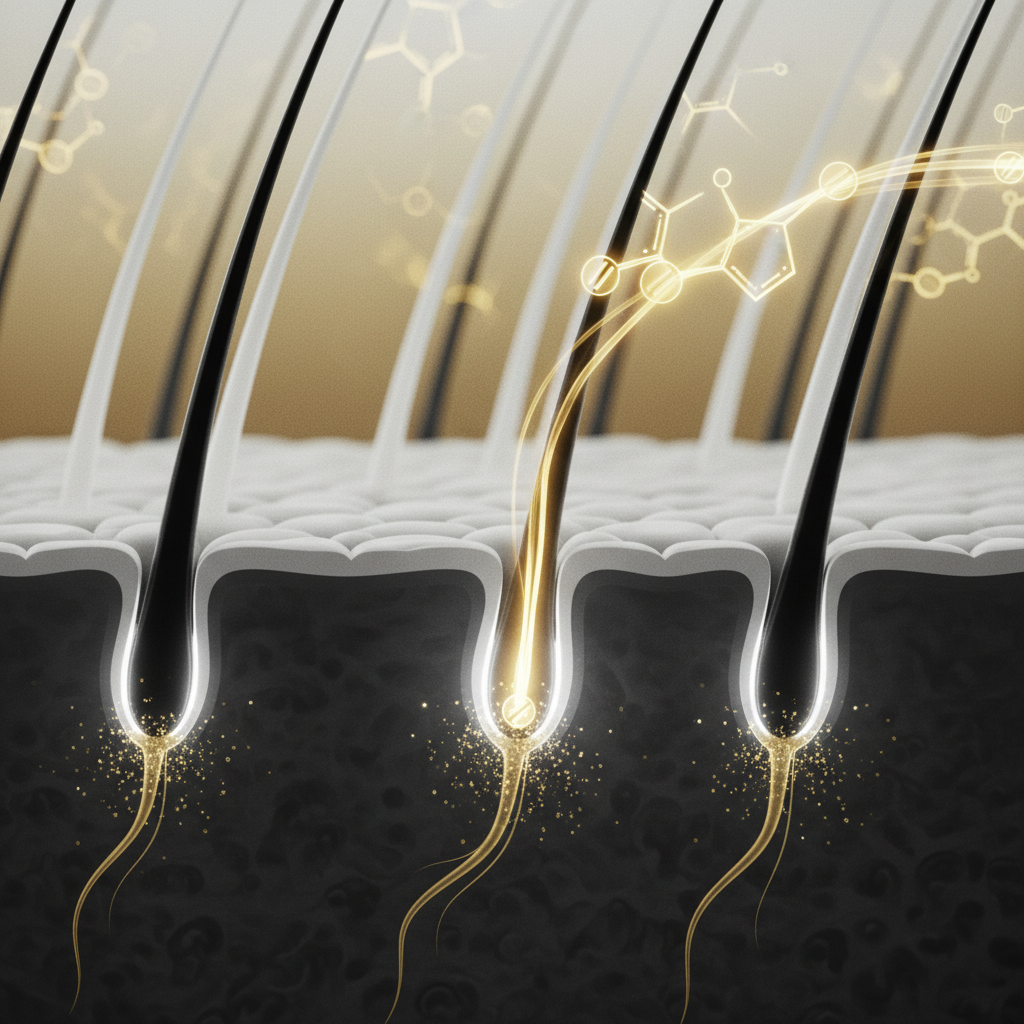
Because caffeine is both water-soluble and lipid-soluble, it passes directly down the hair canal (the infundibulum) without having to cross the dense stratum corneum first. Once inside the follicular structure, it inhibits phosphodiesterase. This raises cAMP, which stimulates metabolic activity in matrix keratinocytes. Concurrently, in vitro trials suggest caffeine helps downregulate transforming growth factor-beta (TGF-beta), a signalling protein that triggers the catagen (regression) phase.
Mechanical body and fibre resilience
Beyond cellular effects, caffeine shampoos are formulated to cleanse sebum, dead skin cells, and product buildup around the follicle opening. Heavy sebum oxidises into squalene peroxides, which irritate the periglandular region and weigh down the roots. By lifting debris and depositing lightweight conditioning polymers alongside active caffeine, these washes give instant lift at the base of the shaft. This creates immediate cosmetic density while supporting the scalp over the long term.
| Attribute | Topical Caffeine Shampoo | Pharmaceutical Minoxidil (5%) |
|---|---|---|
| Classification | Cosmetic rinse-off wash | Licensed medicinal topical solution/foam |
| Primary Goal | Scalp health, strand body, reduced breakage | Stimulating biological hair regrowth in alopecia |
| Contact Time | 2 to 3 minutes before rinsing | Leave-on (minimum 4 hours) |
| Systemic Side Effects | Virtually none reported | Potential low blood pressure, dizziness, facial hair |
| Mechanism | cAMP elevation, DHT antagonism in vitro | Potassium channel opener, local vasodilation |
| Best Used For | Daily maintenance, thinning appearance, fibre strength | Diagnosed progressive androgenetic hair loss |
Signs of reduced hair density: thinning vs breakage vs shedding
To choose the right regimen, you must pinpoint why your hair feels thinner. People often lump every type of density reduction together, but they require different responses.
- Hair shedding (Telogen Effluvium): If you notice clumps coming loose across your pillow, shower drain, and clothes, you are experiencing excessive shedding. This occurs when a biological shock shunts growing hairs into the resting phase prematurely. The root bulb is intact, and shedding resolves once the underlying trigger is addressed.
- Hair breakage: If shorter, jagged pieces snap off when brushing, or your ends look split and uneven, you are dealing with structural breakage. The follicle is completely healthy, but the external keratin cuticle has been degraded by heat, bleach, or mechanical friction.
- Follicular miniaturisation (Hair Loss): If your parting is gradually widening, your temples are receding, or the crown of your scalp shows more skin, the hair follicles themselves are shrinking. Individual strands become finer, shorter, and less pigmented over successive cycles until they resemble peach fuzz.
How to use a caffeine wash for maximum benefit
Cosmetic shampoos require deliberate application habits to provide measurable value.
- Respect the clock: Wet your scalp thoroughly, dispense the product, and work it directly into the roots with your fingertips. Leave the lather undisturbed for 2 to 3 minutes. Rinsing immediately prevents the caffeine molecules from diffusing down the follicular canal.
- Focus on the scalp: Do not aggressively scrub your ends. The purpose of a caffeine shampoo is follicular contact. Gently draw the lather through your mid-lengths just before rinsing.
- Maintain consistency: Caffeine clears from the scalp within 24 to 48 hours. Using the wash consistently (daily or every other day) ensures a regular supply of the active compound.
- Protect the lengths: Follow with a lipid-replenishing conditioner on the mid-lengths and ends to seal moisture into the cuticle, preventing mechanical breakage that detracts from perceived density.
When density issues stem from internal factors
A wash cannot resolve an internal deficiency. If you notice persistent density loss, look into these common systemic drivers:
- Serum ferritin and iron: Low ferritin starves the hair matrix of essential oxygen, often triggering chronic diffuse shedding.
- Thyroid imbalances: Both an underactive and overactive thyroid alter the hair growth cycle, leaving strands dry, brittle, and sparse.
- Hormonal transitions: Postpartum hormone drops, stopping oral contraceptives, and perimenopause shift the balance of oestrogen to androgens, leading to diffuse density reductions.
- Nutritional deficits: Inadequate dietary protein (below 0.8g to 1g per kilogram of body weight) restricts the raw building blocks required to synthesise keratin.
When to seek professional advice
Visit a GP, registered trichologist, or dermatologist if you experience:
- Sudden, patchy areas of round, smooth baldness (indicative of alopecia areata).
- Scalp tenderness, burning, severe itching, crusting, or scaling.
- Rapid shedding lasting longer than three consecutive months.
- Marked, progressive thinning that does not stabilise despite targeted cosmetic scalp care.
Supporting hair density with Watermans
When looking for a dependable daily system, Watermans Grow Me Shampoo provides an advanced approach to cosmetic hair density. Developed to nourish the scalp, it pairs revitalising caffeine with biotin, argan oil, rosemary extract, niacinamide, and allantoin. This blend works synergistically to lift away follicle-clogging sebum, condition the scalp microbiome, and reinforce the hair shaft against daily breakage. Used consistently, it helps maintain a healthy follicular environment so that your hair looks and feels noticeably thicker, stronger, and more resilient from root to tip.
Frequently asked questions about Caffeine Shampoo for Hair Density
Does a Caffeine Shampoo for Hair Density regrow hair on bald spots?
No. A Caffeine Shampoo for Hair Density cannot regenerate dead or completely fibrosed hair follicles. It is a cosmetic wash designed to stimulate the scalp environment, invigorate active follicles, and reduce fibre breakage. Completely bald, smooth patches indicate advanced miniaturisation or autoimmune activity, which requires medical assessment rather than cosmetic shampoos.
How long should I leave a caffeine wash on my scalp?
You should leave the lather on your scalp for 2 to 3 minutes before rinsing thoroughly. Clinical studies on follicular absorption show that caffeine needs roughly 120 seconds of direct cutaneous contact to penetrate the follicular infundibulum and begin cellular absorption.
Can using topical caffeine cause caffeine jitters or heart palpitations?
No. The systemic absorption of caffeine through cosmetic shampoo application is negligible. Research indicates that while caffeine concentrates effectively in the scalp's follicular tissue, the amounts that enter the systemic bloodstream are minute, well below the physiological threshold required to alter heart rate, blood pressure, or sleep.
How many months does it take to notice fuller-looking hair?
You will typically observe an immediate improvement in cosmetic body and volume due to the cleansing action and root-lifting polymers. However, genuine improvements in hair density, fibre strength, and reduced shedding typically take 3 to 6 months of consistent use, mirroring the natural biological timeline of human hair growth cycles.
Summary
Deciding to incorporate a Caffeine Shampoo for Hair Density into your routine gives you an accessible, research-backed way to support daily scalp vitality. While it is not a medical cure for genetic baldness, caffeine's established ability to penetrate follicles, suppress DHT-driven signalling pathways in lab tests, and energise keratinocytes makes it a valuable asset for everyday hair care. Combined with gentle handling, balanced nutrition, and appropriate conditioning, a dedicated caffeine wash helps ensure your hair retains maximum fullness, strength, and structural resilience over time.
Sources and references
- International Journal of Dermatology: Fischer, T. W., et al. "Effect of caffeine and testosterone on the proliferation of human hair follicles in vitro." (2007).
- Skin Pharmacology and Physiology: Otberg, N., et al. "Follicular penetration of topically applied caffeine via a shampoo formulation." (2007).
- British Journal of Dermatology: Fischer, T. W., et al. "Differential effects of caffeine on hair shaft elongation, matrix proliferation and energy metabolism in human hair follicles." (2014).
- NHS: Hair loss (alopecia) diagnostic overview and medical treatment guidelines (2023).
- British Association of Dermatologists: Patient information guidelines on Telogen Effluvium and Androgenetic Alopecia (2022).
Find these ingredients in Watermans products
- Niacinamide: you will find this ingredient in our Hair Mask.