Blow Drying vs Air Drying Mechanics: What Science Really Says
9 min read ·
Explore Blow Drying vs Air Drying Mechanics. Discover how moisture swelling, heat, and cell membrane stress impact hair structure and learn the healthiest drying method.
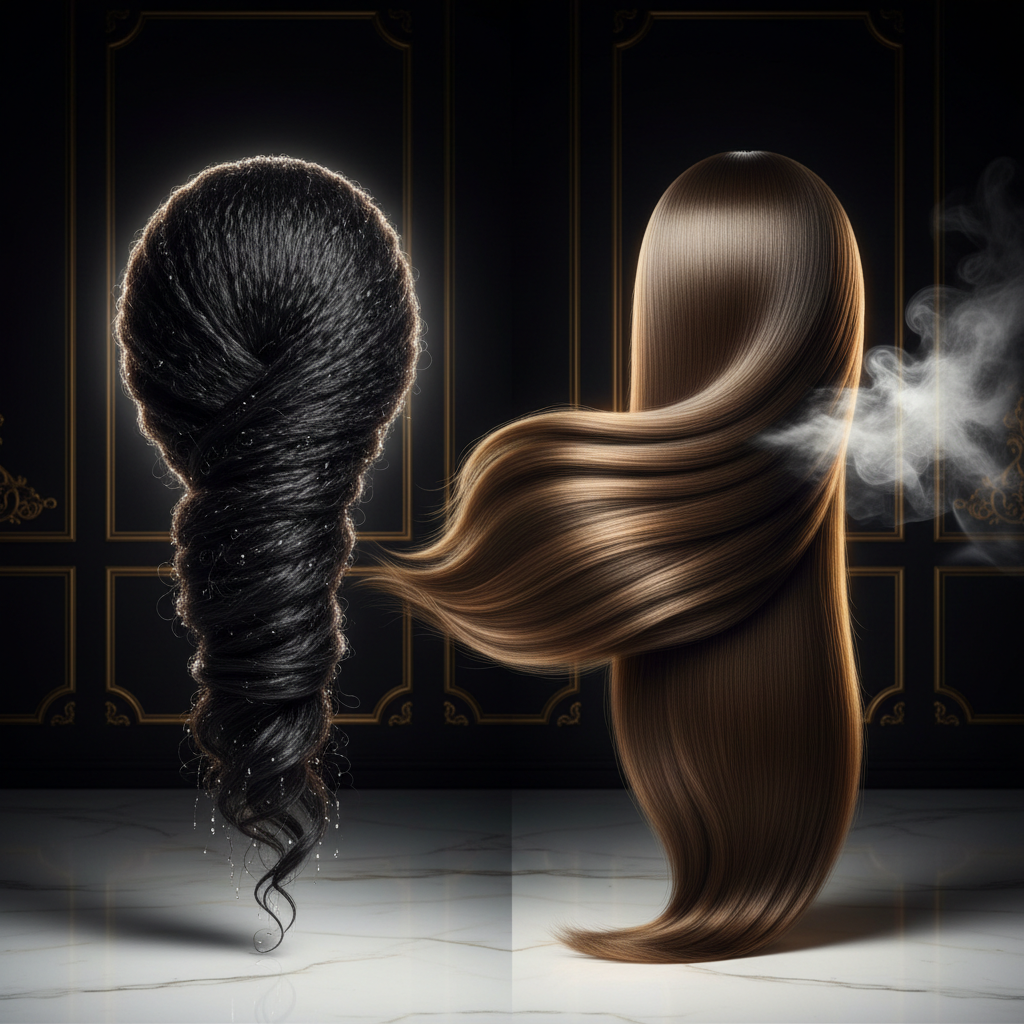
Quick answer: Comparing Blow Drying vs Air Drying Mechanics reveals that neither method is entirely harmless. Air drying prolongs hair swelling, which exerts extended stress on the delicate cell membrane complex (CMC) between cuticle layers. Blow drying removes water quickly, preventing prolonged swelling, but excessive heat strips surface lipids and damages cuticular proteins. Controlled research shows that continuous low-heat blow drying from a distance of 15 cm causes less structural internal damage than natural air drying, though extreme heat causes severe superficial cracking.
Key takeaways
- Wet hair absorbs up to 30 percent of its weight in water, swelling the cortex and putting physical pressure on the cell membrane complex.
- Air drying leaves hair in this fragile, swollen state for hours, which can cause internal fatigue along the shaft.
- Blow drying rapidly evaporates water to relieve swelling, but temperatures above 60 degrees Celsius cause cuticle blistering and lipid degradation.
- The least damaging method combines gentle towel blotting, air drying until hair is damp, and finishing with continuous motion using a dryer held 15 cm away at ambient or low heat.
- Thermal damage affects the cuticle first, whereas prolonged moisture exposure degrades the inner cell membrane complex.
Blow Drying vs Air Drying Mechanics: what the evidence shows
Research into Blow Drying vs Air Drying Mechanics produced surprising conclusions when researchers began examining the interior structure of the hair shaft rather than just the surface. A seminal 2011 study published in the Annals of Dermatology examined hair fibres dried naturally at room temperature (20 degrees Celsius) compared to fibres dried with a hair dryer at various distances and temperatures.
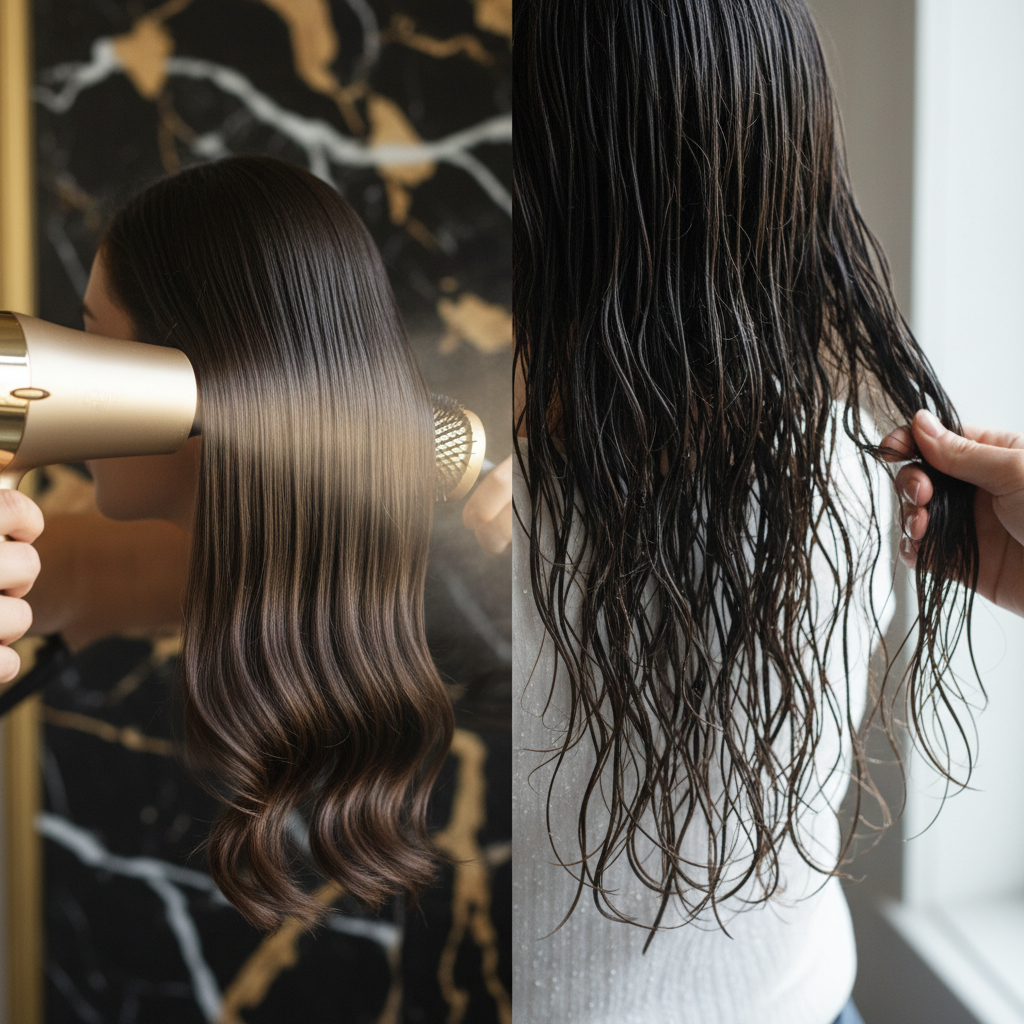
The findings challenged conventional salon wisdom. While high-temperature blow drying caused severe surface cracking, cuticle lifting, and colour alteration, air drying was not completely benign. Air drying caused distinct damage to the cell membrane complex (CMC), the lipid-rich cement that holds the cuticle and cortical cells together.
When hair stays wet, the inner cortex remains swollen with water. This prolonged swelling creates mechanical stress at the boundary between the cortex and the cuticle. Because air drying takes significantly longer than blow drying, the internal structures remain under sustained hydraulic tension for hours. The study revealed that using a hair dryer at a distance of 15 cm with continuous movement actually caused less internal structural damage than leaving hair to air dry completely at room temperature.
| Drying Parameter | Air Drying (Room Temp) | Low Heat Blow Drying (15 cm) | High Heat Blow Drying (5 cm) |
|---|---|---|---|
| Drying Time | 2 to 4+ hours | 10 to 15 minutes | 5 to 8 minutes |
| Cortex Swelling Duration | Prolonged (high stress) | Short (minimal stress) | Very short (rapid contraction) |
| Cell Membrane Complex (CMC) | Moderate to severe damage | Minimal damage | Severe thermal disruption |
| Cuticle Surface Condition | Smooth, intact | Smooth, intact | Chipped, cracked, blistered |
| Optimal Distance | N/A | 15 cm minimum | Dangerous proximity |
| Surface Temperature | ~20°C | ~45°C to 50°C | >95°C |
The internal biological mechanism: why wet hair is vulnerable
Understanding the difference between drying techniques requires a look at how keratin responds to water. Human hair consists of three distinct layers: the outer cuticle (overlapping scales), the cortex (structural bundles of keratin filaments), and occasionally a central medulla.
The cuticle and cortical cells are held together by the cell membrane complex, which contains structural lipids (predominantly 18-methyleicosanoic acid, or 18-MEA) and proteins. When hair is submerged in water, the hydrogen bonds that give keratin its stability temporarily break. Water molecules infiltrate the cortex, causing the fibre to swell in diameter by roughly 14 to 16 percent.
In this swollen state, hair has significantly lower tensile strength. It becomes prone to breakage if stretched, brushed, or rubbed. When hair air dries, it remains in this swollen, weakened configuration for hours. The cell membrane complex swells and contracts slowly, leading to mechanical fatigue over repeated wash cycles.
Blow drying changes this timeline. By applying directed airflow, you accelerate the evaporation of free water on the fibre surface, which draws out bound water from the cortex. However, if the air stream exceeds 60 degrees Celsius, water inside the cortex can boil before it evaporates gently, forming tiny steam pockets known clinically as "bubble hair." High heat also melts the protective 18-MEA lipid layer on the cuticle, leaving the hair feeling rough, porous, and prone to static.
What the evidence does not show
The science on hair drying is specific, and several popular assumptions are unsupported by evidence:
- Air drying does not automatically yield healthier hair. While air drying avoids thermal cuticular blistering, leaving hair saturated for long periods damages internal lipid layers and can exacerbate scalp conditions like seborrhoeic dermatitis by fostering a humid microbial environment.
- Blow dryers do not inherently cause follicular hair loss. Heat and mechanical brushing can cause fibre breakage along the shaft, but they do not cause hair to detach from the follicle root (telogen shedding or androgenetic alopecia).
- Heat protectant sprays do not make hair invulnerable. Protectants (often silicones or polyquaterniums) distribute heat and lower the rate of thermal transfer, but they do not block extreme temperatures completely.
- Air drying curly hair does not prevent internal fatigue. Afro, curly, and wavy hair types possess irregular cuticle distribution and naturally higher structural vulnerability. Prolonged moisture retention can cause hygral fatigue, where repeated excessive swelling and contracting weakens the fibre.
Signs of thermal damage versus prolonged moisture damage
Because air drying and hot blow drying target different layers of the hair fibre, the physical signs of damage present differently.
Signs of prolonged moisture damage (hygral stress from air drying)
- Hair feels mushy, excessively stretchy, or limp when wet.
- The fibre snaps under low tension when damp.
- Ends feel dull and fail to retain moisture despite regular conditioning.
- Flaking or itching on the scalp due to prolonged dampness at the roots.
Signs of thermal damage (excessive blow drying)
- Visible white dots along the shaft (trichorrhexis nodosa) indicating internal fibre fractures.
- Cuticles appear split, frayed, or feel like sandpaper when sliding fingers from tip to root.
- Sudden dullness and colour fading due to oxidised cuticular proteins.
- Tangling and snagging caused by raised, cracked cuticle edges.
Practical drying protocol: balancing both mechanics
To minimise both cuticular heat damage and internal membrane fatigue, apply a hybrid approach:
- Absorb excess water gently. Do not rub hair vigorously with a traditional terry-cloth towel, as wet cuticles tear easily. Press a microfibre towel or smooth cotton t-shirt against the hair to squeeze out excess moisture.
- Apply a leave-in barrier. Coat damp strands with a protective conditioner or thermal spray to smooth down the cuticle scales and preserve hydration within the shaft.
- Allow partial ambient drying. Let hair air dry until it is damp rather than soaking wet (roughly 50 to 70 percent dry). This limits total blow drying exposure without keeping the hair saturated for hours.
- Use continuous motion at a 15 cm distance. Keep the dryer nozzle at least 15 cm away from the hair surface. Move the dryer continuously across sections rather than lingering on one spot.
- Direct airflow downwards. Aim the concentrator nozzle down the hair shaft (from root to tip). This aligns the overlapping cuticle scales, reducing friction and enhancing natural shine.
- Finish with a cool blast. Switching to the cool setting drops the temperature rapidly, helping the keratin structure contract firmly and locking the hair into place.
Scalp health considerations
Leaving hair wet for hours does not just affect the fibre. It can alter the scalp microbiome. The human scalp is naturally colonised by Malassezia yeasts, which feed on sebum. These yeasts thrive in warm, damp environments.
Individuals who leave thick, dense hair to air dry naturally for four to six hours provide ideal conditions for yeast proliferation. This can trigger or worsen dandruff, seborrhoeic dermatitis, and scalp itchiness. Gently drying the root area on a low or medium setting protects both the cuticle and the scalp barrier.
When to seek professional advice
If you notice significant snapping, excessive shedding, or severe scalp irritation, a professional evaluation is recommended:
- Consult a trichologist or dermatologist if you experience hair thinning at the crown, widening of your parting, or excessive shedding where hairs show a white bulb at the end (telogen effluvium). These issues originate at the follicle, not from drying mechanics.
- Consult an experienced hair stylist if hair shows extensive split ends, mid-shaft breakage, or cuticle peeling. A stylist can trim damaged zones and adjust your thermal routine before damage spreads upward.
Supporting hair condition with Watermans
When managing mechanical and thermal drying stresses, maintaining overall fibre resilience and a balanced scalp environment is essential. Watermans GrowMe Shampoo is formulated with biotin, caffeine, argan oil, and rosemary extract to cleanse the scalp gently without stripping the surface lipids necessary for fibre protection. Pairing it with Watermans ConditionMe Conditioner helps smooth the cuticle layer and support moisture balance, strengthening the fibre against the physical stresses encountered during washing, detangling, and drying.
Frequently asked questions about Blow Drying vs Air Drying Mechanics
Which method causes more damage according to Blow Drying vs Air Drying Mechanics?
Controlled studies show that high-heat blow drying causes more surface cuticle damage, while natural air drying causes more damage to the internal cell membrane complex due to extended swelling. The least harmful method is drying with a hair dryer held 15 cm away on a continuous low-heat or cool setting.
Does air drying cause hair loss?
No. Air drying does not affect the hair follicle or cause follicular hair loss. However, leaving hair wet for extended periods makes the shaft more vulnerable to mechanical breakage if you brush or tie it back while damp. It can also exacerbate scalp fungal imbalances.
How far should you hold a hair dryer from your hair?
Hold the hair dryer at least 15 cm (roughly 6 inches) away from your hair. Holding it closer dramatically increases the surface temperature above safe thresholds, leading to cuticle blister formation, structural cracking, and thermal lipid degradation.
Is using a microfibre towel better than air drying alone?
Yes. Microfibre towels absorb water quickly through capillary action without requiring friction. Removing excess moisture promptly reduces the amount of time hair remains in a swollen state, cutting down the overall drying time needed for either air drying or blow drying.
Can air drying damage the scalp?
Yes, indirectly. Leaving thick hair wet for extended periods creates a damp microclimate on the scalp that encourages the overgrowth of Malassezia yeast, which can trigger dandruff, redness, and seborrhoeic dermatitis.
Striking the balance in hair drying mechanics
Reviewing the science behind Blow Drying vs Air Drying Mechanics shows that neither absolute air drying nor high-heat styling is ideal for hair integrity. Air drying protects the surface cuticles from thermal degradation but subjects the internal cell membrane complex to prolonged moisture fatigue. Conversely, rapid blow drying relieves internal swelling immediately but risks severe cuticular cracking if heat and proximity are uncontrolled. By using gentle moisture removal, maintaining a 15 cm distance, and keeping temperatures low, you get the benefits of both methods while preserving structural strength.
Sources and references
- Lee, Y. Choi, Y. J., Lee, K. W., et al. (2011). Hair Shaft Damage from Heat and Drying Time of Hair Dryer. Annals of Dermatology, 23(4), 455-462.
- Robbins, C. R. (2012). Chemical and Physical Behavior of Human Hair. 5th Edition. Springer-Verlag.
- Swift, J. A. (1999). Human hair cuticle: biologically conspired to the owner's benefit, chemically tailored to the sufferer's detriment. International Journal of Cosmetic Science, 21(4), 227-239.
- Dawber, R. (1996). Hair: Its structure and response to cosmetic preparations. Clinics in Dermatology, 14(1), 105-112.
- Gupte, N., & Velingkar, V. (2019). Hair damage and its protection: A review. Journal of Cosmetic Dermatology, 18(6), 1628-1634.
Find these ingredients in Watermans products
- Biotin: you will find this ingredient in our Hair Growth Shampoo.