Blow Drying Techniques for Healthy Hair: Scientific Principles and Methods
8 min read ·
Master blow drying techniques for healthy hair with evidence-based guidance on heat settings, distance, airflow, and protecting the keratin cuticle from damage.
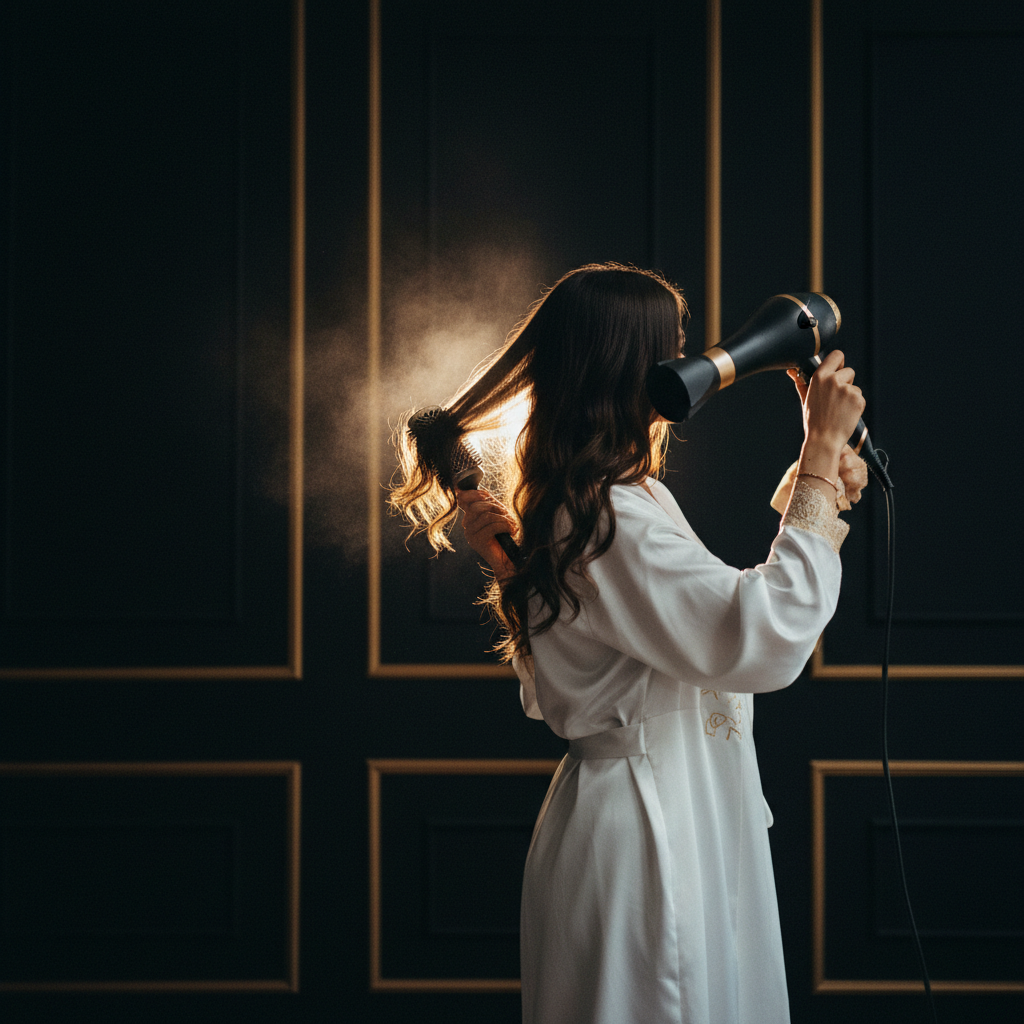
Quick answer: Adopting proper blow drying techniques for healthy hair prevents thermal degradation of the cuticle and protects the inner cortex. Research shows that air-drying leaves hair swollen with water for prolonged periods, straining cell membrane complexes, whereas blow drying at a distance of 15 cm with continuous movement and moderate heat causes less structural damage. However, blow drying techniques for healthy hair cannot reverse existing fibre damage or repair split ends, making preventative heat management essential for maintaining tensile strength.
Key takeaways
- Holding a hair dryer 15 cm away while keeping the nozzle in continuous motion prevents localised thermal spikes.
- Air-drying is not automatically safer than blow drying; extended wet time leads to prolonged swelling of the cell membrane complex (CMC).
- Hair should be roughly 70% to 80% dry before introducing high heat or round-brush tension.
- Directing airflow downward along the cuticle prevents cuticle lifting, reducing surface friction and moisture loss.
- Heat protection products form a low-conductivity barrier that slows heat transfer and reduces cortical bubble formation.
Blow Drying Techniques for Healthy Hair: what the evidence shows
Scientific research challenges the assumption that heat styling is always worse than natural drying. A landmark 2011 study published in the Annals of Dermatology analysed hair morphology across multiple drying modalities. The researchers found that while blow drying at high temperatures damages the surface cuticle, ambient air-drying causes subtle, persistent structural damage to the cell membrane complex.
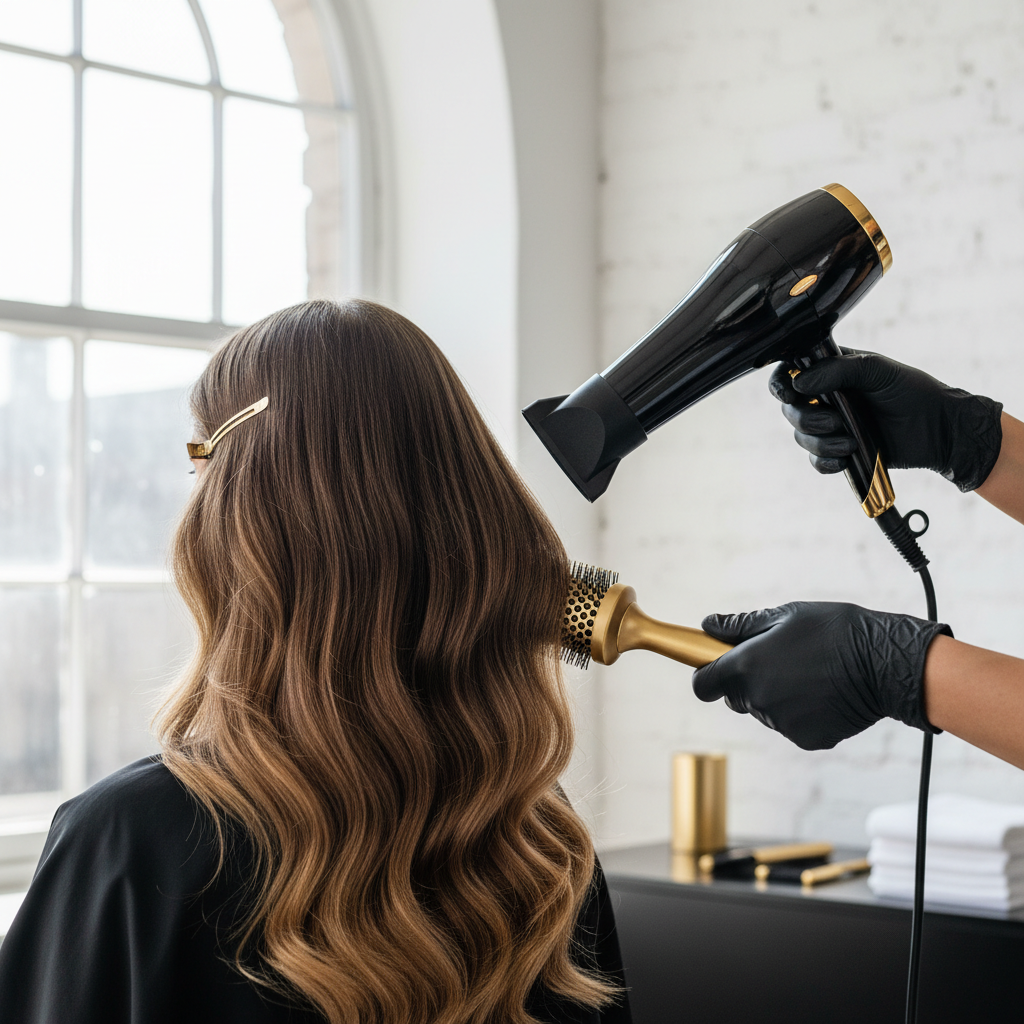
When hair remains wet, the cortex swells with water, placing continuous shear stress on the delicate intercellular cement binding the cuticle scales. Because air-drying takes hours, the hair fibre endures prolonged swelling and deswelling cycles, known as hygral fatigue. Mastered blow drying techniques for healthy hair shorten this vulnerability window while keeping surface temperatures below the threshold of thermal decomposition.
The critical variable identified by researchers is thermal delivery. Blow drying with continuous motion at a distance of 15 cm results in significantly less overall damage than blow drying without movement, held too close, or prolonged natural drying.
The biophysical mechanism of heat damage
Hair consists primarily of keratinised proteins arranged in an outer protective cuticle and an inner cortex. In wet hair, water molecules penetrate the porous cortex, breaking temporary hydrogen bonds and causing the fibre to swell by up to 16% in diameter.
When heat is applied too aggressively, trapped water vaporises rapidly. If the temperature exceeds 100°C before the bulk water evaporates, the steam expands within the fibre, creating internal cavities known as "bubble hair". This severely compromises tensile strength, causing the hair to snap under minimal tension.
Excessive heat also strips the 18-methyleicosanoic acid (18-MEA) lipid layer that naturally coats the epicuticle. Without this hydrophobic layer, hair becomes porous, hydrophilic, and prone to friction-induced breakage.
| Drying Method | Effect on Cuticle | Effect on Cortex / CMC | Risk of Breakage |
|---|---|---|---|
| High Heat, Stationary (<5 cm) | Severe cracking, curling of scales, loss of 18-MEA | Protein denaturation, bubble hair formation | Extremely high |
| Controlled Blow Drying (15 cm, dynamic movement) | Minimal lifting, smooth scale alignment | Rapid drying limits CMC swelling; no steam cavities | Low |
| Ambient Air-Drying | Minimal surface heat degradation | Prolonged swelling damages cell membrane complex | Moderate (hygral fatigue) |
| Rough Towel Drying Prior to Heat | Mechanical chipping and cuticle lifting | Exposed cortex to subsequent heat | High |
Step-by-step blow drying techniques for healthy hair
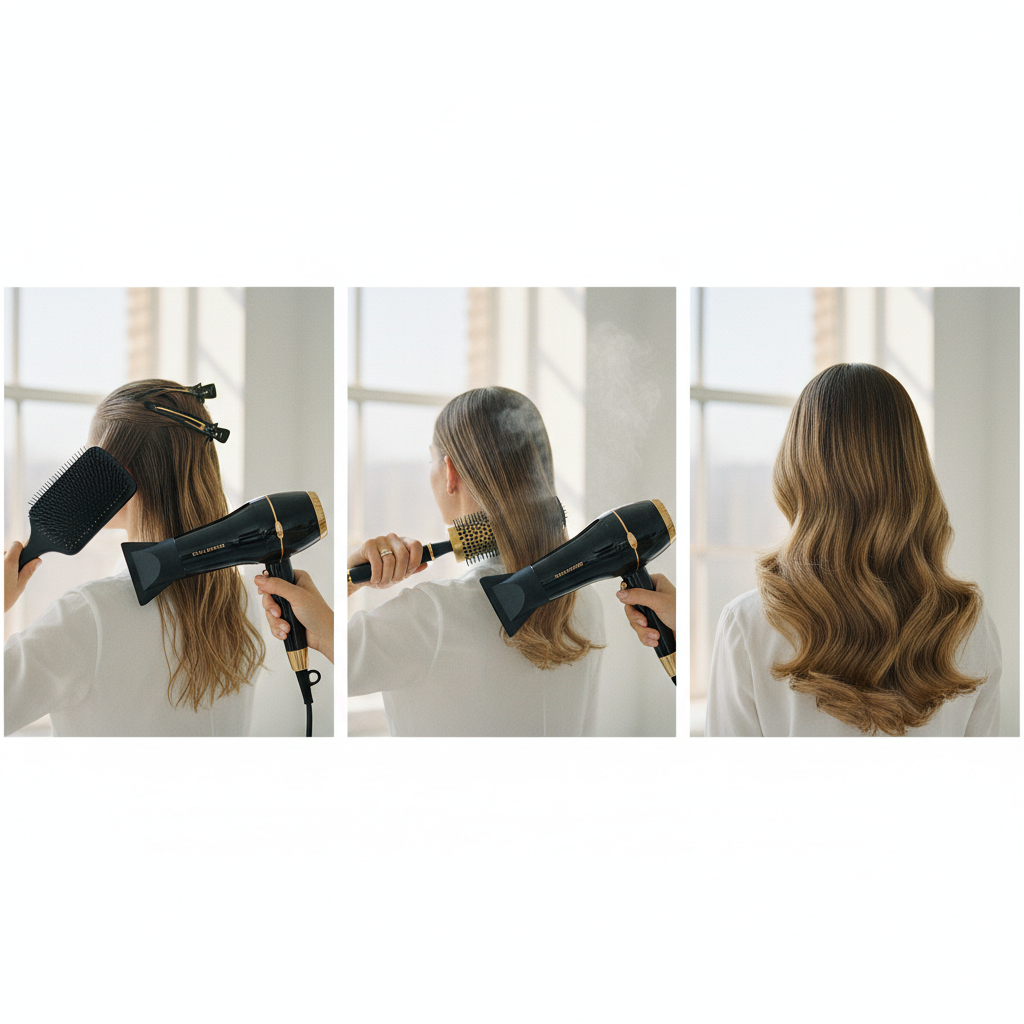
Applying disciplined blow drying techniques for healthy hair requires synchronising temperature, distance, airflow direction, and mechanical tension.
1. Gentle water extraction
Never twist or rub hair with a standard terry-cloth towel. Wet hair exhibits a lower yield point, meaning mechanical friction easily chips swollen cuticle scales. Instead, blot and press hair using a smooth microfibre towel or cotton cloth until hair is damp rather than soaking wet.
2. Apply heat protectants to damp hair
Thermal protectants containing film-forming polymers, silicones, or polyquaterniums create a protective thermal barrier. These ingredients lower heat conductivity, distribute heat evenly, and smooth the surface to reduce combing friction.
3. The rough-dry phase
Begin drying without a styling brush. Use medium heat and medium-to-high airflow, holding the dryer at least 15 cm away. Keep the dryer in perpetual motion, gently tossing the hair with your fingers. Continue until the hair is approximately 70% to 80% dry. This removes excess moisture before introducing direct mechanical stress.
4. Directional airflow with a concentrator nozzle
Attach a concentrator nozzle to focus the airflow down the hair shaft, from root to tip. Blowing air upward against the free edges of the cuticle scales causes them to flare open, increasing tangles and dulling shine. Downward airflow smooths the cuticle scales flat, sealing the reflective surface.
5. Tension styling on nearly dry hair
Once the hair is mostly dry, section it cleanly and introduce a round or paddle brush. Keep tension firm but moderate. Over-stretching wet hair causes plastic deformation, an irreversible elongation of the protein chains. Maintain the 15 cm distance and avoid resting the metal barrel of the dryer directly against the brush or hair fibre.
6. The cool shot setting
Complete each section by depressing the cool shot button for 5 to 10 seconds. Keratin exhibits thermoplastic properties, meaning it becomes malleable when warm and sets as it cools. The blast of ambient air quickly drops the temperature below the glass transition point, locking the shape and sealing the cuticle.
Signs of thermal damage to watch for
Thermal stress presents distinct physical symptoms along the hair shaft. Because heat cannot affect the living follicle beneath the scalp, heat damage is purely structural and cosmetic:
- Split ends (trichoptilosis): The protective cuticle wears away, causing the exposed cortical fibres to unravel longitudinally.
- Rough, velcro-like texture: Flared, chipped cuticle edges catch on adjacent strands, producing chronic tangles.
- Dullness and loss of shine: A disordered cuticle surface scatters light diffusely instead of reflecting it evenly.
- White nodules (trichorrhexis nodosa): Weakened points along the shaft where the cortex has fractured, leaving a tiny white dot where the hair will inevitably snap.
- Premature colour fading: High heat oxidises artificial colour pigments and strips natural melanin granules.
What the evidence does not show
Controlled dermatological studies do not show that blow drying damages hair follicles, slows natural growth rates, or causes follicular hair loss. Heat from styling tools rarely penetrates the scalp deeply enough to alter follicular cycling, unless physical burns occur.
Furthermore, evidence does not show that thermal protectants make hair invulnerable to high heat. Protectants reduce heat transfer and friction, but they do not eliminate damage if heat tools are pressed directly against hair fibres at temperatures exceeding 180°C. Finally, no cosmetic product or drying method can fuse a split end back together permanently; split ends must be trimmed away.
Scalp care and support from Watermans
While blow drying techniques for healthy hair protect the fibre, healthy-looking hair begins at the scalp. High dryer temperatures directed onto the scalp can strip natural sebaceous lipids, leading to dryness, irritation, and flaking.
Maintaining a balanced scalp environment supports the emergence of resilient hair fibres. The Watermans Grow Me range delivers targeted cosmetic support. Formulated with dynamic ingredients such as biotin, rosemary, caffeine, niacinamide, and argan oil, it helps nurture the scalp microbiome, moisturise the skin barrier, and leave hair feeling thicker and more resilient from the root. Used alongside sensible heat styling habits, it provides a comprehensive foundation for stronger-looking hair.
Frequently asked questions about Blow Drying Techniques for Healthy Hair
Is it better to let hair air-dry or blow dry it?
Scientific evidence indicates that a hybrid approach is best. Leaving hair to air-dry completely keeps the cortex swollen for hours, damaging the cell membrane complex. Conversely, blow drying at close range with high heat destroys the surface cuticle. The ideal method is air-drying or rough-drying to roughly 70% before finishing with a blow dryer kept 15 cm away on medium heat.
What temperature should I use when blow drying?
Keep your dryer on low to medium heat settings, generally under 60°C to 80°C at the fibre surface. Temperatures exceeding 100°C risk converting internal water into steam, causing irreversible bubble hair formations. If your dryer feels uncomfortably hot against the skin of your hand, it is too hot for your hair.
How do blow drying techniques for healthy hair differ for curly hair?
Curly and textured hair types have asymmetrical cuticle structures and natural bends that make them more vulnerable to mechanical friction. Blow drying techniques for healthy hair with curls involve using a diffuser attachment on low heat and low speed. The diffuser disperses the airflow evenly, drying the hair without disrupting the natural curl pattern or lifting the cuticle.
Can blow drying cause permanent hair loss?
No, blow drying does not cause medical hair loss (alopecia) or telogen effluvium, as it does not affect the subterranean hair follicle. However, improper blow drying causes hair breakage along the shaft. While broken hairs may look like fallen hairs, the root remains intact in the scalp, meaning the hair will continue its normal biological growth cycle.
Supporting hair integrity through daily habits
Mastering blow drying techniques for healthy hair allows you to style your hair efficiently without sacrificing structural integrity. By respecting the biophysical limits of keratin, keeping the dryer moving at a safe distance of 15 cm, directing airflow downward, and cooling sections to set them, you minimise cuticle abrasion and prevent cortical fracturing. Pair these mechanical habits with gentle cleansing and consistent scalp care to keep your hair resilient, shiny, and strong.
Sources and references
- Lee, Y. W., Choi, E. H., & Lee, S. H. (2011). Hair Shaft Damage from Heat and Drying Time of Hair Dryer. Annals of Dermatology, 23(4), 455 to 462.
- Robbins, C. R. (2012). Chemical and Physical Behavior of Human Hair (5th ed.). Springer-Verlag.
- Evans, T., & Wickett, R. R. (2012). Practical Modern Hair Science. Allured Business Media.
- Swift, J. A. (1999). The mechanics of fracture of human hair. International Journal of Cosmetic Science, 21(4), 227 to 239.
- National Health Service (NHS). (2023). Hair loss. NHS UK.
Find these ingredients in Watermans products
- Biotin: you will find this ingredient in our Hair Growth Shampoo.
- Niacinamide: you will find this ingredient in our Hair Mask.