Bleached Hair Recovery and Care: A Scientific Guide to Fibre Repair
9 min read ·
An evidence-based guide to bleached hair recovery and care, explaining structural protein damage, bond repair, pH balance, and practical steps to stop breakage.
Quick answer: Successful bleached hair recovery and care requires rebuilding the physical integrity of compromised keratin fibres while managing severe porosity. Chemical lighteners dissolve melanin by opening the protective cuticle at high pH, which oxidises vital disulphide bonds and strips natural protective lipids. The primary limitation to understand is biological: hair fibre is non-living tissue. You cannot biologically regenerate damaged keratin, so recovery relies on replacing lost lipids, reinforcing structural bonds, smoothing the cuticle, and preventing ongoing mechanical breakage.
Key takeaways
- Bleaching oxidises natural melanin while breaking structural disulphide bonds, leaving the fibre porous and brittle.
- Fibre snapped by chemical damage is breakage, not follicular hair loss or shedding.
- You cannot biologically heal dead keratin, but you can dramatically improve tensile strength and elasticity using cosmetic chemistry.
- Acidic formulations with a pH of 3.5 to 5.5 help contract swollen cuticles and reduce friction.
- Hydrolysed proteins, bond-building complexes, and penetrating lipids form the foundation of an effective home care routine.
- Mechanical stress such as rough towel drying and aggressive heat styling accelerates breakage on compromised fibres.
Bleached hair recovery and care: what the chemical process does to your hair
Bleached hair recovery and care begins with understanding the chemical alterations that occur during the lightening process. Hair bleaching relies on an alkaline agent (typically ammonium hydroxide or sodium silicate) combined with an oxidising agent (hydrogen peroxide) to swell the shaft and dissolve melanin granules inside the hair cortex.
This process operates at an elevated pH, usually between 9.0 and 11.0. At this alkaline level, the overlapping scale-like cuticle cells lift aggressively. While this allows hydrogen peroxide to penetrate into the cortex to oxidise colour pigments, it causes severe collateral structural damage.
The primary structural victim is keratin, the fibrous protein that forms around 85 to 90 percent of your hair shaft. Keratin relies on cysteine amino acids that link together to create disulphide bonds. These bonds provide hair with its elasticity, tensile strength, and shape. Bleaching breaks these disulphide bonds through oxidation, converting cysteine into cysteic acid. Once cysteic acid forms, the natural disulphide bridge is permanently lost.
Bleaching also strips the hair of 18-methyleicosanoic acid (18-MEA). This integral lipid layer sits on the cuticle surface, creating a natural hydrophobic (water-repelling) barrier. Without 18-MEA, the hair becomes intensely hydrophilic (water-absorbing). While absorbing water sounds beneficial, hydrophilic hair swells excessively when wet, stretches beyond its elastic limit, and snaps with minimal tension.
Structural differences: healthy hair vs bleached hair
The table below outlines the physical and chemical shifts that occur when natural hair undergoes high-lift bleaching.
| Characteristic | Virgin or Healthy Hair | Bleached Hair |
|---|---|---|
| Cuticle Condition | Flat, overlapping, tightly sealed | Lifted, chipped, or missing scales |
| Surface Chemistry | Hydrophobic (repels water via 18-MEA) | Hydrophilic (readily absorbs water) |
| Porosity | Low to medium | High, uneven porosity |
| Fibre Elasticity | Stretches up to 30% wet and snaps back | Stretches irregularly, deforms, or breaks |
| Surface Friction | Low, glides easily | High, prone to knotting and tangling |
| Tensile Strength | High resistance to physical traction | Low resistance, snaps easily under tension |
The visible signs of bleach damage
You can determine the severity of bleaching damage by observing how your hair behaves during washing, detangling, and drying.
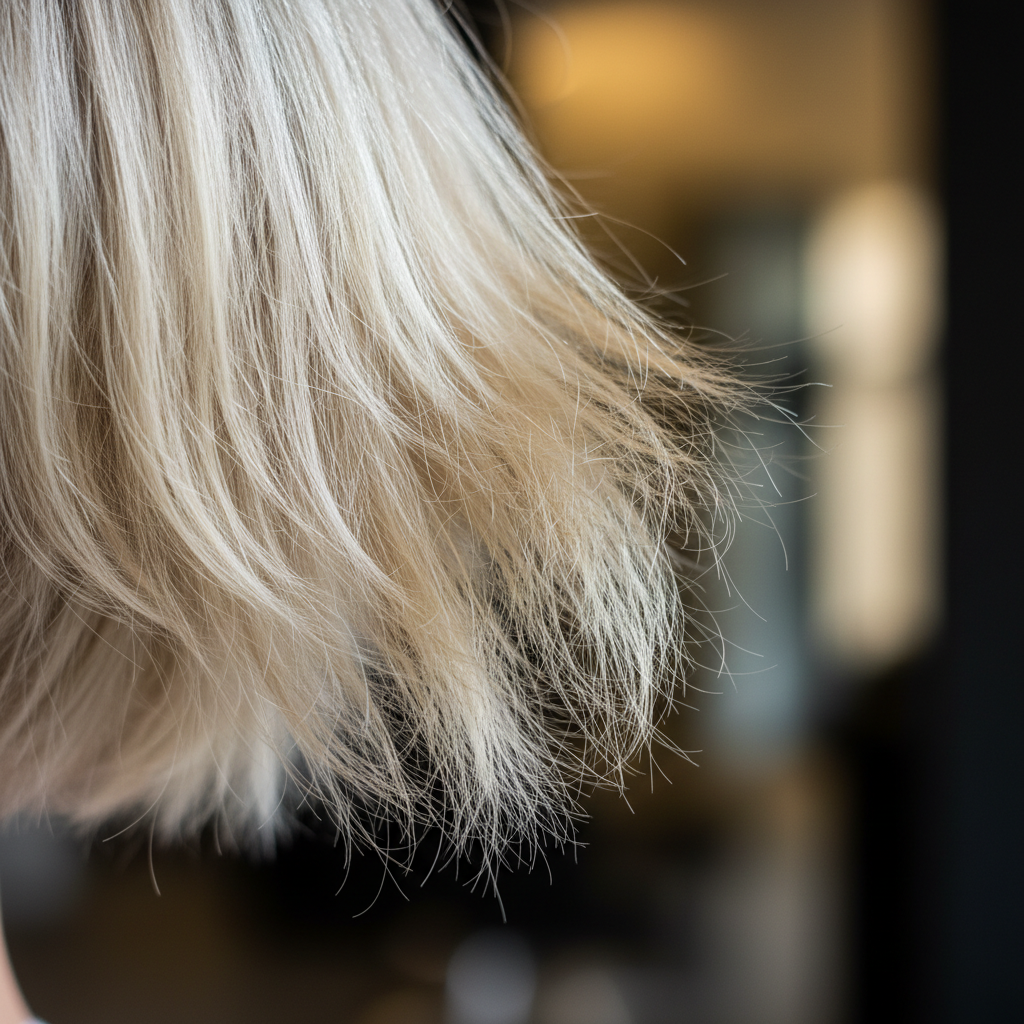
- Gummy texture when wet: If your hair feels like wet chewing gum or soft silicone when saturated, severe cortical damage has occurred. The internal cross-links can no longer support the swollen protein matrix.
- Excessive breakage during brushing: Snapped pieces of hair littering your sink or shoulders, identifiable by their short length and absence of a white bulb at the root, indicate fibre breakage rather than shedding.
- Flash drying: Bleached strands often dry extraordinarily fast because lifted cuticles cannot regulate moisture retention, or conversely, they hold onto water like a saturated sponge and take hours to dry naturally.
- Chronic tangling: Damaged cuticles catch against neighbouring strands like velcro. This friction makes simple detangling a major risk factor for mechanical breakage.
- Dullness and rough texture: Light requires a smooth surface to reflect evenly. Raised, chipped cuticles scatter light in all directions, leaving the hair looking matte and coarse.
What cosmetic science can and cannot do
A realistic bleached hair recovery and care regimen works within biological limits. Hair contains no living cells, blood vessels, or metabolic processes along the length of the shaft. Once a disulphide bond breaks or an amino acid cleaves, your body cannot regenerate that tissue from within.
Cosmetic treatments cannot:
- Heal dead hair back to a virgin biological state.
- Reconnect severed ends (split ends must be trimmed to prevent travelling tears).
- Accelerate biological hair growth at the root through surface-level fibre conditioners.
Cosmetic treatments can:
- Deposit synthetic or plant-derived lipids to replace lost 18-MEA.
- Penetrate the cortex with hydrolysed proteins to temporarily reinforce internal strength.
- Form artificial cross-links using active bond-building chemistry to mimic natural disulphide bridges.
- Lower surface friction using acidic sealers and silicones, reducing combing damage by up to 80 percent.
Step-by-step framework for bleached hair care
An evidence-based recovery strategy requires addressing structural support, hydration, lipid replenishment, and mechanical protection.
1. Introduce structural bond builders
Bond-building formulations use cross-linking agents (such as bis-aminopropyl diglycol dimaleate or maleic acid complexes) to form artificial bridges where disulphide bonds have oxidised. Apply these treatments consistently once or twice a week on damp hair before shampooing to maintain structural integrity.
2. Balance protein and moisture
Bleached hair needs both structural reinforcement and flexibility.
- Hydrolysed proteins: Ingredients like hydrolysed wheat, keratin, or soy protein feature small molecular weights that fit inside small fractures in the cortex. Use protein treatments fortnightly to add tensile strength.
- Conditioning lipids: Fatty alcohols (cetyl and stearyl alcohol), ceramides, and light plant oils coat the shaft to lock out atmospheric humidity and seal the cuticle.
Overusing concentrated protein without adequate conditioning can make bleached hair rigid and brittle, increasing snap risk. Alternate structural protein masks with deeply emollient, moisture-rich treatments.
3. Maintain an acidic pH
Natural hair and sebum rest at a mildly acidic pH of 4.5 to 5.5. Alkaline bleaching agents push this balance far into the alkaline spectrum. To counteract this, choose shampoos and conditioning rinses balanced between pH 3.5 and 5.0. Acidic environments help the keratin structure contract, tightening cuticle plates against the shaft to seal in moisture and increase shine.
4. Minimise mechanical and thermal friction
The highest rate of breakage in bleached hair occurs during styling and drying.
- Detangle strictly with a wide-tooth comb or flexible wet brush, starting at the tips and working slowly toward the roots. Never rip through knots.
- Replace cotton terry towels with smooth microfibre wraps or cotton t-shirts to eliminate rough surface abrasion.
- Keep heated styling tools below 150 degrees Celsius, and always apply a thermal protectant containing film-forming polymers before applying any heat.
When hair issues stem from something else
It is vital to differentiate between chemical damage along the hair shaft and issues originating within the hair follicle.
- Fibre breakage: Short, broken fragments without a bulb indicate mechanical or chemical snapping. This is the direct result of bleaching.
- Telogen effluvium: Finding full-length hairs with a small white bulb at the root across your pillow or shower drain indicates hair shedding. This condition occurs when systemic triggers like illness, psychological stress, hormonal fluctuations, or nutritional deficiencies push follicles prematurely into their resting phase.
- Alopecia: Patchy, circular hair loss or progressive thinning along the parting represents follicular hair loss. Bleach applied incorrectly to the scalp can cause chemical burns that lead to scarring alopecia in extreme cases, but cosmetic bleaching along the fibre does not cause genetic male or female pattern hair loss.
If you notice rapid, excessive shedding from the scalp or visible bare patches, consult a GP or a registered trichologist rather than relying solely on cosmetic repair treatments.
Supporting bleached hair with Watermans
While bleached hair requires intensive topical fibre repair, healthy hair density depends on an optimal scalp environment. Chemical processing can leave the scalp feeling dry, tight, or irritated if lightener makes contact with the skin.
Watermans Grow Me Shampoo provides a gentle, sulphate-free cleanse that respects delicate cuticles while refreshing the scalp. Sulphate-free surfactants are essential for bleached hair recovery and care because harsh detergents strip away the few remaining natural lipids on the hair surface. Packed with biotin, rosemary extract, niacinamide, and hydrolysed lupin protein, this formula helps maintain a clean, nutrient-rich foundation at the follicle level while your leave-in bond builders and conditioning masks work to protect the compromised lengths.
Frequently asked questions about bleached hair recovery and care
Can split ends from bleaching be repaired without cutting?
No. Split ends are complete physical fractures along the hair shaft. While conditioning serums and polymers can temporarily glue the split fibres together until your next wash, they do not mend the fibre. Trimming split ends every six to eight weeks is the only permanent solution to stop splits from travelling higher up the strand.
How often should you wash bleached hair?
Wash your hair two to three times a week. Washing too frequently strips away lipids and forces compromised fibres to swell repeatedly with water, a process known as hygral fatigue. Washing too infrequently, however, can lead to product and sebum build-up on the scalp, which disrupts skin health.
Why is an acidic rinse beneficial for bleached hair recovery and care?
Bleach is highly alkaline, which forces the cuticle open. Acidic products with a pH between 3.5 and 5.0 help the cuticle layers contract and flatten against the shaft. This tight alignment smooths the surface, locks in internal moisture, reduces friction against adjacent strands, and delivers noticeable shine.
Will applying coconut oil fix chemically bleached hair?
Coconut oil can reduce protein loss because its lauric acid content penetrates the hair cortex, but it cannot repair oxidised disulphide bonds on its own. For comprehensive care, combine penetrating plant oils with bond-repairing complexes and hydrolysed proteins to address both internal strength and external moisture.
Summary
Successful bleached hair recovery and care requires patience, careful handling, and realistic expectations. While you cannot biologically regrow or heal oxidised keratin along the hair shaft, targeted cosmetic chemistry can dramatically improve the hair's strength, elasticity, and appearance. By balancing structural bond treatments with acidic conditioners, regular micro-trims, and gentle mechanical styling, you can preserve the integrity of your lightened hair and prevent severe breakage.
Sources and references
- Chemical and Physical Behavior of Human Hair, Clarence R. Robbins, 5th Edition, Springer, 2012.
- Journal of Cosmetic Science, "Investigation of the effects of chemical bleaching on hair fibre structure and mechanical properties", 2008.
- International Journal of Trichology, "Hair cosmetics: An overview", 2015.
- British Association of Dermatologists, "Telogen Effluvium and Hair Shedding Guidelines", 2021.
Find these ingredients in Watermans products
- Niacinamide: you will find this ingredient in our Hair Mask.