Biotin for Hair Density: Evidence, Mechanisms, and Real Expectations
8 min read ·
Evaluating the real impact of Biotin for Hair Density: what the clinical evidence shows, the risks of lab interference, and how to support natural hair growth.

Quick answer: Evaluating Biotin for Hair Density reveals that while biotin (vitamin B7) is essential for producing keratin, taking high-dose supplements does not increase hair density in healthy individuals who lack a clinical deficiency. Hair density depends on active follicular count per square centimetre. Biotin corrects thinning only when poor diet, malabsorption, or genetics cause an underlying deficiency. In well-nourished individuals, excess biotin is excreted in urine without altering follicular cycling or follicle numbers.
Key takeaways
- Biotin (vitamin B7) is an enzymatic cofactor vital for fatty acid synthesis and keratin protein infrastructure.
- Clinical biotin deficiency causes hair thinning and shedding, but true deficiency is rare in balanced diets.
- Supplementing biotin without a diagnosed deficiency does not increase follicular density or awaken dormant follicles.
- Hair density measures the number of active follicles per square centimetre, which differs fundamentally from hair thickness or breakage.
- High supplemental doses of biotin can severely skew clinical laboratory results, including cardiac troponin and thyroid blood panels.
- Topical formulations containing biotin can help strengthen the outer fibre and scalp environment, but they cannot treat systemic hormonal hair loss.
Biotin for Hair Density: what the evidence shows
Research into Biotin for Hair Density demonstrates that biotin supplementation produces measurable gains in hair count only in patients with an established biochemical deficiency. A review published in Skin Appendage Disorders analysed clinical trials involving biotin for hair loss and found that every case demonstrating significant improvement involved an underlying pathology, such as uncombable hair syndrome or an inherited enzyme deficiency.

In individuals with normal dietary intake, systemic biotin levels already saturate the carboxylase enzymes that build hair proteins. Hair density refers specifically to the number of hairs growing per square centimetre of scalp surface. Because biotin does not alter androgen sensitivity, follicle size, or genetic programming, extra vitamin intake cannot force follicles to produce more strands. When someone with normal blood levels takes oral biotin, the water-soluble vitamin simply passes through the kidneys and exits via urine.
What the evidence does not show
Marketing campaigns often suggest that taking biotin tablets will convert fine hair into thick, dense growth. Controlled clinical trials have repeatedly failed to show that supraphysiological doses of biotin improve hair count or follicle proliferation in healthy men and women.
Biotin does not:
- Prevent or reverse androgenetic alopecia (pattern hair loss driven by dihydrotestosterone, or DHT).
- Increase the physical number of hair follicles established on your scalp before birth.
- Convert resting telogen follicles back into active anagen growth prematurely.
- Prevent mechanical breakage caused by heat styling, bleaching, or harsh chemical processing.
Assuming all thinning stems from a lack of vitamins can delay an accurate diagnosis. Conditions like telogen effluvium, iron deficiency anaemia, thyroid disorders, and female pattern hair loss require targeted medical interventions rather than generalised vitamin supplementation.
| Metric | Biotin Deficiency | Normal Nutrient Status | Genetic Thinning (Androgenetic) |
|---|---|---|---|
| Typical Daily Need | Under 30 micrograms | 30 to 35 micrograms | Normal metabolic need |
| Impact on Follicles | Premature telogen shedding, brittle shafts | Normal keratinisation and growth cycle | Follicle miniaturisation via DHT |
| Density Effect | Diffuse thinning across the whole scalp | Stable, genetically determined density | Gradual reduction in visible coverage |
| Response to Biotin | Rapid restoration of baseline growth | No measurable change in density | No therapeutic response |
| Diagnostic Route | Plasma or urine organic acid testing | Standard nutritional screening | Dermoscopy and clinical scalp exam |
The biological mechanism: how biotin interacts with hair
Biotin serves as an essential coenzyme for five carboxylases in human metabolism: acetyl-CoA carboxylase, pyruvate carboxylase, propionyl-CoA carboxylase, and two forms of methylcrotonyl-CoA carboxylase. These enzymes process glucose, amino acids, and fatty acids.
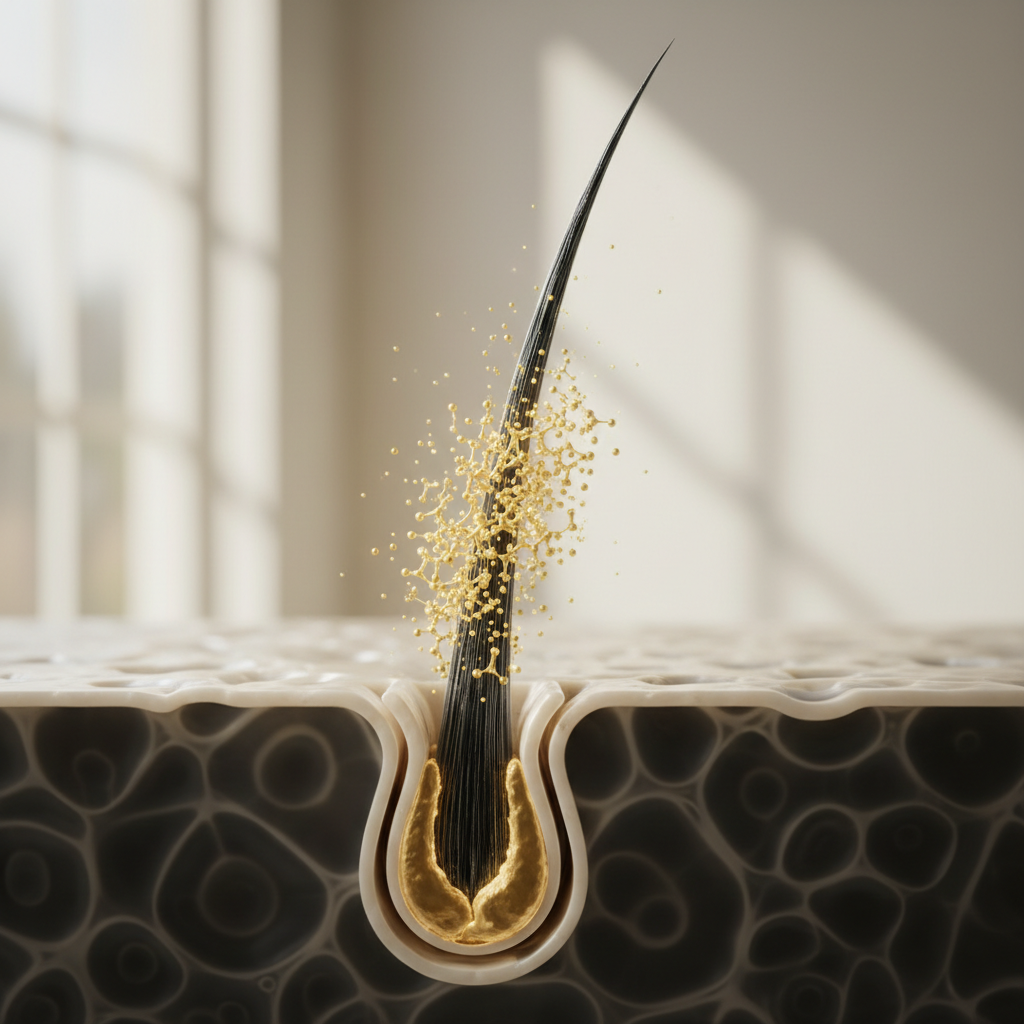
Within the hair follicle matrix, rapid cell division demands a continuous supply of energy and protein building blocks. Biotin aids in processing the sulphur-rich amino acids, including cysteine, that form the cross-linked keratin chains of the hair shaft. When biotin is present at normal physiological levels (roughly 30 micrograms daily for adults, according to dietary health standards), hair follicles manufacture strong, resilient protein fibres. Without it, structural integrity degrades, leading to hair shaft fragility, increased breakage, and widespread shedding.
Signs of genuine biotin deficiency
Because gut bacteria synthesise biotin and the vitamin appears across many everyday foods, true deficiency is unusual. However, when it does occur, it displays distinct clinical markers:
- Diffuse thinning across the entire scalp without a clear pattern.
- A red, scaly, erythematous rash located around the eyes, nose, mouth, and perineum.
- Noticeably brittle, fragile fingernails and toenails that split easily.
- Neurological symptoms in advanced cases, including lethargy, mild depression, tingling in the extremities, or muscle pain.
Deficiency is typically limited to specific clinical scenarios. These include long-term use of anticonvulsants, chronic alcohol dependence, severe gastrointestinal conditions that impair absorption (such as Crohn's disease or coeliac disease), pregnancy, or the rare genetic condition known as biotinidase deficiency. Consuming raw egg whites over several months can also trigger deficiency because the avidin protein binds tightly to biotin, preventing its absorption in the gut.
What you can do to support hair density
If you want to support your natural hair density, a multifaceted approach works best:
- Verify blood levels before supplementing: Speak to your GP to evaluate ferritin, vitamin D, zinc, thyroid hormones (TSH), and full blood count. Blindly taking vitamins rarely resolves hair shedding.
- Prioritise dietary sources: Eat nutrient-dense whole foods. Egg yolks, salmon, sunflower seeds, almonds, sweet potatoes, and spinach provide biotin alongside the proteins and micronutrients necessary for hair synthesis.
- Protect hair against breakage: Mechanical damage mimics loss of density. When individual strands snap along the shaft, the mid-lengths and ends appear thin, even if follicle density at the root remains unchanged. Use gentle detangling methods and reduce thermal stress.
- Optimise the scalp environment: Topical care can stimulate circulation, support scalp hygiene, and reinforce the outer hair shaft.
Topical formulations and supportive haircare
Watermans approaches hair density by targeting the topical health of the scalp and the resilience of the existing hair fibre. While dietary supplements work internally, topical formulations deliver targeted ingredients directly to the scalp surface.
Watermans Grow Me Shampoo and Condition Me Conditioner blend ingredients such as biotin, caffeine, rosemary extract, niacinamide, and argan oil. In topical cosmetics, biotin helps condition the hair fibre and support surface hydration, while caffeine and rosemary help invigorate the scalp skin. This approach supports hair that feels thicker, looks fuller, and resists day-to-day breakage, complementing a healthy lifestyle without interfering with internal biochemistry.
The risks of high-dose biotin supplementation
Taking excessive amounts of biotin carries clear diagnostic risks. Over-the-counter hair supplements frequently contain 5,000 to 10,000 micrograms per serving, which is hundreds of times higher than the recommended daily intake.
In 2017 and 2019, health authorities, including the US Food and Drug Administration (FDA) and the UK Medicines and Healthcare products Regulatory Agency (MHRA), issued safety alerts regarding biotin interference in laboratory tests. High concentrations of biotin in the blood can falsely alter immunoassay results. This can lead to falsely low readings of troponin (a critical biomarker used to diagnose heart attacks) or falsely abnormal thyroid hormone readings, sometimes leading to an incorrect diagnosis of Graves' disease. Always inform your doctor if you take any supplement containing biotin before undergoing routine or emergency blood tests.
Frequently asked questions about Biotin for Hair Density
Can Biotin for Hair Density bring back dead hair follicles?
No. Biotin cannot revive follicles that have fully miniaturised or scarred over. Follicles lost to late-stage androgenetic alopecia or cicatricial alopecia cannot produce new fibres simply through vitamin supplementation. Biotin only assists active, living follicles in synthesising keratin when a physical deficiency is present.
How long does biotin take to work if a deficiency is present?
If a medical professional identifies a true deficiency and prescribes supplementation, improvement usually takes three to six months. Hair grows at roughly one centimetre per month, so newly strengthened fibres require several months to emerge from the scalp and contribute to visible density.
Is topical biotin as effective as taking oral tablets?
Topical biotin acts as a conditioning agent rather than a systemic treatment. When applied in shampoos or serums, biotin helps moisturise the scalp and coat the cuticle, improving elasticity and reducing breakage. It does not penetrate into the bloodstream to alter internal metabolic pathways.
Why do my hair and nails feel stronger after taking biotin?
Many people experience a placebo effect or benefit from concurrent dietary changes. Furthermore, supplements often combine biotin with zinc, iron, or amino acids. If you were low in zinc or protein, those ingredients may improve your hair, leading you to credit the biotin.
Does stopping biotin cause hair to shed?
Stopping biotin will not cause shedding unless you have a chronic, unaddressed deficiency. If your body was relying on supplements to correct an underlying absorption problem, stopping might cause shedding to return once tissue levels drop. For people with normal diets, stopping supplements causes no hair loss.
Summary on Biotin for Hair Density
Understanding the role of Biotin for Hair Density helps separate cosmetic marketing from dermatological reality. Biotin remains an irreplaceable nutrient for normal human metabolism, working behind the scenes to help build structural proteins like keratin. However, taking large oral doses does not multiply hair follicles, prevent genetic thinning, or magically increase hair count if your body already receives sufficient daily intake.
To maintain optimal hair density, focus on a balanced, nutrient-rich diet, keep your scalp clean and well-nourished, minimise mechanical breakage, and consult a qualified GP, trichologist, or dermatologist whenever you experience sudden or progressive thinning.
Sources and references
- Patel, D.P., Swink, S.M. And Castelo-Soccio, L., 2017. 'A Review of the Use of Biotin for Hair Loss', Skin Appendage Disorders, 3(3), pp. 166-169.
- U.S. Food and Drug Administration (FDA), 2019. 'Update: FDA Warns that Biotin May Interfere with Lab Tests'. Safety Alert.
- Trüeb, R.M., 2016. 'Serum Biotin Levels in Women Complaining of Hair Loss', International Journal of Trichology, 8(2), pp. 73-77.
- British Association of Dermatologists (BAD), 2020. 'Telogen Effluvium: Clinical Guidelines'.
- National Institutes of Health (NIH) Office of Dietary Supplements, 2021. 'Biotin: Fact Sheet for Health Professionals'.
Find these ingredients in Watermans products
- Niacinamide: you will find this ingredient in our Hair Mask.