The Biology of the Hair Cuticle: Structure, Function, and Fibre Protection
9 min read ·
Discover the biology of the hair cuticle, its microscopic sub-layers, natural lipid mantle, and practical ways to protect your hair from breakage.

Quick answer: The biology of the hair cuticle refers to the outermost protective shield of the hair shaft, consisting of 5 to 10 overlapping layers of dead, keratinised cells arranged like roof tiles. Understanding the biology of the hair cuticle reveals how hair manages moisture, resists mechanical friction, and reflects light. However, because cuticle cells are biologically non-living tissue once emerged from the scalp, they cannot regenerate or biologically heal themselves once structurally damaged or stripped away.
Key takeaways
- The hair cuticle consists of 5 to 10 overlapping flat scales composed of hardened, amorphous keratin and structural lipids.
- An intact cuticle relies on a thin surface lipid barrier dominated by 18-methyleicosanoic acid (18-MEA), which renders the fibre naturally hydrophobic.
- Each cuticle scale features distinct internal sub-layers: the epicuticle, the exocuticle, the endocuticle, and the cell membrane complex (CMC).
- Alkaline formulations (above pH 7.0) cause cuticle scales to swell and flare, while slightly acidic environments (pH 4.5 to 5.5) keep them tight and compact.
- Mechanical abrasion, chemical processing, and heat degrade the cuticle layers permanently, leading to porous hair and fibre snapping rather than follicular hair loss.
The biology of the hair cuticle: what the evidence shows
Microscopic and biochemical research demonstrates that the cuticle serves as the mechanical and chemical barrier for the delicate inner cortex. The biology of the hair cuticle reveals a complex composite structure rather than a simple waxy coating. Each individual cuticle cell is roughly 0.3 to 0.5 micrometres thick and about 35 to 45 micrometres long, pointing towards the hair tip.
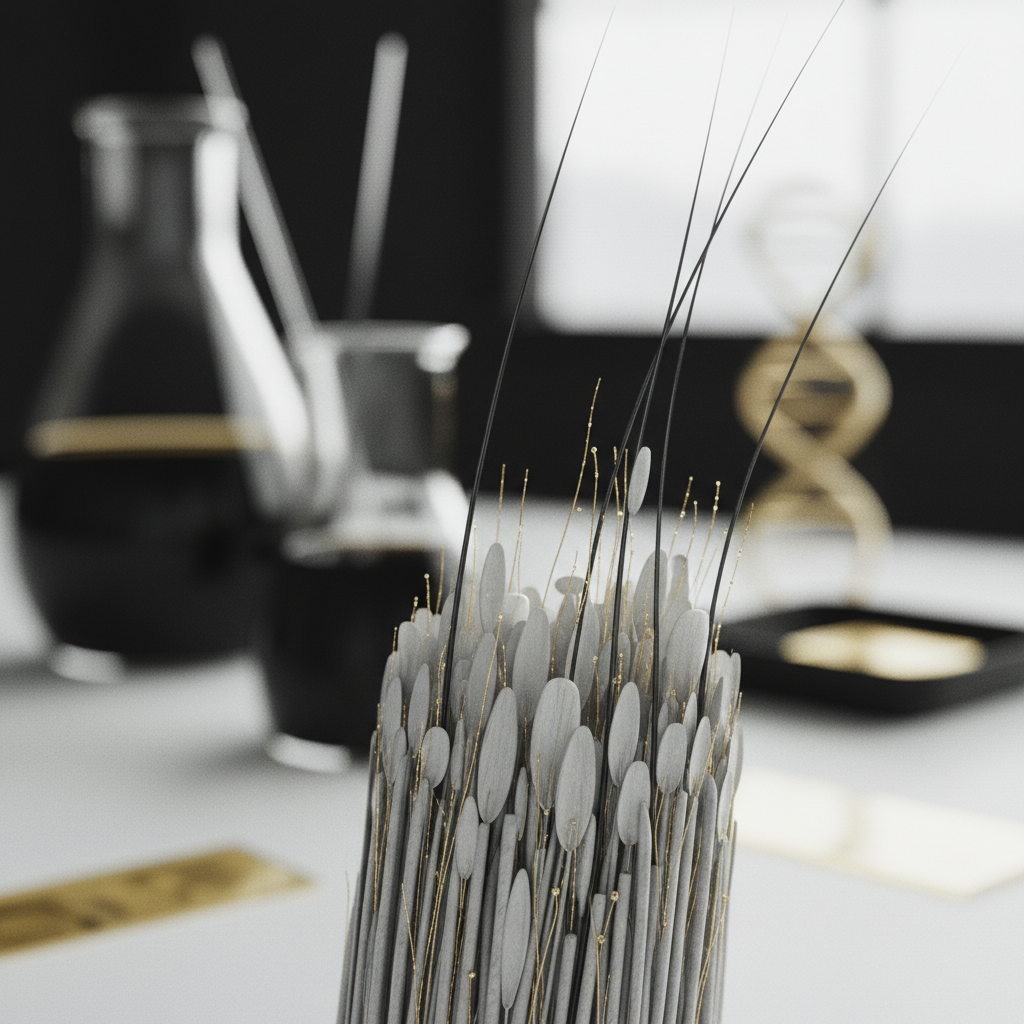
At the very surface sits the F-layer, a monolayer of fatty acids chemically bonded via thioester linkages to the protein substrate. The dominant lipid in this layer is 18-methyleicosanoic acid (18-MEA). This fatty layer makes healthy virgin hair hydrophobic, meaning it actively repels liquid water and limits excessive internal swelling.
Beneath the lipid mantle, each scale contains three distinct protein zones:
- The Epicuticle: A thin outer membrane (about 5 to 10 nanometres thick) rich in cystine (approx. 12 percent), resistant to chemical attack.
- The Exocuticle: A dense layer comprising roughly 55 percent of the cell thickness, heavily cross-linked with cystine (approx. 30 percent), conferring rigid physical resistance.
- The Endocuticle: An inner zone low in cystine (approx. 3 percent), rendering it softer, mechanically weaker, and more prone to swelling when exposed to water or alkaline solutions.
Connecting adjacent cuticle cells to each other and to the underlying cortex is the cell membrane complex (CMC). The CMC contains delta-layers and intercellular cement made up of ceramides, free fatty acids, and structural proteins that allow slight flex during styling while preventing shearing.
| Layer / Component | Approximate Cystine Content | Primary Function | Vulnerability |
|---|---|---|---|
| F-Layer (18-MEA) | N/A (Lipid monolayer) | Hydrophobicity, lubricity, water repellency | Bleach, permanent tint, harsh alkaline cleaners |
| Epicuticle | Moderate (~12%) | Semi-permeable outer boundary | Heavy mechanical abrasion, UV oxidation |
| Exocuticle | High (~30%) | Structural hardness, rigidity, barrier defence | Extreme heat (>200°C), repeated alkaline swelling |
| Endocuticle | Low (~3%) | Cushioning and flexibility | Rapid hydration cycles, hygral fatigue |
| Cell Membrane Complex (CMC) | Low-to-moderate | Intercellular adhesion, lipid pathway | Solvents, chemical relaxers, repeated detergent stripping |
What the evidence does not show
Scientific literature clearly delineates what cuticle biology cannot do:
- It cannot heal biologically: Hair shafts contain no living cells, blood vessels, or metabolic repair mechanisms. Products claiming to permanently "repair" or "fuse" broken cuticle scales back into their original biological state do not alter the cellular reality. They deposit film-forming polymers, proteins, or synthetic lipids that temporarily coat the damage.
- It is not an impenetrable shield: Water vapor easily penetrates an intact cuticle layer, which is normal and healthy for fibre elasticity. The cuticle is semi-permeable, not waterproof plastic.
- Cuticle damage does not trigger root hair loss: Flaking, chipped, or missing cuticle scales lead to friction, knots, and hair breakage (shaft snapping). They have no biological connection to follicular shedding (telogen effluvium) or pattern hair loss (androgenetic alopecia).
The mechanism of cuticle damage
Cuticle degradation occurs through physical, thermal, and chemical mechanisms that strip its protective architecture in stages.
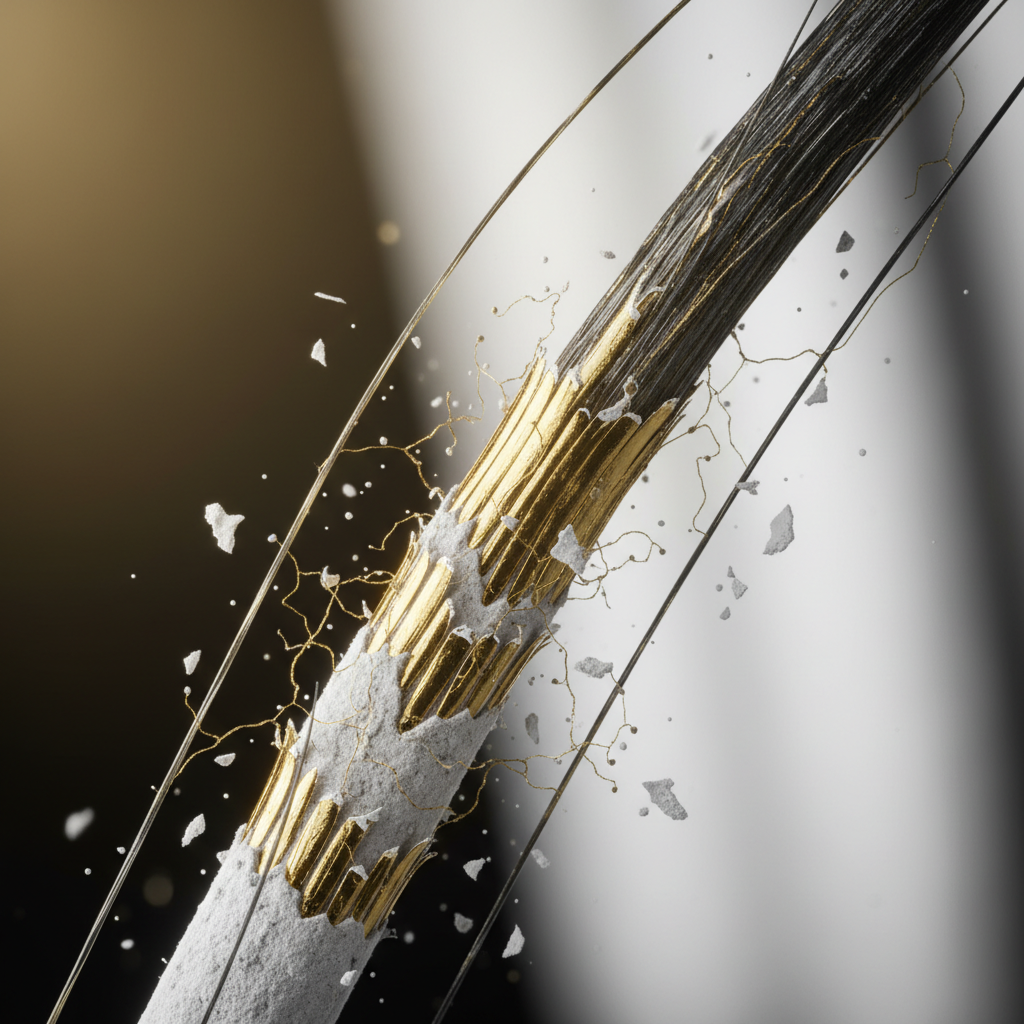
1. Loss of the 18-MEA lipid layer
A single session of permanent hair colouring or bleaching cleaves the covalent thioester bonds holding 18-MEA to the epicuticle. The fibre instantly shifts from hydrophobic (water-repelling) to hydrophilic (water-attracting). Hydrophilic hair absorbs liquid water excessively, expanding by up to 15 to 20 percent in diameter, which repeatedly strains the cellular boundaries.
2. Alkaline lifting and swelling
The hair fibre's isoionic point sits around pH 3.67, and its resting surface pH is typically between 4.5 and 5.5. When exposed to alkaline solutions such as salon bleaches (pH 9.0 to 11.0), permanent waving agents, or harsh soaps, the cuticle cells swell and their free edges lift outward. Repeated lifting weakens the underlying endocuticle and disrupts the cell membrane complex.
3. Mechanical shearing and thermal blistering
Combing lifted scales causes micro-fractures along the scale edges. Over time, physical force chips the scales away entirely, exposing the cortical cells beneath. Thermal tools applied above 180°C to 200°C can boil trapped moisture inside the fibre, causing cuticle blistering and permanent scale detachment.
Signs of cuticle compromise
You can assess cuticle integrity through both visual and tactile cues:
- High porosity: Wet hair absorbs moisture rapidly but dries out within minutes, feeling rough and straw-like.
- Tangling and friction: When scales lift or wear away, neighbouring fibres catch against one another, creating chronic knotting during washing and styling.
- Dullness and lack of shine: A smooth, aligned cuticle reflects light like a flat mirror. A chipped or lifted cuticle scatters light in all directions, making the hair look matte and lacklustre.
- Fraying and split ends (Trichoptilosis): Once the cuticle scales slough off completely, the cortex is stripped bare and unspools longitudinally.
Managing and protecting the hair cuticle
Because you cannot biologically regenerate dead keratin scales, prevention and surface conditioning are your primary tools.
- Respect the pH balance: Use cleansing and conditioning products buffered to a slightly acidic pH (4.5 to 5.5). Mild acidity contracts swollen cuticles, encouraging scales to lie flat against the shaft.
- Replace lost slip with conditioning lipids: While you cannot naturally replace 18-MEA, conditioning agents like behentrimonium chloride, amodimethicone, and plant-derived triglycerides deposit a hydrophobic film over bare patches. This reduces combing friction and protects remaining scales.
- Control thermal exposure: Keep hot tools below 180°C and always apply heat protectants containing film-forming silicones or polymers that redistribute heat evenly across the surface.
- Minimise friction during washing: Avoid roughly piling hair onto the crown while shampooing. Work cleansers through the scalp with fingertips, allowing the suds to rinse gently down the lengths.
- Address hard water mineral buildup: High levels of calcium and magnesium carbonate can crystallise on lifted cuticle scales, creating a rough, brittle texture that accelerates physical chipping.
Watermans: Supporting fibre condition and resilience
When caring for the outer fibre, mechanical protection works hand-in-hand with scalp vitality. Watermans approaches haircare by pairing scalp-nurturing botanicals with cosmetic conditioning agents that support strand smoothness. Watermans GrowMe shampoo and ConditionMe conditioner incorporate ingredients such as hydrolysed lupin protein, niacinamide, caffeine, and argan oil.
While proteins and plant oils cannot biologically rebuild damaged scales, they temporarily coat and fill structural fissures along the cuticle layer. This reinforces slip, reduces wet combing friction, and minimises the snapping breakage that occurs when compromised cuticles leave the cortex exposed.
When the cause may be something else
If your hair appears dry, sparse, or brittle, consider whether the problem originates along the fibre or within the follicle:
- Hair breakage versus hair shedding: Check the ends of shed strands. A white bulb at the root end signifies that a strand has naturally completed its telogen cycle and detached from the follicle. A strand snapped cleanly with no bulb indicates structural cuticle failure and cortex breakage.
- Diffuse thinning: If you notice sudden scalp-wide shedding of more than 100 to 150 hairs daily, the underlying cause is likely physiological (such as post-illness telogen effluvium, nutritional deficiency, or hormonal shifts), not cuticle damage.
- Genetic hair disorders: Rare structural anomalies like monilethrix (beaded hair) or trichorrhexis nodosa (node-like swelling and breakage) involve internal cortical defects that mimic routine cuticle wear.
When to seek professional advice
Consult a qualified trichologist or dermatologist if you observe:
- Sudden, excessive shedding from the roots that lasts longer than three months.
- Distinct patches of hair loss on the scalp accompanied by redness, scaling, burning, or pain.
- Unexplained hair fragility from the scalp level in the absence of chemical processing, bleaching, or heat styling.
- Severe breakage unresponsive to deep conditioning and reduced mechanical styling.
Frequently asked questions about The Biology of the Hair Cuticle
How many layers make up the hair cuticle?
In human hair, the cuticle typically consists of 5 to 10 overlapping cellular layers. Coarse, thick hair types often feature up to 10 to 12 layers, while fine hair may only possess 4 to 6 layers. This makes fine hair naturally more susceptible to chemical and mechanical damage.
Can products permanently repair cuticle scales?
No cosmetic product can permanently repair the cuticle. The biology of the hair cuticle explains that the shaft is non-living keratinised tissue without metabolic healing capabilities. Shampoos, masks, and treatments temporarily bind to damaged sites or coat the fibre with lipids and polymers, which wash away over time.
How does pH affect the hair cuticle?
Alkaline solutions (above pH 7.0) break ionic bonds and cause cuticle scales to swell and open, which allows salon chemicals to penetrate the cortex. Acidic solutions (around pH 4.5 to 5.5) contract the cuticle scales, flattening them down to preserve inner moisture, minimise friction, and boost shine.
What is 18-MEA and why is it important to cuticle biology?
18-methyleicosanoic acid (18-MEA) is a structural fatty acid covalently bound to the outer epicuticle. It provides hair with natural water repellency (hydrophobicity) and lowers friction between fibres. Chemical bleaching and colouring permanently strip 18-MEA, leaving hair porous, hydrophilic, and vulnerable to damage.
Fibre preservation and structural health
A thorough grasp of the biology of the hair cuticle shifts how you care for your hair every day. Because these outer keratinised scales lack biological cellular repair mechanisms, every styling decision, chemical service, and wash routine either preserves or erodes the hair's protective perimeter. By respecting the natural acid mantle, using lipid-rich conditioning agents, and minimising physical and thermal stress, you protect the cuticle architecture, ensuring long-term fibre strength, smoothness, and shine.
Sources and references
- Robbins, C. R. (2012). Chemical and Physical Behavior of Human Hair. 5th ed. Springer-Verlag New York.
- Swift, J. A. (1999). "The hair surface, involvement in personal hygiene, styling and styling aids." International Journal of Cosmetic Science, 21(4), 227-239.
- Negri, A. P., et al. (1993). "Detection of 18-methyleicosanoic acid in human hair by gas chromatography-mass spectrometry." Textile Research Journal, 63(2), 109-114.
- Gavazzoni Dias, M. F. (2015). "Hair cosmetics: An overview." International Journal of Trichology, 7(1), 2-15.
- Dawber, R. (1996). "Hair: Its structure and response to cosmetic preparations." Clinics in Dermatology, 14(1), 105-112.
Find these ingredients in Watermans products
- Niacinamide: you will find this ingredient in our Hair Mask.