Best Hair Wash Routine for Thinning Hair: The Evidence-Based Guide
8 min read ·
Discover the evidence-based Best Hair Wash Routine for Thinning Hair to clear sebum, reduce breakage, and support a healthy scalp environment.
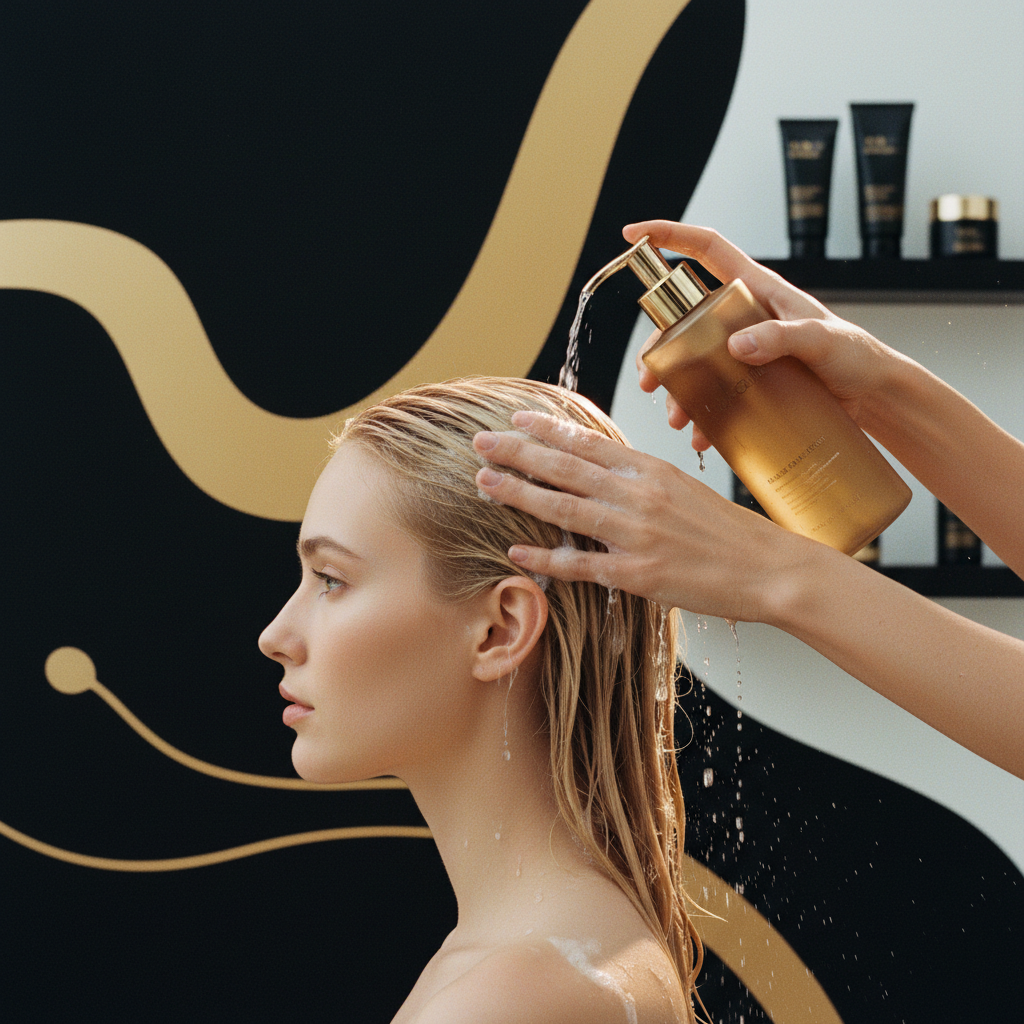
Quick answer: The Best Hair Wash Routine for Thinning Hair balances gentle scalp cleansing with fibre protection to keep follicles clear without causing mechanical friction. Wash every one to two days using lukewarm water, apply a mild shampoo directly to the scalp with light fingertip pressure, and condition only the mid-lengths and ends. While an optimal wash regimen removes dihydrotestosterone-laden sebum, debris, and dead skin to create an ideal growth environment, it cannot reverse genetic miniaturisation on its own.
Key takeaways
- Washing frequency should be determined by your scalp's sebum output, with most thinning hair benefiting from washing every 24 to 48 hours.
- Sebum buildup harbours inflammatory microbes such as Malassezia, which can trigger oxidative stress around vulnerable follicles.
- Mechanical manipulation during washing is responsible for substantial hair breakage; gentle handling prevents unnecessary fibre fracture.
- Clarifying treatments should be limited to once every seven to fourteen days to prevent lipid stripping along the hair shaft.
- True follicular miniaturisation requires medical evaluation, as cosmetic washing routines alter the scalp environment rather than underlying endocrine pathways.
Best Hair Wash Routine for Thinning Hair: what the evidence shows
Research indicates that the Best Hair Wash Routine for Thinning Hair centres on managing the scalp microbiome and minimising tensile stress on wet strands. A common myth suggests that washing thinning hair accelerates shedding. Clinical observation demonstrates the opposite: telogen hairs already resting in the follicle dislodge during washing simply due to light friction. Avoiding washing merely allows these hairs to accumulate, creating the illusion of sudden, heavy loss when you eventually wash.
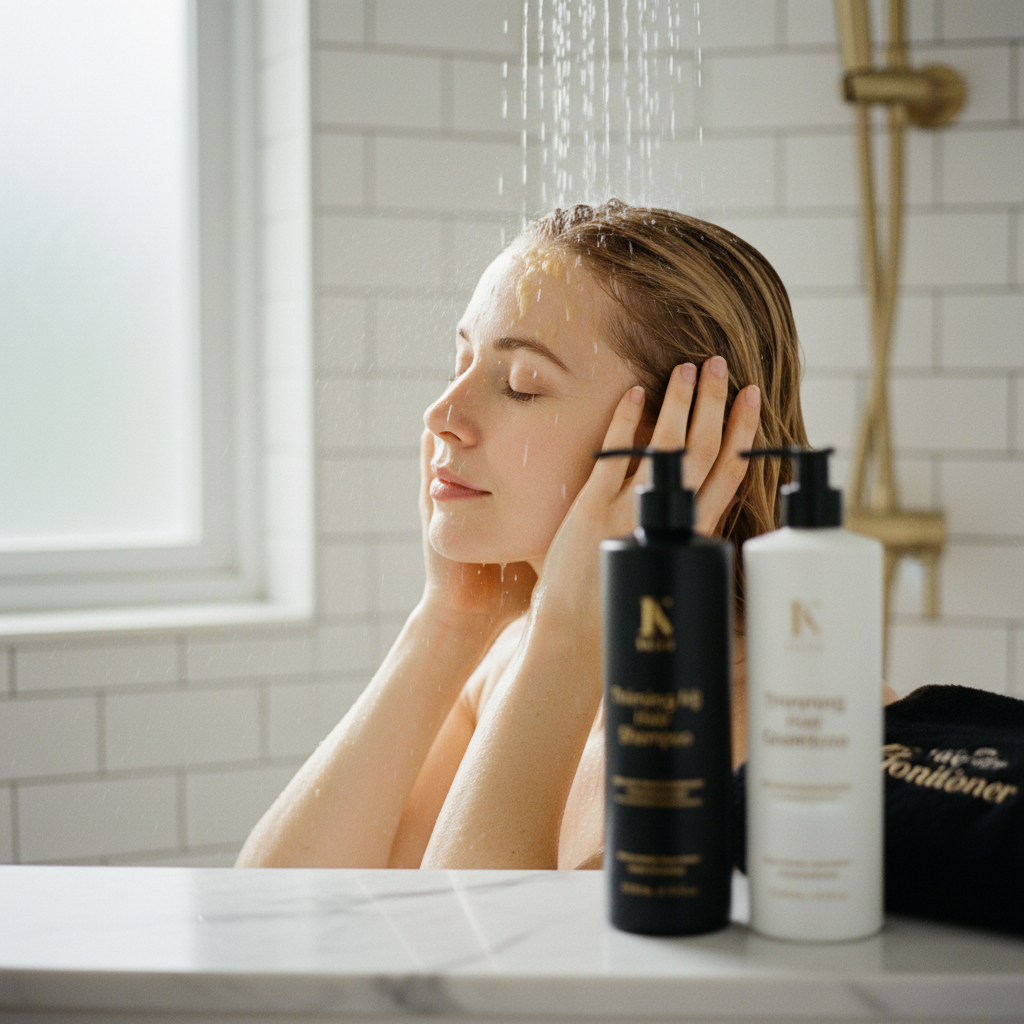
Sebum contains squalene, triglycerides, and fatty acids. When left on the scalp, these lipids oxidise and foster colonisation by Malassezia yeasts. Studies published in the International Journal of Trichology show that untreated scalp inflammation and seborrhoeic conditions significantly worsen hair thinning by inducing premature catagen phase entry. Cleansing the scalp every 24 to 48 hours removes oxidized surface lipids, particulate pollution, and product residue, ensuring that the follicular infundibulum remains unclogged and free of local micro-inflammation.
+------------------+-----------------------------+-------------------------------+
| Step | Recommended Technique | Common Error to Avoid |
+------------------+-----------------------------+-------------------------------+
| Water Temp | Lukewarm (37°C to 38°C) | Hot water (strips lipids) |
| Shampoo Focus | Scalp only; pads of fingers | Scrubbing hair lengths roughly|
| Rinse Duration | Minimum 60 seconds | Leaving surfactant residue |
| Conditioning | Mid-lengths and ends only | Applying conditioner to roots |
| Drying | Microfibre towel blot | Vigorous towel rubbing |
+------------------+-----------------------------+-------------------------------+
Step-by-step: how to wash thinning hair
Adopting a systematic approach protects fine, miniaturising fibres while purifying the dermal surface. Wet hair swells, stretching the protective cuticle layers and rendering the internal cortex vulnerable to permanent structural damage.
1. Pre-wash preparation
Never brush dry, tangled hair roughly right before the shower. Use a wide-toothed comb or your fingers, starting at the ends and working upward. This removes knots without putting sudden tensile load on compromised follicles.
2. Temperature control
Drench the scalp with lukewarm water (roughly 37°C to 38°C). Hot water expands the hair cuticle excessively, leaches structural moisture, and increases erythema on sensitive scalps. Cold water fails to emulsify hardened sebum waxes effectively.
3. Scalp-targeted cleansing
Dispense a 50p-sized amount of sulfate-free or mild surfactant shampoo into your hands. Emulsify it between your palms before applying it directly to the roots. Massage with the soft pads of your fingertips, using small circular motions. Do not bunch the lengths of your hair onto the crown; the runoff lather will cleanse the shaft without rough abrasion.
4. Thorough rinsing
Rinse continuously for at least 60 seconds. Residual surfactants left on the skin disrupt the epidermal acid mantle (normally pH 4.5 to 5.5), creating itching, flaking, and secondary inflammation that mimics or exacerbates shedding.
5. Weightless conditioning
Gently press excess water from the hair shaft before applying conditioner. Choose a lightweight formulation containing hydrolysed proteins or light humectants. Apply strictly from the ears downward. Placing heavy conditioners on the scalp flattens thinning roots and coats the follicular ostia. Rinse with cool-to-lukewarm water.
6. Low-friction drying
Do not twist your hair into a heavy terrycloth turban or scrub it dry. Use a smooth microfibre towel or an old cotton t-shirt to blot and press moisture out of the hair. If blow-drying, apply a heat protectant and use the lowest heat setting, keeping the dryer at least 15 centimetres away from the scalp.
The mechanism: scalp sebum, inflammation, and breakage
Understanding how washing impacts thinning requires distinguishing between three separate hair issues: follicular hair loss (alopecia), hair shedding (telogen release), and hair breakage (fracture of the hair shaft).
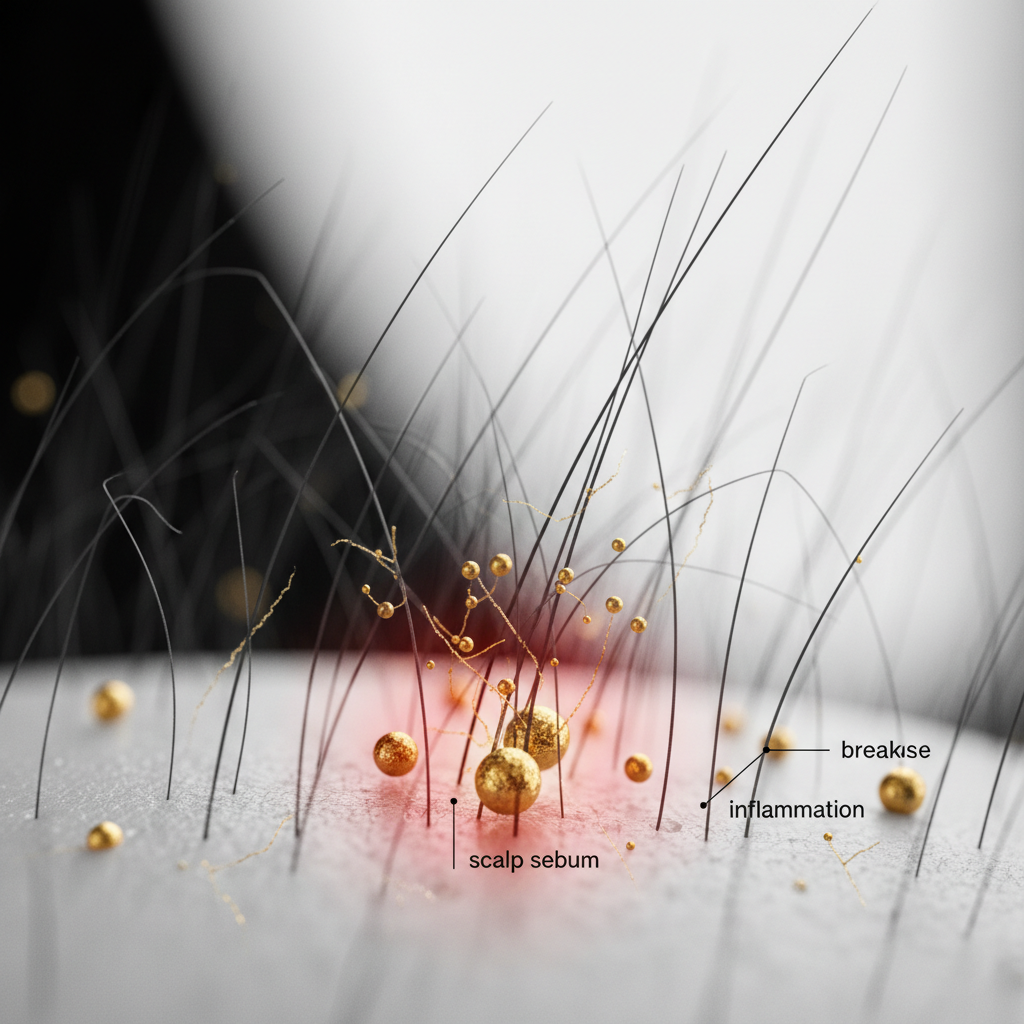
Miniaturisation occurs when dihydrotestosterone (DHT) binds to androgen receptors in genetically susceptible hair follicles, shortening the anagen (growth) phase. While shampoo does not alter androgen receptor genetics, an unwashed scalp accumulates 5-alpha reductase and sebum metabolites right at the follicle opening. This accumulation fuels oxidative stress.
Simultaneously, thinning hair shafts have smaller diameters, lower tensile strength, and fewer cuticle layers. When wet, the hydrogen bonds inside the hair cortex temporarily break, allowing the fibre to stretch up to 30 percent beyond its resting length before breaking. A rough washing technique fractures these delicate strands, leading to noticeable diffuse loss across the mid-lengths that is entirely preventable mechanical breakage, not genetic hair loss.
What the evidence does not show
There is no scientific proof that skipping shampoo saves hair. Natural oils do not "feed" or fertilise the follicle from the outside; hair receives its nutritional supply via microcirculation at the dermal papilla underneath the skin.
Furthermore, cosmetic shampoos cannot cure androgenetic alopecia, alopecia areata, or scarring alopecias. A wash routine creates the biological baseline for healthy growth by reducing inflammatory burden, but it cannot fundamentally rewrite hormonal programming or revive fully fibrosed follicles.
Distinguishing thinning from other conditions
If you notice rapid, widespread shedding rather than a gradual reduction in density over several years, the underlying cause is likely something other than simple progressive thinning.
- Telogen Effluvium: Sudden, dramatic shedding two to four months after a physiological shock (such as severe illness, childbirth, rapid weight loss, or high fever). A gentle wash routine helps manage shedding, but internal recovery dictates the timeline.
- Nutritional Deficiencies: Inadequate ferritin (iron stores), vitamin D, or zinc restricts protein synthesis in the hair matrix. Correcting these levels through diet or supplementation is necessary alongside your topical routine.
- Thyroid Dysfunction: Both hypothyroidism and hyperthyroidism produce dry, brittle, diffuse thinning across the entire scalp.
- Autoimmune Alopecia: Distinct smooth patches or inflamed, scarring borders demand immediate clinical intervention rather than adjustments to shampoo frequency.
Supporting thinning hair with Watermans
When building an intentional routine for fine, low-density hair, product formulation plays a key supporting role. Watermans GrowMe Shampoo is formulated as a daily, nutrient-rich cleanser designed to clear the scalp of debris and sebum while infusing the surface with biotin, rosemary, caffeine, and hydrolysed lupin protein.
Following with Watermans ConditionMe Conditioner provides weightless conditioning that smooths the outer cuticle without dragging down delicate roots. Together, they form a cohesive cleansing framework that reduces grooming-induced breakage and fosters a balanced, healthy-feeling scalp environment.
When to seek professional advice
Schedule an evaluation with a GP, dermatologist, or registered trichologist if you notice:
- Sudden shedding exceeding 100 to 150 hairs daily for more than six consecutive weeks.
- Distinct coin-sized bald spots or receding margins accompanied by tingling, burning, or pain.
- Heavy scaling, yellow crusts, or persistent erythema that does not respond to standard cleansing.
- Widening of the central parting accompanied by a reduction in individual pony-tail thickness.
Frequently asked questions about Best Hair Wash Routine for Thinning Hair
How often should you wash thinning hair?
Most people with thinning hair achieve the best results by washing every one to two days. Leaving long gaps between washes allows sebum, environmental pollutants, and cellular debris to accumulate, which can trigger inflammatory conditions that hinder healthy follicular function. If your scalp is naturally dry, every two to three days may be sufficient.
Will washing my hair every day make thinning worse?
No. Daily washing with a mild, pH-balanced shampoo does not cause hair loss or accelerate thinning. Hairs that shed in the shower are already in the telogen (resting) phase and separated from their blood supply weeks earlier. Daily cleansing simply dislodges these loose hairs alongside daily grime.
What is the Best Hair Wash Routine for Thinning Hair to prevent breakage?
The Best Hair Wash Routine for Thinning Hair to minimise breakage involves gentle pre-detangling, lukewarm water, light fingertip pressure on the roots, and blotting with a microfibre towel. Avoid piling your hair onto your crown while washing, and never aggressively comb or brush wet strands when they are at their weakest.
Should people with thinning hair skip conditioner?
Do not skip conditioner entirely. While applying heavy masks to the scalp will weigh down fine hair, omitting conditioner leaves the hair shaft vulnerable to friction, tangling, and structural breakage. Apply a lightweight conditioner exclusively from mid-lengths to ends to keep the protective cuticle intact.
Final thoughts on washing thinning hair
Finding the Best Hair Wash Routine for Thinning Hair comes down to treating your scalp like skin and your hair lengths like delicate fabric. Regular, gentle cleansing clears away sebum and microbes that drive surface inflammation, while low-friction conditioning protects fine strands from avoidable breakage. Paired with accurate medical diagnosis when shedding is sudden, a thoughtful wash routine protects your existing density and supports your hair's natural growth cycle over the long term.
Sources and references
- British Association of Dermatologists. Alopecia Areata and Telogen Effluvium Guidelines (2021).
- International Journal of Trichology. Scalp Condition and Its Impact on Hair Quality (2019).
- Journal of the American Academy of Dermatology. The Role of Sebum and Malassezia in Scalp Health (2018).
- National Institute for Health and Care Excellence (NICE). Alopecia: Clinical Knowledge Summary (2022).
- Trüeb, R. M. Shampoos: Ingredients, benefits and adverse effects. Journal of the European Academy of Dermatology and Venereology (2018).
Find these ingredients in Watermans products
- Zinc: you will find this ingredient in our Hair Vitamins.