Afro Hair Sebum Distribution: Science, Structure, and Moisture
7 min read ·
Understand the science of Afro Hair Sebum Distribution. Discover why coiled hair experiences dry ends, how curl geometry blocks lipids, and how to prevent breakage.

Quick answer: Afro Hair Sebum Distribution refers to how natural lipid secretions from the scalp travel along tightly coiled hair shafts. Because afro-textured hair features an elliptical cross-section, sharp twists, and multiple curvature points, sebum struggles to migrate down the fibre through capillary action. The scalp produces normal lipid levels, but the lengths remain lipid-depleted. The main limitation is geometry: structural bends impede natural lipid spreading, leaving ends vulnerable to mechanical friction, moisture loss, and breakage if external conditioning is not introduced.
Key takeaways
- Scalp sebaceous glands in individuals with afro hair produce similar amounts of sebum to other hair types, meaning reduced fibre lubrication is structural, not glandular.
- The tight coiling, elliptical cross-section, and frequent twists create high physical resistance, stalling sebum within the first 2 to 5 centimetres of the root.
- Sebum deficiency along the hair shaft leaves the outer cuticles exposed, increasing vulnerability to friction, moisture evaporation, and mechanical snapping.
- True hair breakage along the shaft must not be confused with follicular shedding or physiological hair loss.
- Managing distribution requires external emollient layers, targeted scalp cleansing, and mechanical assistance through gentle stretching or protective styling.
Afro Hair Sebum Distribution: what the evidence shows
Research into ethnic hair morphology demonstrates that Afro Hair Sebum Distribution is governed primarily by physical geometry rather than chemical deficiency. Biomechanical evaluations published in cosmetic and dermatological literature, including investigations by the International Journal of Cosmetic Science, confirm that the sebaceous glands of Black individuals function at normal rates. The issue lies entirely in transit.
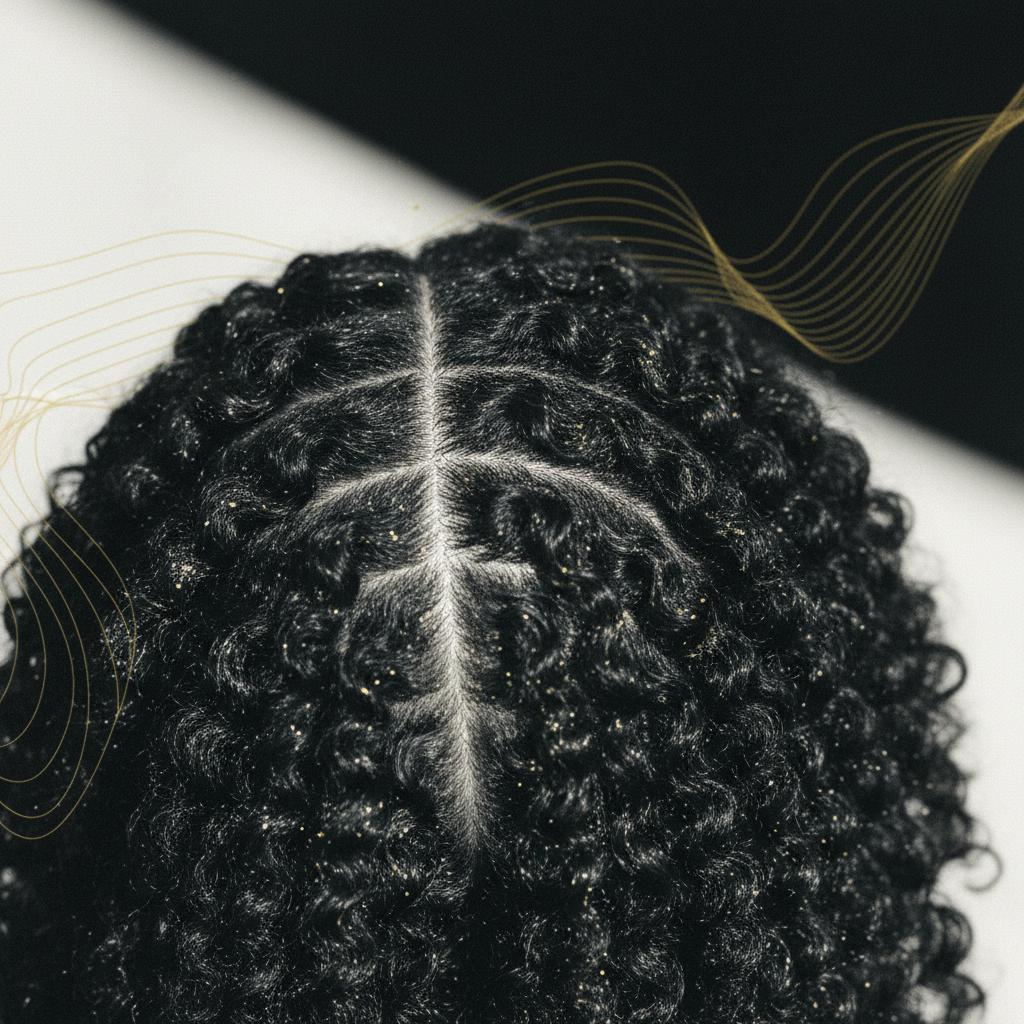
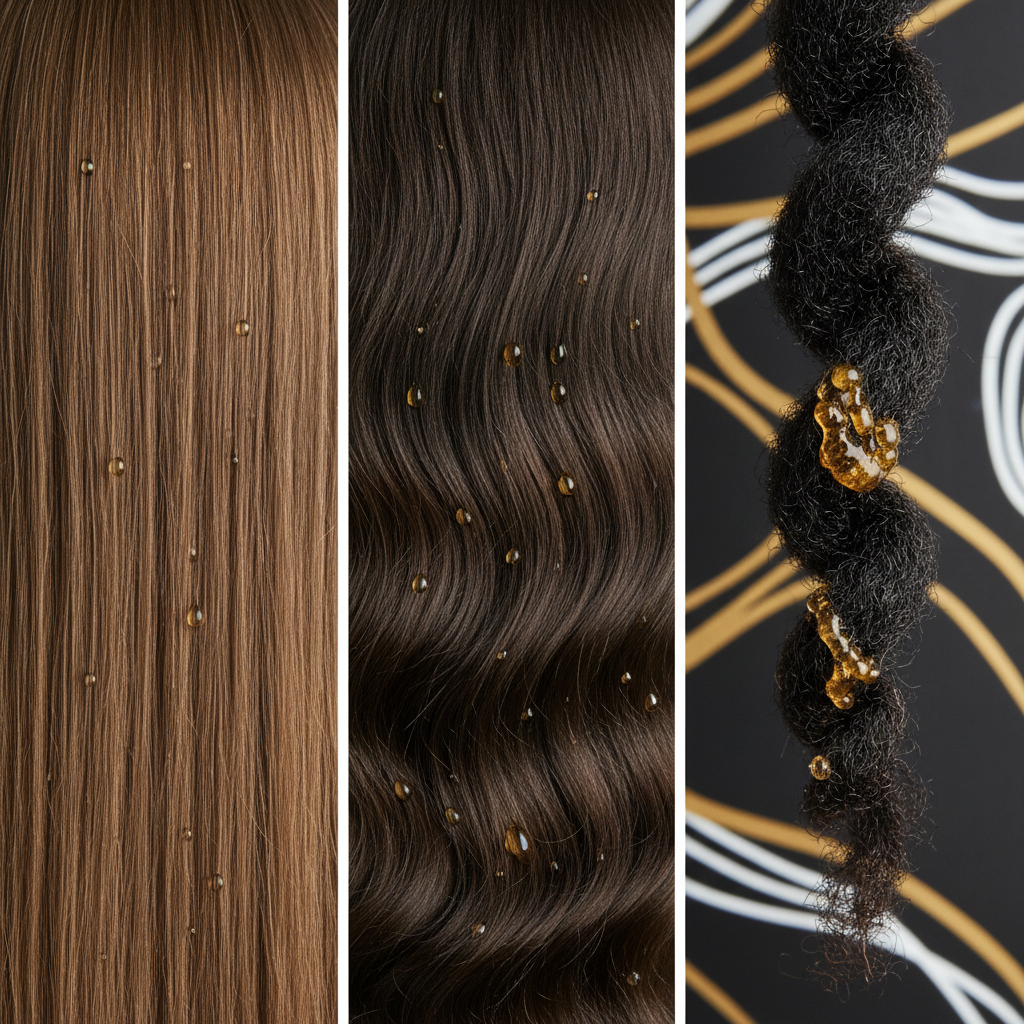
In straight fibres with circular cross-sections, sebum migrates smoothly along the cuticle edges via capillary action and gravitational movement. Gravity and natural head movement allow the lipid layer to coat the fibre from root to tip. In contrast, afro hair grows from curved follicles, emerging as a flattened, ribbon-like structure that curls tightly upon itself.
Every curve, kink, and twist introduces an angle of resistance. Sebum is a thick, viscous mixture of squalene, wax esters, triglycerides, and free fatty acids. It cannot easily turn sharp corners without mechanical aid. As a result, the proximal end (the hair closest to the scalp) receives an abundant coating, while the mid-lengths and distal tips receive virtually none. Controlled studies examining surface lipids reveal that distal afro hair fibres possess significantly lower lipid surface concentrations compared to straight fibres of equivalent length.
The mechanical consequences of stalled lipid migration
The absence of continuous sebum coating creates distinct structural vulnerabilities along the hair shaft:
- Cuticle lifted edges: Sebum smooths the edges of cuticle scales. Without this protective coating, cuticles lift and chip away under everyday friction.
- Elevated moisture loss: Sebum forms a semi-occlusive layer that slows the evaporation of water from the inner cortex. Lipid-depleted fibres lose internal moisture rapidly when ambient humidity drops.
- Increased inter-fibre friction: When unprotected strands rub against each other, the coefficient of friction spikes, leading directly to tangling and single-strand knots (trichonodosis).
- Fibre breakage: High friction combined with moisture depletion leads to mechanical breakage along the shaft, completely distinct from follicular hair shedding.
Straight Hair Fibre (Circular Cross-Section):
Scalp [==Sebum==] ───────────────────────────> Tip (Even coating)

Afro Hair Fibre (Elliptical, Coiled Cross-Section):
Scalp [==Sebum==] ───\___/───\___/───X Tip (Lipid-depleted)
 (Curvature blocks flow)
Comparing sebum dynamics across hair types
| Structural Characteristic | Straight Hair (Type 1) | Wavy / Curly Hair (Type 2 to 3) | Afro / Coiled Hair (Type 4) |
|---|---|---|---|
| Follicle Shape | Straight, cylindrical | Slightly curved | Distinctly curved, hook-shaped |
| Fibre Cross-Section | Circular or near-circular | Oval | Elliptical to flattened ribbon |
| Sebum Travel Rate | Fast (reaches tips within 24 to 48 hours) | Moderate (slows past mid-lengths) | Extremely low (rarely passes 2 to 5 cm) |
| Surface Friction | Low | Medium | High (cuticles exposed and dry) |
| Primary Breakage Risk | Low friction, chemical over-processing | Mechanical brush damage | Inter-fibre friction, tensile stress at curve points |
What the evidence does not show
There is no credible scientific evidence showing that afro-textured scalps are naturally "dry" in terms of sebum generation. Biopsies and sebumeter readings show normal sebaceous gland volume and active lipid production.
Furthermore, evidence does not show that applying heavy mineral oils to the scalp improves Afro Hair Sebum Distribution. Heavy greases applied directly to the skin do not encourage natural sebum to travel faster. Instead, they congest the follicular openings, trap dead keratinocytes, and create a breeding ground for Malassezia yeasts, which can lead to seborrhoeic dermatitis.
Crucially, cosmetic breakage caused by low lipid protection must never be diagnosed as alopecia. Alopecia involves follicular damage, miniaturisation, or systemic disruption of the hair growth cycle. Snapping mid-shaft is purely mechanical and cosmetic.
Practical strategies to support afro hair lipid balance
Because natural sebum cannot travel down the shaft on its own, your haircare routine must simulate that distribution manually.
1. External lubrication through layering
Mimic natural sebum by applying emollient plant oils and butters directly to the mid-lengths and ends. Fatty acids such as oleic, linoleic, and palmitic acids work to seal cuticles and cushion the shaft against abrasion. Apply water-based leave-in conditioners first to hydrate the cortex, followed by an oil or butter to lock that moisture in.
2. Manual distribution techniques
While aggressive brushing breaks dry afro hair, gentle finger-detangling or using a wide-tooth comb on thoroughly conditioned, wet hair helps distribute emollients from the mid-lengths down to the fragile tips.
3. Scalp-focused cleansing
Because sebum stays near the root, the scalp can experience product build-up and oily debris even while the ends are dry. Cleanse the scalp regularly with a gentle, sulphate-free shampoo to remove oxidised lipids and flaky dead cells. Keep the cleansing focus on the scalp skin, allowing the suds to run down the lengths without aggressively stripping them.
4. Protective styling
To reduce the rapid loss of added emollients and limit friction, wear protective styles such as twists, braids, or buns. These styles keep fibres bundled together, reducing the exposed surface area and retaining artificial lipid coatings for longer.
When low moisture is caused by something else
If your hair snaps rapidly despite regular conditioning, look beyond structural sebum distribution. Chemical treatments such as relaxers, bleaching, and permanent dyes alter the protein bonds within the cortex and strip away the 18-methyleicosanoic acid (18-MEA) layer that naturally waterproofs the cuticle. Once 18-MEA is lost, fibres become highly porous, absorbing and losing water almost instantly.
Environmental elements like hard water can also leave mineral deposits (such as calcium carbonate and magnesium) that coat the shaft, preventing added conditioning products from penetrating. In addition, internal nutritional factors, including iron deficiency or insufficient protein intake, can produce weaker keratin structures that break regardless of surface lubrication.
When to seek professional advice
Consult a qualified trichologist or dermatologist if you notice:
- Significant shedding where hairs fall out with a white bulb intact at the root.
- Visible patches of thinning, receding hairlines, or sudden scalp exposure.
- Persistent scalp itching, redness, flaking, or pain, which may indicate seborrhoeic dermatitis or scalp psoriasis.
- Progressive breakage that does not respond to regular moisture, protein balance, or protective handling.
Frequently asked questions about Afro Hair Sebum Distribution
Why does afro hair feel dry if the scalp produces normal sebum?
The tight coils and sharp bends of afro hair create physical barriers that block natural sebum from sliding down the fibre. While your scalp has plenty of natural oils, the mid-lengths and ends remain uncoated, leaving them exposed to dry air and friction.
Can brushing help Afro Hair Sebum Distribution?
Aggressive dry brushing will snap tightly coiled hair. Unlike straight hair, where boar-bristle brushing distributes oils safely, afro hair should only be detangled or manipulated when damp and lubricated with a slippery conditioner to prevent mechanical breakage.
Does an oily scalp mean afro hair is well moisturised?
No. An oily scalp merely shows that the sebaceous glands are active. Because Afro Hair Sebum Distribution is restricted by hair geometry, an individual can easily have an oily, flaky scalp alongside severely dehydrated, brittle ends.
How often should afro hair be washed if sebum moves slowly?
Most stylists and trichologists recommend washing every 7 to 14 days. This window prevents sebum and product build-up on the scalp while avoiding the drying effects of over-washing the naturally lipid-depleted hair ends.
Supporting hair health and fibre resilience
Understanding the biomechanics of Afro Hair Sebum Distribution allows you to tailor your hair care approach with precision. Because natural lipids cannot navigate tight coils alone, healthy retention relies on conscious external care: gentle scalp cleansing to remove accumulated root oils, paired with targeted emollient application on the lengths. To keep your scalp foundation clean and balanced without over-drying delicate strands, Watermans provides carefully formulated haircare solutions designed to nurture the scalp environment and support stronger-feeling hair from root to tip. By working alongside your hair's natural geometry rather than fighting it, you protect the fibre, minimise breakage, and maintain soft, resilient hair.
Sources and references
- International Journal of Cosmetic Science: Cosmetic and physical properties of African hair (2007)
- Journal of Investigative Dermatology: Structure and mechanical properties of human hair fibres (2009)
- British Association of Dermatologists: Hair structure and cosmetic hair care guidelines (2020)
- Journal of the American Academy of Dermatology: Hair breakage in normal and weathered hair (2010)