Single Strand Knots Trichonodosis: Causes, Science, and Solutions
9 min read ·
Single Strand Knots Trichonodosis occurs when curly or coiled hair loops and knots itself. Learn the clinical causes, mechanical mechanisms, and evidence-based prevention.
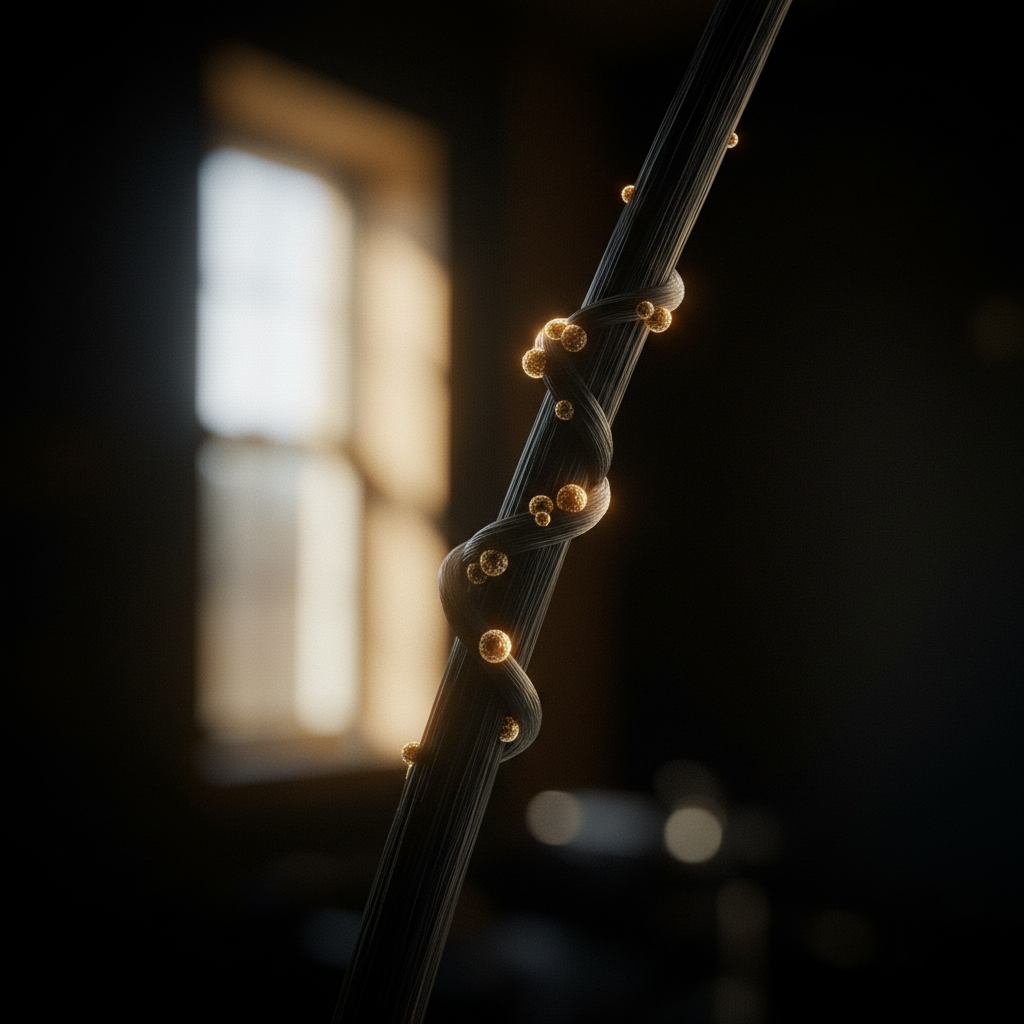
Quick answer: Single Strand Knots Trichonodosis refers to a physical hair shaft disorder where an individual strand loops and ties itself into a microscopic knot. Commonly called fairy knots, these formations predominantly affect tightly coiled, curly, and afro-textured hair due to elliptical follicle geometry and mechanical friction. The main limitation is that formed knots cannot be untied or repaired with conditioning products; once a knot forms, it creates a permanent structural weak point that requires clean trimming to prevent severe breakage further up the hair fibre.
Key takeaways
- Single strand knots, clinically termed trichonodosis, occur when a single hair fibre loops around itself and tightens into a knot.
- They are driven by hair geometry (elliptical, curved shafts) combined with mechanical friction from washing, detangling, and fabric contact.
- A knot creates a focal point of high stress, stripping the protective cuticle and predisposing the shaft to longitudinal splitting or transverse fracture.
- Topical hair products cannot untie or dissolve these knots; physical removal with sharp shears is the only permanent solution.
- Preventative strategies focus on reducing friction, maintaining moisture-lipid balance to lower the friction coefficient, and keeping curls elongated during drying and sleeping.
Single Strand Knots Trichonodosis: what the evidence shows
Trichonodosis is classified in dermatological literature as an acquired hair shaft abnormality. First described comprehensively in clinical dermatology in the late nineteenth and early twentieth centuries, it presents as single or multiple knots along the hair shaft. While trichonodosis can technically occur on straight or wavy hair subjected to severe mechanical agitation, clinical surveys and trichological examinations show it is overwhelmingly concentrated in tight curly and afro hair patterns (types 3 and 4).
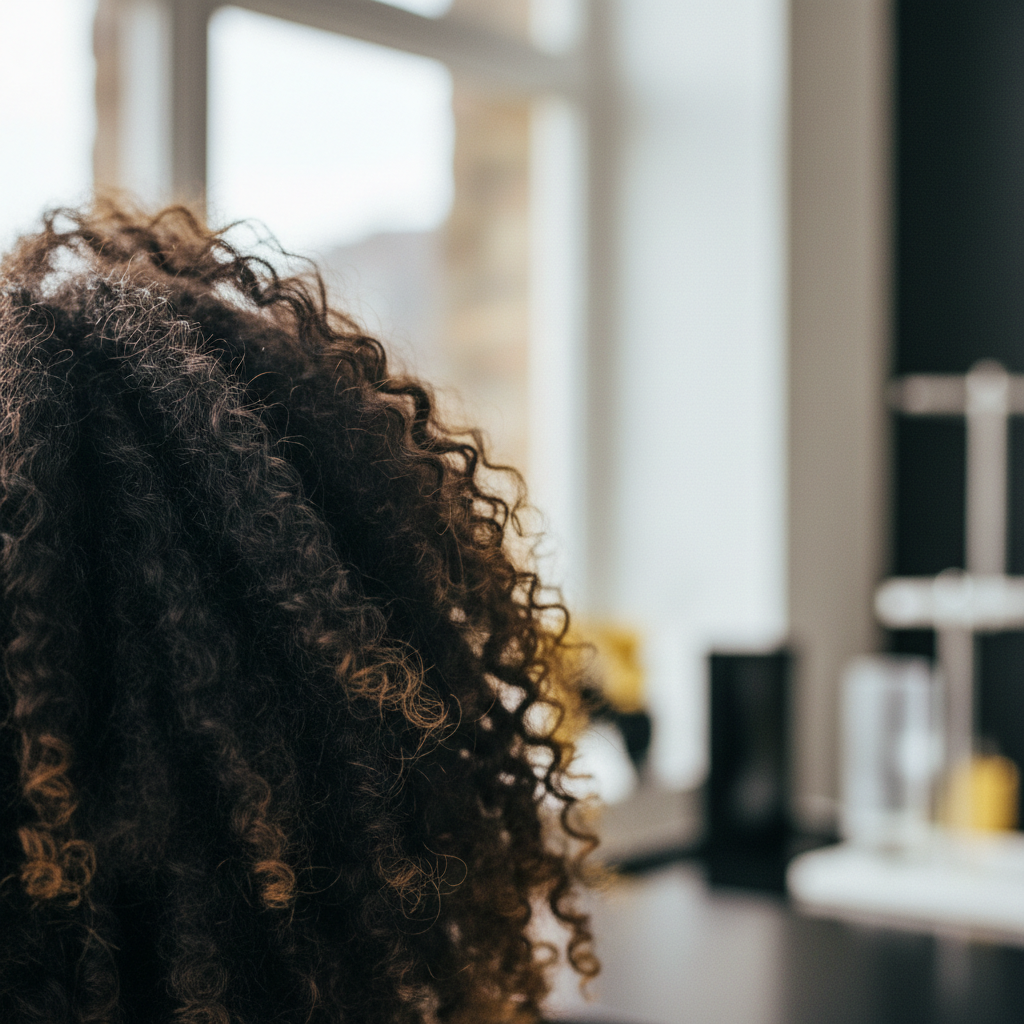
The fundamental driver is follicle morphology. Tightly coiled hair emerges from an asymmetrical, curved hair bulb, producing a flat, elliptical cross-section. As the strand grows, it twists along its own axis. Because curly fibres naturally curve back on themselves, regular movements such as sleeping, shampooing, and wind exposure cause neighbouring sections of the same fibre to interlock. When tension is applied during styling or combing, the loop tightens into a true knot.
Electron microscopy studies of trichonodosis reveal that the cuticle scales at the site of the knot become raised, chipped, and eventually worn away entirely. The tight curvature places excessive tensile load on the convex side of the loop. Once the outer cuticle is lost, the underlying cortex is exposed to environmental and mechanical degradation, leaving the hair fibre compromised at that specific locus.
What the evidence does not show
There is no scientific evidence that Single Strand Knots Trichonodosis is caused by internal nutritional deficiencies, systemic illness, or genetic metabolic disorders. It is a strictly physical, biomechanical condition of the hair shaft, not a disease of the living follicle.
Furthermore, laboratory data does not support claims that deep conditioning treatments, bond builders, or natural oils can untie, dissolve, or repair a true knot once it has cinched tight. While emollients and hydrolysed proteins reduce the friction coefficient of undamaged surrounding hair, they cannot reverse the physical geometry of an established knot. Similarly, trichonodosis is not contagious and does not affect the scalp skin or follicular growth cycle; it does not cause hair loss at the root.
The mechanical mechanism: how a strand knots itself
The formation of trichonodosis relies on two mechanical factors: high intrinsic curvature and a variable friction coefficient along the shaft.
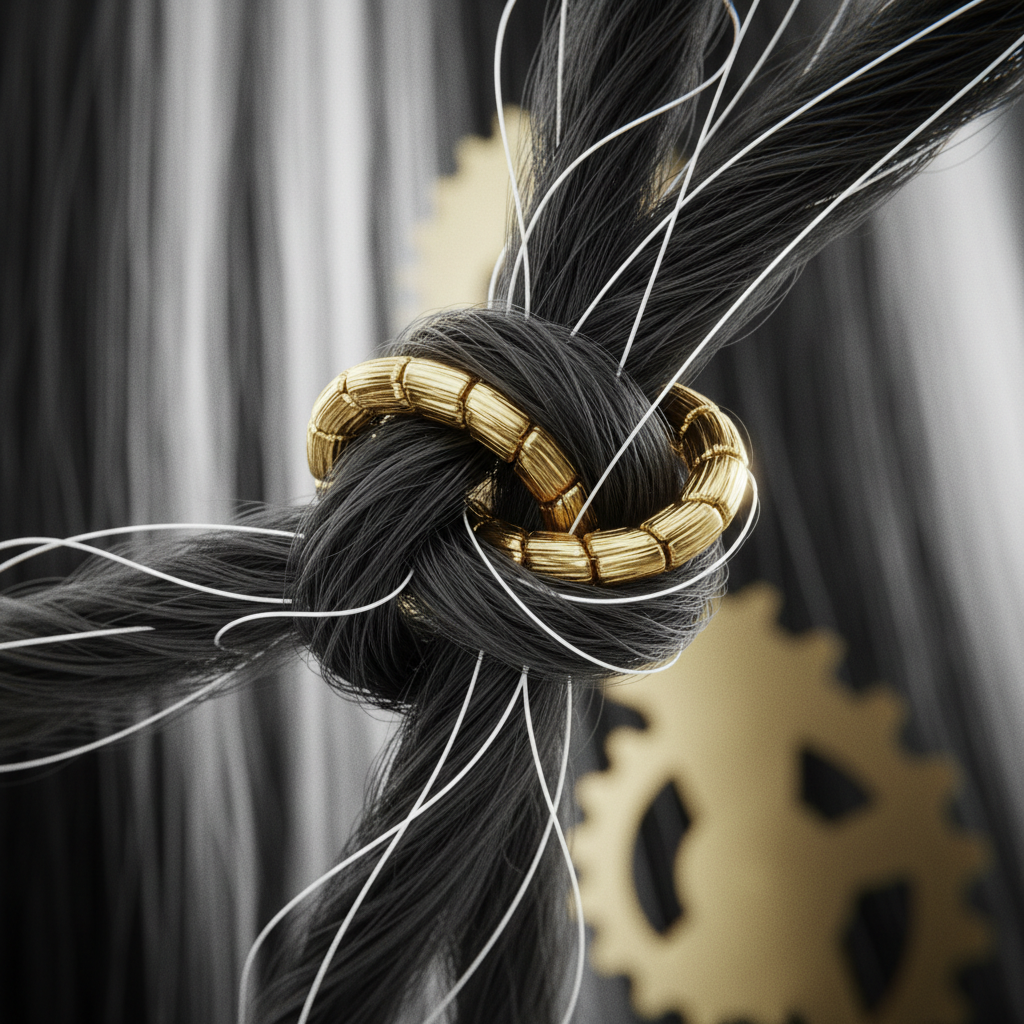
Curved hair growth -> Tip curls backwards -> Forms loose loop -> Mechanical tension (combing/friction) -> Loop cinches into tight knot -> Cuticle fractures
- Loop initiation: Highly coiled hair possesses low flexural stiffness, meaning the tip can bend easily and double back on the hair shaft, forming a small circular loop.
- Entanglement: As hair strands move against each other or against external surfaces like cotton pillowcases, the free tip threads through the loop.
- Cinching: Subsequent combing, brushing, or manual manipulation exerts directional force. Instead of dislodging the loop, the movement slides the strand tighter, turning a loose overlap into a cinched knot.
- Cuticle shearing: As the knot tightens, the sharp radius of curvature forces the outer cuticle layers to buckle and shear off. This exposes cortical cells, forming a microscopic fracture zone.
In some severe cases documented in trichology, multiple knots can form on a single shaft, or two independent hairs can knot together (compound trichonodosis).
Comparing hair shaft structural defects
To manage hair effectively, you must distinguish between true knots and other common shaft deformities that feel like bumps along the strand.
| Condition | Clinical Name | Structural Appearance | Primary Cause | Can Products Fix It? |
|---|---|---|---|---|
| Single Strand Knot | Trichonodosis | Distinct loop cinched onto the same fibre | Natural curl geometry + mechanical friction | No, requires trimming |
| Split End | Trichoptilosis | Longitudinal splitting of the distal shaft | Weathering, heat, chemical processing | No, temporary gluing only |
| Node-like Swelling | Trichorrhexis nodosa | Small white/grey nodules along shaft resembling interlocking paintbrushes | Severe thermal, physical, or chemical trauma | No, structural cortex fracture |
| Beaded Hair | Monilethrix | Alternating swollen nodes and constricted internodes | Inherited genetic disorder (keratin gene mutation) | No, congenital structural defect |
| Ringed Hair | Pili annulati | Alternating light and dark bands along the shaft | Genetic variation in cortical air spaces | No, purely visual phenotype |
Signs to look for: identifying trichonodosis
Single strand knots are often felt before they are seen. Because individual knots are microscopic, typically measuring between 0.1 mm and 0.5 mm across, they present through specific tactile and behavioural cues:
- Rough, sandy texture: Running your fingers down individual strands feels like encountering tiny, hard beads or grains of sand along the hair length, particularly near the ends.
- Snagging during detangling: Wide-tooth combs or fingers suddenly halt at the ends of the hair, accompanied by tiny snapping sounds as the comb shears through the knotted fibre.
- Premature distal breakage: You notice short fragments of hair snapping off during styling, often with a tiny bead visible at the very tip of the broken piece under bright light.
- Increased matting: The jagged, exposed cortex of a knotted strand acts like a hook, snagging adjacent smooth strands and creating larger clusters of tangled hair.
What you can do: prevention and management
Because you cannot undo an established knot, management divides cleanly into physical removal and preventative friction control.
Precise physical removal
Never rip, pick, or pull single strand knots off with your fingernails. Tearing the knot off strips the cortex and leaves an uneven, jagged edge that will split upwards within days. Instead, use sharp, dedicated hair-cutting shears to snip the strand approximately 5 millimetres above the knot. Dull household scissors crush the cuticle and replicate the damage.
Minimise free-movement friction
Keep tightly curled and afro-textured hair in stretched or defined styles. Wash-and-go styles that allow curls to shrink to their maximum natural density dramatically increase the opportunity for fibres to loop around themselves. Protective styling, twists, braids, and heatless stretching techniques reduce the freedom of distal tips to double back on the shaft.
Manage the surface friction coefficient
Water swells the hair fibre and temporarily raises the cuticle. Always detangle hair when it is thoroughly saturated with a high-slip conditioner containing cationic surfactants (such as behentrimonium chloride) or silicones. These ingredients deposit a thin, lubricating film that lowers the wet friction coefficient, allowing loops to slide open rather than cinch tight under tension.
Sleep protection
Cotton fabrics absorb natural surface lipids and create high abrasive drag against the hair cuticle. Sleeping on a smooth silk or satin pillowcase, or wearing a satin bonnet, allows hair strands to glide effortlessly over the surface during nocturnal movement.
Complementary cosmetic support with Watermans
While established structural knots must be excised with shears, supporting the overall strength and surface resilience of the remaining hair helps reduce routine breakage. The Watermans hair care range offers targeted cosmetic support for hair that experiences chronic mechanical wear. Formulated with hydrolysed lupin protein, biotin, allantoin, and rosemary, Watermans products help improve the tactile feel of the hair shaft and maintain a balanced, refreshed scalp environment. Using a conditioning regimen that strengthens the hair's surface makes detangling smoother and less abrasive, protecting vulnerable curl patterns from excessive friction during daily styling.
Frequently asked questions about Single Strand Knots Trichonodosis
Can deep conditioners dissolve Single Strand Knots Trichonodosis?
No. Deep conditioners contain conditioning agents, fatty alcohols, and proteins that temporarily smooth and lubricate the hair cuticle, but they cannot untie or dissolve Single Strand Knots Trichonodosis. Once a hair fibre has cinched into a physical knot, the structural change is permanent. The knot must be cleanly removed with sharp hair shears to stop the hair from splitting further up the shaft.
Does cutting single strand knots make hair grow faster?
Trimming single strand knots does not speed up the biological rate of hair growth at the follicle, which averages around 1 to 1.25 centimetres per month. However, trimming knots prevents the knotted fibres from snapping off prematurely or tearing adjacent strands. By halting distal breakage, you preserve length retention, making it appear that your hair is growing significantly faster.
Why do single strand knots happen more on curly hair?
Curly and afro hair textures grow from elliptical follicles, producing an asymmetrical strand that twists and loops as it extends. Straight hair has a circular cross-section, maintaining high flexural stiffness that resists looping back on itself. The sharp curve and natural shrinkage of curly hair allow the strand tip to double back, thread through itself, and cinch into a knot during routine handling.
Should I pull single strand knots off with my fingers?
You should never pull or pick knots off using your fingernails. Snapping the strand with your fingers crushes the cortex and rips the outer cuticle, leaving an open, frayed break point. This frayed end rapidly develops into a split end that travels upwards toward the root. Always use dedicated, sharp hair shears to cut cleanly above the knot.
A balanced approach to Single Strand Knots Trichonodosis
Living with curly or afro-textured hair means accepting that Single Strand Knots Trichonodosis is a natural physical consequence of your hair's unique curvature, not a sign of poor health or neglect. Because the geometry of elliptical hair fibres inherently favours looping, occasional knots will inevitably occur. The most effective strategy combines realistic expectations with protective habits: keep your hair well-lubricated during detangling, sleep on low-friction fabrics, wear stretched styles when practical, and keep sharp shears on hand for routine maintenance. By managing friction and removing knots cleanly, you protect the structural integrity of your hair and support healthy, continuous length retention.
Sources and references
- Dawber, R. (1974). Knotting of scalp hair: Trichonodosis. British Journal of Dermatology, 91(4), 491-492.
- Whiting, D. A. (2004). Structural abnormalities of the hair shaft. Journal of the American Academy of Dermatology, 51(1), 121-122.
- Robbins, C. R. (2012). Chemical and Physical Behavior of Human Hair (5th ed.). Springer-Verlag.
- Cruz, C. F., et al. (2016). Human hair characteristics and methods to evaluate hair physical and mechanical properties. International Journal of Trichology, 8(2), 52-60.
- British Association of Dermatologists. (2021). Hair Shaft Disorders and Physical Damage: Clinical Guidelines.
Find these ingredients in Watermans products
- Biotin: you will find this ingredient in our Hair Growth Shampoo.