Understanding Trichorrhexis Nodosa: Causes, Diagnosis, and Care
9 min read ·
Understanding Trichorrhexis Nodosa: explore the causes, signs, and management of this common hair shaft defect that leads to breakage and fraying.
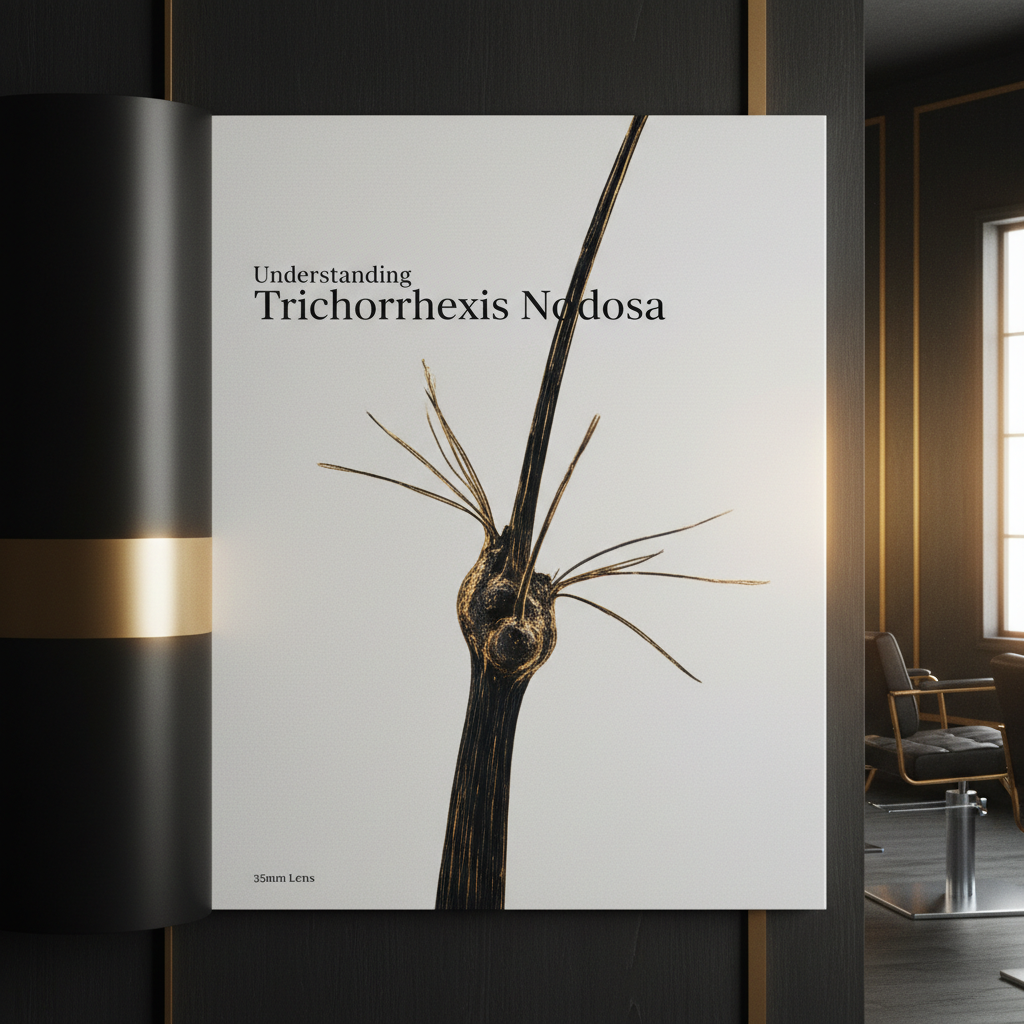
Quick answer: Understanding Trichorrhexis Nodosa begins with recognising it as the most common structural hair shaft defect, characterised by tiny, brush-like nodes where the hair fibre frays and snaps. It is a form of mechanical or chemical hair breakage, not follicular hair loss. The condition develops when physical trauma or harsh treatments strip the protective cuticle, leaving the internal cortex exposed and weakened. While existing fractured nodes cannot be permanently repaired, the limitation is easily managed: stopping the damaging practices allows healthy, unbroken fibre to emerge.
Key takeaways
- Trichorrhexis nodosa is a structural defect of the hair shaft that causes severe breakage, not hair loss from the follicle.
- Under magnification, the nodes look like two interlocking paintbrushes pushed together, forming weak points along the strand.
- Most cases are acquired, triggered by heat styling, chemical straighteners, bleaching, vigorous brushing, or harsh cleansing.
- Rare congenital forms exist, usually linked to inherited metabolic disorders like argininosuccinic aciduria or Menkes disease.
- Management focuses entirely on reducing trauma, preserving moisture, and cutting off damaged lengths until new growth takes over.
Understanding Trichorrhexis Nodosa: what the evidence shows
Understanding Trichorrhexis Nodosa requires an analysis of the hair fibre's anatomy. The hair shaft consists of an outer protective cuticle made of overlapping keratin scales, a dense cortex providing tensile strength, and an optional central medulla. In trichorrhexis nodosa, localised destruction of the cuticle exposes the underlying cortical cells. Deprived of their protective sheath, these spindle-shaped cortical fibres splay outwards, creating a microscopic swelling or "node" that resembles two broom heads pushed together.

Dermatological literature categorises the condition into two forms: acquired and congenital. Acquired trichorrhexis nodosa accounts for the vast majority of cases seen in salons and clinics. It occurs across all hair types, but tightly coiled afro-textured hair and chemically processed hair are especially vulnerable due to their unique structural geometries and lower intrinsic moisture retention. Research shows that repeated heat styling above 180°C, chemical permanent waves, chemical relaxers (which alter disulphide bonds at a high pH of 12 to 14), and bleaching break down the protective lipid layer (18-methyleicosanoic acid) and dissolve the cuticle.
Congenital trichorrhexis nodosa is rare. It typically manifests in infancy or early childhood and often accompanies genetic syndromes. For example, argininosuccinic aciduria impairs the urea cycle, leading to an arginine deficiency that disrupts keratin synthesis and produces fragile hair fibres prone to nodular fractures.
What the evidence does not show
Controlled research does not show that trichorrhexis nodosa causes permanent follicular damage or leads to true alopecia (such as androgenetic alopecia or alopecia areata). The hair follicle in the scalp remains fully functional and continues its normal growth cycles. The hair is snapping along the length of the shaft rather than falling out from the root.
Furthermore, evidence does not show that any cosmetic product, oil, or salon treatment can permanently fuse severed cortical fibres back together once a node has formed. While conditioning treatments, protein complexes, and hydrolysed peptides can temporarily coat the shaft and improve pliability, they do not reverse the structural disintegration. The only definitive cure for the damaged section is trimming.
Identifying the signs of trichorrhexis nodosa
Trichorrhexis nodosa often goes unnoticed in its early stages because the nodes are microscopic. Over time, cumulative damage makes the signs visible to the naked eye or a standard magnifying loupe.
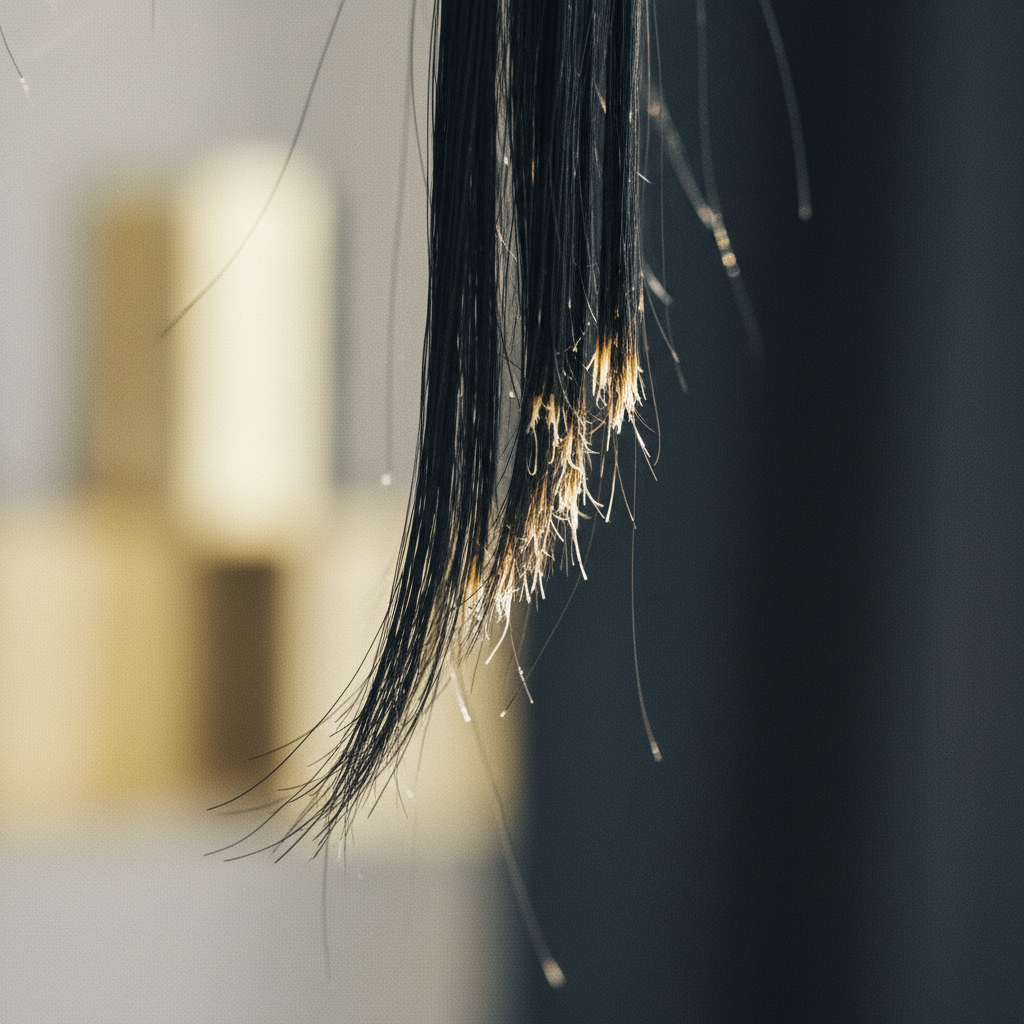
- White specks along the shaft: Sufferers frequently mistake the tiny nodular fractures for dandruff flakes, nits (head lice eggs), or fungal infections like white piedra. Unlike dandruff, these specks are fixed firmly to the hair strand and cannot be slid down the fibre.
- Premature snapping: Hair breaks off at varying lengths, giving the impression that the hair has stopped growing. In reality, the rate of breakage simply matches or exceeds the rate of follicular growth (roughly 1 to 1.25 cm per month).
- Frayed, uneven ends: The ends of broken fibres look split or brush-like, lacking a clean, blunt edge.
- Loss of elasticity: The hair feels dry, brittle, and catches on combs or clothing, snapping under minimal mechanical tension.
Structural comparison: shaft defects and shaft deposits
Because white nodules on the hair shaft can indicate several distinct conditions, careful distinction is necessary.
| Condition | Visual appearance | Cause | Root or shaft? | Mobility on strand |
|---|---|---|---|---|
| Trichorrhexis nodosa | Paintbrush-like swelling, fraying | Physical trauma, chemical processing | Mid-shaft to ends | Fixed (cannot move) |
| Monilethrix | Beaded hair with regular thinning intervals | Genetic defect in hair keratins | Shaft near scalp | Structural feature of fibre |
| Plica neuropathica | Irreversible matted bird's-nest tangle | Severe friction, neglect, harsh washing | Entire shaft | Matted mass |
| White piedra | Soft, light-coloured fungal concretions | Trichosporon fungal infection | Mid-shaft | Attached, but can be scraped |
| Pediculosis capitis (nits) | Oval egg capsules cemented at an angle | Head lice infestation | Within 1 cm of scalp | Firmly glued, uniform shape |
The underlying mechanisms of fibre breakdown
The structural collapse in trichorrhexis nodosa follows a clear biomechanical pathway. Under baseline conditions, the cuticle consists of 6 to 10 layers of tightly packed, overlapping scales bound by a cell membrane complex. This structure shields the cortex from physical friction and environmental degradation.
When chemical treatments raise the hair's pH, the cuticle swells and lifts. Harsh bleaching agents oxidise cystine, reducing the hair's natural disulphide cross-links by up to 50% in heavily processed fibres. If high-temperature tools (flat irons, curling wands) are then applied without thermal protection, moisture inside the shaft rapidly vaporises, causing micro-cavitation and cuticle loss. Once the protective outer shell is gone, routine friction from cotton pillowcases, vigorous towel-drying, or fine-toothed combs pulls the longitudinal cortical filaments apart. The cortex buckles, splays, and forms the signature node, which ultimately fractures completely under trivial mechanical strain.
What you can do to manage and prevent it
Reversing acquired trichorrhexis nodosa requires eliminating the mechanical and chemical stresses that weaken the hair fibre.
- Trim away fractured fibres: Because exposed cortex cannot be rebuilt, regular blunt trimming removes the fragile nodes and stops the fraying from migrating further up the shaft.
- Minimise thermal stress: Cease heat styling or lower tool temperatures below 150°C. Always use a silicone- or polymer-based thermal protectant to distribute heat evenly.
- Avoid overlapping chemical services: Do not apply permanent colour, bleach, or relaxers over previously treated lengths. Allow substantial regrowth between treatments.
- Gentle detangling practices: Detangle hair only when damp and thoroughly saturated with a high-slip conditioner. Use wide-toothed combs or flexible detangling brushes, working slowly from the ends upward to the roots.
- Protect hair during sleep: Use a satin or silk pillowcase or wear a bonnet to reduce overnight friction on vulnerable strands.
- Optimise hair conditioning: Use shampoos formulated around a physiological pH (4.5 to 5.5) and incorporate deep-conditioning treatments featuring fatty alcohols, ceramides, and hydrolysed proteins to temporarily reinforce fibre tensile strength.
Exploring supportive care with Watermans
When managing fragile hair recovering from structural breakage, maintaining a healthy scalp environment and keeping the emerging hair shaft well conditioned is essential. Watermans offers cosmetic formulas designed to support the appearance of stronger, fuller-looking hair.
The Watermans Grow Me Shampoo and Condition Me Conditioner provide a gentle, sulphate-free cleanse alongside nourishing ingredients like biotin, rosemary, hydrolysed lupin protein, and caffeine. These formulas help smooth the hair cuticle, enhance moisture retention, and improve hair slip during washing. Using products that minimise washing-related friction can help safeguard new growth against the physical stress that triggers trichorrhexis nodosa.
When the cause may be internal
While physical styling habits cause most cases of trichorrhexis nodosa, systemic factors can also weaken the developing fibre from inside the follicle. Severe nutritional deficiencies, including protein-energy malnutrition, profound iron deficiency, and zinc deficiency, directly impair keratinisation, producing a thinner, more fragile hair shaft.
Endocrine disorders like hypothyroidism alter cellular turnover in the follicular matrix, leaving the hair dry, coarse, and prone to shaft fractures. Metabolic conditions such as argininosuccinic aciduria, Menkes kinky hair disease (an inherited copper transport defect), and trichothiodystrophy (characterised by sulphur-deficient, brittle hair) cause profound congenital shaft abnormalities. If an infant or young child presents with widespread hair breakage, or if an adult experiences severe shaft fractures without a history of heat or chemical styling, internal causes must be investigated.
When to seek professional advice
Consult a GP, dermatologist, or qualified trichologist if you notice widespread breakage that does not improve after 8 to 12 weeks of gentle hair handling and trimming. Professional trichoscopy or light microscopy can quickly confirm trichorrhexis nodosa and rule out congenital defects or fungal infections.
Seek immediate medical guidance if the hair breakage is accompanied by other systemic symptoms, such as unexplained fatigue, weight changes, brittle nails, developmental delays in children, or widespread skin rashes. These signs may point to an underlying metabolic, thyroid, or nutritional issue requiring targeted medical care.
Frequently asked questions about Understanding Trichorrhexis Nodosa
Is trichorrhexis nodosa a type of alopecia?
No, trichorrhexis nodosa is not a form of alopecia or follicular hair loss. The hair follicle continues to grow hair normally. It is a structural defect of the hair shaft that causes the fibre to snap, leading to ragged lengths and thinning ends that can look like hair loss.
Can salon bonding treatments cure trichorrhexis nodosa?
Bonding treatments cannot cure trichorrhexis nodosa. While these treatments use active chemistry to form cross-links and temporarily reinforce weakened strands, they cannot rebuild absent cuticle layers or fuse frayed cortical cells back together. Trimming the fractured hair is the only permanent solution.
What is the most effective approach to Understanding Trichorrhexis Nodosa prevention?
The most effective approach to Understanding Trichorrhexis Nodosa prevention is reducing physical, thermal, and chemical trauma. Avoid overlapping bleaches or relaxers, limit high-heat styling, detangle gently with wide-toothed tools, and use conditioning agents that reduce surface friction along the cuticle.
Can low iron cause trichorrhexis nodosa?
Severe iron deficiency can indirectly contribute to trichorrhexis nodosa by disrupting the matrix cells responsible for producing robust keratin. This makes the newly produced hair fibre intrinsically weaker and far more vulnerable to breaking and developing nodes under everyday handling.
How long does it take for hair to recover?
Recovery depends on hair length and growth rate. Hair grows approximately 1 to 1.25 cm per month. Once you stop damaging practices, it typically takes 6 to 12 months of consistent trimming and protective handling to replace the compromised, node-bearing lengths with healthy, intact hair.
Concluding thoughts on managing hair fragility
Understanding Trichorrhexis Nodosa demystifies what is often a frustrating and alarming hair problem. Seeing hair snap mid-shaft can feel overwhelming, but discovering that the follicle remains completely healthy provides genuine reassurance. Because this condition is largely acquired through routine styling friction, chemical processing, and heat exposure, reversing it lies within your control. By eliminating mechanical trauma, supporting cuticle integrity with conditioning care, and trimming away damaged lengths, you allow the follicle to produce resilient, unbroken hair once again.
Sources and references
- British Association of Dermatologists. Hair shaft disorders and fragility. 2021.
- American Academy of Dermatology. Hair breakage and shaft disorders: diagnosis and clinical management. 2022.
- National Health Service (NHS). Hair loss and hair shaft abnormalities. 2023.
- Journal of the American Academy of Dermatology. Trichorrhexis nodosa: an updated review of pathogenesis and management. 2020.
- International Journal of Trichology. Structural hair shaft abnormalities: trichoscopic and microscopic evaluation. 2019.
Find these ingredients in Watermans products
- Zinc: you will find this ingredient in our Hair Vitamins.