Understanding Scalp Tension: Biomechanics, Blood Flow, and Hair Health
8 min read ·
Discover the biomechanics behind Understanding Scalp Tension, how cranial muscle tightness affects microcirculation, and evidence-based ways to improve tissue mobility.

Quick answer: Understanding Scalp Tension involves recognising the mechanical strain exerted across the galea aponeurotica and epicranial muscles of the head. When chronic tightness restricts local microcirculation, it alters mechanical signalling within dermal papilla cells and may accelerate follicle miniaturisation. However, scalp tension alone is rarely the sole cause of pattern hair loss. It interacts with underlying genetic susceptibility, androgen sensitivity, and local inflammation. Managing tension through massage, stress reduction, and posture can support scalp comfort, but it cannot cure genetic alopecia.
Key takeaways
- Scalp tension refers to sustained mechanical contraction across the galea aponeurotica, occipitofrontalis, and temporoparietalis muscles.
- Biomechanical stress can compress microvascular capillary beds, lowering oxygen delivery and tissue compliance in susceptible scalp regions.
- Mechanotransduction pathways convert physical pulling forces into cellular signals, sometimes increasing inflammatory cytokines such as TGF-beta-1.
- Tension is an aggravating cofactor rather than an independent primary cause; androgenic sensitivity (specifically dihydrotestosterone, or DHT) remains the primary driver of pattern hair loss.
- Practical interventions like manual scalp massage, trigger point release, and ergonomic adjustments improve local blood flow and tissue mobility, but clinical regrowth claims must remain conservative.
Understanding Scalp Tension: what the evidence shows
Understanding Scalp Tension requires a close look at the cranial anatomy. The scalp is not an isolated layer of skin. It rests on a tough, fibrous sheet of connective tissue called the galea aponeurotica (epicranial aponeurosis). This aponeurosis connects the frontalis muscle at the forehead to the occipitalis muscle at the base of the skull, flanked laterally by the temporoparietalis muscles. When you clench your jaw, squint at screens, or hold stress in your neck, these muscles contract, stretching the galea taut over the bony dome of the cranium.
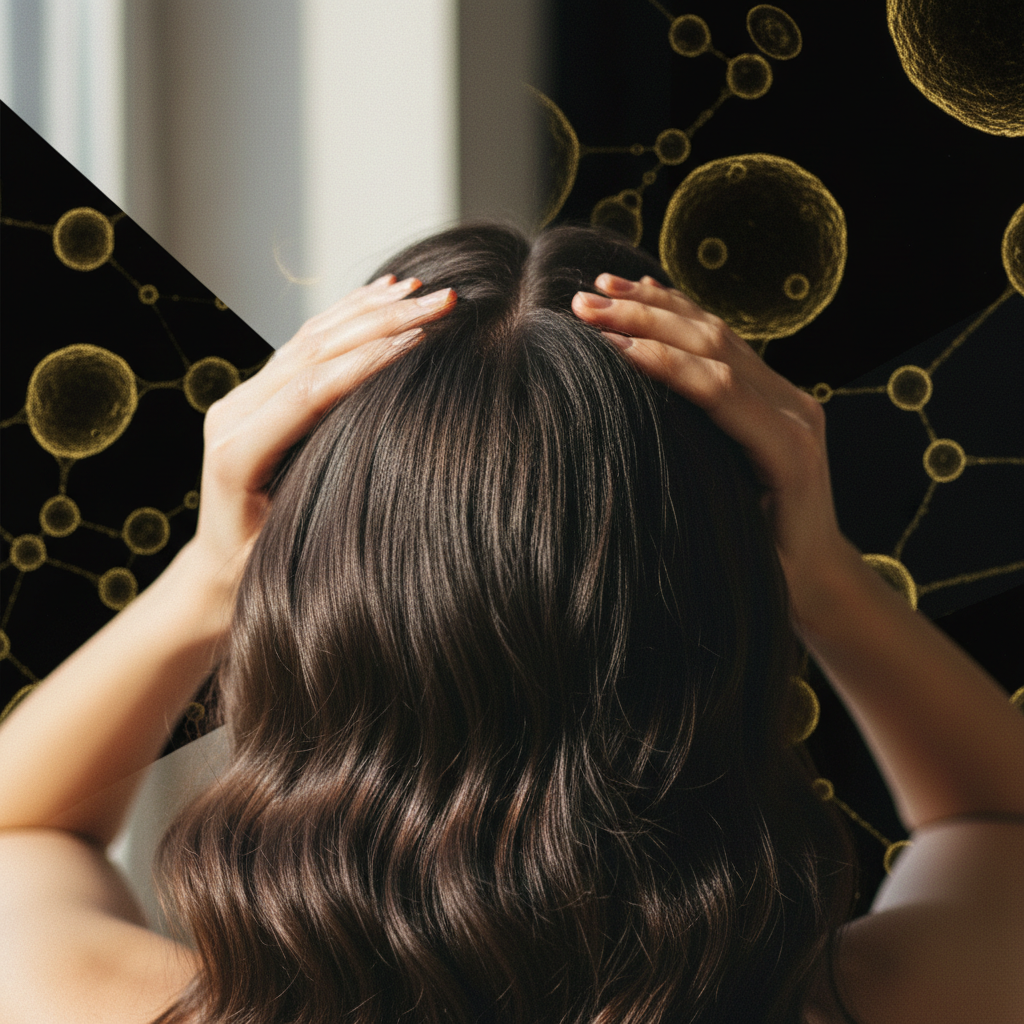
Biomechanical models of androgenetic alopecia, proposed by researchers such as Freund (2008) and Ustuner (2013), highlight a striking anatomical pattern: the regions that lose hair in male and female pattern baldness match the exact perimeter and surface of the galea aponeurotica. Areas with underlying muscular support, such as the back and lower sides of the scalp, rarely bald.
When the galea is subjected to chronic perimeter tension, mechanical stress compresses the microvasculature supplying the superficial dermis. Transcutaneous partial pressure of oxygen measurements show that balding scalp tissue exhibits significantly lower microvascular blood flow and oxygenation compared to non-balding scalp zones. Tissue hypoxia prompts dermal papilla cells to express vascular endothelial growth factor (VEGF) antagonists and profibrotic cytokines, altering the healthy hair growth cycle.
What the evidence does not show
It is critical not to oversimplify this relationship. Scalp tension does not render genetics or hormones irrelevant. The hypothesis that tension is the sole cause of pattern loss is unsupported by mainstream dermatological consensus.
Castrated males with low circulating androgens do not develop androgenetic alopecia, regardless of their head shape, muscle tightness, or stress levels. Androgens, particularly dihydrotestosterone (DHT), remain essential for follicular miniaturisation. Tension appears to act as a local biomechanical catalyst: tissue strain and low perfusion may upregulate 5-alpha reductase activity or amplify the inflammatory cascade triggered by DHT. Claiming that relieving scalp tightness will fully reverse long-standing genetic hair loss is scientifically inaccurate and misleads those seeking treatment.
Biological mechanisms: mechanotransduction and tissue stiffness
At the cellular level, hair follicles respond to physical forces through a process called mechanotransduction. Integrins and stretch-activated ion channels on the surface of dermal papilla cells sense mechanical load.
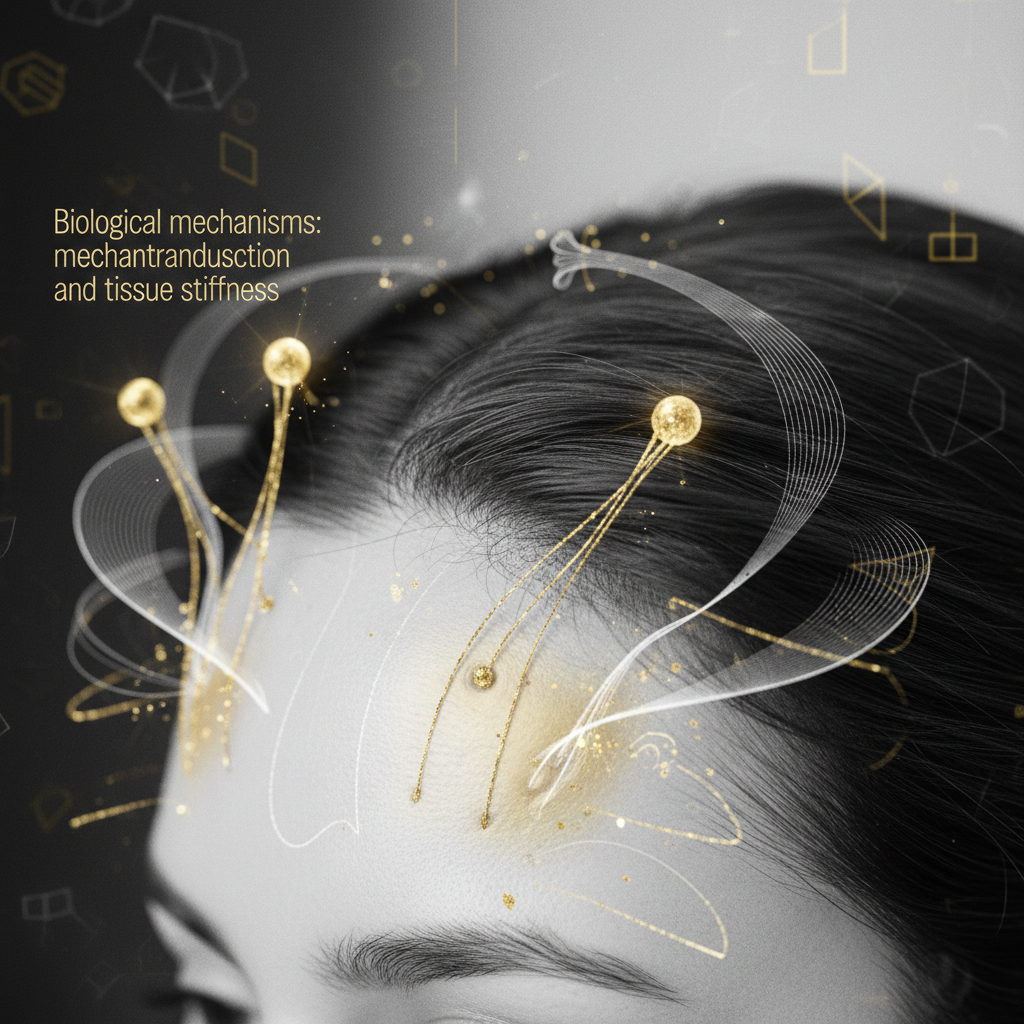
When sustained mechanical tension pulls on the dermis, it triggers downstream intracellular signalling pathways:
- Upregulation of Transforming Growth Factor-beta 1 (TGF-beta 1): Mechanical strain stimulates fibroblasts and follicle cells to secrete TGF-beta 1, an inhibitory cytokine that prematurely terminates the anagen (growth) phase and drives follicles into catagen (regression).
- Perifollicular fibrosis: Persistent tension induces chronic, low-grade mechanical inflammation. Fibroblasts deposit excess collagen fibres in the perifollicular sheath, gradually replacing supple, elastic tissue with rigid, fibrotic matrix.
- Impaired microcirculation: Healthy capillary loops surrounding anagen bulbs require compliant, well-perfused tissue. Elevated mechanical tissue pressure restricts capillary diameter, reducing erythrocyte transit and cellular waste removal.
Over successive growth cycles, the combination of mechanical stiffness, poor perfusion, and androgen action shortens anagen duration and shrinks follicle diameter.
Signs of elevated scalp tightness
Recognising chronic tension early helps you separate mechanical strain from other scalp conditions. Common signs include:
- Reduced scalp mobility: When placing your fingertips firmly on your scalp and attempting to slide the skin over the cranium, the tissue feels bound, rigid, and resistant to movement.
- Dull, diffuse ache or "trichodynia": A persistent tenderness, burning sensation, or dull ache across the crown or vertex, often worsened after long periods of mental concentration or desk work.
- Tight forehead or jaw tension: Co-occurring temporomandibular joint (TMJ) tightness, bruxism (teeth grinding), or tension headaches originating at the suboccipital region.
- Band-like constriction feeling: A subjective sensation that a tight headband is wrapped around the circumference of the head.
Scalp tension compared to traction and stress shedding
It is easy to confuse scalp tension with other conditions driven by mechanical forces or psychological stress. The table below outlines how these presentations differ.
| Condition | Primary Mechanism | Primary Affected Area | Follicular Outcome |
|---|---|---|---|
| Scalp tension | Internal muscular contraction pulling the galea aponeurotica taut; microvascular compression | Crown, frontal hairline, and vertex (aponeurotic zone) | Gradual miniaturisation of fibres; reduced tissue mobility |
| Traction alopecia | External physical pulling from tight hairstyles, extensions, or heavy braids | Margins of the hairline, temples, or parting lines | Follicular inflammation, broken hairs, eventual permanent scarring |
| Telogen effluvium | Systemic physiological stress, hormonal shifts, illness, or nutritional deficits | Diffuse across the entire scalp, including the sides and back | Sudden, heavy shedding of club hairs without initial follicle miniaturisation |
| Trichodynia | Neurogenic inflammation and hypersensitivity of cutaneous scalp nerves | Patchy or widespread across vertex and crown | Scalp pain and burning; not an independent cause of structural loss |
What you can do to address scalp tightness
Addressing mechanical tension involves restoring tissue compliance, encouraging microcirculation, and releasing hypertonic cranial muscles.
Targeted manual scalp massage
A 2016 study published in Eplasty evaluated the effects of standardised scalp massage on healthy men. Daily four-minute mechanical stimulation over 24 weeks altered the expression of hair-cycle-related genes in dermal papilla cells and significantly increased hair shaft thickness.
To perform manual massage effectively:
- Place your finger pads firmly against the scalp. Do not glide your fingers over the hair, which creates friction and breakage.
- Apply moderate, steady pressure and move the scalp skin in small circles over the skull beneath it.
- Focus on the occipital ridge at the base of the skull, the temporal regions above the ears, and the vertex.
- Spend 4 to 5 minutes daily on this routine.
Postural and cervical alignment
Cranial muscles do not work in isolation. Protracted head carriage (forward-head posture from smartphone and computer use) places continuous eccentric load on the trapezius, splenius capitis, and suboccipital muscles. This strain radiates directly into the galea aponeurotica. Keeping computer monitors at eye level, taking regular breaks, and stretching the neck muscles help prevent muscular overload.
Stress and jaw management
Chronic psychological stress drives clenching of the masseter and temporalis muscles. Using a nocturnal bite guard if you grind your teeth, practicing diaphragmatic breathing, and taking conscious breaks to unclamp your jaw can reduce peripheral tension on the cranial aponeurosis.
When the cause may be something else
Never assume thinning or tenderness is purely mechanical. Several conditions require medical intervention:
- Autoimmune scarring alopecias: Lichen planopilaris and frontal fibrosing alopecia cause burning, tenderness, and inflammation, but they destroy the follicle stem cell niche permanently if left untreated.
- Scalp dermatoses: Conditions like seborrhoeic dermatitis, psoriasis, and folliculitis cause tightness, burning, and flaking driven by fungal overgrowth or immune dysregulation, not galea tension.
- Systemic deficiencies: Iron deficiency, thyroid disorders, and acute nutrient deficits trigger shedding that manual tension release cannot fix.
When to seek professional advice
Consult a qualified trichologist or dermatologist if you notice sudden, diffuse shedding, patch-like bald spots, severe redness, scaling, or pustules. If scalp tenderness is accompanied by visual changes, severe headaches, or numbness, schedule a visit with a medical doctor to rule out temporal arteritis or neurological complications.
Supporting the scalp environment with Watermans
While biomechanical exercises focus on deep tissue compliance, maintaining a healthy epidermal barrier is equally vital. Watermans approaches scalp care from the surface down. Watermans Grow Me Shampoo combines caffeine, biotin, rosemary extract, and niacinamide to invigorate the surface microenvironment without stripping essential moisture. When paired with manual scalp massage, cleansing the scalp with gentle, nourishing formulations helps maintain a supple, clean environment conducive to strong-feeling, healthy-looking hair.
Understanding Scalp Tension: the path forward
Understanding Scalp Tension provides valuable insight into how biomechanics, cranial muscular tone, and local circulation influence the scalp environment. Chronic tension across the galea aponeurotica can restrict microvascular perfusion and elevate local mechanical stress, accelerating follicle miniaturisation in genetically susceptible areas. However, tension is one part of a complex biological picture alongside genetics and hormones. By combining manual scalp mobility techniques, ergonomic improvements, and balanced cosmetic care, you can encourage healthy microcirculation, alleviate discomfort, and support the overall vitality of your hair.
Sources and references
- Eplasty. Koyama, T., Kobayashi, K., Hama, T., Murakami, K., & Ogawa, R. (2016). Standardized Scalp Massage Results in Increased Hair Thickness by Inducing Stretching Forces on Dermal Papilla Cells in the Subcutaneous Tissue. PubMed Central: PMC4740347.
- Medical Hypotheses. Ustuner, E. T. (2013). Cause of Androgenic Alopecia: Crux of the Matter. 81(5): 794-805.
- Plastic and Reconstructive Surgery. Freund, B. J., & Schwartz, M. (2010). Treatment of Male Pattern Baldness with Botulinum Toxin: A Pilot Study. 126(5): 246e-248e.
- British Journal of Dermatology. Goldman, B. E., Fisher, M. A., & Ringwelski, F. J. (1996). Transcutaneous PO2 of the Scalp in Male Pattern Baldness: A New Piece to the Puzzle. 134(6): 1088-1090.
- Journal of Plastic, Reconstructive & Aesthetic Surgery. Ro, B. I., & Dawson, T. L. (2005). The Role of Mechanical Stress and Microcirculation in Alopecia. 58(8): 887-893.
Find these ingredients in Watermans products
- Niacinamide: you will find this ingredient in our Hair Mask.