Understanding Hair Types
5 min read ·
Hair typing is a classification system that helps identify specific hair characteristics, influencing product choices and styling techniques for optimal hair health and appearance.
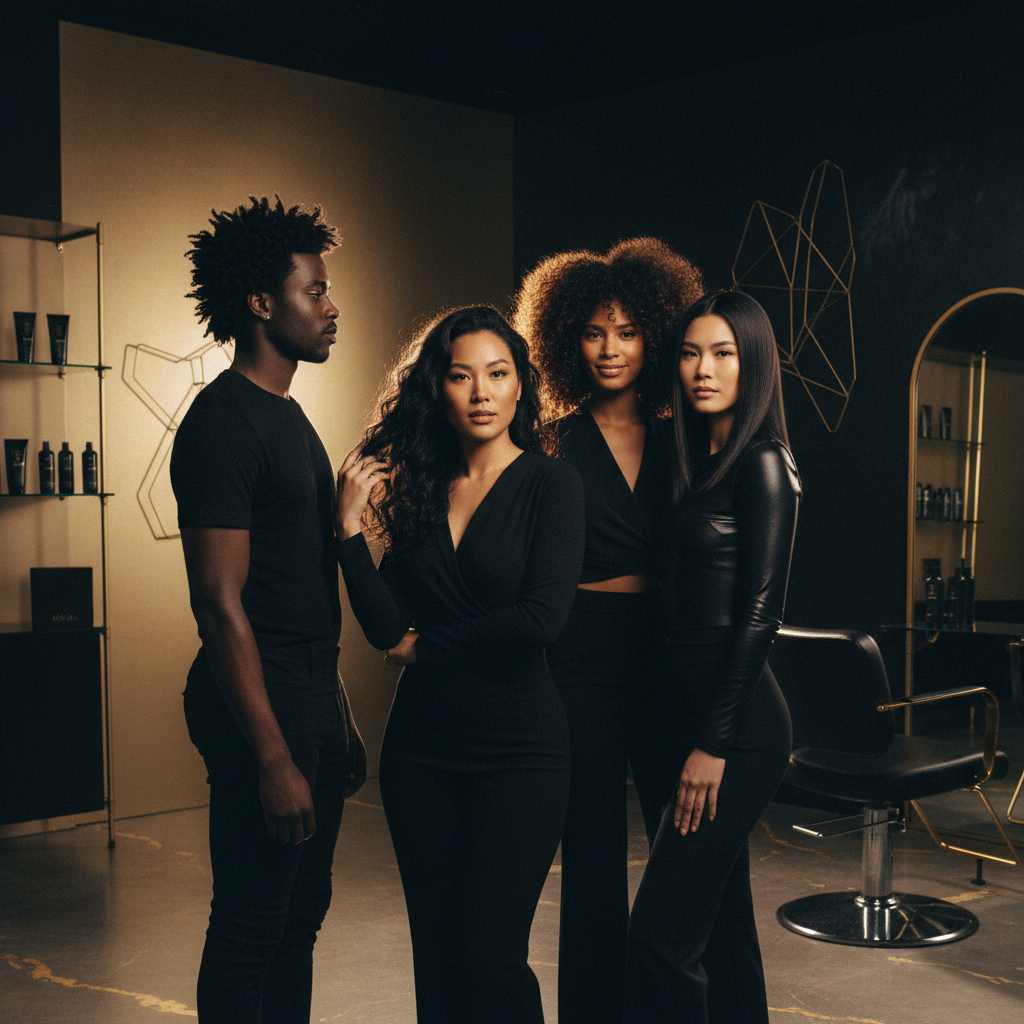
Hair typing is a system used to categorize hair based on its curl pattern, thickness, and oil production. Understanding your hair type is fundamental for selecting appropriate haircare products and routines, leading to healthier hair and more effective styling.
Curl Pattern: The Andre Walker Hair Typing System
The Andre Walker Hair Typing System is the most widely recognized method for classifying hair based on its curl pattern. It categorizes hair into four main types, with sub-categories for each.
Type 1: Straight Hair
Type 1 hair is characterized by a complete lack of curl. The hair strands fall without any bend or wave from root to tip. This hair type tends to be very resilient and reflects light easily, giving it a shiny appearance, as the cuticle lies flat.
- 1A: Pin-straight, very fine, and soft. It often struggles to hold curls and can appear oily quickly due to easy oil distribution from the scalp down the shaft.
- 1B: Straight with medium texture. It has some body and can hold a curl better than 1A, yet it remains fundamentally straight.
- 1C: Generally straight but can have a slight wave or 'S' bend. It is typically coarser and thicker, making it more resistant to styling than 1A or 1B.
Type 2: Wavy Hair
Type 2 hair exhibits a gentle 'S' shape pattern. It is neither straight nor curly and can range from loose waves to more defined ones. Wavy hair often has more volume than straight hair but can be prone to frizz.
- 2A: Fine, thin waves that are easily straightened or curled. The waves are loose and can lack definition at the roots.
- 2B: Medium-textured waves that are more defined than 2A and have a more noticeable 'S' shape. It can be a bit more resistant to styling and prone to frizz.
- 2C: Well-defined, coarse waves that begin closer to the scalp. This type is generally thicker, more prone to frizz, and can be difficult to straighten without significant effort.
Type 3: Curly Hair
Type 3 hair is characterized by distinct loops and spirals that form a clear 'S' or 'Z' pattern. These curls have a lot of body and volume but can also be prone to dryness and frizz due to the raised cuticle and difficulty of natural oils (sebum) travelling down the helix of the hair strand.
- 3A: Large, loose curls with a circumference similar to a thick sidewalk chalk stick. Curls are well-defined and often shiny.
- 3B: Springy, bouncy curls with a circumference similar to a permanent marker. This hair type can be prone to frizz and often requires more moisture.
- 3C: Tight, corkscrew curls with a circumference similar to a pencil. These curls are densely packed, have significant volume, and are highly susceptible to shrinkage and dryness.
Type 4: Kinky/Coily Hair
Type 4 hair features very tight, often small, zig-zag patterns or coils that are densely packed and can appear shorter than their actual length due to extreme shrinkage. This hair type is typically the most fragile and prone to dryness as sebum struggles to descend the full hair shaft with maximal cuticle lift, making moisture retention crucial.
- 4A: Densely packed, 'S'-patterned coils that are often visible and have a circumference similar to a knitting needle. It retains a more distinct curl pattern wet and dry.
- 4B: Hair bends in sharp angles, resembling a 'Z' shape. The curl pattern is less defined and can be cotton-like in texture, often shrinking considerably.
- 4C: Densely packed hair with a very tight zig-zag pattern that may not have a defined curl pattern without manipulation. It experiences the most shrinkage and is the most fragile hair type, requiring maximum moisture retention and gentle handling.
Hair Thickness (Texture)
Hair thickness, often referred to as hair texture, refers to the circumference of individual hair strands. It's distinct from the amount of hair you have on your head.
- Fine: Individual strands are very thin and barely noticeable. Fine hair can be delicate and prone to breakage.
- Medium: Strands are neither thin nor thick. This is the most common hair thickness and is generally resilient.
- Coarse/Thick: Individual strands are thick and strong. Coarse hair is robust but can be resistant to styling and may take longer to dry.
To determine your hair thickness, take a single strand and roll it between your fingers. If you can barely feel it, it's fine. If you can feel it distinctly, it's medium. If it feels like a strong thread, it's coarse.
Hair Porosity
Hair porosity refers to your hair's ability to absorb and retain moisture. It's determined by the condition of your hair's cuticle, the outermost layer of the hair shaft.
| Porosity Type | Cuticle Condition | Moisture Absorption | Retention | Characteristics & Care |
|---|---|---|---|---|
| Low Porosity | Tightly closed, flat | Resists absorption | Excellent | Products sit on hair; requires steam or heat to open cuticle. Use lightweight products. |
| Medium Porosity | Slightly raised | Absorbs well | Good | Balanced, healthy hair; flexible with styling. Maintain with balanced products. |
| High Porosity | Raised, damaged | Absorbs quickly | Poor | Prone to frizz/dryness; requires heavy creams, butters, and protein treatments to seal cuticle. |
Scalp Type (Oil Production)
Scalp type dictates the amount of oil (sebum) produced, which affects how hair looks and feels.
- Oily Scalp: Produces excess sebum, leading to greasy hair quickly. Requires frequent washing with a gentle, balancing shampoo.
- Normal Scalp: Produces a balanced amount of sebum. Hair feels clean for several days. Benefits from regular washing with a mild shampoo.
- Dry Scalp: Produces insufficient sebum, leading to dry, sometimes itchy, scalp and hair. Requires moisturising shampoos and conditioners, and less frequent washing to preserve natural oils.
- Combination Scalp: Oily in some areas (often the T-zone of the scalp) and dry in others. Requires careful product selection to address both concerns, potentially using different products on different areas.
Hair Type and Product Selection
Understanding your hair type is crucial for making informed decisions about haircare products. For instance:
- Straight hair may benefit from lightweight shampoos and conditioners that don't weigh it down, and products that add volume without causing greasiness.
- Wavy hair often needs products that enhance wave definition while controlling frizz, such as leave-in conditioners and light styling creams.
- Curly and kinky/coily hair universally require significant moisture to combat dryness and enhance curl definition. Rich conditioners, deep conditioning treatments, and curl-defining creams are essential. Watermans products such as Watermans Grow Me Shampoo and Conditioner are formulated to support the health of all hair types by providing essential nutrients directly to the scalp and hair follicles, promoting stronger hair regardless of its curl pattern or thickness.
By accurately identifying your hair's unique characteristics, you can tailor a regimen that supports its health, manages its challenges, and highlights its natural beauty.