Understanding Hair Biology: Structure, Growth, and Health
14 min read ·
Understanding Hair Biology is key to informed haircare, revealing the complex structure, growth cycles, and environmental factors impacting your hair's health.
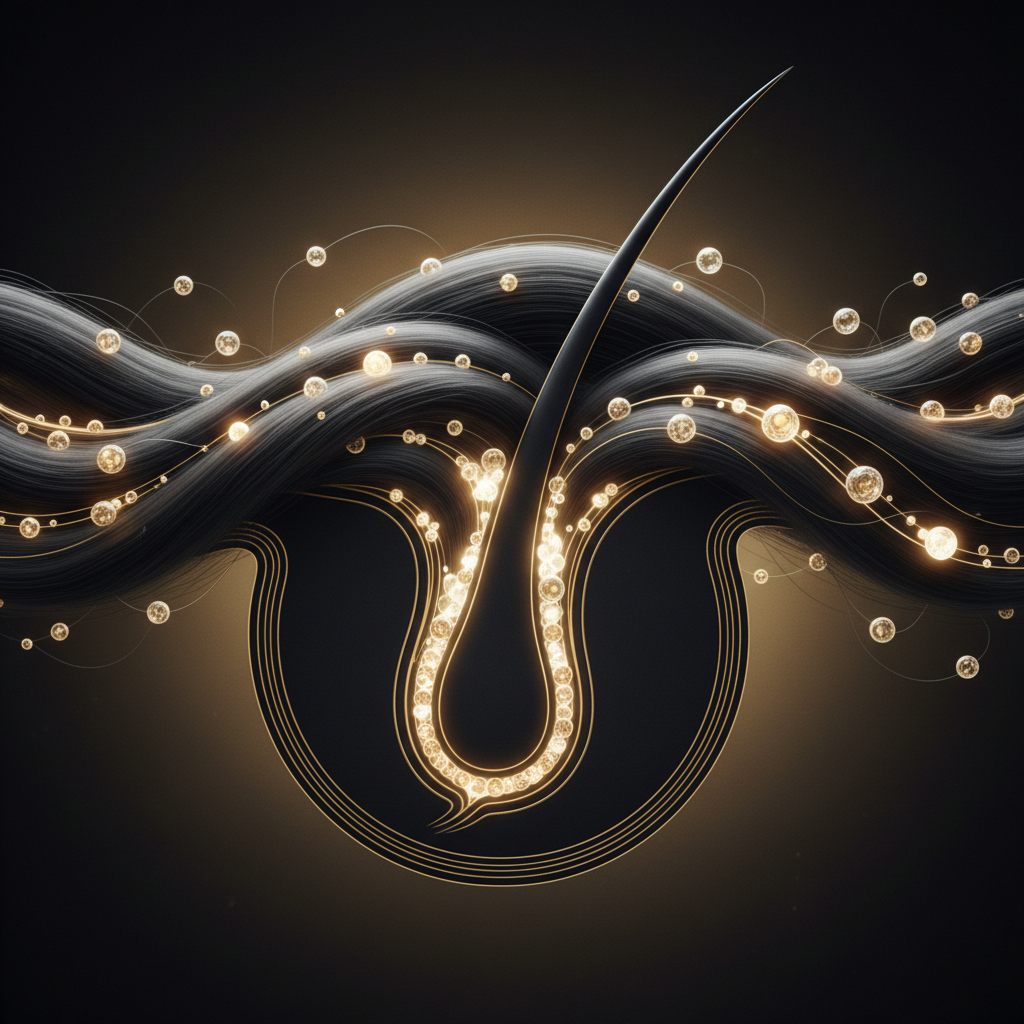
Quick answer: Understanding Hair Biology involves exploring the intricate structure of the hair shaft and follicle, the dynamic three-phase hair growth cycle, and the various internal and external factors that influence hair health and appearance. It's a complex field, and while much is known, the full interplay of genetics, environment, and cellular processes on individual hair biology is still an area of ongoing research, meaning there are always new insights to be discovered. This knowledge empowers you to make more informed decisions about your haircare.
Key takeaways
- Hair is a complex biological structure composed primarily of keratin, growing from follicles embedded in the skin.
- Each hair strand undergoes a distinct growth cycle: anagen (growth), catagen (transition), and telogen (resting/shedding).
- The hair shaft has three main layers: the protective cuticle, the strength-giving cortex, and the central medulla (present in some hairs).
- Factors like genetics, nutrition, hormones, stress, and haircare practices significantly influence hair health and growth.
- Distinguishing between hair shedding (normal cycle) and hair breakage (damage to the shaft) is crucial for accurate diagnosis and care.
- Knowing your hair's biological characteristics can help you choose appropriate products and routines for optimal hair health.
Understanding Hair Biology: what the evidence shows
Understanding Hair Biology is fundamental to appreciating how your hair grows, why it behaves the way it does, and how to best care for it. Far from being a simple fibre, hair is a sophisticated biological material produced by an equally complex mini-organ: the hair follicle. Each hair strand you see is a result of a continuous, tightly regulated process that begins beneath your skin.
The Anatomy of Hair: Follicle and Shaft
Hair is broadly divided into two main parts: the hair follicle, which is embedded within the skin, and the hair shaft, which is the visible portion extending above the skin's surface.
The Hair Follicle: The Hair's Root System
The hair follicle is a dynamic structure, often described as a miniature organ, located in the dermis (the middle layer of the skin). It's responsible for hair production and plays a crucial role in the hair growth cycle.
Key components of the hair follicle include:
- Dermal Papilla: Situated at the base of the follicle, this cone-shaped structure is rich in blood vessels and nerves. It acts as the hair's nutritional supply line, delivering oxygen and nutrients essential for cell division and hair growth. It also contains cells that signal hair growth and cycle regulation.
- Hair Matrix: Surrounding the dermal papilla, this area contains rapidly dividing cells. These cells keratinise (fill with keratin protein) and are pushed upwards, forming the hair shaft.
- Sebaceous Gland: Attached to the follicle, this gland produces sebum, a natural oily substance. Sebum lubricates the hair shaft, keeping it supple and moisturised, and forms a protective barrier on the scalp. Issues with sebum production can lead to conditions like an oily scalp or dandruff.
- Arrector Pili Muscle: A small, involuntary muscle connected to the follicle. When it contracts, it pulls the hair upright, causing "goosebumps."
- Bulge Region: Located higher up the follicle, this area contains stem cells vital for regenerating the hair follicle and initiating new hair growth after shedding.
The Hair Shaft: The Visible Hair Strand
The hair shaft is the part of the hair that extends beyond the scalp. It's the structure we typically refer to as "hair" and is composed of three concentric layers, each contributing to its overall properties:
- Cuticle: This is the outermost, protective layer of the hair shaft. It consists of several overlapping layers of dead, flattened keratinised cells, arranged like shingles on a roof. A healthy, smooth cuticle lies flat, reflecting light and making hair appear shiny. Damage to the cuticle, often from chemical processes or heat styling, can cause the scales to lift, leading to dullness, frizz, and increased vulnerability to further damage. This is a key factor in hair damage.
- Cortex: The thickest layer, located beneath the cuticle, the cortex makes up the bulk of the hair shaft. It comprises highly organised keratin fibres twisted together like a rope, giving hair its strength, elasticity, and resilience. The cortex also contains melanin, the pigment responsible for your natural hair colour.
- Medulla: The innermost layer, the medulla is a central core present in some hair types, particularly thicker or coarser hair. It may be absent in fine or vellus (peach fuzz) hair. Its exact function is not fully understood, but it's thought to play a role in regulating hair thickness and insulation.
Hair Composition: What Hair Is Made Of
Hair is primarily a protein fibre, but it also contains other essential components that contribute to its physical properties:
- Keratin (80-90%): The predominant component, keratin is a tough, fibrous structural protein. It forms strong disulphide bonds that are critical for hair's structural integrity, resilience, and shape. The arrangement and number of these bonds dictate whether hair is straight, wavy, or curly.
- Moisture (10-15%): Water content is vital for hair's flexibility, softness, and overall health. Insufficient moisture can lead to brittle, dry hair that is prone to breakage. This highlights the importance of hair hydration.
- Lipids (3-6%): These include fatty acids and ceramides, which contribute to the hair's natural protective barrier, helping to seal the cuticle and prevent moisture loss. They provide lubricity and help maintain smoothness.
- Minerals (0.5-2%): Trace elements such as zinc, iron, copper, and magnesium are present. While their exact roles are still being researched, some are known to be involved in enzymatic reactions essential for hair growth.
- Melanin (around 1%): The pigment that determines hair colour, produced by melanocytes within the hair follicle. There are two main types: eumelanin (responsible for black and brown hair) and pheomelanin (responsible for red and yellow tones).
An interesting aspect of hair composition is its natural pH. The healthy pH of the scalp and hair surface is slightly acidic, typically ranging from 4.5 to 5.5. This acidity helps to keep the cuticle scales lying flat, which protects the inner cortex and reduces friction. Products with a pH similar to hair can help maintain this optimal state, leading to smoother, shinier hair and reducing issues like frizz.
The Hair Growth Cycle: A Continuous Renewal Process
Hair growth is not a continuous, steady process but rather a cyclical one, with each follicle operating independently. This means that at any given time, different hairs on your head will be in different phases of their growth cycle. There are three main phases:
1. Anagen (Growth Phase)
This is the active growth phase, during which the cells in the hair matrix rapidly divide and differentiate, forming new hair fibres. The dermal papilla continuously supplies nutrients to these growing cells. The duration of the anagen phase largely determines the maximum length a hair can achieve. It typically lasts for 2 to 7 years, but this can vary significantly based on genetics, age, and overall health. For example, the anagen phase for body hair is much shorter than for scalp hair.
2. Catagen (Transition Phase)
The catagen phase is a short, transitional period that lasts approximately 2 to 3 weeks. During this phase, hair growth stops, and the hair follicle begins to shrink. The lower part of the follicle detaches from the dermal papilla, effectively cutting off the blood supply and nutrient delivery to the hair shaft.
3. Telogen (Resting/Shedding Phase)
The telogen phase is the resting period, lasting roughly 3 to 4 months. The hair strand remains in the follicle, but no active growth occurs. Towards the end of this phase, the old hair is released and shed, and the follicle re-enters the anagen phase, beginning the growth of a new hair. It is entirely normal to shed between 50 and 100 telogen hairs per day as part of this natural cycle. This is hair shedding, not hair loss or breakage.
| Phase | Duration | Activity |
|:----------|:-------------------|:---------------------------------------------|
| Anagen | 2 to 7 years | Active growth, cell division, nutrient supply |
| Catagen | 2 to 3 weeks | Growth stops, follicle detaches, shrinks |
| Telogen | 3 to 4 months | Resting, old hair shed, new cycle begins |
Hair Type Classification
Beyond basic structure, hair biology also encompasses diverse hair types. Hair can be broadly classified by:
- Texture (Pattern): Straight, wavy, curly, or coily. This is primarily determined by the shape of the hair follicle and the way keratin proteins are distributed and bonded within the hair shaft. For example, oval or ribbon-shaped follicles produce curly hair, while round follicles produce straight hair. Caring for curly hair or how to care for afro hair often requires specific understanding of these textures.
- Porosity: The hair's ability to absorb and retain moisture, which is influenced by the condition of the cuticle. Low porosity hair has tightly closed cuticles, making it difficult for moisture to enter, but also difficult for it to leave. High porosity hair has raised or damaged cuticles, absorbing moisture easily but losing it quickly. Understanding hair porosity helps in choosing suitable products.
- Density: The number of hair strands per square inch on the scalp, ranging from thin to thick.
- Width (Fine, Medium, Coarse): The diameter of individual hair strands. Fine hair can be more prone to breakage, while coarse hair can be more resilient but also more resistant to styling.
These classifications are not mutually exclusive; for instance, you can have fine, curly, high porosity hair. Each combination requires a tailored haircare approach.
Factors Influencing Hair Health and Growth
Many factors, both internal and external, can impact the health, density, and growth rate of your hair. Understanding Hair Biology includes recognising these influences:
- Genetics: Your genes play a significant role in determining your hair type, natural colour, texture, and growth cycle duration. They also predispose individuals to certain hair conditions, such as androgenetic alopecia (pattern hair loss), which affects hair follicles.
- Nutrition: A balanced diet rich in essential vitamins, minerals, and proteins is crucial for healthy hair growth. Deficiencies in nutrients like iron, zinc, biotin (a B vitamin), vitamin D, and protein can disrupt the hair growth cycle and lead to increased shedding or thinning. The hair matrix cells are among the fastest dividing cells in the body, requiring a constant supply of energy and building blocks.
- Hormones: Hormonal fluctuations or imbalances can profoundly affect hair growth. For example, changes during pregnancy, menopause, or conditions like thyroid dysfunction and polycystic ovary syndrome (PCOS) can lead to temporary increases in hair shedding (telogen effluvium) or changes in hair texture and density. Androgens (male hormones) can play a role in pattern hair loss.
- Age: As people age, hair follicles can gradually miniaturise, producing finer, shorter hair. The anagen phase may shorten, and the number of active follicles can decrease, leading to an overall reduction in hair density.
- Stress: Both acute and chronic psychological stress can disrupt the hair growth cycle. Significant stress can prematurely push a larger percentage of hairs into the telogen phase, resulting in noticeable hair shedding a few months later (telogen effluvium).
- Environmental Factors: Exposure to harsh environmental elements like UV radiation from the sun, pollution, and chlorinated water can damage the hair shaft, making it dry, brittle, and prone to breakage. The effects of hard water are a good example.
- Haircare Practices: The way you treat your hair physically and chemically has a direct impact on its health. Excessive heat styling without protection, harsh chemical treatments (colouring, perming, relaxing), tight hairstyles, and aggressive brushing can cause significant damage to the cuticle and cortex, leading to breakage. Proper technique, such as seen in heat styling safety best practices, is crucial.
- Scalp Health: A healthy scalp provides the optimal environment for hair growth. Conditions like dandruff, seborrheic dermatitis, or psoriasis can cause inflammation, itching, and disrupt the hair follicles, potentially affecting hair quality and growth. Understanding scalp health is therefore paramount.
Distinguishing Hair Shedding from Hair Breakage
It's common to confuse hair shedding with hair breakage, but Understanding Hair Biology clarifies these distinct phenomena:
- Hair Shedding: This is a natural, physiological process where hair in the telogen phase is released from the follicle. When you see a shed hair, it typically has a small, white bulb (the root) at one end. This indicates that the entire hair strand, from root to tip, has detached from the follicle. Shedding is a normal part of the hair growth cycle, and losing 50 to 100 hairs per day is considered average.
- Hair Breakage: This occurs when the hair shaft snaps along its length, not from the root. Broken hairs do not have a bulb at their end. Breakage is a sign of damage to the hair fibre itself, often caused by chemical treatments, excessive heat styling, mechanical stress (aggressive brushing, tight hairstyles), or environmental factors. It can make hair appear thinner or shorter, but it does not represent a problem with the hair follicle or growth cycle. Addressing breakage involves improving hair strength and elasticity, such as through the use of protein treatments or deep conditioners, and minimising damaging practices.
When noticing more hair than usual, it's important to examine the fallen strands to differentiate between shedding and breakage. If many hairs have a white bulb, increased shedding may be occurring. If strands are breaking at various points along the shaft without a bulb, the focus should be on reducing damage and strengthening the hair fibre.
When to Seek Professional Advice
While Understanding Hair Biology provides a foundation for general hair care, certain situations warrant professional medical advice from a dermatologist or trichologist:
- Sudden or excessive hair shedding: If you notice a significant increase in hair shedding that persists for several weeks or months, it could indicate an underlying medical condition, nutritional deficiency, or a stress-related effluvium.
- Patchy hair loss: The appearance of circular or irregular bald patches could be a sign of alopecia areata or other dermatological conditions.
- Persistent scalp issues: Chronic itching, redness, scaling, or pain on the scalp that does not improve with over-the-counter treatments should be evaluated.
- Changes in hair texture or quality: Unexplained changes in hair texture, such as sudden brittleness or thinning, especially if accompanied by other symptoms.
- Concerns about conditions like androgenetic alopecia: If you suspect pattern hair loss, early diagnosis and treatment can be beneficial.
A professional can accurately diagnose the cause of your hair concerns and recommend appropriate treatments, which may include prescription medications, specific therapies, or dietary adjustments.
Frequently asked questions about Understanding Hair Biology
What are the main components of a hair strand?
A hair strand primarily consists of three layers: the cuticle (outer protective layer), the cortex (middle layer providing strength and colour), and sometimes the medulla (innermost core). These layers are made mostly of keratin protein, alongside water, lipids, and trace minerals. Understanding Hair Biology starts with knowing these fundamental building blocks.
How does hair grow?
Hair grows from the hair follicle, which is embedded in the skin. The process involves rapidly dividing cells in the hair matrix that produce keratin. These cells are pushed upwards, forming the hair shaft. This growth occurs in a continuous cycle of three phases: anagen (growth), catagen (transition), and telogen (resting/shedding).
Why is my hair type different from others?
Your hair type (straight, wavy, curly, coily; fine, medium, coarse) is largely determined by genetics. The shape of your hair follicles, the angle at which they emerge from the scalp, and the distribution of disulphide bonds within your hair's keratin structure all play a role in defining your unique hair pattern and texture. Environmental factors and haircare practices can also influence its appearance.
What role does diet play in hair health?
Diet plays a critical role in hair health. Hair cells require a steady supply of nutrients to grow properly. Deficiencies in essential vitamins (like biotin, vitamin D), minerals (iron, zinc), and protein can negatively impact the hair growth cycle, potentially leading to slower growth, increased shedding, or weaker hair. A balanced diet supports robust hair health.
Can stress cause hair loss?
Yes, significant physical or emotional stress can lead to a temporary condition called telogen effluvium. Stress can prematurely push a large number of growing hairs into the resting (telogen) phase. About two to four months after the stressful event, these hairs are then shed, leading to noticeable hair thinning. Managing stress is important for overall and hair health.
How is hair shedding different from hair breakage?
Hair shedding is the natural release of a complete hair strand from its follicle, usually with a small bulb attached to the root. It's part of the normal hair growth cycle. Hair breakage, on the other hand, occurs when the hair shaft snaps along its length due to damage (chemical, mechanical, heat). Broken hairs do not have a bulb and indicate weakened hair fibre, not an issue with the follicle.
Supporting your hair biology with Watermans
Watermans hair care products are formulated with ingredients selected to support healthy hair growth and strength, working synergistically with your natural hair biology. For example, our products contain hydrolysed lupin protein, which studies suggest may help stimulate hair follicles and support hair growth. We also incorporate ingredients like rosemary extract, known for its scalp-stimulating properties, and niacinamide, a B vitamin that supports cellular energy and can help improve the condition of the scalp. By providing essential nutrients and supportive compounds, Watermans aims to foster an optimal environment for your hair, promoting fuller-looking and stronger-feeling strands.
Sources and references
- American Academy of Dermatology Association. Hair Loss: Diagnosis and Treatment. (n.d.). Available from: https://www.aad.org/public/diseases/hair-loss/diagnosis-treatment
- NHS. Hair loss. (2023). Available from: https://www.nhs.uk/conditions/hair-loss/
- PubMed Central. Anatomy and physiology of hair. (2009). Available from: https://pmc.ncbi.nlm.nih.gov/articles/PMC2738328/
- PubMed Central. Hair biology: an overview. (2007). Available from: https://pmc.ncbi.nlm.nih.gov/articles/PMC2684534/
- British Association of Dermatologists. Hair Biology and Pathophysiology. (n.d.). Available from: https://www.bad.org.uk/for-the-public/skin-conditions-a-z/hair-biology-and-pathophysiology/
- Journal of Cosmetic Science. Hair Structure and the Physical Properties of Human Hair. (2010). Available from: https://pubmed.ncbi.nlm.nih.gov/20300438/
- National Institute of Arthritis and Musculoskeletal and Skin Diseases (NIAMS). Hair Follicle Stem Cells. (n.d.). Available from: https://www.niams.nih.gov/health-topics/hair-follicle-stem-cells
- Journal of Clinical and Aesthetic Dermatology. The Role of Nutrition in Hair Health. (2019). Available from: https://pubmed.ncbi.nlm.nih.gov/31338166/
- Cleveland Clinic. Telogen Effluvium. (2023). Available from: https://my.clevelandclinic.org/health/diseases/21921-telogen-effluvium
Find these ingredients in Watermans products
- Biotin: you will find this ingredient in our Hair Growth Shampoo.
- Zinc: you will find this ingredient in our Hair Vitamins.
- Niacinamide: you will find this ingredient in our Hair Mask.