Trichorrhexis Nodosa and Bubble Hair: Causes, Mechanisms, and Solutions
10 min read ·
Explore the causes, microscopic mechanisms, and solutions for Trichorrhexis Nodosa and Bubble Hair, two distinct structural hair shaft disorders causing breakage.
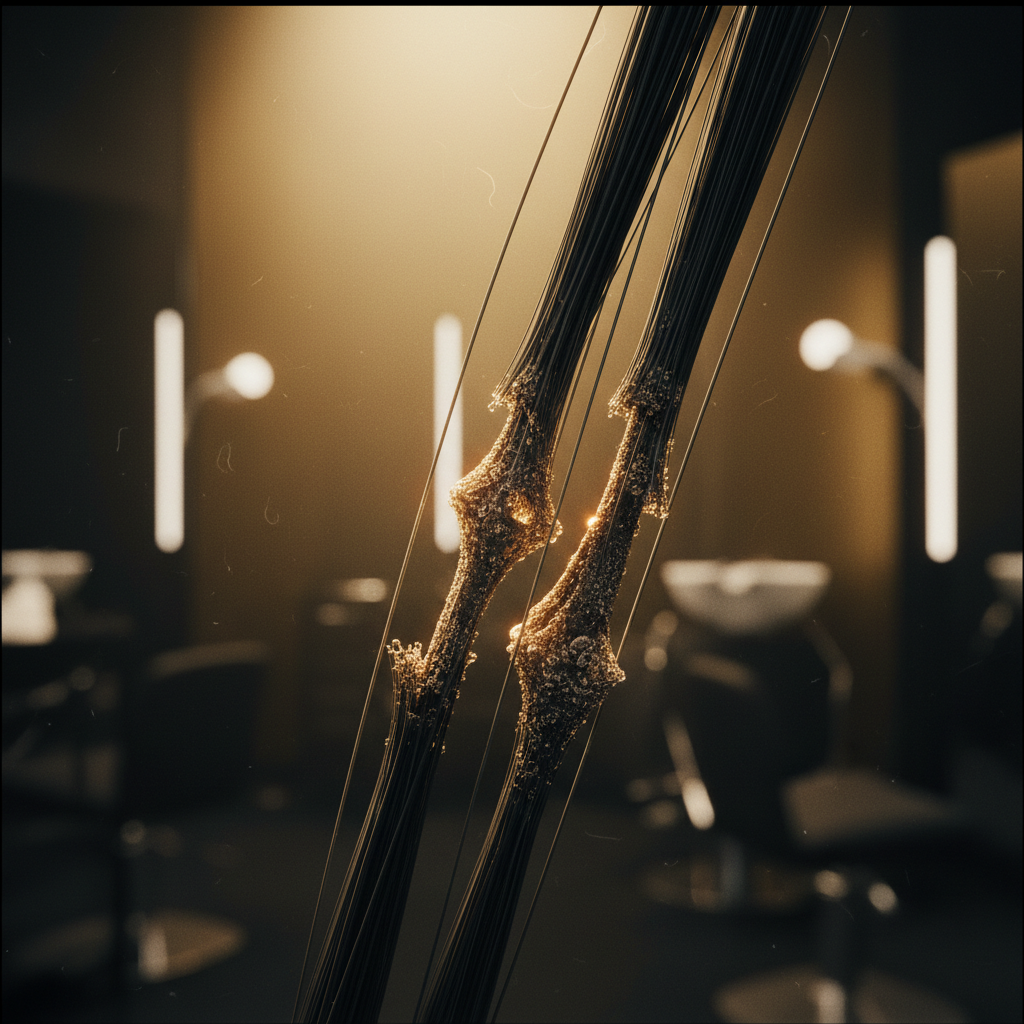
Quick answer: Trichorrhexis Nodosa and Bubble Hair are two distinct acquired hair shaft disorders characterised by severe structural fibre damage, visible node-like deformities, and localized breakage. While trichorrhexis nodosa stems from cumulative mechanical, chemical, or thermal trauma splitting cortical fibres into brush-like fractures, bubble hair is caused by rapid, intense heat vapourising trapped water inside damp hair fibres. Neither condition represents follicular hair loss, but cosmetic repair is impossible once the cortex fractures; the only remedy is cutting damaged lengths and adopting protective hair care.
Key takeaways
- Trichorrhexis nodosa and bubble hair are hair shaft disorders causing breakage, not true follicular hair loss or alopecia.
- Trichorrhexis nodosa features small, white nodes along the shaft where cuticles have stripped away, causing the cortex to splay like two interlocking paintbrushes.
- Bubble hair develops when high-heat tools (typically above 160 degrees Celsius) boil water inside wet or damp hair fibres, creating gaseous cavities that weaken the shaft.
- While trichorrhexis nodosa often develops gradually through repeated bleaching, brushing, or heat styling, bubble hair can occur instantaneously during a single styling session.
- Broken fibres cannot be glued back together; management requires trimming away affected sections, removing chemical or thermal stressors, and using conditioning formulations to protect unaffected growth.
Trichorrhexis Nodosa and Bubble Hair: what the evidence shows
Research published across dermatological journals shows that Trichorrhexis Nodosa and Bubble Hair are mechanical and thermal deformities of the hair fibre rather than diseases of the follicle. Both conditions disrupt the protective cuticle and tear into the inner cortex, leaving the hair brittle, dull, and prone to snapping. However, their structural pathways, triggers, and microscopic presentations differ significantly.
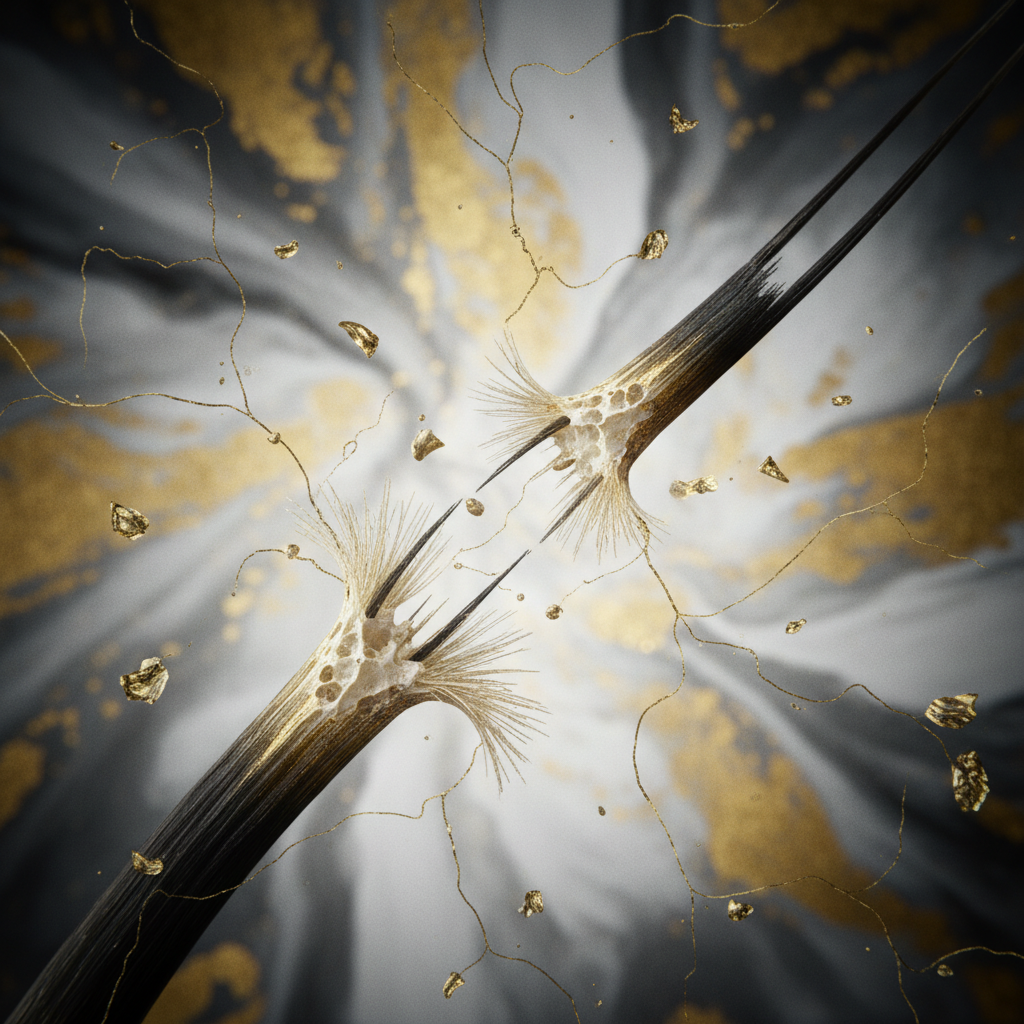
Trichorrhexis nodosa is the most common acquired hair shaft disorder. It presents clinically as tiny white specks or nodules scattered along the hair length. Under a dermatoscope or light microscope, these nodules are visible as points where the outer cuticle has eroded entirely. Stripped of its shield, the inner cortical fibres burst apart longitudinally. When tension is applied, the hair snaps cleanly at these swollen nodes, leaving characteristic splayed ends resembling two paintbrushes pressed together tip-to-tip.
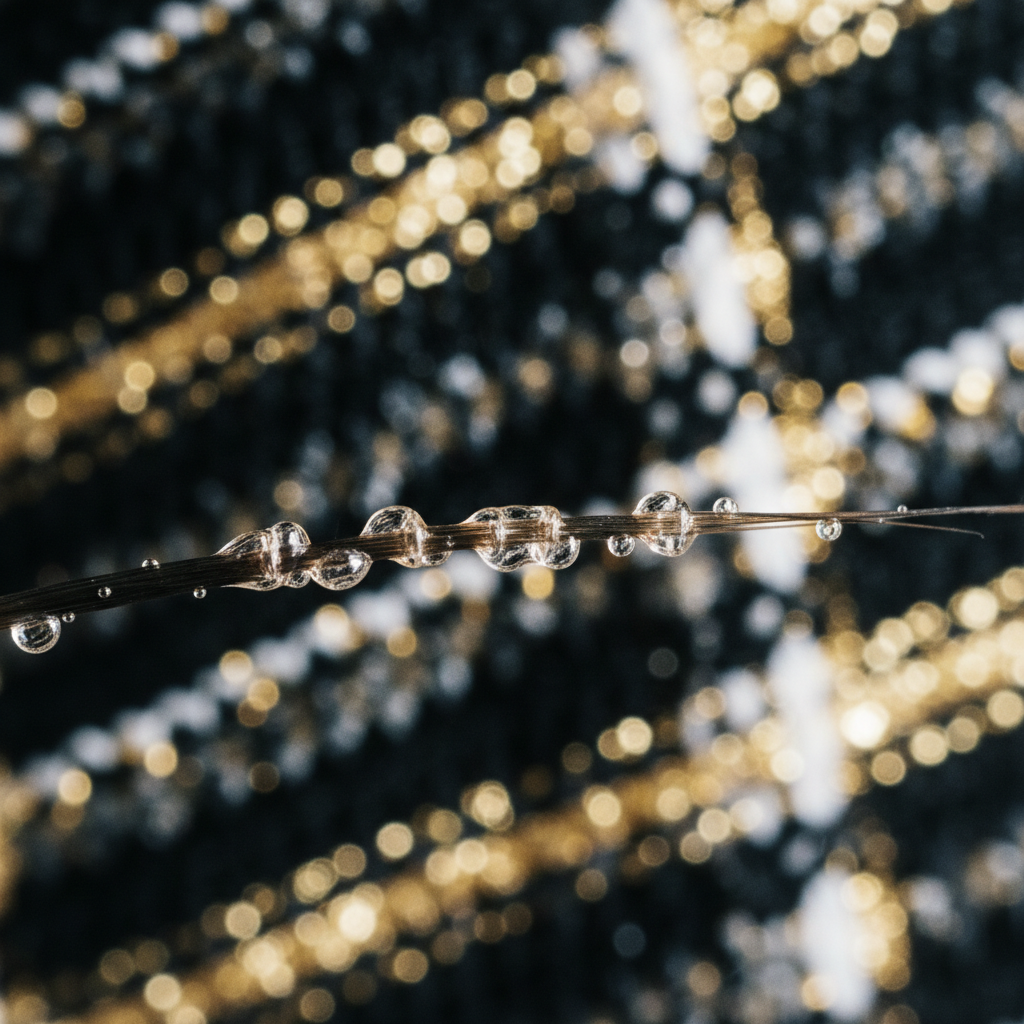
Bubble hair deformity, first formally described in dermatological literature in the early 1990s, is an acute thermal injury. Unlike the slow attrition seen in most shaft defects, bubble hair happens when styling tools (such as curling tongs, flat irons, or high-powered blow dryers held too close) contact hair containing free water. The heat turns the trapped water into steam faster than it can escape through the cortex. This rapid expansion creates microscopic gas bubbles inside the shaft, thinning the cortex walls and producing distinct, rigid kinks that break under minimal force.
What the evidence does not show
The scientific literature on hair biology is clear about what these conditions do not represent:
- They are not forms of alopecia: Neither condition originates in the dermal papilla or hair bulb. The follicle remains fully healthy and continues to produce new hair at its normal rate (roughly 1 to 1.25 cm per month). The apparent thinning is entirely due to fibre breakage along the shaft.
- They are not caused by hard water or standard washing: While hard water minerals can increase fibre friction, they do not produce cortical brush fractures or internal steam cavitation on their own.
- They cannot be cured with topical oils, keratin treatments, or supplements: Once cortical fibres split or internal air pockets form, biological repair is impossible because the hair shaft is biologically non-living tissue. "Bond builders" and deep conditioners can temporarily smooth surface friction, but they cannot fuse severed keratin chains back into an intact cortex.
Structural mechanisms: how the fibre breaks down
To understand why these defects form, you must look at the hair fibre's microscopic architecture. A healthy hair consists of an outer protective cuticle (5 to 10 overlapping layers of flat, keratinised cells), a dense cortex providing tensile strength, and occasionally a central medulla.
The mechanism of trichorrhexis nodosa
Trichorrhexis nodosa occurs when the cuticle layer is completely worn away by physical, environmental, or chemical stress. Alkaline chemical treatments like bleaching, permanent dyes, and sodium hydroxide relaxers lift the cuticle and degrade its protective lipid layer (18-methyleicosanoic acid). When combined with vigorous brushing, backcombing, or daily heat, the naked cortical cells lose their cohesive matrix. The macrofibrils uncouple, producing a focal swelling (the node). Because these uncoupled fibrils have no lateral cohesion, the fibre snaps under minimal tension.
Rarely, trichorrhexis nodosa can be congenital, associated with metabolic disorders such as argininosuccinic aciduria, Menkes disease, or trichothiodystrophy. In these cases, genetic mutations impair normal protein synthesis, causing the hair to form with severe structural fragility from birth.
The mechanism of bubble hair
Bubble hair relies entirely on physics and thermodynamics. Hair naturally holds between 10% and 30% water depending on ambient humidity and wetness. When hair is heated above 100 degrees Celsius, this water reaches its boiling point. If the hair is heated gradually or when dry, water escapes relatively harmlessly as vapour.
However, when a heating element exceeding 160 to 200 degrees Celsius is applied directly to damp or wet hair, flash vapourisation occurs. The moisture transforms into expanding steam faster than it can diffuse through the cuticle. This pressure forces open microscopic, bubble-like cavities within the cortex. These gas pockets distort the hair's cross-sectional shape, turning the smooth cylinder into an uneven, brittle strand that snaps when gently brushed.
Comparing Trichorrhexis Nodosa and Bubble Hair
The following table contrasts the key clinical features, microscopic findings, and primary triggers of both disorders:
| Feature | Trichorrhexis Nodosa | Bubble Hair |
|---|---|---|
| Primary Trigger | Cumulative mechanical, chemical, and thermal wear | Sudden thermal trauma to damp or wet hair |
| Onset | Gradual (weeks to months of repetitive damage) | Immediate (can occur in a single styling session) |
| Microscopic Appearance | Swollen nodes with cortical fibres splaying like paintbrushes | Irregular, oval gas-filled bubbles or cavities in the cortex |
| Clinical Presentation | Small white nodules, rough texture, distal breakage | Stiff, kinky, frizzy patches that snap easily; often localized |
| Congenital Form? | Yes, rarely (linked to metabolic or urea-cycle defects) | No, strictly acquired |
| Reversibility | Irreversible along damaged lengths; requires trimming | Irreversible along damaged lengths; requires trimming |
Signs to look for
Stylists and individuals can usually spot both shaft disorders through careful tactile and visual examination:
- White specks mimicking lice: Trichorrhexis nodosa is frequently mistaken for head lice nits because the swollen white nodes cling along the hair strand. Unlike nits, which are firmly glued to one side of the shaft near the scalp, these nodes encompass the entire shaft circumference and cannot be slid down the fibre.
- Uneven, "chewed" lengths: Instead of clean shedding with a white bulb attached, both conditions cause hair fragments of irregular lengths (2 to 10 cm) to litter your clothes, pillow, or sink.
- Sudden frizzy patches: Bubble hair often appears as a localised, straw-like tuft where a curling iron or straightener was held too long against damp hair. The hair feels notably stiff and brittle compared to adjacent strands.
- Tangled, velcro-like texture: Because the cuticle is missing or deformed, hair fibres catch on one another, forming persistent mats and knots that resist gentle detangling.
What you can do: management and recovery
Because dead keratin cannot regenerate, managing both shaft defects focuses on cutting away the compromised lengths and shielding new growth from repeated trauma.
- Cut out the damage: The most practical intervention is trimming the hair above the highest visible fracture point. Leaving fractured nodes in place leads to progressive splitting further down the fibre.
- Never style wet hair with direct heat: Bubble hair is entirely preventable. Ensure hair is 100% dry before using straighteners or curling tongs. When using blow dryers, keep the nozzle moving and maintain a distance of at least 15 cm from the scalp and hair surface.
- Minimise chemical overlap: Avoid applying permanent dyes, bleaches, or chemical relaxers over previously treated lengths. Keep chemical applications restricted to the new root regrowth.
- Reduce friction and mechanical strain: Switch to wide-tooth combs, detangle only when hair is lubricated with conditioner, and sleep on silk or satin pillowcases to lower surface friction.
- Incorporate conditioning agents: Use rinse-out and leave-in conditioners formulated with silicones, fatty alcohols, or hydrolysed proteins. While these cannot fix broken cortex cells, they coat the exterior, deposit a temporary barrier, reduce wet combing forces by up to 50%, and prevent neighbouring healthy hairs from snagging on damaged strands.
When the cause may be something else
If you notice widespread breakage without a clear history of chemical or heat abuse, the underlying issue might not be standard mechanical wear:
- Monilethrix: A rare genetic condition where hair shafts have a beaded appearance, causing fragile breaks near the scalp accompanied by follicular keratosis (rough scalp bumps).
- Trichorrhexis invaginata ("Bamboo hair"): Characteristic of Netherton syndrome, where the shaft telescopes into itself to form ball-and-socket joints.
- Underlying metabolic or nutritional issues: Severe iron deficiency, hypothyroidism, or protein-calorie malnutrition can compromise the initial formation of the keratin matrix, making hair significantly more vulnerable to mechanical breakdown.
When to seek professional advice
Consult a dermatologist, trichologist, or GP if your hair is breaking close to the scalp, shedding from the root in large amounts, or failing to improve several months after eliminating heat and chemical treatments. A clinician can perform trichoscopy (dermoscopy of the hair and scalp) or take hair clippings for light and electron microscopy to pinpoint the exact structural defect and rule out underlying systemic or genetic causes.
Supporting vulnerable hair with Watermans
When managing hair that is brittle or snapping due to environmental and mechanical damage, keeping the scalp environment healthy and shielding the emerging fibre is vital. The Watermans GrowMe collection offers targeted cosmetic support for stressed hair routines.
Formulated without harsh sulphates, Watermans Grow Me Shampoo cleanses gently without stripping away fragile remaining cuticles. Paired with Watermans Condition Me Conditioner, which blends hydrolysed lupin protein, cholesterol, niacinamide, and natural oils, it lubricates the fibre surface, seals moisture, and dramatically cuts combing friction. While cosmetic products cannot fuse broken cortical fractures caused by Trichorrhexis Nodosa and Bubble Hair, incorporating gentle, protein-rich nourishment supports the strength, resilience, and appearance of fresh growth as old damage is trimmed away.
Frequently asked questions about Trichorrhexis Nodosa and Bubble Hair
Can Trichorrhexis Nodosa and Bubble Hair cause permanent baldness?
No. Neither condition damages the hair follicle or dermal papilla. The breakage occurs entirely along the external shaft. As long as the follicle itself is healthy, new hair will continue to grow from the scalp normally. Once you stop the damaging habits and trim away the fractured ends, your hair density will gradually restore over time.
How can a stylist differentiate between nits and trichorrhexis nodosa?
Nits (lice eggs) are oval capsules cemented firmly to one side of the hair shaft, almost always within a centimetre of the scalp, and can be slid along the strand with firm finger pressure. Trichorrhexis nodosa presents as microscopic white swellings that encompass the entire circumference of the hair fibre, appear anywhere along the length, and snap easily when manipulated.
What exact temperature causes bubble hair deformity?
Research indicates that bubble hair generally occurs when thermal appliances operating between 160 and 215 degrees Celsius are applied to wet or damp hair fibres. The intense heat instantly boils trapped moisture inside the hair shaft, creating expanding steam bubbles within the cortex that permanently deform the fibre structure.
Does cutting hair cure these conditions?
Cutting the hair removes the fractured, mechanically compromised portions of the shaft, which stops splits from travelling higher up the strand. However, cutting does not "cure" the underlying vulnerability if the original styling habits, such as wet flat-ironing, excessive bleaching, or rough brushing, continue on newly grown hair.
Summary
Dealing with Trichorrhexis Nodosa and Bubble Hair can be deeply frustrating, but understanding their physical mechanisms removes the mystery from their management. Trichorrhexis nodosa is the outcome of cumulative physical and chemical wear stripping the hair's protective cuticle, while bubble hair is the direct consequence of flash-boiling moisture inside damp strands with styling tools. Neither disorder is an incurable illness or a sign of permanent hair loss. By eliminating aggressive heat styling, avoiding chemical overlap, embracing gentle handling, and gradually trimming away broken ends, you can successfully protect your hair fibres and allow healthy, unbroken growth to flourish.
Sources and references
- British Association of Dermatologists. Guidelines for the management of hair shaft disorders. British Journal of Dermatology, 2021.
- Brown, V. M., et al. "Bubble hair: A unique acquired hair shaft deformity." Archives of Dermatology, 1992.
- Dawber, R. "Hair: Its structure and response to cosmetic and physical treatments." Clinics in Dermatology, 1996.
- Gummer, C. L. "Bubble hair: a condition of localized heat damage." British Journal of Dermatology, 1994.
- National Institute for Health and Care Excellence (NICE). Alopecia and hair shaft abnormalities: clinical presentation and diagnosis, 2022.
- Sinclair, R. D., & de Berker, D. A. "Hair shaft disorders." Dermatologic Clinics, 2005.
Find these ingredients in Watermans products
- Niacinamide: you will find this ingredient in our Hair Mask.