Understanding Thermal Hair Damage: Science, Symptoms, and Fibre Protection
9 min read ·
Thermal Hair Damage degrades keratin proteins and causes fibre breakage. Learn the structural mechanisms, temperature thresholds, and how to protect hair.
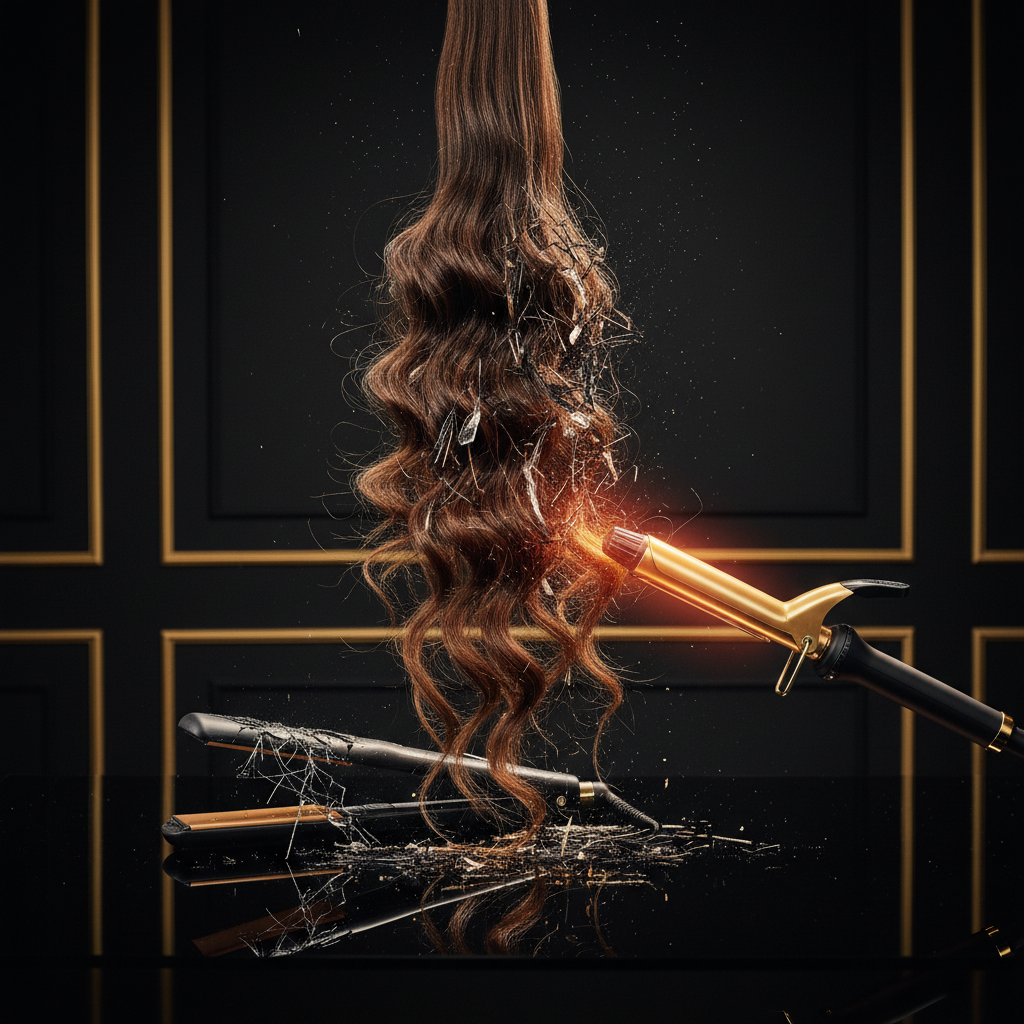
Quick answer: Thermal Hair Damage occurs when high temperatures alter the physical and chemical architecture of the hair shaft. Exposure to styling tools exceeding 150°C degrades structural keratin proteins, strips natural surface lipids, and vaporises moisture trapped inside the cortex. This weakens the fibre, causing split ends and breakage along the length. Because the visible hair shaft consists of dead, non-living cells, thermal hair damage cannot biologically heal or regenerate once structural bonds break, meaning prevention and surface management are your primary defences.
Key takeaways
- Thermal damage breaks down structural alpha-keratin coils and oxidises protective 18-methyleicosanoic acid (18-MEA) lipid layers.
- Using hot tools on wet or damp hair causes "bubble hair", an irreversible deformity where rapidly boiling water forms vapor pockets inside the cortex.
- Heat styling causes hair fibre breakage along the shaft; it does not directly cause follicular hair loss or shedding at the scalp.
- Thermal degradation begins around 140°C to 150°C, while acute protein denaturation and cuticle cracking accelerate sharply above 185°C to 200°C.
- Heat protectant formulations containing silicones and specialised polymers reduce heat transfer rates and friction, but they do not eliminate thermal stress entirely.
Thermal Hair Damage: what the evidence shows
Thermal Hair Damage represents progressive, cumulative wear on the hair shaft caused by excessive artificial heat. Research published in cosmetic and dermatological literature demonstrates that heat alters every layer of the fibre, from the exterior cuticle scales down to the inner cortex.
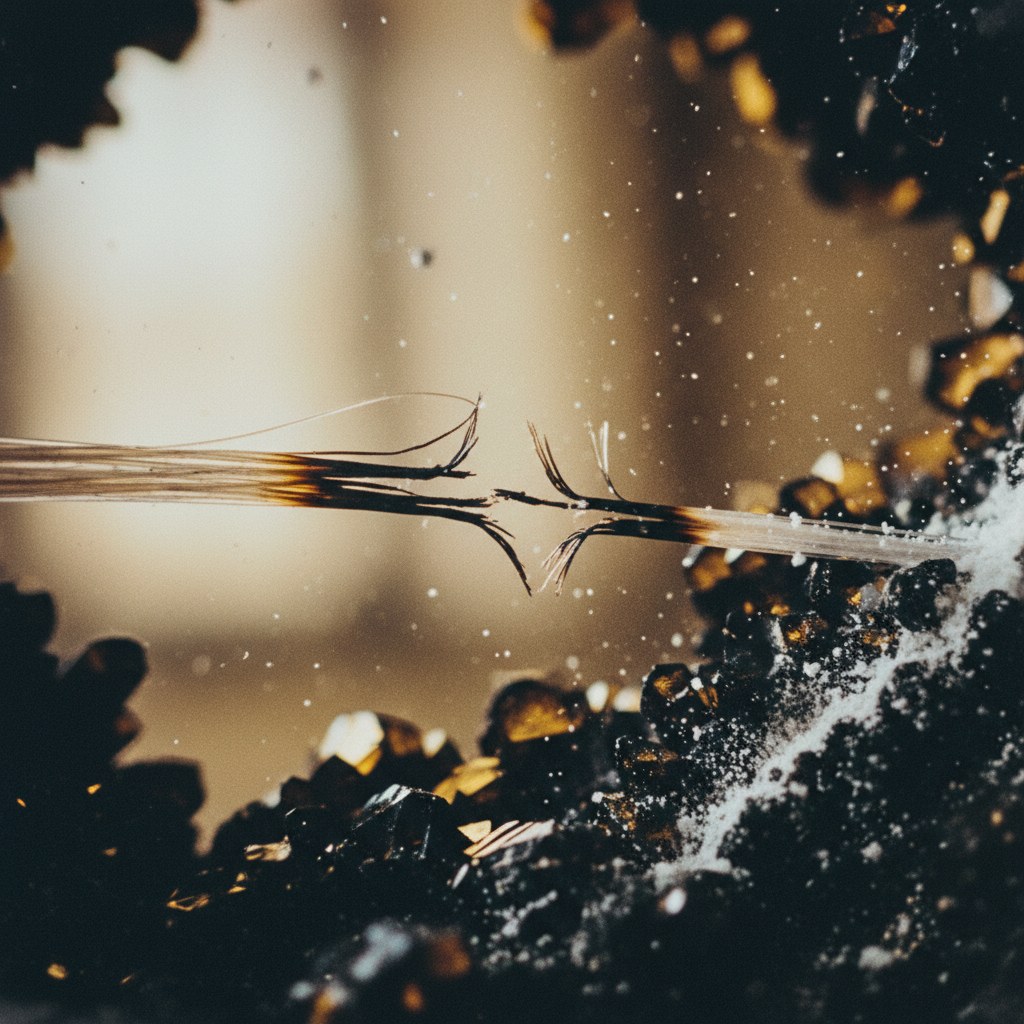
The outermost layer of the hair fibre is covered by a natural lipid barrier known as 18-methyleicosanoic acid (18-MEA). When exposed to heat tools above 140°C, this protective fatty layer degrades. Without it, the hair loses its natural hydrophobicity, absorbing ambient moisture too quickly and swelling unevenly.
As temperatures climb toward 180°C and beyond, the interior cortex undergoes thermal denaturation. The keratin intermediate filaments, originally organised in stable alpha-helix spirals, unravel into disordered beta-sheet configurations. Above 200°C, the amino acid cystine begins to decompose, breaking the disulphide bonds that give the hair fibre its tensile strength and elasticity. The result is dry, brittle hair that snaps under standard combing forces.
The mechanical and physical mechanisms of heat
To understand why heat damages hair, you have to look at what happens at microscopic scale during styling. The hair fibre behaves differently depending on whether heat is applied to dry or damp keratin.
Alpha-keratin denaturation
Keratin fibres are held together by hydrogen bonds, salt bridges, and covalent disulphide bonds. Gentle heat temporarily softens hydrogen bonds, which allows you to reshape hair using a blow dryer or curling wand. However, sustained heat above 155°C alters the secondary protein structure permanently. Once these proteins denature, the fibre loses its mechanical springiness, leading to irreversible limpness or frizzy, brittle ends.
The "bubble hair" phenomenon
Applying a flat iron or curling tong to damp hair poses severe mechanical risks. Free water within the hair cortex has a boiling point of 100°C, whereas thermal styling tools routinely run at 180°C to 230°C. When heated rapidly, internal moisture flashes into steam before it can escape through the cuticle. This steam expands violently, creating microscopic cavities and visible gas bubbles within the cortex. Under a scanning electron microscope, these appear as swollen, hollow blisters that create focal fracture points, causing the hair to snap off cleanly under the lightest tension.
Cuticle lifting and cracking
Cuticle cells overlap like tiles on a roof. Repeated thermal cycling causes differential thermal expansion between the outer cuticle and inner cortex. The rapid heating and cooling cycles make the cuticle edges buckle, lift, and crack. Lifted cuticles dramatically increase surface friction, making detangling difficult and accelerating grooming-related breakage.
| Temperature Range | Structural Impact on Fibre | Visible Symptoms | Recommended Actions |
|---|---|---|---|
| Below 140°C | Temporary disruption of weak hydrogen bonds | Hair smooths or curls temporarily; minimal structural risk | Safe for daily blow drying with a nozzle at a distance |
| 140°C to 175°C | Degradation of surface 18-MEA lipid layer; mild moisture loss | Slight dryness, increased porosity, subtle loss of shine | Always apply a heat protectant; limit passes with irons |
| 175°C to 200°C | Denaturation of alpha-keratin into beta-sheets; early cuticle cracking | Rough texture, split ends, reduced elasticity | Restrict to coarse or thick hair; avoid frequent use |
| Above 200°C | Thermal decomposition of cystine, disulphide bond rupture, cuticle melting | Severe breakage, frizzy halo, extreme brittleness, colour shift | Avoid; causes irreversible fibre collapse and snapping |
What the evidence does not show
There are several persistent misconceptions regarding heat styling and its effect on hair health:
- Heat tools do not cause biological hair loss: Thermal hair damage causes fibre snapping and mid-shaft breakage. It does not cause follicular shedding conditions such as telogen effluvium or androgenetic alopecia, unless a hot iron physically burns the scalp skin and creates scarring (cicatricial) alopecia.
- Heat protectants do not offer 100 percent immunity: A quality heat protectant reduces thermal conduction and cushions mechanical friction, lowering damage by roughly 30 to 50 percent. It does not create an impenetrable barrier that permits repeated iron passes at 230°C.
- Products cannot "repair" severed keratin: No cosmetic mask, oil, or salon treatment can regrow or physically reform melted cuticles or split ends. Products can temporarily fill microscopic cracks, lubricate the exterior, and coat the fibre with conditioning polymers, but the underlying structural compromise remains until cut away.
Signs and symptoms of heat damage
Recognising the early stages of heat stress allows you to adjust your routine before widespread breakage occurs. Watch for these distinct signs:
- Altered curl or wave pattern: If you have wavy, curly, or coily hair, heat-damaged sections will look limp, stringy, or fail to form their normal coil, even when soaking wet.
- Loss of elasticity: Take a single wet hair shed naturally from the head and gently pull both ends. Healthy hair stretches roughly 30 percent beyond its length before returning. Heat-compromised hair stretches very little and snaps immediately.
- Split ends and white dots: White specks visible near the tips of the hair shaft (trichorrhexis nodosa) indicate places where the cortex has frayed completely inside the cuticle sheath.
- Chronic tangling and roughness: When cuticles crack and stand upright, adjacent fibres catch on one another like Velcro, leading to persistent matting and knots.
- Rapid colour fading: Thermal degradation strips the cuticle of its ability to retain artificial colour pigments, causing dye to wash out rapidly.
What you can do: protection and management
Because damaged fibre cannot biologically regenerate, management focuses on reducing thermal stress and lubricating damaged lengths to prevent snapping.
Lower your styling temperatures
Most fine or chemically processed hair styles effectively at 150°C to 165°C. Thick or coarse hair rarely requires more than 180°C. Reserve temperatures above 190°C exclusively for professional chemical restructuring services.
Dry thoroughly before using direct-contact hot tools
Never allow a flat iron, curling wand, or hot brush to touch hair that contains liquid moisture. Ensure the fibre is 100 percent dry to touch before applying direct hot plates to eliminate the risk of bubble hair.
Apply film-forming protectants
Look for formulations containing ingredients that distribute heat evenly and reduce friction. Dimethicone, amodimethicone, polyquaternium polymers, and hydrolysed wheat or vegetable proteins coat the shaft, slowing heat transfer and smoothing down raised cuticle edges.
Trim regularly
Once the cortex splits or develops trichorrhexis nodosa, that split will travel upward along the shaft over time. Trimming off the frayed ends removes the fracture point and stops the tear from destroying healthy lengths above it.
Supporting compromised hair with Watermans
When your hair fibre is compromised by heat, your routine must shift toward gentle handling and minimizing further mechanical stress. Watermans GrowMe Shampoo and ConditionMe Conditioner are designed to support an optimal environment for hair that feels fragile or brittle.
While topical products cannot rebuild split ends, ConditionMe utilizes cholesterol, niacinamide, and hydrolysed lupin protein to deposit a softening, protective layer over the hair fibre. This helps improve surface slip, reducing the combing resistance that snaps heat-weakened strands during post-wash detangling. Paired with GrowMe's gentle, sulphate-free cleansing base, this system cleanses the scalp without roughly stripping the residual natural oils that compromised hair desperately needs.
When the cause may be something else
If your hair appears thin, sparse, or brittle, thermal tools might not be the only factor at play:
- Telogen effluvium: If you notice diffuse shedding coming directly from the scalp (hairs with small white bulbs at the root), this is a follicle-level cycle disruption, often triggered by systemic illness, hormonal shifts, or severe physiological stress.
- Chemical damage: Bleaching, high-lift colour, and chemical relaxers cleave disulphide bonds chemically. When combined with heat, the structural breakdown accelerates exponentially.
- Nutritional deficiencies: Inadequate intake of dietary protein, iron (ferritin), or zinc causes newly produced hair fibres to grow out finer and more fragile, making them far more vulnerable to normal styling temperatures.
- Traction alopecia: Tightly pulled ponytails, buns, or extensions place physical strain on the root, causing follicular inflammation and hair loss that is distinct from mid-shaft snapping.
When to seek professional advice
Consult a trichologist or dermatologist if you experience sudden, heavy shedding at the root rather than breakage along the length, or if you notice inflamed, scaling, or painful patches on your scalp. Similarly, if your hair snaps off extensively despite avoiding heat tools and chemical treatments, an underlying metabolic evaluation or closer examination under a trichoscope can pinpoint the true source of structural weakness.
Frequently asked questions about Thermal Hair Damage
Can Thermal Hair Damage be reversed with deep conditioning treatments?
No, Thermal Hair Damage cannot be truly reversed. Conditioning masks, protein treatments, and bonding serums can temporarily coat the cuticle, patch microscopic fissures, and improve mechanical slip. However, they cannot biologically fuse split ends or re-establish denatured alpha-keratin proteins. Trimming the compromised ends is the only permanent solution for structural breakage.
What temperature causes permanent damage to hair?
Permanent structural damage generally begins between 150°C and 175°C, where surface lipids degrade and cuticles begin to lift. When temperatures exceed 185°C to 200°C, internal keratin denatures rapidly, disulphide bonds break down, and moisture flash-boiling can cause irreversible cortex fractures.
Does a blow dryer cause as much damage as a flat iron?
Blow dryers typically cause less direct structural damage than flat irons because the hot air is diffused and the tool does not make direct, pressurized contact with the fibre. However, holding a dryer nozzle too close to damp hair without continuous movement can still create significant cuticle blistering and surface dehydration.
How can I tell if my hair is shedding or breaking from heat?
Examine the fallen hairs under good light. Shed hairs have a small, rounded white bulb at one end, indicating that the entire fibre released naturally from the follicle. Broken hairs from heat styling are shorter, irregular lengths without a bulb, often featuring frayed or split edges.
Summary on managing heat-stressed hair
Protecting your hair from Thermal Hair Damage requires a disciplined balance between styling goals and structural preservation. By moderating your tool temperatures, refusing to iron damp strands, and relying on scientifically supported film-forming barriers, you can preserve the integrity of your keratin fibres. Treat heat as a powerful styling agent that demands respect, and trim away compromised ends to keep your lengths resilient and strong.
Sources and references
- Journal of Cosmetic Science: McMullen, R. L., & Jachowicz, J. (2004). Thermal degradation of hair.
- International Journal of Trichology: Lee, Y., Kim, Y. D., Hyun, H. J., Pi, L. Q., Jin, X., & Lee, W. S. (2011). Hair shaft damage from heat and drying time of hair dryer.
- Journal of the Society of Cosmetic Chemists: Gamez-Garcia, M. (1998). The cracking of human hair cuticles by cyclical thermal stresses.
- British Journal of Dermatology: Gummer, C. L. (1994). Bubble hair: a condition produced by cosmetic heat treatments.
- National Center for Biotechnology Information (NCBI): Robbins, C. R. (2012). Chemical and Physical Behavior of Human Hair. Springer Science & Business Media.
Find these ingredients in Watermans products
- Zinc: you will find this ingredient in our Hair Vitamins.