Traction Alopecia Causes: The Science Behind Tension Hair Loss
9 min read ·
Understand the primary Traction Alopecia Causes, biological mechanisms, early warning signs, and evidence-based ways to prevent permanent follicular scarring.

Quick answer: Identifying Traction Alopecia Causes centres on prolonged, repetitive mechanical tension applied to hair follicles. Common triggers include tight ponytails, braids, cornrows, heavy extensions, tight turbans, and sustained use of hair rollers. Over time, persistent pulling inflames the follicle (traction folliculitis) and disrupts blood supply. The main limitation is that while early traction alopecia is entirely reversible by removing tension, long-standing follicular scarring (cicatricial alopecia) leads to permanent, irreversible hair loss that cosmetic remedies cannot restore.
Key takeaways
- Mechanical tension is the primary driver: persistent pulling forces on the hair root damage the outer root sheath and dermal papilla.
- High-risk hairstyles include tight weaves, braids, cornrows, slicked-back buns, and heavy clip-in or bonded extensions.
- Chemical relaxers, excessive heat, and heavy accessories amplify the risk by weakening fibre elasticity and root anchorage.
- Early warning signs include redness, tenderness, pimple-like bumps (traction folliculitis), and short, broken hairs along the hairline.
- Early intervention leads to full recovery, but chronic tension causes irreversible fibrosis and permanent follicle destruction.
Traction Alopecia Causes: what the evidence shows
Research published in dermatological literature demonstrates that Traction Alopecia Causes are mechanical rather than hormonal or autoimmune. When a hairstyle or headwear pulls hair fibres taut for prolonged periods, the force transfers down the hair shaft to the follicle. This continuous strain induces perifollicular inflammation, loosens the hair from its attachment within the follicle bulb, and forces anagen (growing) hairs prematurely into the catagen (transition) or telogen (resting) phases.
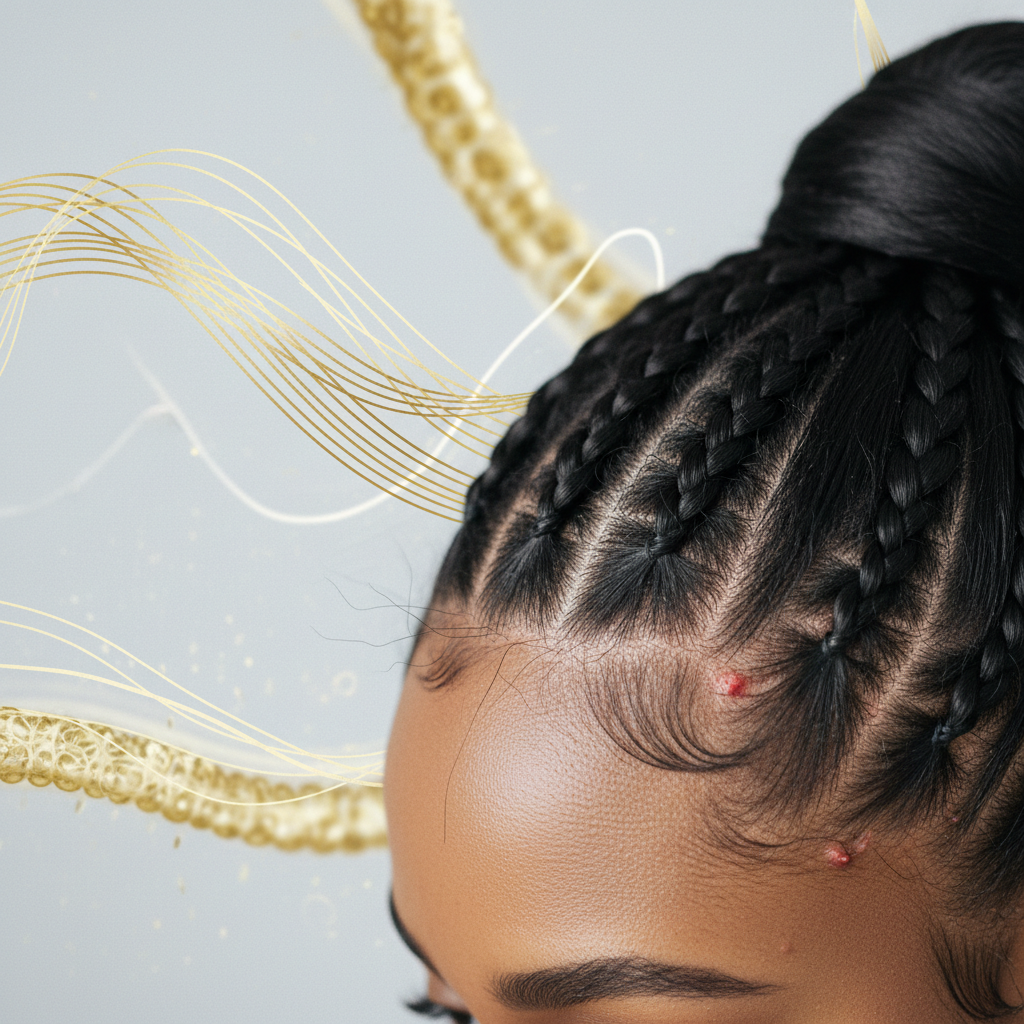
Clinical investigations recognise several distinct culprits behind this mechanical strain:
- High-tension styling: Tight cornrows, box braids, dreadlocks, slick high ponytails, and ballerinas' buns generate persistent anchoring stress. When braids or twists are installed too tightly against the scalp, the root experiences unyielding outward tension.
- Extensions and weaves: Glued, taped, or sewn-in hair extensions add sustained physical weight to natural strands. As the heavy artificial fibre swings, it acts as a lever on the natural follicle, particularly when worn continuously without adequate rest periods.
- Headwear and religious coverings: Everyday items can exert unexpected traction. Snug turbans, tightly pinned hijabs, tight swim caps, and hard-hat straps worn consistently across the same scalp zones cause localised tension and friction hair loss.
- Mechanical tools: Heavy rollers left in overnight, tight headbands with rubberised grips, and aggressive brushing routines pull hair fibres directly from their bases.
The risk escalates when mechanical tension combines with chemical processing. Studies note that combining tight styling with chemical straighteners (relaxers) or frequent bleach drastically lowers the tensile strength of keratin. This makes the hair shaft more brittle and lowers the threshold of physical force required to detach or destroy the follicle.
| Causative Factor | Primary Mechanism | Typical Scalp Location | Reversibility Potential |
|---|---|---|---|
| Tight Braids / Cornrows | Sustained root tension from tight sectioning | Frontal hairline, temples, parting lines | High if caught early; low if scarring occurs |
| Heavy Hair Extensions | Weight-based lever force pulling on anchoring roots | Crown, parietal zones, occipital scalp | High within 3 to 6 months of removal |
| Slick Buns & Ponytails | Backward mechanical pull flattening follicle angles | Frontotemporal margins and nape | Very high if tension is relaxed promptly |
| Chemical Relaxers + Tension | Weakened protein bonds combined with physical pull | Diffuse or localised along styled edges | Moderate; higher risk of rapid scarring |
| Snug Headwear / Turbans | Constant surface friction combined with tension | Frontal fringe, behind ears, vertex | High once pressure distribution is altered |
What the evidence does not show
The scientific consensus clarifies several common misconceptions regarding traction alopecia:
- It is not an internal or hormonal disorder: Unlike androgenetic alopecia, traction alopecia is not driven by dihydrotestosterone (DHT) or genetic receptor sensitivity.
- It is not caused by poor hygiene: Sebaceous oil, product build-up, and everyday dirt do not generate mechanical traction or cause this form of hair loss.
- It does not stem from nutritional deficiency: While severe iron or protein deficiencies can cause telogen effluvium, they do not produce the localised, margin-focused patterns typical of traction alopecia.
- Cosmetics cannot repair scarred follicles: Shampoos, oils, and topical serums cannot revive a follicle once fibrous scarring (cicatricial damage) replaces the follicular unit.
The biological mechanism: from tension to scarring
Traction alopecia progresses through well-documented biological phases. Initially, acute tension causes perifollicular erythema (redness) and small sterile pustules or papules, clinically termed traction folliculitis. Patients often report tenderness, headache, or a sensation of relief when releasing their hair.
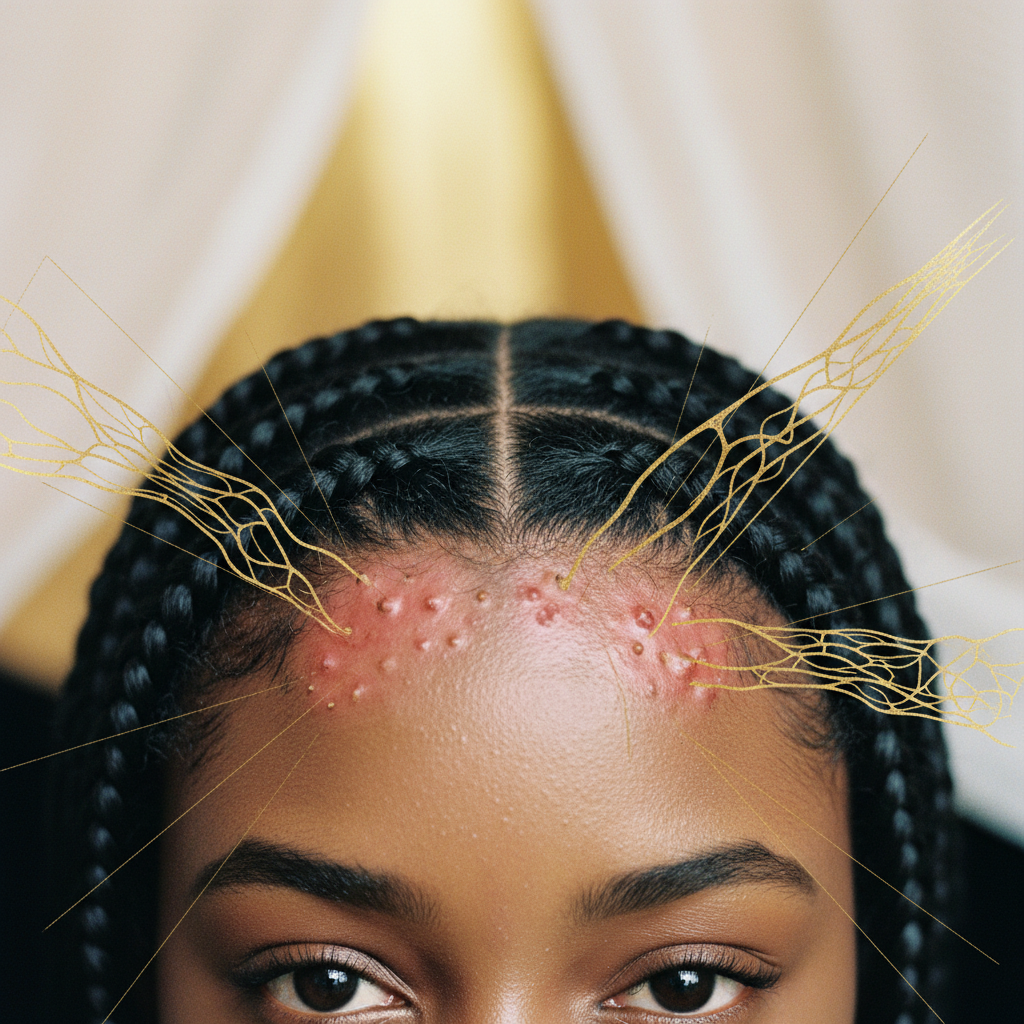
If the mechanical pull persists over months or years, the chronic mechanical stress starves the dermal papilla of microvascular circulation. The inner and outer root sheaths separate prematurely from the hair shaft. Over extended timelines, chronic low-grade inflammation triggers fibroblasts, which gradually replace healthy follicular structures with dense fibrous connective tissue. Once this fibrosis takes place, the follicular pore disappears entirely, leaving a smooth, shiny scalp surface incapable of producing new hair fibres.
The signs to look for
Catching traction alopecia before permanent damage sets in relies on spotting these distinctive clinical signs:
- The "Fringe Sign": Retained, fine vellus hairs along the very edge of the hairline, while larger terminal hairs just behind them have been pulled out. This is a classic diagnostic marker differentiating traction alopecia from alopecia areata or frontal fibrosing alopecia.
- Traction folliculitis: Small red bumps, white pustules, or scaling clustered directly around hair follicles subjected to the tightest tension.
- Scalp tenting: The scalp skin lifts slightly around the base of the hair shaft due to extreme pulling during braiding or styling.
- Hairline recession: Gradual, symmetrical backward creeping of the temporal margins, frontal hairline, or nape.
- Broken stubs: Short, fractured hair shafts mixed with completely bare patches along parting lines.
When the cause may be something else
Localised hair loss around the margins or crown does not always stem from tension. Several conditions mimic the presentation of traction alopecia:
- Frontal Fibrosing Alopecia (FFA): A primary cicatricial alopecia causing progressive recession of the frontal and temporal hairline, frequently accompanied by loss of eyebrows. It is an autoimmune condition, not mechanical.
- Alopecia Areata: Characterised by smooth, round, totally bare patches that develop rapidly, often showing exclamation-mark hairs under dermoscopy.
- Trichotillomania: A behavioural impulse-control disorder involving conscious or subconscious hair pulling, resulting in irregular, non-symmetrical patches with broken hairs of varying lengths.
- Central Centrifugal Cicatricial Alopecia (CCCA): A scarring alopecia beginning on the vertex (crown) and spreading outward symmetrically, seen most commonly in women of African descent.
A qualified dermatologist or trichologist uses dermoscopy to differentiate these conditions by checking for follicular openings, loss of sebaceous glands, and specific patterns of peripilar casts.
What you can do: recovery and styling modifications
Halting and reversing early-stage traction alopecia requires immediate, consistent reduction of physical tension on the scalp.
- Loosen your styles immediately: Instruct your stylist to never pull tightly on baby hairs or edges. If a style hurts, tingles, or causes headaches, it is damaging your follicles and should be taken down.
- Limit wear time: Keep protective styles such as braids, weaves, or twists installed for a maximum of 6 to 8 weeks. Allow an equal rest window of unbraided, low-manipulation styling between installations.
- Avoid small, heavy braids: Opt for larger partings and lightweight braiding hair. Avoid micro-braids, which focus significant mechanical load onto tiny clusters of follicles.
- Change your pony placement: If you wear a daily ponytail or bun, alternate the height daily (high, low, loose at the nape) and secure it with soft silk or satin scrunchies rather than elastic bands.
- Separate chemicals from tension: Never install braids, weaves, or tight styles immediately after relaxing, perming, or bleaching hair. Wait at least 2 to 3 weeks to allow the hair shaft to stabilise.
Supporting the scalp environment
While mechanical relief is the only true remedy for the root cause, supporting overall scalp condition aids natural recovery during resting phases. Maintaining a clean, balanced scalp environment free from heavy microbial build-up prevents secondary irritation.
For general hair vitality and supporting the resilience of remaining strands, gentle formulas like Watermans Grow Me Shampoo and Conditioner can complement your daily hair wellness routine. Formulated with biotin, rosemary, caffeine, and argan oil, they help maintain a clean, refreshed scalp environment and improve the look and feel of hair thickness, without weighing down fragile new growth. These topical measures support cosmetic hair quality, though they do not replace the fundamental need to eliminate physical traction.
When to get professional advice
Consult a board-certified dermatologist or registered trichologist if you notice:
- Persistent bumps, pustules, or scalp tenderness that do not vanish 24 hours after styling.
- Visible recession of the hairline that continues even after adopting loose styles.
- Smooth, shiny, pale skin where hair follicles used to be, which signals potential scarring.
- Unexplained hair shedding across the entire scalp alongside edge thinning.
Medical professionals can prescribe topical corticosteroids or anti-inflammatory treatments to suppress active traction folliculitis, halting the progression toward permanent scarring.
Frequently asked questions about Traction Alopecia Causes
Can tight ponytails really cause permanent baldness?
Yes. Wearing tight ponytails daily exerts continuous backward pull on frontotemporal follicles. While occasional wear causes only temporary shedding or breakage, chronic daily tension triggers inflammation that gradually destroys the hair root. Over years, this transforms reversible thinning into permanent, scarred hair loss.
What are the earliest Traction Alopecia Causes and symptoms to spot?
The earliest warning signs are physical discomfort and scalp inflammation. If your scalp feels tender, develops small red bumps (traction folliculitis), or shows slight swelling after styling, mechanical tension is too high. Noticing short, broken hairs or thinning edges along the temples indicates early follicle distress that requires immediate tension relief.
How long does it take for hair to grow back after stopping tight styles?
If caught in the non-scarring stage, hair typically begins to regrow within 3 to 6 months after completely removing tension. Full recovery of density may take 9 to 12 months, depending on your individual hair growth rate (which averages roughly 1 to 1.25 cm per month).
Does wearing a wig cause traction alopecia?
Wigs can contribute to traction alopecia if secured with tight internal combs, silicone grip bands, or glues that pull on the hairline during wear and removal. To prevent damage, choose correctly sized wigs, avoid combs that dig into fragile edges, and use soft velvet grip bands without excessive tightening.
Conclusion
Understanding Traction Alopecia Causes gives you direct power over your hair health, because unlike genetic forms of thinning, mechanical hair loss is largely preventable. By recognising the hazards of persistent tension, respecting early symptoms like tenderness and traction bumps, and choosing gentle, low-manipulation styles, you protect delicate follicles from permanent damage. Treat your hairline with care, allow your roots regular rest, and seek expert dermatological assessment at the first sign of persistent thinning.
Sources and references
- British Association of Dermatologists. Traction Alopecia Patient Information Leaflet, 2020.
- American Academy of Dermatology. Hair loss: Tips for managing traction alopecia, 2022.
- Billero, V. And Miteva, M. Traction alopecia: the root of the problem. Clinical, Cosmetic and Investigational Dermatology, 2018.
- Haskin, A. And Aguh, C. All hairstyles are not created equal: What the dermatologist needs to know about black hairstyling practices and the risk of traction alopecia. Journal of the American Academy of Dermatology, 2016.
- National Institute for Health and Care Excellence (NICE). Alopecia - non-scarring and scarring clinical guidance, 2021.