Thermal Heat Damage to Hair Keratin: Science, Symptoms, and Solutions
9 min read ·
Thermal heat damage to hair keratin breaks down essential protein bonds, permanently weakening the hair shaft. Learn the science and practical ways to protect your hair.
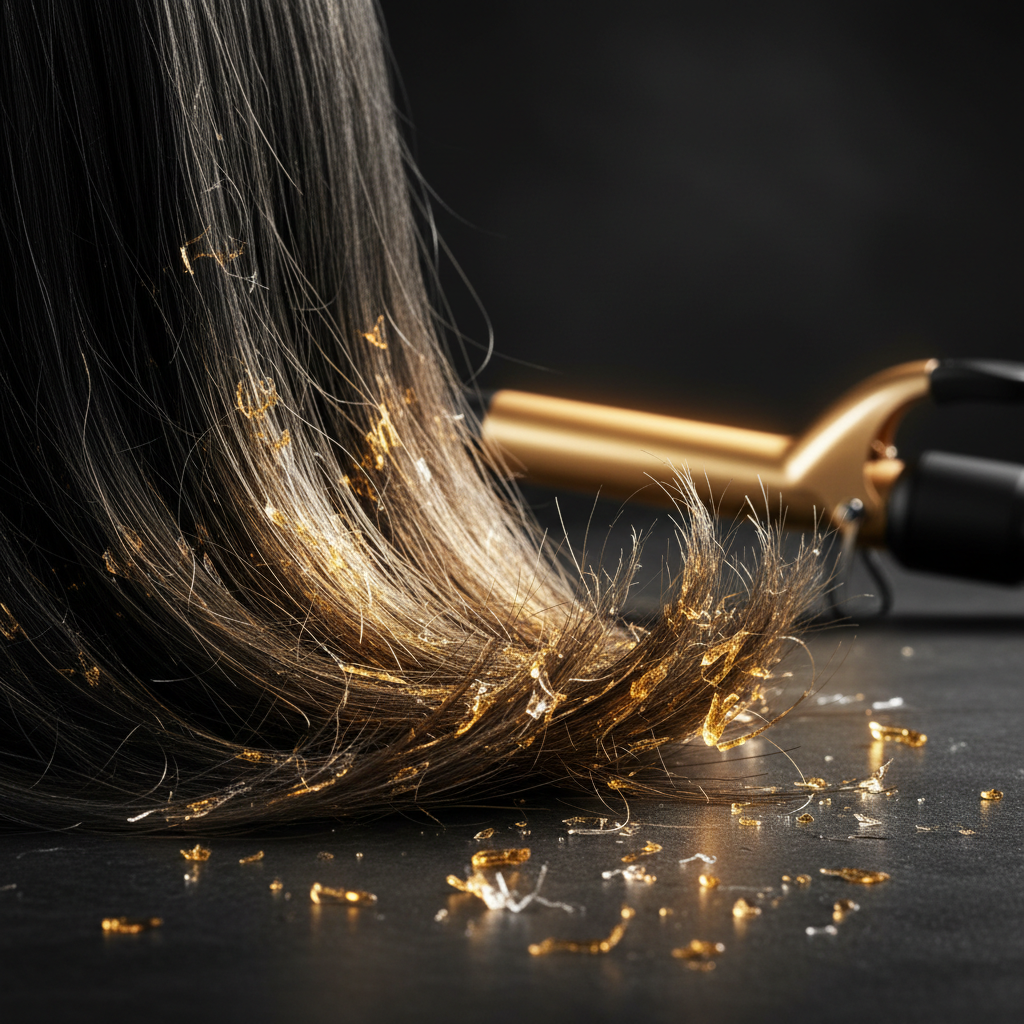
Quick answer: Thermal heat damage to hair keratin occurs when hot styling tools or high blow-dryer temperatures permanently alter and degrade the fibrous protein structures that give hair its strength and elasticity. Applying temperatures above 140°C denatures the alpha-helix keratin chains, while heat exceeding 200°C degrades structural proteins and oxidises disulphide bonds. Because hair shaft tissue is non-living and cannot self-repair, thermal damage is cumulative and irreversible, meaning affected sections must ultimately be grown out and trimmed.
Key takeaways
- Hair consists of roughly 65 to 90 percent keratin, an insoluble fibrous protein organised in organised alpha-helical coiled coils.
- Temperatures between 140°C and 160°C trigger the denaturation of alpha-helical keratin, causing it to unfold into weaker beta-sheet forms.
- Temperatures above 200°C decompose tryptophan, break disulphide bonds, and cause cuticle cracking, blistering, and moisture loss.
- Styling wet hair at extreme temperatures flash-boils internal water, producing microscopic cavities known as bubble hair.
- Thermal degradation causes mechanical weakness and shaft breakage, but it does not cause follicular hair shedding or alopecia.
Thermal Heat Damage to Hair Keratin: what the evidence shows
Research published in cosmetic science and dermatology journals demonstrates that excessive heat fundamentally transforms the molecular structure of hair. Hair fibres are composed primarily of alpha-keratin. These proteins depend on a strict hierarchy of chemical bonds: peptide bonds forming the primary protein chain, hydrogen bonds creating the alpha-helix coil, and covalent disulphide bonds cross-linking adjacent chains to give the cortex its rigidity.
Controlled laboratory studies using differential scanning calorimetry (DSC) and Fourier-transform infrared spectroscopy (FTIR) reveal that Thermal Heat Damage to Hair Keratin begins at predictable thermal thresholds:
- 140°C to 160°C: The reversible glass transition phase ends and permanent physical changes begin. The tightly coiled alpha-keratin begins to denature, uncoiling into a less organised beta-sheet structure. Elasticity drops noticeably.
- 180°C to 200°C: Surface cuticle lipids (18-methyleicosanoic acid or 18-MEA) melt and strip away. The protective outer scales lift, crack, and chip, leaving the inner cortex exposed to friction and environmental weathering.
- 215°C to 235°C: Rapid protein melting occurs. DSC testing shows the thermal denaturation peak of keratin falls within this range. Disulphide cross-links oxidise into cysteic acid, tryptophan amino acids degrade, and hair fibres lose tensile strength.
When hair breaks under tension after regular heat exposure, the failure originates at these thermally degraded sites.
What the evidence does not show
It is critical to separate fibre breakage from true hair loss. Thermal heat damage to hair keratin affects only the hair shaft, which is non-living, fully keratinised biological material. The peer-reviewed evidence does not show that thermal styling tools cause follicular miniaturisation, pattern hair loss (androgenic alopecia), or autoimmune shedding conditions like alopecia areata.
Unless a styling tool causes severe contact burns to the scalp skin that damage the dermal papilla, heat styling cannot halt hair production inside the follicle. If you notice shorter pieces snapping off during brushing, you are experiencing fibre breakage, not root shedding.
Furthermore, no scientific evidence supports the claim that cosmetic oils, serums, or deep-conditioning masks can truly "repair" or reverse denatured keratin. Cosmetic treatments can coat the fibre, lubricate the cuticle, and temporarily restore slip, but they cannot rebuild decomposed peptide backbones or re-link oxidised disulphide bonds.
The biophysical mechanism: how heat breaks down hair
To understand how heat ruins hair integrity, you have to look at the cuticle and the cortex under mechanical stress.
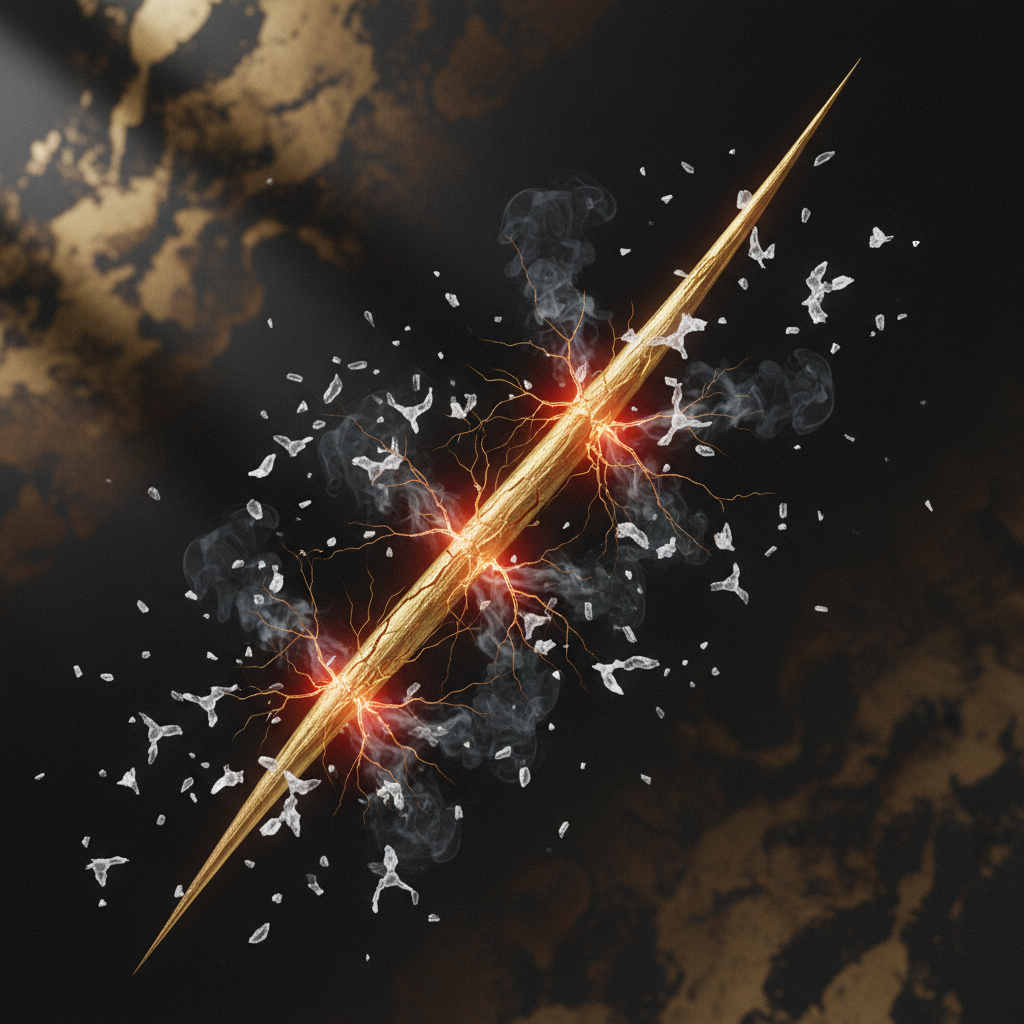
Intact Hair:
[ Cuticle (18-MEA Lipid Layer) ] -> [ Cortex: Alpha-Helix Keratin Coils + Disulphide Bonds ]

Heat > 160°C - 200°C:
[ Stripped Lipids & Chipped Cuticles ] -> [ Denatured Beta-Sheets + Cysteic Acid Breakdown ]
1. Alpha-to-beta transition
Keratin filaments in a healthy cortex are wound into resilient alpha-helices. When exposed to dry heat above 150°C, thermal energy breaks the weak hydrogen bonds stabilising these coils. The chains uncoil and rearrange into flattened beta-sheet conformations. This transition reduces the fibre's natural elasticity, making it brittle and prone to snapping when stretched.
2. Disulphide bond oxidation
Disulphide bonds, formed between pairs of cysteine amino acid residues, provide hair with its lateral strength and resistance to chemical dissolution. Temperatures generated by modern flat irons (often exceeding 210°C) oxidise these bonds into cysteic acid residues. Without these covalent cross-links, the cortex softens and loses its structural density.
3. Rapid water vaporisation (bubble hair)
Hair contains roughly 10 to 15 percent bound and free moisture by weight under normal atmospheric conditions. When hot ceramic plates or curling irons touch damp or wet hair, that water flash-boils instantly into steam. Trapped beneath an intact cuticle, the expanding steam creates microscopic cavities within the cortex. Under light microscopy, this appears as distinct internal voids known as "bubble hair". The hair shaft at each bubble site becomes exceptionally fragile and breaks with minimal force.
Thermal thresholds and their effects on hair fibres
The table below outlines the structural changes observed across common styling temperature bands.
| Temperature Range | Biological Effect on Fibre | Observable Physical Result |
|---|---|---|
| Below 140°C | Temporary hydrogen bond rearrangement; reversible softening of the fibre. | Hair takes temporary shape; reverts upon exposure to ambient humidity or water. |
| 140°C to 160°C | Early alpha-to-beta keratin denaturation; initial loss of cortex elasticity. | Increased friction, slight dullness, hair feels stiffer when dry. |
| 160°C to 190°C | Surface lipid (18-MEA) loss; cuticle scale edges buckle and peel away. | Rough surface texture, frizz, poor light reflection, tangling. |
| 190°C to 220°C | Extensive disulphide oxidation into cysteic acid; degradation of tryptophan. | Yellowing or brassiness on grey/blonde hair; split ends and mid-shaft fractures. |
| Above 220°C | Complete thermal decomposition of keratin matrix; melting of structural proteins. | Severe fibre collapse, brittle snapping, irreversible structural breakdown. |
Signs of thermal keratin degradation
Thermal damage rarely happens overnight; it accumulates with each styling pass. Watch for these physical signs:
- Loss of natural curl or wave pattern: When alpha-helices uncoil permanently, textured hair loses its spring and forms limp, stringy sections that refuse to curl even when wet.
- Surface roughness and lack of shine: Intact cuticles lie flat and reflect light evenly. Thermally damaged cuticles crack and stand open, creating a matte, lifeless appearance.
- High porosity and rapid drying: Damaged fibres absorb water quickly because the protective lipid layer is gone, but they cannot retain it, causing hair to dry out quickly and feel like straw.
- Trichoptilosis and trichorrhexis nodosa: These are clinical terms for split ends and focal brush-like fractures along the hair shaft where the cortex has completely failed.
- Pigment shifts: Heat degrades amino acids in hair melanin and artificial dye molecules, leading to unwanted brassy red tones on dark hair or scorched yellowing on silver and platinum hair.
Practical strategies to mitigate thermal damage
Because you cannot mend denatured protein, prevention and mechanical preservation are your best tools.
- Dry hair completely before iron styling: Never run a flat iron or curling tong over damp hair. Ensure hair is 100 percent dry to prevent flash-boiling and bubble hair deformities.
- Cap your tool temperatures: Keep hot tools below 185°C. For fine, bleached, or chemically processed hair, dial styling tools down to 150°C to 165°C.
- Use proven heat protectants: Formulations containing heat-stable silicones (like dimethicone or amodimethicone), polyquaternium polymers, and hydrolysed proteins slow down heat transfer and lower surface friction. They distribute heat evenly across the shaft rather than letting it concentrate on one spot.
- Reduce mechanical passes: Make one smooth, steady pass with a styling tool rather than clamping repeatedly over the same section.
- Incorporate regular trims: Snip away split ends every 8 to 12 weeks to stop fractures from travelling upward toward the roots.
Supporting hair condition with Watermans
When managing hair that has suffered mechanical stress and thermal wear, keeping your scalp clean and nourishing existing growth is vital. Watermans Grow Me Shampoo and Condition Me Conditioner are formulated to support the appearance of strong, healthy hair.
Grow Me includes scalp-friendly ingredients like biotin, rosemary extract, niacinamide, and caffeine, cleansing away styling residue without stripping the scalp. Condition Me combines cholesterol, shea butter, and hydrolysed lupin protein to coat the hair shaft, smoothing down raised cuticles and improving wet combability. While no topical formulation can reverse denatured keratin deep in the cortex, these ingredients help protect the external fibre from unnecessary friction, reducing further breakage while healthier hair grows out.
When the cause may be something else
If your hair is thinning or shedding in high volumes from the root rather than snapping along the shaft, thermal styling is unlikely to be the primary cause. True hair shedding reveals an intact white bulb at the end of the fallen strand.
Common causes of root-level shedding include:
- Telogen effluvium: Triggered by systemic illness, acute psychological stress, childbirth, or major dietary deficiencies (such as ferritin or vitamin D shortages).
- Androgenetic alopecia: A genetically driven, hormone-mediated miniaturisation of follicles, typically showing a widening parting or receding hairline.
- Chemical damage: Over-processing with high-lift bleaches, permanent relaxers, or perm solutions breaks disulphide bonds chemically, which can look identical to thermal breakage.
When to seek professional advice
Consult a trichologist or dermatologist if you observe:
- Hair coming out in clumps with visible white bulbs.
- Redness, burning, scaling, or blistering on the scalp after tool usage.
- Circular bald patches appearing rapidly on the scalp.
- Hair thinning that does not improve after eliminating heat tools and chemical services for three to six months.
Frequently asked questions about Thermal Heat Damage to Hair Keratin
Can thermal heat damage to hair keratin be repaired with protein treatments?
No. Protein treatments cannot reverse Thermal Heat Damage to Hair Keratin. Hydrolysed proteins can temporarily fill small gaps on the damaged cuticle surface and improve tensile resistance until your next shampoo, but they cannot re-form melted alpha-helices or decomposed disulphide bonds. The only permanent fix for denatured hair is trimming the affected ends.
At what exact temperature does hair keratin start to melt?
Thermal analysis demonstrates that hair keratin begins irreversible structural changes around 140°C to 160°C. Complete protein melting and matrix degradation happen between 215°C and 235°C, depending on the hair's moisture content, chemical history, and natural diameter.
Why does heat styling make blonde or grey hair look yellow?
Excess heat oxidises and degrades tryptophan, an essential amino acid within hair keratin. When tryptophan breaks down under temperatures exceeding 190°C, it produces yellowish oxidation by-products, causing natural grey or bleached blonde hair to look scorched and brassy.
Is blow-drying safer than using a flat iron?
Generally, yes. Blow dryers usually deliver air between 60°C and 100°C when held at a safe distance of 15 cm. Flat irons make direct contact with the fibre at temperatures between 180°C and 230°C. However, holding a high-heat blow dryer nozzle directly against wet hair can still cause surface cuticle blistering.
Summary on heat damage and hair integrity
Guarding against Thermal Heat Damage to Hair Keratin requires understanding the physical limits of the hair fibre. Keratin is remarkably strong, but it cannot withstand temperatures exceeding 180°C without sustaining permanent molecular alterations. By keeping styling tools at moderate heat settings, applying effective barrier protectants, and never applying direct hot plates to damp hair, you can enjoy styled hair while preserving the underlying protein structure for long-term fibre strength.
Sources and references
- Journal of Cosmetic Science: "Thermal analysis of hair: thermal degradation of hair proteins"
- International Journal of Cosmetic Science: "The effect of heat on the physical and chemical properties of hair"
- Journal of the Society of Cosmetic Chemists: "The thermal denaturation of hair keratin: a differential scanning calorimetry study"
- British Journal of Dermatology: "Bubble hair: a unique physical deformity caused by thermal styling"
- Cosmetics: "Thermal treatment and hair damage: a comprehensive biophysical perspective"
Find these ingredients in Watermans products
- Vitamin D: you will find this ingredient in our Hair Vitamins.
- Niacinamide: you will find this ingredient in our Hair Mask.
- Shea Butter: you will find this ingredient in our Curly Hair Conditioner.