Telogen Effluvium Overview: Causes, Mechanisms, and Recovery
10 min read ·
A comprehensive Telogen Effluvium Overview detailing triggers, biological mechanisms, shed counts, diagnosis, and evidence-based recovery strategies.
Quick answer: A comprehensive Telogen Effluvium Overview reveals that this condition is a temporary, non-scarring form of excessive hair shedding triggered when a physiological or psychological shock prematurely pushes growing hairs into their resting phase. Rather than permanent follicle damage, it causes diffuse thinning across the scalp roughly two to three months after the triggering event. The primary limitation is that no topical cosmetic can instantly halt shedding; resolution relies on identifying the underlying trigger and waiting for follicles to re-enter their natural growth cycle.
Key takeaways
- Telogen effluvium is a reactive disturbance of the hair cycle, distinct from hair breakage and patterned miniaturisation.
- Shedding typically begins 60 to 90 days following a distinct physiological trigger such as illness, severe stress, surgery, or nutritional deficiency.
- Daily shed counts often rise from the normal 50 to 100 hairs up to 300 hairs or more per day.
- Acute episodes typically resolve spontaneously within three to six months once the primary trigger is removed.
- Chronic telogen effluvium persists beyond six months and warrants comprehensive blood panels to investigate metabolic or systemic drivers.
Telogen Effluvium Overview: what the evidence shows
Any thorough Telogen Effluvium Overview must begin with the physiology of the hair growth cycle. Under normal conditions, approximately 85 to 90 percent of scalp follicles reside in the active growth phase (anagen), which lasts anywhere from two to seven years. Around 1 to 2 percent enter the brief regression phase (catagen), while roughly 10 to 15 percent rest in the telogen phase. After approximately 100 days in telogen, the resting hair is shed (exogen) as a new anagen fibre emerges underneath.
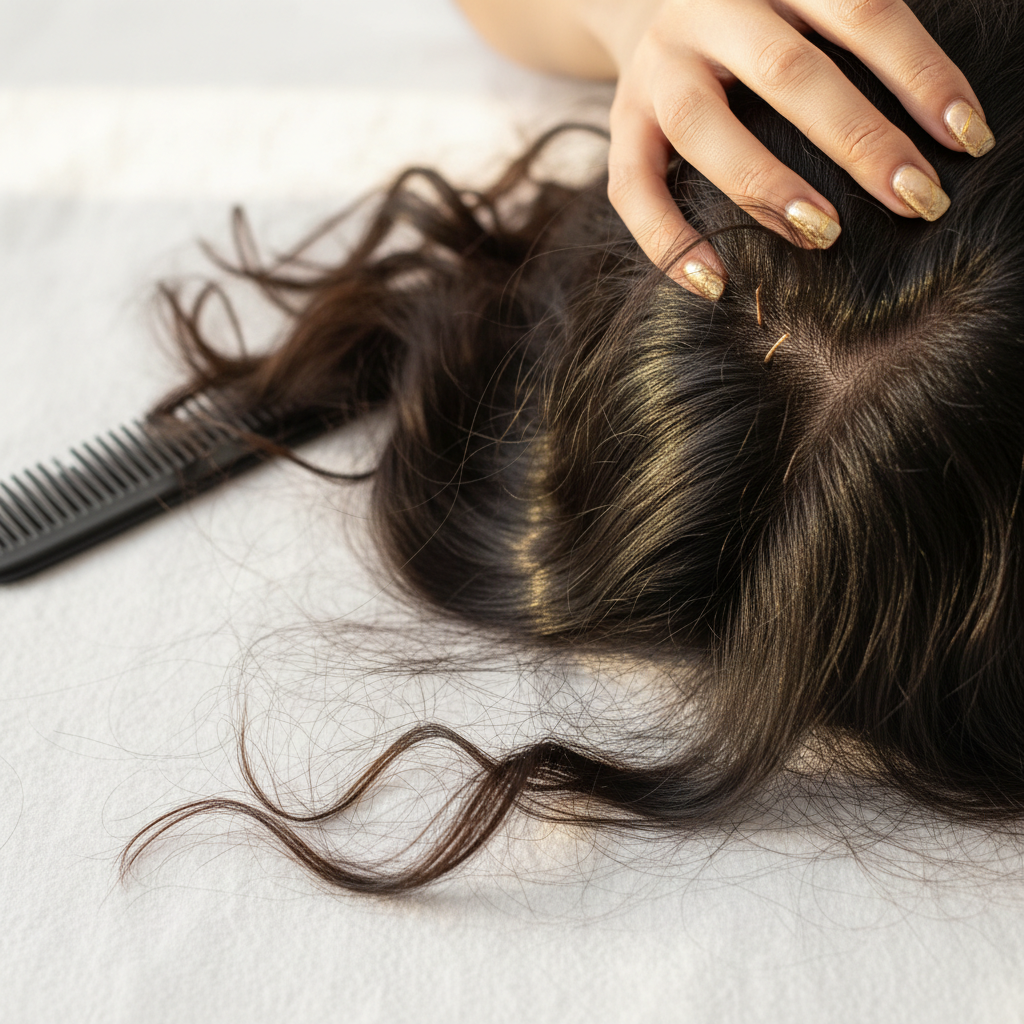
In telogen effluvium, an acute physiological disturbance abruptly signals a disproportionate number of anagen hairs to transition prematurely into catagen and telogen. Up to 30 to 50 percent of the total hair population on the scalp can enter the resting phase simultaneously. Because the telogen phase consistently lasts between two and four months before shedding occurs, individuals rarely notice hair loss when the stressful event happens. Instead, excessive shedding becomes visible eight to twelve weeks later, creating a confusing lag between cause and effect.
Research published in clinical dermatology literature confirms that telogen effluvium affects individuals of all ages and genders, though it is reported far more frequently in women due to post-partum hormonal fluctuations, menstrual iron depletion, and differences in healthcare-seeking behaviour. The condition is strictly non-scarring: the follicular ostia (openings) remain patent and healthy, meaning the potential for complete hair density recovery remains entirely intact.
What the evidence does not show
Clinical evidence does not show that telogen effluvium causes permanent baldness or follicle death. Because follicles do not undergo the progressive miniaturisation seen in androgenetic alopecia, the follicle retains its baseline capacity to produce a robust terminal hair fibre once the disruptive stimulus ceases.
Furthermore, evidence does not show that aggressive topical washing increases the rate of follicle shedding. When people notice handfulls of hair accumulating in the shower drain, they often reduce washing frequency out of fear. However, the hairs that shed during washing were already detached at the follicular base days prior, held only by sebum and friction. Avoiding shampooing does not save these fibres; it simply causes them to accumulate and shed in larger, more alarming clumps during the next wash, while increasing the risk of secondary scalp issues like seborrhoeic dermatitis.
Finally, controlled studies do not support the idea that taking random, high-dose hair multivitamins will resolve shedding if you do not have a clinically verified nutritional deficiency. Ingesting excess vitamin A, vitamin E, or selenium can paradoxically trigger or exacerbate hair shedding rather than cure it.
The biological mechanism and underlying triggers
The biological mechanism of telogen effluvium centres on an abrupt cellular arrest within the rapidly dividing matrix cells of the hair bulb. Because hair matrix cells possess one of the highest proliferation rates in the human body, they are exceptionally sensitive to systemic metabolic disruptions.
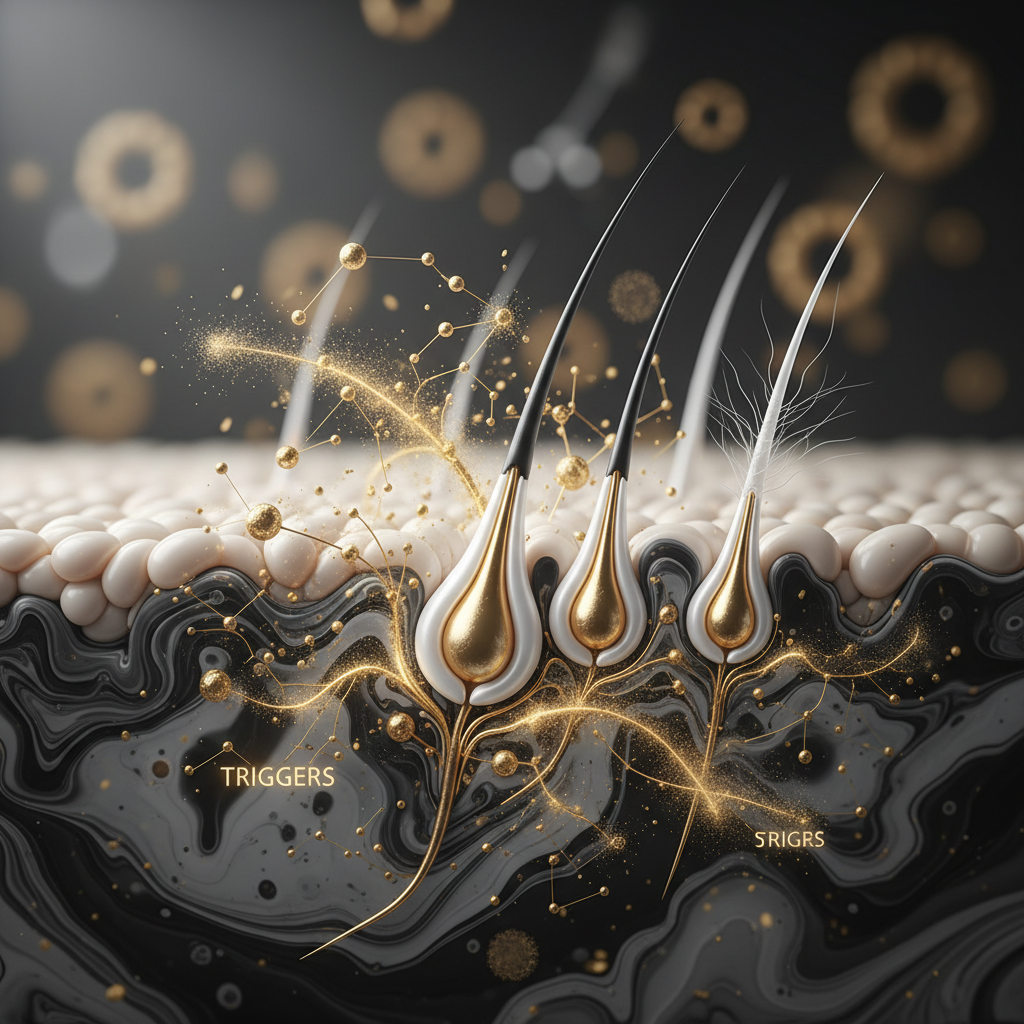
When the body encounters severe physiological strain, it prioritises essential metabolic processes over non-vital functions like hair fibre synthesis. The signals that maintain anagen (such as Wnt/beta-catenin pathways and local growth factors) drop, while apoptosis-inducing signals trigger catagen.
Commonly documented triggers include:
- Systemic illness and febrile episodes: High fevers, severe infections (such as influenza or severe viral illnesses), and major physical trauma.
- Endocrine fluctuations: Sudden drops in circulating oestrogen post-partum (telogen gravidarum) or acute thyroid dysfunction (both hypothyroidism and hyperthyroidism).
- Nutritional depletion: Rapid weight loss, severe caloric restriction, bariatric surgery, zinc deficiency, and depleted iron stores (serum ferritin below 30 to 50 micrograms per litre).
- Medication initiation or cessation: Starting or discontinuing certain pharmaceuticals, including beta-blockers, anticoagulants, retinoids, and oral contraceptives.
- Acute psychological shock: Severe, life-altering emotional distress that induces sustained neuroendocrine elevations in cortisol and substance P.
The signs to look for
Identifying telogen effluvium involves recognising diffuse hair shedding rather than focal bald patches. The classic presentations include:
- Diffuse shedding across the entire scalp: Unlike androgenetic alopecia, which recedes the temples or thins the crown, telogen effluvium affects the whole head evenly, including the sides and occipital area (back of the head).
- A positive hair pull test: A clinician gently grasps approximately 50 to 60 hairs between thumb and forefinger and applies light traction away from the scalp. If more than 10 percent (roughly six hairs) release easily without pain, active effluvium is likely.
- Presence of club hairs: Shed hairs exhibit a small, white, bulbous keratinised ball at the proximal root end without a gelatinous root sheath. This confirms the hair was shed from the telogen stage, not broken mid-shaft.
- Bitemporal thinning: While shedding is diffuse, individuals often notice decreased density most prominently around the anterior hairline and temples where hair naturally grows with slightly less baseline density.
- Absence of scalp inflammation: The underlying scalp skin should appear completely calm, devoid of erythema (redness), scaling, pustules, or follicular scarring.
| Feature | Telogen Effluvium | Androgenetic Alopecia | Alopecia Areata | Hair Fibre Breakage |
|---|---|---|---|---|
| Primary Mechanism | Premature shift into resting phase | Progressive follicular miniaturisation | Autoimmune attack on hair bulb | Mechanical, chemical, or heat damage |
| Pattern of Loss | Diffuse across entire scalp | Crown, temples, widening part | Round, smooth, focal patches | Irregular, patchy, ragged ends |
| Onset Speed | Sudden (2 to 3 months post-event) | Very slow and progressive (years) | Sudden (days to weeks) | Variable, correlates with styling |
| Hair Root Status | Intact white club hair bulb | Miniaturised, wispy hairs | Exclamation mark hairs | Snapped shaft, no root present |
| Reversibility | High (naturally self-correcting) | Requires continuous medical therapy | Variable, unpredictable course | Requires trimming and conditioning |
When the cause may be something else
Because shedding can look similar across various scalp complaints, differential diagnosis is essential.
If the shedding presents with visible scaling, itching, burning, or redness, you may be experiencing seborrhoeic dermatitis, contact allergy, or a cicatricial (scarring) alopecia such as lichen planopilaris or frontal fibrosing alopecia. Scarring alopecias require immediate dermatological intervention because follicular loss in those conditions is permanent.
If the loss creates clean, distinct, circular bald spots, the diagnosis is likely alopecia areata, an autoimmune disorder.
If the hair density is gradually decreasing along the central parting while the back and sides remain thick, female pattern hair loss (androgenetic alopecia) is often co-existing. It is common for an episode of acute telogen effluvium to "unmask" underlying patterned hair loss, leaving the central scalp thinner even after shedding normalises.
Finally, always inspect the shed fibres. If the hairs coming out do not have a white club bulb at the root and are shorter than your overall hair length, you are dealing with cosmetic fibre breakage rather than follicular shedding.
What you can do: management and cosmetic care
When managing active shedding, patience and protective care are the primary strategies. Because follicles that have entered telogen cannot be forced back into anagen, your goal is to support the follicle environment while waiting for the cycle to self-correct.
Nutrition and medical review
Request a comprehensive blood screen from your GP. This should include full blood count, serum ferritin, total iron-binding capacity, thyroid stimulating hormone (TSH), free T4, vitamin D (25-hydroxyvitamin D), and zinc levels. Correcting nutritional gaps with targeted clinical supplementation allows newly emerging anagen hairs to synthesise robust keratin.
Gentle hair and scalp hygiene
Maintain a regular, gentle cleansing routine. Keeping the scalp free from excess sebum, dead skin cells, and microflora overgrowth prevents secondary inflammation. Use lukewarm water and avoid rough friction. Detangle with a wide-tooth comb or flexible bristle brush, starting at the ends and working upward to avoid mechanical stress on vulnerable roots.
Cosmetic support with Watermans
While medical causes require internal resolution, topical support can significantly improve the cosmetic appearance of thinning strands and maintain an optimal environment for incoming growth.
Watermans Grow More Shampoo and Conditioner provide a targeted, topical approach formulated with clean, active botanicals. Incorporating ingredients such as biotin, caffeine, rosemary extract, niacinamide, and argan oil, this system revitalises the feel of the scalp and reinforces hair fibres from root to tip. Caffeine and niacinamide help invigorate the topical scalp barrier, while botanical proteins give thinning, limp strands visibly fuller body and improved texture while waiting for your biological growth cycle to recalibrate.
When to get professional advice
You should consult a GP, trichologist, or board-certified dermatologist if:
- Hair shedding continues intensely for longer than six months without signs of slowing down (indicating chronic telogen effluvium).
- You notice localized, completely bare patches or receding margins.
- Your scalp burns, itches intensely, flakes heavily, or shows red inflammation.
- The shedding is accompanied by systemic symptoms such as unexplained weight gain or loss, extreme fatigue, cold intolerance, or irregular menstrual cycles.
- You see no sign of new, tapered regrowth (short "sprouts" along the hairline) four to six months after the initial shedding began.
Frequently asked questions about Telogen Effluvium Overview
How long does telogen effluvium typically last?
In acute telogen effluvium, shedding lasts between three and six months. Once the underlying physiological or emotional trigger has passed, follicles naturally re-enter the anagen (growth) phase. You will usually observe fine, short regrowth along the hairline within three to four months after shedding subsides, though full cosmetic length takes a year or more.
Can stress alone really cause your hair to fall out?
Yes. Severe physiological stress (such as high fever or surgery) or intense, sustained emotional shock alters systemic neurochemistry. Stress signals trigger the release of neuropeptides and cortisol around the hair follicle, which prematurely aborts the active anagen phase and pushes hairs into telogen. Shedding then appears two to three months later.
What is the primary difference in a Telogen Effluvium Overview compared to chronic shedding?
In a standard Telogen Effluvium Overview, the condition is defined as acute and self-limiting, concluding within six months of the initial trigger. Chronic telogen effluvium, by contrast, persists beyond six months, fluctuates in intensity over years, and is frequently tied to ongoing systemic issues like persistent iron deficiency, thyroid dysfunction, or continuous medication side effects.
Will cutting your hair short stop telogen effluvium?
Cutting your hair short will not stop or slow telogen effluvium. Shedding is driven by cellular signals deep within the scalp follicle, not by the weight or length of the fibre. However, shorter hair often reduces mechanical snagging during washing and styling, and shorter shed strands appear less visually overwhelming in hairbrushes and drains.
Can telogen effluvium lead to total baldness?
Telogen effluvium does not lead to total baldness. The condition rarely affects more than 30 to 50 percent of scalp follicles at one time. A significant proportion of hairs always remain firmly anchored in the active growth phase, meaning you will retain coverage even during peak shedding periods.
The path to recovery
Understanding the dynamics presented in this Telogen Effluvium Overview provides peace of mind during an unsettling experience. Because hair follicles operate on a delayed biological clock, shedding is an echo of a past physiological stressor rather than a permanent loss of hair-producing capacity. By addressing nutritional markers, treating your hair fibre with gentle care, and supporting the scalp surface, you create the ideal conditions for your natural growth cycle to restore its normal rhythm.
Sources and references
- British Association of Dermatologists. Telogen Effluvium: An Information Leaflet. 2021.
- National Institute for Health and Care Excellence (NICE). Alopecia: Diffuse Hair Loss and Telogen Effluvium. Clinical Knowledge Summaries, 2022.
- Journal of the American Academy of Dermatology. Telogen Effluvium: A Comprehensive Review. 2017; 77(3): 449-457.
- American Academy of Dermatology. Hair Loss: Diagnosis and Treatment. 2023.
- World Health Organization. Guideline: Assessing the Iron Status of Populations. 2020.
Find these ingredients in Watermans products
- Zinc: you will find this ingredient in our Hair Vitamins.
- Niacinamide: you will find this ingredient in our Hair Mask.