Telogen Effluvium Causes and Solutions: An Evidence-Based Guide
9 min read ·
Explore evidence-based Telogen Effluvium Causes and Solutions to understand sudden diffuse shedding, physiological triggers, biological timelines, and recovery steps.

Quick answer: Understanding Telogen Effluvium Causes and Solutions requires recognising that this condition is a form of temporary, diffuse hair shedding rather than permanent follicle death. Triggered by physiological stress, illness, rapid weight loss, hormonal shifts, or nutritional deficiencies, it forces anagen (growing) follicles prematurely into the telogen (resting) phase. While shedding resolves naturally within three to six months once the underlying trigger is addressed, topicals or supplements cannot instantly halt shedding that has already entered the resting pipeline.
Key takeaways
- Telogen effluvium is excessive daily hair shedding (often 300 or more hairs per day), distinct from hair breakage or pattern miniaturisation.
- It usually manifests two to three months after a physiological or psychological shock, making the original trigger easy to miss.
- Primary causes include high fevers, childbirth, severe nutritional deficits (such as iron or protein deficiency), acute psychological stress, and certain medications.
- Evidence-based solutions focus on identifying the systemic trigger, correcting blood markers, and maintaining scalp support.
- Full recovery typically takes six to nine months, matching the biological timeline of the human hair cycle.
Telogen Effluvium Causes and Solutions: what the evidence shows
Telogen effluvium occurs when a metabolic, hormonal, or systemic shock interrupts the normal follicular rhythm. In a healthy human scalp, roughly 85 to 90 percent of the 100,000 follicles reside in the anagen (growth) phase, while 10 to 15 percent rest in the telogen phase. During telogen effluvium, up to 30 to 50 percent of growing hairs abruptly transition into telogen.

Because the telogen resting phase naturally lasts between 60 and 90 days before the hair bulb detaches and sheds (exogen), individuals do not experience immediate shedding at the moment of stress. Instead, massive shedding appears two to three months after the initiating event. Research published in the Journal of the American Academy of Dermatology confirms that once a follicle enters telogen, it must complete its resting phase. No cosmetic product, vitamin, or medication can push a telogen follicle back into anagen mid-cycle. Therefore, effective solutions centre on removing the inciting cause so the next cycle can emerge unhindered.
Primary causes identified in clinical literature
Clinical consensus identifies several distinct triggers that drive widespread follicle synchronisation into the resting state:
- Systemic illness and acute fever: Severe viral or bacterial infections, surgery under general anaesthetic, and systemic inflammation cause cellular resources to divert away from non-essential tissues like hair follicles.
- Hormonal fluctuations: Postpartum telogen effluvium is classic. High oestrogen levels during pregnancy prolong anagen, keeping hairs unnaturally anchored. When oestrogen drops precipitously following birth, massive cohorts of follicles enter telogen simultaneously.
- Nutritional and metabolic deficits: Ferritin (stored iron) deficiency, severe caloric restriction, bariatric surgery, zinc deficiency, and inadequate protein intake deprive the follicular matrix of the energy needed for rapid cellular division.
- Endocrine imbalances: Both hypo- and hyperthyroidism disrupt normal hair cycling, often triggering widespread shedding.
- Severe psychological trauma: Acute, profound psychological distress releases neuropeptides, substance P, and cortisol, which promote local neurogenic inflammation and trigger catagen induction.
- Medications: Certain drugs, including beta-blockers, anticoagulants, retinoids, and abrupt cessation of oral contraceptives, list telogen effluvium as a documented adverse effect.
| Cause Category | Typical Onset Window | Common Clinical Markers | Expected Recovery Timeline |
|---|---|---|---|
| Postpartum | 8 to 12 weeks after delivery | Dropping oestrogen levels | 6 to 12 months postpartum |
| Febrile Illness or Surgery | 6 to 12 weeks post-event | High CRP, post-viral fatigue | 4 to 6 months after recovery |
| Nutritional Deficiency | Gradual (months of depletion) | Ferritin <30-50 ug/L, low zinc | 3 to 6 months post-repletion |
| Thyroid Dysfunction | Insidious, ongoing shedding | Abnormal TSH, free T4/T3 | 6 to 9 months post-stabilisation |
| Acute Severe Stress | 8 to 16 weeks post-trauma | Elevated cortisol markers | 6 to 9 months post-stressor |
What the evidence does not show
Marketing claims often promise instant remedies for shedding, but dermatological science disproves several common myths:
- Topical treatments do not stop active shedding instantly: The hairs falling out today were pushed into the telogen phase two to three months ago. Their release is biologically predetermined.
- Washing your hair less does not prevent loss: Hairs detached in the follicle will fall out during washing, brushing, or simply through friction against clothing. Reducing wash frequency only creates a buildup of already-shed hairs, making subsequent washes look more alarming.
- Biotin does not cure telogen effluvium in healthy individuals: Unless a diagnosed biotinidase deficiency or severe malabsorption exists, high-dose biotin supplementation provides no measurable benefit for telogen shedding and can distort clinical thyroid lab panels.
The biological mechanism of follicular shedding
The hair follicle is one of the most metabolically active structures in the body, dividing faster than almost any other non-malignant human tissue. This hyperactive state requires a consistent supply of oxygen, amino acids, micronutrients, and hormonal signalling.
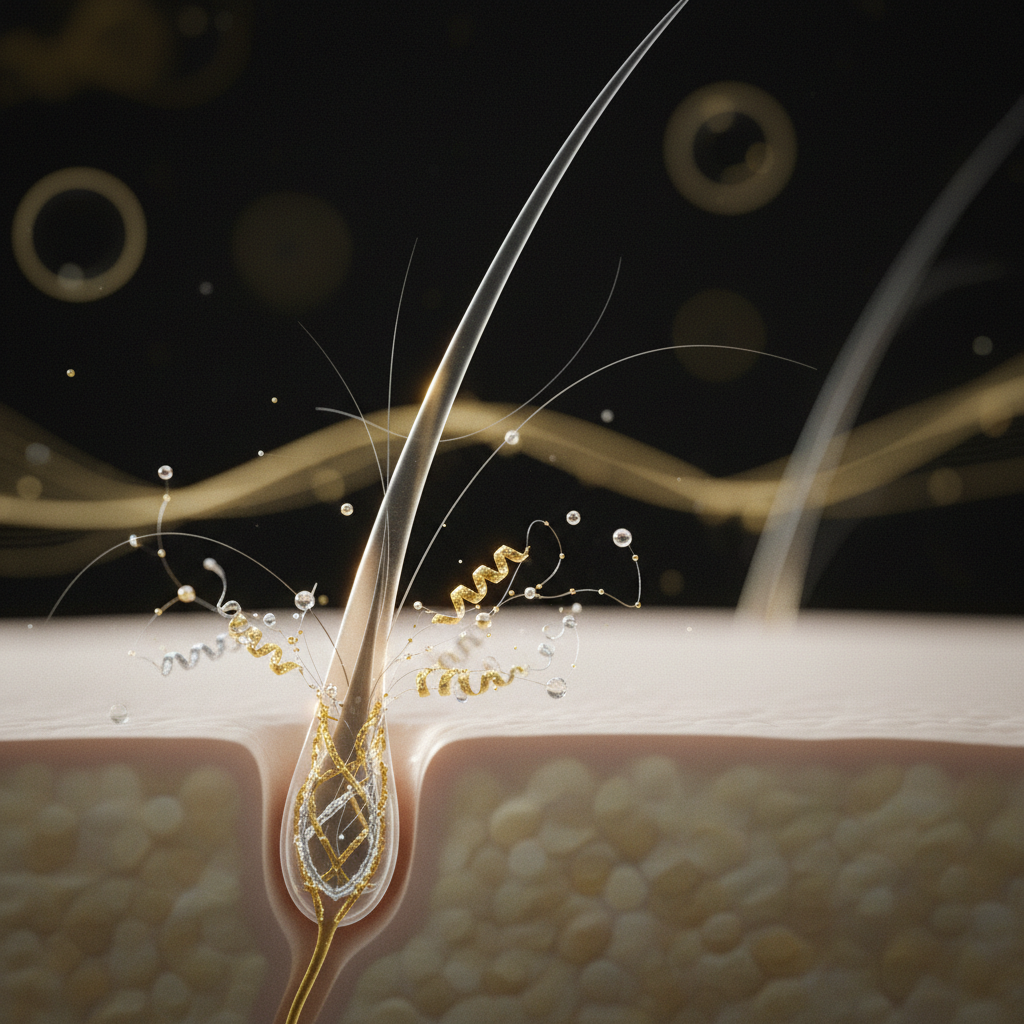
When a physiological shock occurs, the body prioritises vital organs over peripheral keratin production. Follicles receive biochemical signals (including elevations in transforming growth factor-beta and tumour necrosis factor-alpha) that arrest mitosis in the matrix. The hair enters catagen, where the lower third of the follicle involutes, followed by telogen, where the hair bulb keratinises into a distinct club shape.
Under trichoscopy or microscopic examination, telogen effluvium is diagnosed by observing shed hairs with depigmented, rounded, club-like ends without a gelatinous root sheath. This bulb signifies that the hair finished its natural cycle, differentiating it from anagen effluvium (where hairs fracture or fall while growing, common in chemotherapy) or mechanical breakage.
[ Anagen (Growth) ] ---> Trigger Event (Fever, Blood Loss, Stress)
 |
 v
 [ Catagen (Regression) ]
 |
 v
 [ Telogen (Resting) ] (Lasts 60-90 Days)
 |
 v
 [ Exogen (Shedding) ] ---> Sudden diffuse shedding begins
Signs to look for: identifying true telogen effluvium
Telogen effluvium presents with specific patterns that help distinguish it from other hair disorders:
- Diffuse thinning across the entire scalp: Shedding affects the crown, temples, sides, and nape equally, rather than following a localised widening part or receding hairline.
- A positive hair pull test: A clinician gently tugs roughly 50 to 60 fibres from the scalp base. If more than 10 percent (roughly six hairs) release painlessly with club roots, active effluvium is indicated.
- Sudden volume reduction in ponytails: Sufferers frequently notice their ponytail circumference shrinks visibly over a four-week span.
- Bimodal bitemporal recession: While diffuse, shedding can occasionally feel more prominent at the temples due to lower baseline hair density in those areas.
What you can do: evidence-based solutions
Addressing telogen effluvium requires a twofold approach: eliminating the root physiological cause and creating an optimal scalp environment for the subsequent anagen phase.
Correct systemic and nutritional markers
A GP or dermatologist should evaluate a comprehensive blood panel. This should measure full blood count (FBC), serum ferritin, vitamin D3, vitamin B12, folate, thyroid stimulating hormone (TSH), and free T4.
Targeting serum ferritin levels above 50 micrograms per litre is widely accepted in trichological practice to support robust anagen re-entry. Correcting deficiencies must be carried out under medical supervision to avoid toxicity.
Reduce mechanical tension and heat stress
While shedding occurs at the root, preserving the structural integrity of remaining fibres prevents concurrent breakage. Avoid tight hairstyles that exert traction, lower the temperature on heat styling tools below 180 degrees Celsius, and use a wide-tooth comb or flexible detangling brush on wet hair.
Maintain scalp hygiene and microcirculation
Keeping the scalp clean prevents microbial dysbiosis and secondary inflammation, which can exacerbate shedding. Scalp stimulation through gentle massage has been shown to encourage blood flow to the dermal papilla, supporting new anagen sprouts.
Support with specialised topical formulations
Cosmetic shampoos and topical treatments cannot reverse an existing telogen phase, but they can optimise the scalp environment for newly emerging hair. Formulations incorporating caffeine, niacinamide, biotin, and botanical extracts like rosemary support scalp microcirculation, condition the stratum corneum, and reduce surface inflammation.
In this category, Watermans provides supportive cosmetic care. Formulated with ingredients such as caffeine, rosemary, biotin, and hydrolysed lupin protein, Watermans products help maintain a clean, stimulated scalp and improve the feel and body of thinning hair fibres without making medicinal claims.
When the cause may be something else
It is vital to confirm whether excessive shedding is truly telogen effluvium or a separate condition:
- Female or male pattern hair loss (Androgenetic Alopecia): Involves progressive follicular miniaturisation rather than sudden diffuse shedding. Hairs grow thinner and shorter over years, primarily across the crown and frontal hairline. Telogen effluvium can, however, unmask underlying pattern loss.
- Alopecia Areata: An autoimmune attack causing distinct, smooth, circular patches of hair loss rather than generalised thinning.
- Hair breakage: Snapped hair shafts lack the white club bulb at the root and exhibit frayed, irregular ends. Breakage stems from chemical overprocessing, heat damage, or severe mechanical friction, leaving the follicle unaffected.
Frequently asked questions about Telogen Effluvium Causes and Solutions
How long does telogen effluvium typically last?
Acute telogen effluvium usually lasts between three and six months. Shedding stops once the underlying trigger resolves and the follicles that were pushed into telogen shed their club hairs. New regrowth appears shortly after, though regaining original length and ponytail thickness can take 12 to 18 months depending on hair length.
Can Telogen Effluvium Causes and Solutions involve permanent hair loss?
No, pure telogen effluvium does not cause permanent hair loss or scar the hair follicles. The dermal papilla and stem cell niches remain intact. Once the physiological stressor passes, follicles re-enter the anagen growth phase. However, severe shedding may unmask underlying genetic pattern loss that was already present.
Does chronic telogen effluvium require different solutions?
Yes. If shedding persists beyond six months, it is classified as chronic telogen effluvium. This form is common in middle-aged women and requires deep clinical investigation to identify persistent triggers, such as subclinical thyroid disorders, ongoing nutritional deficits, chronic systemic inflammation, or drug side effects.
What blood tests are essential for telogen effluvium?
Key blood tests include serum ferritin, full blood count, zinc, vitamin D, vitamin B12, and a comprehensive thyroid panel (TSH and free T4). A doctor may also test for inflammatory markers like CRP to identify hidden post-viral or autoimmune activity driving the shedding episode.
Evidence-led recovery strategies
Recovering from acute shedding requires patience and consistency. Understanding the science behind Telogen Effluvium Causes and Solutions removes the panic that often accompanies sudden hair loss. By isolating the precipitating trigger, replenishing nutritional stores, and caring for the scalp with gentle, high-quality topical routines, you give your follicles the foundation they need to return to their normal, productive growth cycle.
Sources and references
- British Association of Dermatologists (BAD): Guidelines for the management of hair loss and telogen effluvium (2021).
- Journal of the American Academy of Dermatology: "Telogen Effluvium: A review of etiology, diagnosis, and management" (2019).
- National Institute for Health and Care Excellence (NICE): "Alopecia, diffuse hair shedding - Clinical Knowledge Summaries" (2022).
- American Journal of Clinical Dermatology: "The Hair Cycle and Hair Loss: Telogen Effluvium Mechanics and Clinical Pearls" (2020).
- World Health Organization: "Nutritional anaemias: tools for effective prevention and control" (2017).
Find these ingredients in Watermans products
- Biotin: you will find this ingredient in our Hair Growth Shampoo.
- Niacinamide: you will find this ingredient in our Hair Mask.