The Evidence-Based Guide to Sulfate Free Haircare
9 min read ·
Learn how Sulfate Free Haircare protects the hair cuticle, preserves colour, and supports scalp health, while understanding the limits of mild surfactants.
Quick answer: Sulfate Free Haircare refers to cleansing and conditioning formulas formulated without harsh anionic detergents such as Sodium Lauryl Sulfate (SLS) or Sodium Laureth Sulfate (SLES). These formulas preserve the hair cuticle, reduce moisture loss, and minimise scalp irritation by using gentler surfactants. While Sulfate Free Haircare excels at protecting colour-treated, dry, or chemically processed hair from fibre breakage, its main limitation is a reduced ability to rapidly dissolve heavy sebum or non-water-soluble silicone buildup.
Key takeaways
- Sulfates are aggressive anionic surfactants designed to strip away sebum and environmental grime, but they can compromise the hair's protective lipid barrier.
- Choosing a gentler cleansing routine helps reduce cuticle swelling, hair fibre breakage, and premature colour fading.
- Modern sulfate-free formulas rely on milder surfactants derived from coconut, glucose, or amino acids, providing a balanced cleanse without excessive dryness.
- People with fine hair, seborrhoeic dermatitis, or heavy styling product buildup may occasionally require a clarifying wash to prevent residue.
- Switching away from sulfates does not cure genetic pattern hair loss (alopecia), though it creates a healthier scalp environment and reduces mechanical snapping.
Sulfate Free Haircare: what the evidence shows
Sulfate Free Haircare has moved from a salon trend to an established cosmetic standard supported by cosmetic chemistry research. Standard cleansing products often rely on synthetic detergents like Sodium Lauryl Sulfate (SLS), Ammonium Lauryl Sulfate (ALS), and Sodium Laureth Sulfate (SLES). SLS in particular has a low molecular weight and a high critical micelle concentration, allowing it to penetrate the outer layers of the stratum corneum and hair shaft. In clinical patch testing, SLS is frequently used as a benchmark irritant to induce controlled barrier disruption.
When you wash hair with aggressive sulfates, the surfactant dissolves sebum while simultaneously leaching structural lipids (18-methyleicosanoic acid) from the hair cuticle. This leaves the outer cuticle lifted, increasing porosity, frizz, and vulnerability to moisture loss. By contrast, formulas using alternatives such as cocamidopropyl betaine, sodium cocoyl isethionate, and alkyl polyglucosides display significantly lower protein denaturation rates. In cosmetic trials, these milder cleansers consistently show improved colour retention on dyed tresses and lower trans-epidermal water loss (TEWL) across the scalp.
What the evidence does not show
It is vital to separate cosmetic benefits from clinical medical claims. Marketing frequently claims that sulfates cause systemic toxicity, disrupt hormones, or directly cause follicular hair loss (androgenetic alopecia). Regulatory reviews by the Cosmetic Ingredient Review (CIR) Expert Panel and the European Commission's Scientific Committee on Consumer Safety (SCCS) confirm that standard cosmetic concentrations of sulfates do not cause systemic disease or cancer.
Furthermore, sulfates do not miniaturise hair follicles or cause alopecia. When people experience increased shedding in the shower after using standard shampoo, the cause is typically telogen effluvium, hormonal shifts, or nutritional deficiencies, rather than the detergent itself. The damage sulfates do inflict is confined to the hair fibre and the epidermal barrier: surface roughness, cuticle chipping, dryness, and brittle breakage that mimics hair loss.
The mechanism: surfactants and the hair fibre
Every surfactant molecule features a hydrophilic (water-attracting) head and a lipophilic (oil-attracting) tail. During washing, the lipophilic tails bind to sebum, dirt, and styling polymers, while the hydrophilic heads remain anchored in water, rolling soil up into micelles that rinse away down the drain.
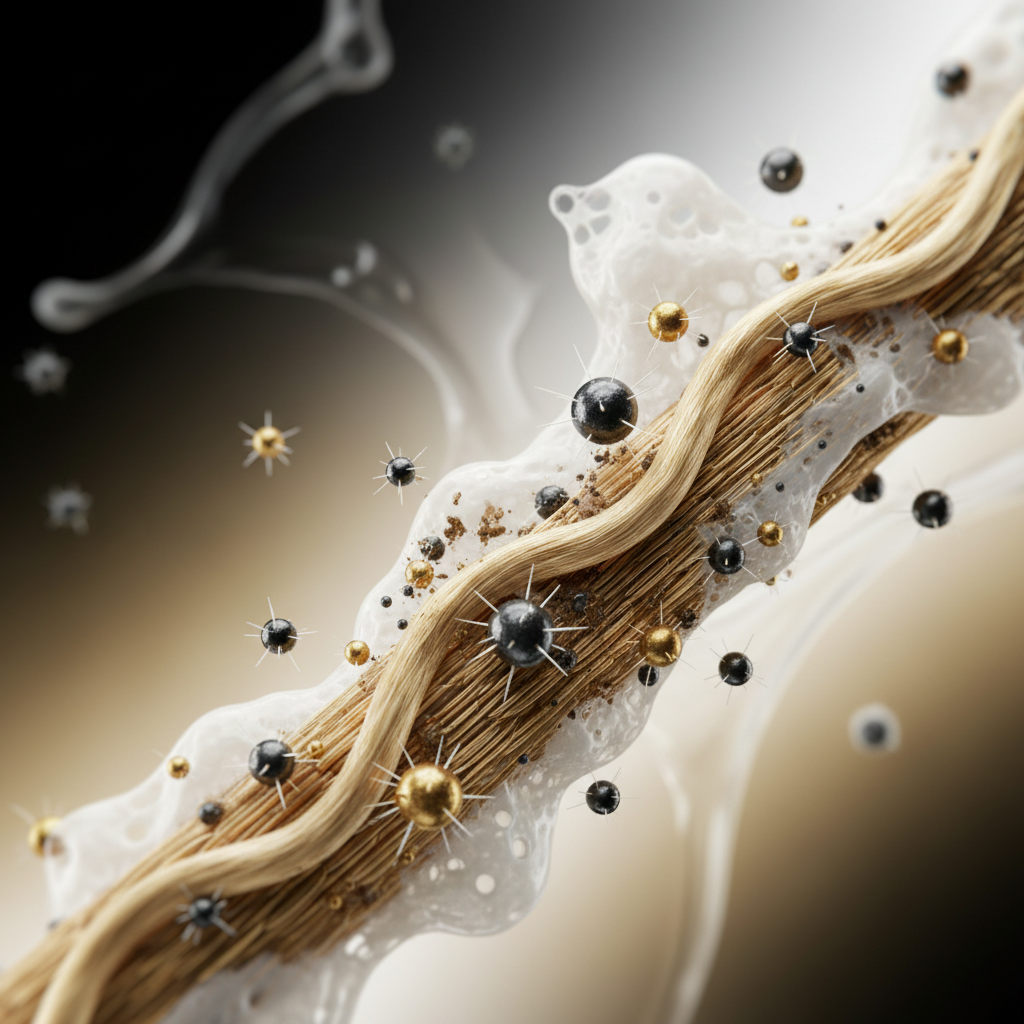
The problem lies in charge density and molecular penetration. Anionic sulfates carry a strong negative charge that strongly repels the negatively charged keratin proteins of damaged hair. This electrostatic clash, combined with water penetration at neutral or slightly alkaline pH levels (between 6.0 and 8.0), forces the cuticle scales to flare open. Over time, repeated swelling and drying (hygral fatigue) strips natural ceramides and exposes the inner cortex.
Sulfate-free alternatives function differently:
- Amphoteric surfactants (e.g., Cocamidopropyl Betaine): Carry dual charges depending on pH, buffering the cleansing action and drastically lowering the irritation score of the final formula.
- Isethionates (e.g., Sodium Cocoyl Isethionate): Form dense, creamy lathers with large micelles that rinse clean without penetrating into the stratum corneum.
- Glucosides (e.g., Decyl Glucoside, Coco Glucoside): Non-ionic, plant-derived cleansers that remove surface sebum without disrupting electrical charges across the hair shaft.
- Amino acid surfactants (e.g., Sodium Lauroyl Sarcosinate, Sodium Cocoyl Glycinate): Biomimetic cleansers that maintain an acidic pH (between 4.5 and 5.5), keeping the cuticle flat and tight.
Comparing cleansing agents in haircare
| Surfactant Type | Common Examples | Cleansing Power | Irritation Potential | Ideal Candidate |
|---|---|---|---|---|
| Primary Harsh Anionic | Sodium Lauryl Sulfate (SLS), Ammonium Lauryl Sulfate (ALS) | Very High | High | Very oily scalps needing heavy degreasing (rarely recommended daily) |
| Primary Moderate Anionic | Sodium Laureth Sulfate (SLES), Sodium C14-16 Olefin Sulfonate | High | Moderate | Regular cleansing for straight, resilient, untreated hair |
| Mild Anionic / Amino Acid | Sodium Cocoyl Isethionate (SCI), Sodium Lauroyl Sarcosinate | Moderate to High | Low | Dry, colour-treated, or chemically straightened hair |
| Amphoteric (Secondary) | Cocamidopropyl Betaine, Disodium Cocoamphodiacetate | Mild | Very Low | Sensitive scalps, curly textures, baby formulations |
| Non-Ionic (Glucosides) | Coco Glucoside, Decyl Glucoside, Lauryl Glucoside | Mild | Extremely Low | Fragile, bleached, or thinning hair prone to mechanical snapping |
Signs your hair needs a sulfate-free routine
Your hair and scalp will usually provide visible feedback when an aggressive detergent is compromising your barrier. Look for these specific signs:
- Colour stripping: Fresh salon colour or toner fades within two to three weeks instead of lasting six to eight weeks.
- Mid-shaft snapping: Small fragments of hair collect on your shoulders or brush with no white root bulb attached (breakage, not follicular shedding).
- Post-wash scalp tightness: Your scalp feels itchy, taut, or prickly immediately after drying, followed by an oily rebound forty-eight hours later.
- Persistent frizz and rough texture: The lengths of your hair feel straw-like, catch on each other, and resist smoothing even after applying heavy conditioners.
- Loss of curl definition: Natural curls or coils lose their elasticity and spring, dropping into a limp, dehydrated pattern due to missing internal moisture.
What you can do: building a gentle washing routine
Transitioning to milder cleansers requires small adjustments in technique because gentler surfactants do not flash-foam in the same manner as industrial detergents.
First, saturate your hair thoroughly with warm water for at least sixty seconds before applying product. Milder cleansers rely heavily on water volume to distribute evenly. Emulsify a ten-pence-sized amount of cleanser between wet palms before working it directly onto the scalp. Focus your physical massage on the skin rather than rubbing the delicate lengths together.
Allow the formula to sit on the scalp for one to two minutes so the active botanicals and mild cleansers can dissolve oils before rinsing. Always follow with an acidic, cuticle-sealing conditioner focused on the mid-lengths and ends to replenish lost fatty acids.
When the issue is not sulfates
If your hair remains persistently greasy, limp, or itchy after switching to milder cleansers, sulfates may not be the root cause. A common misstep is confusing cleansing irritation with seborrhoeic dermatitis. Seborrhoeic dermatitis is driven by an overgrowth of Malassezia yeast, which thrives on natural scalp sebum. Using overly gentle or oil-heavy sulfate-free formulas can allow sebum to build up, worsening flaking, redness, and inflammation.
Similarly, chronic shedding across the crown or widening parts often indicates androgenetic alopecia, telogen effluvium triggered by systemic stress, or thyroid imbalances. Altering your cosmetic detergent will not halt medical conditions that originate beneath the scalp in the dermal papilla.
When to seek professional advice
Consult a GP, dermatologist, or registered trichologist if you notice distinct patches of baldness, sudden handfuls of hair shedding from the root (with bulbs attached), or painful burning sensations across the scalp. Cosmetic formulations support hair quality, but persistent scalp inflammation, scabbing, or thinning requires professional clinical diagnosis and prescribed medical treatments.
Supporting hair density and scalp health with Watermans
When formulating a high-performance routine, removing sulfates is only half the battle; replenishing the scalp with active support is equally important. Watermans GrowMe Shampoo is formulated entirely without harsh sulfates or parabens. It combines gentle cleansing with an evidence-informed botanical complex featuring biotin, rosemary extract, caffeine, niacinamide, argan oil, and lupin protein.
By keeping the formula sulfate-free, it cleanses the scalp without stripping delicate hair lipids or fading dyed hair. This makes it a reliable everyday foundation for those seeking to reduce mechanical fibre breakage and foster optimal conditions for thicker, fuller-looking hair.
Frequently asked questions about Sulfate Free Haircare
Do sulfate-free formulas clean greasy hair effectively?
Yes. Modern sulfate-free cleansers use intelligent surfactant combinations like glucosides and amphoterics that successfully dissolve excess sebum without stripping the skin's lipid barrier. If your hair is exceptionally oily, performing a double cleanse (washing twice with a small amount of product) removes residual oils effectively.
Will Sulfate Free Haircare cause product buildup on my scalp?
Sulfate Free Haircare cleansers themselves rinse away cleanly. However, if you regularly use styling serums loaded with non-water-soluble silicones or heavy waxes, milder cleansers may struggle to lift them over time. You can solve this by choosing water-soluble styling products or using an occasional chelating wash.
Does transitioning to sulfate-free cause an oily adjustment period?
Some people experience a brief period where the scalp feels slightly heavier for one to two weeks. When you stop stripping away natural sebum with sulfates, your sebaceous glands need a short timeframe to rebalance their natural production. Rinsing thoroughly with warm water usually manages this transition smoothly.
Can Sulfate Free Haircare stop my hair from falling out?
Sulfate Free Haircare prevents hair breakage along the shaft, but it cannot cure genetic hair loss or hormonal shedding from the follicle. By keeping the hair fibre supple and hydrated, it stops strands from snapping prematurely, helping you retain length and achieve a fuller overall appearance.
Conclusion
Transitioning to Sulfate Free Haircare offers clear, tangible benefits for anyone struggling with dry strands, fading salon colour, or a sensitized scalp. By replacing harsh industrial detergents with biomimetic, amino-acid-based surfactants, you protect the delicate cuticle and maintain moisture balance across the entire hair shaft. Pair a mild cleansing base with balanced conditioning and targeted scalp care to ensure your hair remains resilient, vibrant, and strong from root to tip.
Sources and references
- Cosmetic Ingredient Review (CIR) Expert Panel. (2010). Final Report on the Safety Assessment of Sodium Lauryl Sulfate and Ammonium Lauryl Sulfate. International Journal of Toxicology.
- European Commission Scientific Committee on Consumer Safety (SCCS). (2015). Opinion on the safety of cosmetic ingredients: Surfactants and cutaneous tolerance.
- Robbins, C. R. (2012). Chemical and Physical Behavior of Human Hair (5th ed.). Springer-Verlag.
- Draelos, Z. D. (2010). Essentials of Hair Care often Neglected: Human Hair and Scalp Cleanliness. Dermatologic Clinics.
- Gavazzoni Dias, M. F. (2015). Hair cosmetics: An overview. International Journal of Trichology, 7(1), 2-15.
Find these ingredients in Watermans products
- Niacinamide: you will find this ingredient in our Hair Mask.