Sulfate-Free Cleansing Guide: Evidence, Chemistry, and Routine
8 min read ·
Master gentle hair care with this Sulfate-Free Cleansing Guide: explore surfactant science, scalp barrier protection, and methods for healthier-looking hair.
Quick answer: A Sulfate-Free Cleansing Guide provides a practical roadmap for washing hair without harsh anionic surfactants like sodium lauryl sulfate. Switching to milder cleansers protects your scalp's moisture barrier, limits structural protein swelling, and extends cosmetic hair dye vibrancy. However, sulfate-free cleansers are not a cure for medical hair loss conditions like androgenetic alopecia. Their main limitation is lower detergency, meaning they can struggle to remove heavy petrolatum, mineral oils, and non-water-soluble silicones without deliberate washing technique.
Key takeaways
- Sulfate-free cleansers replace aggressive sulfates with amphoteric, non-ionic, or gentle anionic surfactants that clean without stripping natural lipids.
- They help preserve artificial hair colour molecules and protect the structural integrity of chemically treated or fragile fibres.
- Gentle surfactants minimise transepidermal water loss on the scalp, making them ideal for reactive, dry, or eczema-prone skin.
- Sulfate-free shampoos do not treat or reverse medical hair loss, though reducing mechanical breakage along the fibre helps hair retain visual density.
- Using sulfate-free formulas alongside heavy, non-water-soluble silicones may lead to scalp build-up over time unless you clarify periodically.
Sulfate-Free Cleansing Guide: what the evidence shows
Research into cosmetic chemistry and dermatological surfactants demonstrates that the primary benefit of avoiding traditional sulfates lies in the preservation of the lipid barrier. Surfactants work by reducing surface tension between water and oils, encapsulating sebum and environmental debris inside structures called micelles so they rinse away.
Standard sulfates, such as Sodium Lauryl Sulfate (SLS) and to a slightly lesser extent Sodium Laureth Sulfate (SLES), possess high critical micelle concentrations and small molecular footprints. Because of this small molecular size, SLS penetrates deep into the stratum corneum of the scalp and intercalates into the lipid bilayers. Peer-reviewed dermatological studies routinely use SLS as an established skin irritant control in patch testing precisely because it disrupts barrier lipids, denatures keratin proteins, and induces transepidermal water loss.
By contrast, modern sulfate-free cleansers substitute these harsh detergents with larger, milder molecules. Classes like alkyl polyglucosides (such as decyl glucoside) and isethionates (such as sodium cocoyl isethionate) form larger micelles that cannot penetrate the stratum corneum as easily. Cosmetic trials confirm that these milder surfactant systems extract significantly less 18-methyl eicosanoic acid (18-MEA), the primary protective lipid bound to the cuticle layer of the hair fibre. Preserving 18-MEA keeps the hair shaft hydrophobic, reducing swelling, cuticle lifting, and mechanical fibre breakage during daily grooming.
What the evidence does not show
Popular hair discourse often claims that sulfates cause baldness or permanent follicle damage. There is currently insufficient evidence to conclude that sulfates cause follicular hair loss or conditions such as telogen effluvium and androgenetic alopecia. High concentrations of harsh surfactants can provoke scalp irritation, contact dermatitis, and inflammation, which may create a hostile environment for hair growth if left unmanaged, but they do not alter the genetic or hormonal mechanisms of alopecia.
Similarly, switching to a gentle formula will not automatically speed up the hair cycle or increase the count of active follicles. A quality cleanser improves the cosmetic condition of the emerging fibre, prevents brittle snapping along the hair shaft, and soothes the scalp barrier, but it is not a medical drug for hair regrowth.
Surfactant chemistry: comparing cleansing agents
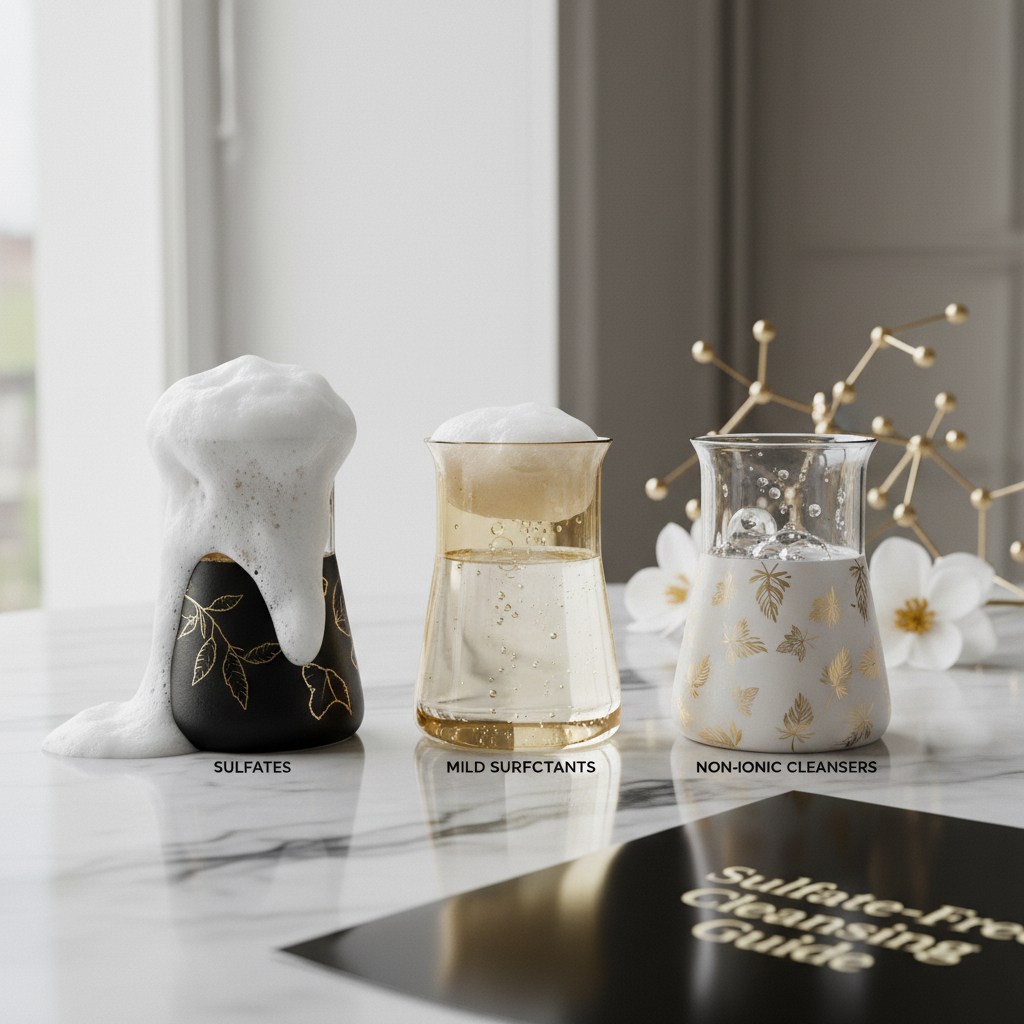
Understanding the chemical classifications helps you read ingredient labels accurately and choose a formula that matches your styling routine and scalp type.
| Surfactant Type | Common Examples | Cleansing Power | Barrier Irritation Risk | Best Suited For |
|---|---|---|---|---|
| Harsh Anionic (Sulfates) | Sodium Lauryl Sulfate (SLS), Ammonium Lauryl Sulfate (ALS) | Very High | High | Deep clarifying, heavy industrial grime removal |
| Moderate Anionic (Sulfates) | Sodium Laureth Sulfate (SLES), Ammonium Laureth Sulfate (ALES) | High | Moderate | General cleansing, removing persistent styling waxes |
| Mild Anionic (Sulfate-Free) | Sodium Cocoyl Isethionate, Sodium Lauroyl Methyl Isethionate | Moderate to High | Low | Dry scalp, colour-treated hair, daily cleansing |
| Amphoteric (Sulfate-Free) | Cocamidopropyl Betaine, Coco Betaine | Moderate | Very Low | Sensitive scalp, curly hair, co-wash formulas |
| Non-Ionic (Sulfate-Free) | Decyl Glucoside, Lauryl Glucoside, Coco-Glucoside | Low to Moderate | Extremely Low | Ultra-sensitive skin, baby products, post-treatment care |
How to use a sulfate-free cleanser effectively
Because milder surfactants generate less aggressive lather, many people initially assume the product is not working. Following specific application techniques ensures thorough hygiene without residue:
- Saturate completely: Wet your hair thoroughly with warm water for at least two minutes before applying product. Milder surfactants depend heavily on water volume to disperse evenly across the scalp.
- Emulsify in your hands: Dispense a small coin-sized amount into damp palms and rub them together vigorously to create a micro-foam before touching your scalp.
- Target the skin, not the lengths: Work the cleanser directly into the roots using the pads of your fingers. Avoid scrubbing the mid-lengths and ends directly; the lather that runs down during rinsing provides sufficient cleansing for older fibres.
- Consider a double cleanse: If you wash your hair only once or twice a week, the first application removes surface sebum and styling debris, while the second produces a richer lather to cleanse the scalp epidermis properly.
- Rinse thoroughly: Sulfate-free surfactants can leave a soft conditioning film if not rinsed with sufficient water. Spend an extra 60 seconds rinsing with lukewarm water.
Signs your routine needs adjustment
Adopting gentle cleansing requires balancing oil removal against oil preservation. Look out for these signs to assess your hair and scalp equilibrium:
- Persistent greasy roots within hours of washing: Your cleanser may be too mild for your sebum production rate, or you may be failing to emulsify and rinse the product thoroughly.
- A waxy, coated feeling on the fibre: This occurs when non-water-soluble silicones, polyquaterniums, or heavy plant butters build up over several weeks without an occasional clarifying wash.
- Dry, itchy scalp flaking: While mild formulas reduce dryness, true seborrhoeic dermatitis is driven by Malassezia yeast feeding on sebum. If sebum is under-cleansed, the yeast can proliferate, increasing visible flaking.
- Increased fibre breakage when detangling: If you transition from heavy sulfate shampoos to sulfate-free without adjusting your conditioner, your cuticle might experience higher friction until hydration levels balance out.
When the cause of hair changes lies elsewhere
If you switched to a gentle routine hoping to correct hair shedding, thinning, or persistent scalp redness, the root cause may involve systemic or biological factors rather than cosmetic surfactants.
Telogen effluvium involves sudden, diffuse shedding across the entire scalp, often triggered two to three months after intense physiological stress, high fevers, hormonal shifts, nutritional deficiencies (such as low ferritin or zinc), or thyroid dysfunction.
Androgenetic alopecia involves progressive follicular miniaturisation at the hairline, crown, or parting, driven by androgen sensitivity and genetics. No cosmetic cleanser can alter these systemic pathways. If you notice wide patches of baldness, burning sensations, scaling plaques, or sudden high-volume shedding in the shower drain, book a consultation with a registered trichologist or dermatologist for a formal diagnostic evaluation.
Supporting scalp balance with Watermans
When building a low-stress haircare routine, formulation synergy matters as much as omitting harsh sulfates. Watermans develops scalp-first cleansing systems that bypass aggressive cleansing agents while delivering vital botanical and nutritional support directly to the surface of the scalp.
Watermans GrowMe Shampoo is formulated entirely sulfate-free, using gentle surfactant chemistry combined with biotin, rosemary extract, caffeine, and niacinamide. This ensures your scalp microbiome remains undisturbed, your natural lipid mantle stays protected, and your hair fibres experience minimal mechanical stress from root to tip during every wash.
Frequently asked questions about Sulfate-Free Cleansing Guide
Does this Sulfate-Free Cleansing Guide apply to oily scalps?
Yes, but you may need to adjust your wash frequency. Individuals with high sebum production can successfully use sulfate-free cleansers by performing a double cleanse during each wash. If excess sebum continues to build up, alternating between a gentle cleanser and a clarifying formulation once a fortnight keeps the follicle clear while sparing the delicate ends from daily stripping.
Will sulfate-free shampoo prevent colour fading?
Yes. Water penetration and harsh detergents are the two primary causes of artificial hair dye loss. Harsh anionic surfactants swell the hair cuticle and draw out synthetic colour pigments rapidly. Milder surfactants keep the outer cuticle tighter and remove surface oils without stripping the cortex, significantly extending the life and vibrancy of hair colour treatments.
Why does sulfate-free shampoo produce less lather?
Foam volume is largely a cosmetic side effect created by high-detergency molecules like SLS. Sulfate-free surfactants, such as glucosides and betaines, possess different surface tensions and chemical geometry, producing a tighter, creamier micro-foam rather than vast bubbles. Foam volume does not correlate with how effectively a cleanser dissolves scalp oil.
Can sulfate-free cleansing cause scalp build-up?
It can if your hair routine includes ingredients that require strong detergents to break down. Heavy styling waxes, petrolatum, and non-water-soluble dimethicone can cling to the shaft and scalp if washed exclusively with ultra-mild glucosides. Look for water-soluble conditioning agents or incorporate an occasional chelating or clarifying wash if you notice residue.
Is sulfate-free shampoo suitable for curly and afro hair textures?
It is particularly beneficial for wavy, curly, and afro textures (types 2 through 4). These hair types have naturally elliptical cross-sections and raised cuticle scales, making them prone to dryness and friction breakage. Preserving natural 18-MEA lipids along the shaft prevents cuticle damage and helps curly patterns maintain natural elasticity and hydration.
Making the most of your gentle hair routine
Adopting a balanced routine based on this Sulfate-Free Cleansing Guide helps you protect fragile strands, extend salon colour, and respect the biological barrier of your scalp. While changing your wash product will not resolve genetic hair thinning or sudden follicular shedding, reducing unnecessary chemical abrasion gives your hair the best chance to grow strong, retain its length, and look visibly fuller every day.
Sources and references
- British Association of Dermatologists. Patch Testing Guidelines and Irritant Contact Dermatitis Protocols, 2021.
- Journal of the American Academy of Dermatology. Surfactant-induced changes in skin barrier integrity and trans-epidermal water loss, 2019.
- International Journal of Cosmetic Science. The impact of harsh cleansing systems on hair lipid composition and mechanical properties, 2020.
- NHS. Scalp conditions, seborrhoeic dermatitis, and hair loss overview, 2023.
Find these ingredients in Watermans products
- Biotin: you will find this ingredient in our Hair Growth Shampoo.
- Zinc: you will find this ingredient in our Hair Vitamins.
- Niacinamide: you will find this ingredient in our Hair Mask.