The Structure of the Hair Cuticle: An In-Depth Guide
9 min read ·
Discover the structure of the hair cuticle, its microscopic protective layers, and how to defend this vital barrier against friction, heat, and chemical breakage.
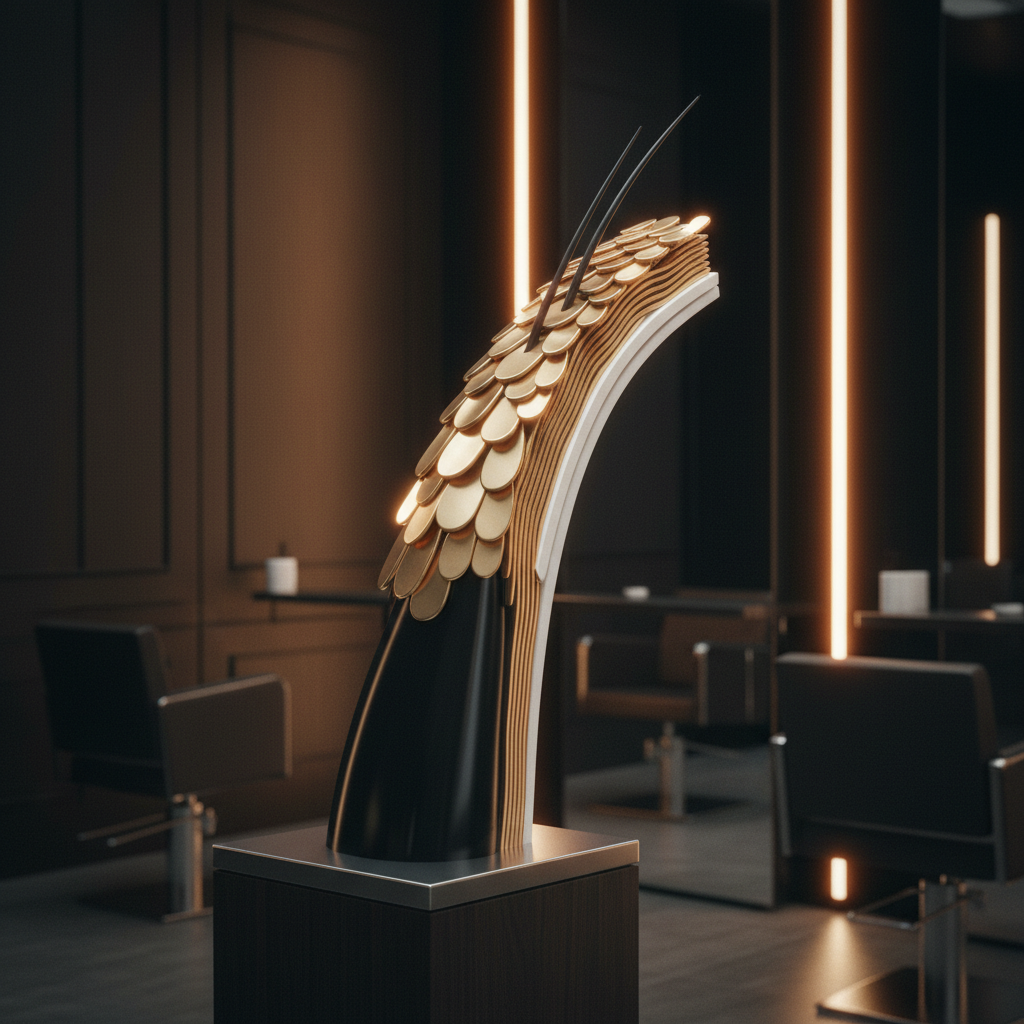
Quick answer: The structure of the hair cuticle consists of 5 to 10 overlapping layers of flattened, dead keratinised cells that shield the inner cortex. Bound together by the cell membrane complex and coated in a natural lipid layer called 18-methyleicosanoic acid (18-MEA), the cuticle regulates moisture loss and defends against mechanical friction. However, because cuticle cells are biologically non-living, physical or chemical wear cannot biologically regenerate; damage must be managed topically through conditioning and careful handling.
Key takeaways
- The hair cuticle is the outermost protective barrier of the hair shaft, composed of 5 to 10 imbricated (overlapping) cellular scales.
- Each individual cuticle cell contains distinct sub-layers: the epicuticle, A-layer, exocuticle, and endocuticle, each differing in cystine content and chemical resilience.
- The outermost surface features a covalently bound lipid layer of 18-MEA, which renders virgin hair naturally hydrophobic and water-repellent.
- Cuticle damage manifests as lifting, chipping, or total loss of scales, leading directly to friction, moisture imbalance, and fibre breakage.
- Topical cosmetic agents like conditioners and oils can temporarily smooth or seal lifted cuticles, but they cannot biologically repair detached or missing cells.
The Structure of the Hair Cuticle: what the evidence shows
The structure of the hair cuticle represents an intricate biological shield. Scanning electron microscopy demonstrates that human hair cuticles resemble shingles on a roof, pointing downward from the scalp towards the hair tip. In healthy Caucasian and Asian hair, this envelope typically spans 5 to 10 overlapping cell layers, measuring approximately 0.3 to 0.5 micrometres thick per scale, with a total cuticle sheath thickness of roughly 2.5 to 5 micrometres. Afro-textured hair generally features fewer cell layers, often between 4 to 8, with higher susceptibility to axial shear stresses.
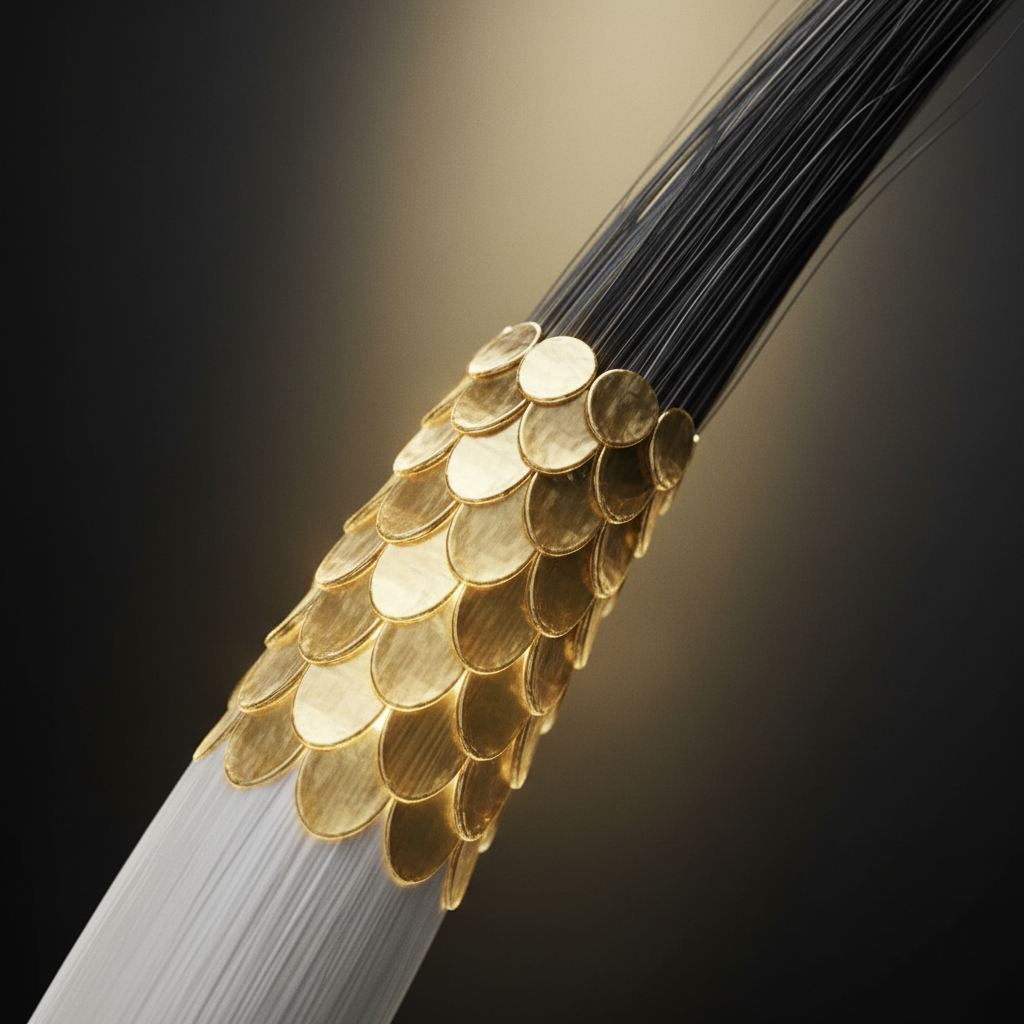
Each individual cuticle cell is not a uniform block of protein. Instead, it is divided into clear horizontal strata, separated from neighbouring cells by an intercellular adhesive called the cell membrane complex (CMC).
| Cuticle Sub-Layer | Cystine Content | Physical Characteristics | Primary Function |
|---|---|---|---|
| Epicuticle | Moderate (approx. 12%) | Thin membrane (approx. 5 nm) covered by 18-MEA | Provides a hydrophobic, low-friction outer boundary |
| A-Layer | Very High (> 30%) | Rigid, cross-linked protein matrix | Resists mechanical abrasion and chemical penetration |
| Exocuticle | High (approx. 15 to 20%) | Firm, highly cross-linked keratin | Structural resilience against physical wear |
| Endocuticle | Very Low (< 3%) | Soft, mechanically weak, protein-poor | Accommodates swelling when the fibre absorbs water |
| Cell Membrane Complex (CMC) | Low (approx. 2%) | Lipids and non-keratin proteins | Cements cuticle scales together and permits lipid diffusion |
The outermost surface of the epicuticle is anchored to an ultra-thin lipid monolayer dominated by 18-methyleicosanoic acid (18-MEA). This fatty acid layer provides high lubricity, keeping hair soft and naturally repelling external moisture. Underneath lies the A-layer and exocuticle, both densely packed with cystine cross-links (disulphide bonds) that offer stiff physical defence. By contrast, the endocuticle contains minimal cystine, making it softer and prone to swelling when wet.
What the evidence does not show
Cosmetic science frequently faces marketing claims regarding "cuticle repair" and "rebuilding damaged outer layers." The scientific literature does not support the claim that dead, keratinised cuticle scales can be biologically regenerated or permanently re-attached once broken off.
Once an alkaline treatment (such as bleaching or permanent relaxers) cleaves the thioester bonds holding 18-MEA to the epicuticle, the natural hydrophobic state cannot be natively restored by the body. Furthermore, while conditioning polymers, hydrolysed proteins, and cationic surfactants temporarily coat the fibre and fill microscopic voids between lifted scales, they rinse away over subsequent washes. They do not turn back the biological clock or fuse chipped keratin back onto the fibre.
Mechanisms of cuticle damage and lifting
Healthy hair fibres maintain an acidic isoelectric point between pH 3.67 and 5.5. At this physiological balance, cuticle cells remain compacted and tightly pressed against the hair shaft, minimising surface friction.
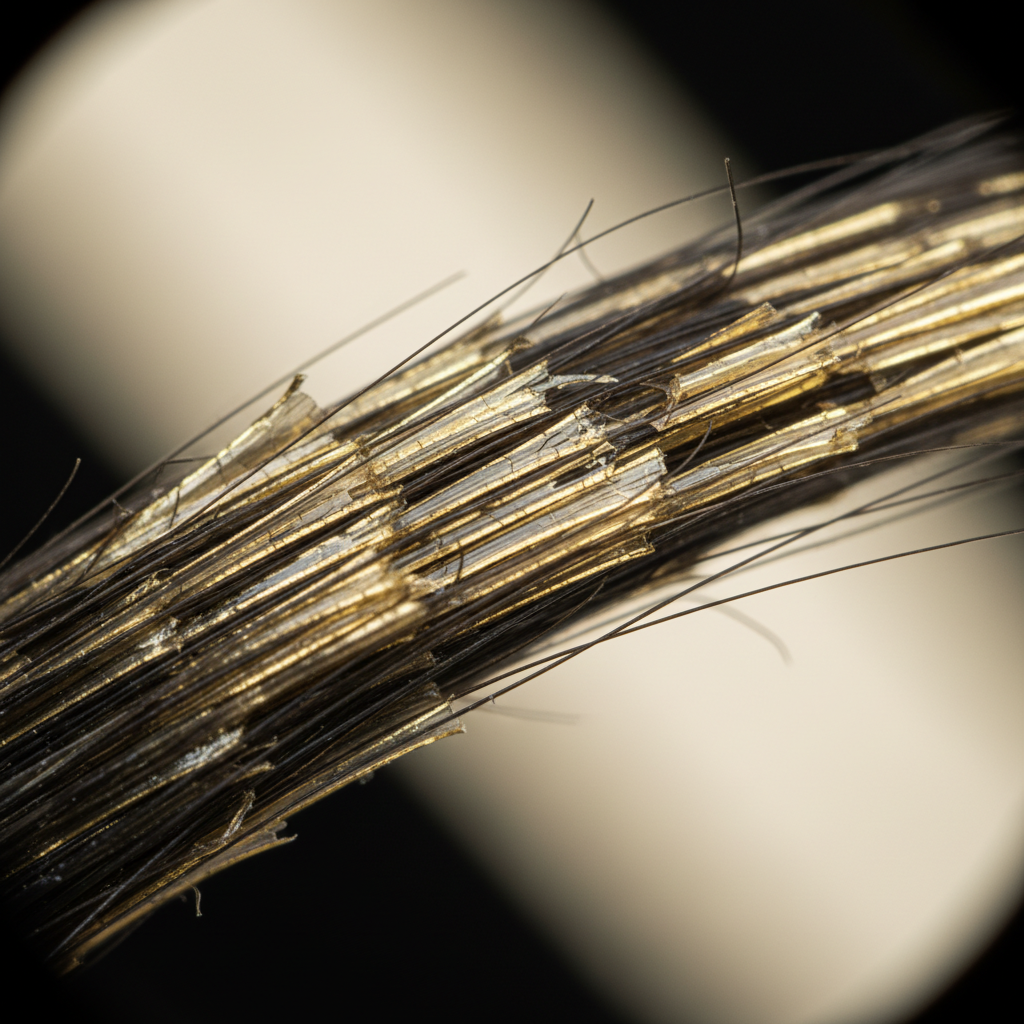
When hair is exposed to water or alkaline formulas (above pH 7.0), the fibre absorbs moisture and swells. Because the endocuticle has very few disulphide bonds, it expands significantly more than the rigid exocuticle and A-layer. This uneven expansion forces the edges of the cuticle scales to lift outward, a state known as raised cuticles.
Repeated lifting cycles cause mechanical fatigue. Common drivers include:
- Chemical processing: Bleaching agents, permanent tints, and perms employ high pH levels (often pH 9.0 to 11.0) to open the cuticle, breaking disulphide bonds in the process and stripping the 18-MEA layer.
- Thermal stress: Applying styling tools above 180 degrees Celsius strips internal moisture rapidly, creating steam bubbles within the endocuticle and blistering the cuticle surface.
- Mechanical friction: Aggressive backcombing, rough towel drying, or vigorous brushing against the natural scale direction chips scale margins and shears the intercellular cement of the CMC.
Signs of cuticle deterioration
Stylists and individuals can detect cuticle distress through several clear tactile and visual indicators:
- High porosity: Hair absorbs water rapidly when washed but dries out just as quickly, leaving strands feeling parched.
- Tension and friction: Strands feel rough or raspy when slid between the thumb and forefinger from the tip upward toward the root.
- Persistent tangling: Lifted cuticle margins hook onto adjacent fibres, creating chronic knots and mats.
- Dull appearance: A flat, smooth cuticle reflects light uniformly, creating natural shine. Lifted, jagged scales scatter light irregularly, resulting in a matte, lacklustre appearance.
- Increased fibre breakage: With the protective armour compromised, the underlying cortex takes the brunt of physical tension, snapping under standard brushing loads.
Practical steps to protect the hair cuticle
Preserving cuticle integrity relies on preventative handling and surface protection rather than post-damage rescue:
- Maintain an acidic pH balance: Use shampoos and post-wash rinses formulated between pH 4.5 and 5.5. Acidic solutions neutralise negative surface charges, helping cuticle scales contract and lie flat.
- Minimise wet friction: Wet hair expands the endocuticle and weakens hydrogen bonds, leaving the cuticle vulnerable to scale detachment. Detangle with a wide-tooth comb or flexible wet brush, starting at the ends and working upward.
- Apply thermal protectants: Silicones and specialised conditioning polymers act as sacrificial barriers against heat, diffusing thermal energy before it blisters the cuticle scales.
- Replenish surface lubricity: While you cannot re-grow 18-MEA, lightweight plant oils and cationic surfactants (like behentrimonium chloride) deposit onto the outer fibre, temporarily mimicking lost fatty acids and reducing combing force by up to 50 percent.
- Sleep on low-friction fabrics: Cotton absorbs hair lipids and causes friction. Silk or satin pillowcases reduce abrasive wear on the cuticle layer overnight.
When the cause is something else: systemic vs structural issues
It is crucial to separate fibre breakage caused by cuticle breakdown from true hair shedding or follicular hair loss. If hair strands are falling out intact with a small white bulb at the root, the issue is follicular shedding (such as telogen effluvium) or patterned hair loss (alopecia). These conditions stem from biological cycles, genetics, hormones, or systemic nutritional deficiencies, not from cuticle degradation.
Conversely, if hair is snapping mid-shaft into short, jagged fragments without bulbs, the cause is physical or chemical structural failure, directly tied to the degradation of the hair cuticle and cortex.
When to seek professional advice
Consult a qualified trichologist or dermatologist if you experience sudden patches of hair loss, excessive shedding of more than 100 hairs daily for over three months, or scalp inflammation accompanied by burning or scaling.
For severe cosmetic damage, such as chemical melt from over-bleaching or extreme friction tangling, seek guidance from an experienced salon colourist or stylist. They can assess structural porosity, perform necessary trims to halt split ends from unravelling up the shaft, and tailor lower-pH restorative regimes.
Supporting hair vitality with Watermans
While damaged cuticles must be treated with external care and minimal mechanical friction, overall hair resilience begins at the scalp. Watermans focuses on creating a healthy scalp environment to support strong fibre growth from the very beginning. Using formulas that maintain scalp balance ensures that emerging hair emerges with its natural lipid barriers and cuticle structure intact, giving strands the strongest possible foundation before daily styling begins.
Frequently asked questions about The Structure of the Hair Cuticle
How many layers make up the structure of the hair cuticle?
The structure of the hair cuticle typically features 5 to 10 overlapping cellular layers in healthy human hair. Each layer is made of a flattened, dead cell containing an epicuticle, A-layer, exocuticle, and endocuticle, bound together by the lipid-rich cell membrane complex.
Can a damaged hair cuticle ever repair itself?
No, the cuticle cannot repair itself biologically. Because hair fibres consist of non-living, fully keratinised cells with no blood supply or cellular turnover, shed or fractured cuticle scales cannot regrow. Topically applied treatments can smooth down lifted edges or coat gaps, but the relief is temporary.
What is the role of 18-MEA in cuticle health?
18-methyleicosanoic acid (18-MEA) is a primary lipid covalently bound to the outer surface of the epicuticle. It acts as the hair fibre's primary water repellent, lowering surface friction and preventing excess moisture penetration. Chemical treatments like bleaching frequently strip this lipid, leaving the fibre hydrophilic and prone to tangles.
Why does hair expand and swell when wet?
Hair expands when wet because water penetrates past the epicuticle into the endocuticle and cortex. The endocuticle contains minimal cystine cross-linking, allowing it to absorb moisture and swell. This internal pressure pushes the outer edges of the cuticle scales outward, making wet hair especially vulnerable to mechanical wear.
How does pH affect the hair cuticle?
Alkaline solutions (pH above 7.0) cause cuticle scales to swell and flare open, which exposes the vulnerable cortex beneath. Acidic solutions (around pH 4.5 to 5.5, matching the hair's natural isoelectric point) help the scales contract and lie flat against the shaft, minimising friction and boosting light reflection.
Preserving the cuticle shield
Understanding the structure of the hair cuticle highlights why gentle haircare habits matter. The cuticle is an ingenious biological barrier designed to preserve internal cortex hydration, defend against abrasive elements, and maintain tensile flexibility. Because the body cannot regenerate damaged cuticle scales, safeguarding this microscopic layer through pH-conscious routines, thermal moderation, and low-friction styling is the single most effective way to prevent breakage and maintain vibrant hair.
Sources and references
- Robbins, C. R. (2012). Chemical and Physical Behavior of Human Hair. 5th ed. Springer-Verlag.
- Swift, J. A. (1999). "The hair surface and its role in haircare." International Journal of Cosmetic Science, 21(4), 227-239.
- Dawber, R. (1996). "Hair: Its structure and response to cosmetic preparations." Clinics in Dermatology, 14(1), 105-112.
- Society of Cosmetic Scientists (SCS). "Hair Structure and Chemistry." Distance Learning Modules, Formulating Hair Care.
- Sinclair, R. D. (2007). "Healthy hair: what is it?" Journal of Investigative Dermatology Symposium Proceedings, 12(2), 2-5.
Where Watermans fits
If you want a routine built around the science above, these are the products from the range that apply here: