Signs of Protein Overload in Hair: How to Spot It and Restore Balance
9 min read ·
Learn how to spot the classic Signs of Protein Overload in Hair, test fibre elasticity, avoid brittle breakage, and restore soft, healthy moisture balance.
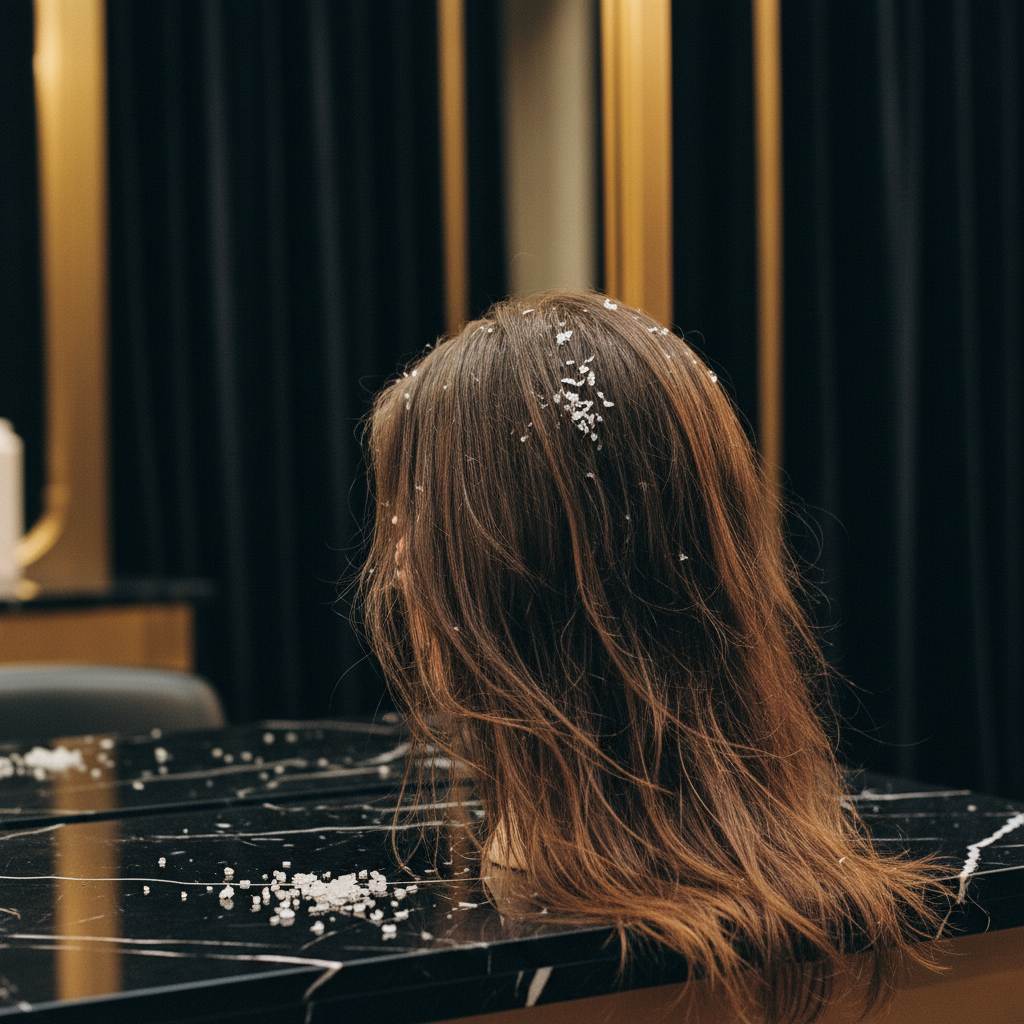
Quick answer: The classic Signs of Protein Overload in Hair include extreme stiffness, a dry straw-like texture, tangling, lack of natural curl definition, and sudden snapping when strands are stretched. Hair requires a precise balance of internal moisture and structural keratin. When leave-in treatments, bonding agents, or hydrolysed proteins coat and penetrate the fibre excessively without sufficient conditioning emollients, the hair shaft loses its natural elasticity. This results in brittle fibre breakage rather than follicular hair loss.
Key takeaways
- Protein overload occurs when topical proteins accumulate on and within the hair shaft, reducing flexibility and elasticity.
- The most frequent symptoms are a straw-like feel, dullness, excessive tangling, and sudden snapping without stretching first.
- Protein overload causes fibre breakage along the shaft; it does not trigger follicular shedding or alopecia.
- The issue is fully reversible using clarifying shampoos followed by protein-free, emollient-rich deep conditioning masks.
- Porous, chemically lightened, or fine hair types are particularly susceptible to rapid protein accumulation.
Signs of Protein Overload in Hair: what the evidence shows
Recognising the Signs of Protein Overload in Hair starts with understanding how the hair fibre functions under physical tension. Healthy human hair contains roughly 65 to 90 percent protein (primarily keratin) alongside water, lipids, and trace minerals. While cosmetic proteins help patch damaged areas along a weathered cuticle, saturating the fibre alters its physical properties.
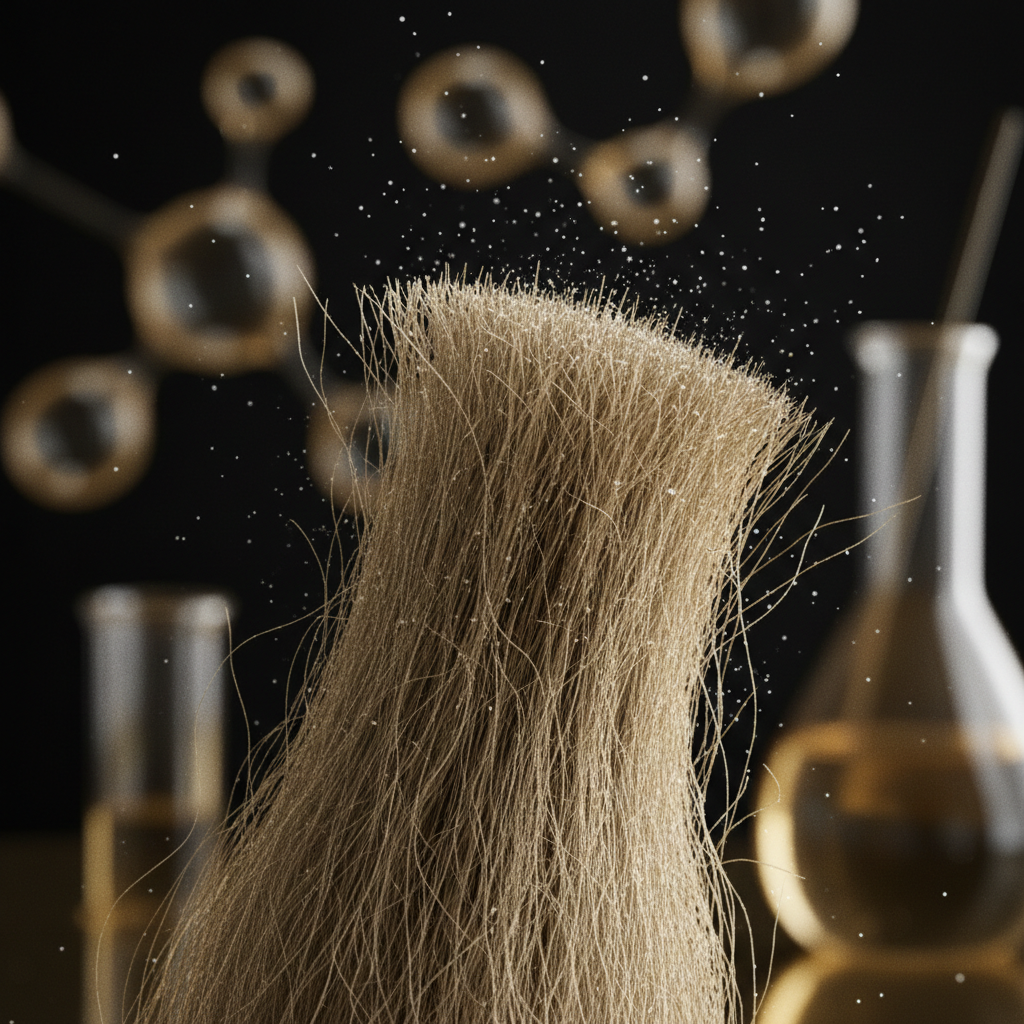
When hydrolysed proteins deposit in excessive concentrations, the hair fibre stiffens. Research in cosmetic chemistry demonstrates that while protein deposition temporarily increases tensile strength, an over-abundance limits tensile elongation. In practical terms, healthy wet hair can stretch up to 30 percent of its resting length before breaking. Hair experiencing protein overload stretches very little, snapping almost instantly under low mechanical stress.
Cosmetic formulators measure elasticity using stress-strain tensile testing. Hair fibres over-treated with low-molecular-weight proteins show a steep initial modulus (stiffness) and a markedly reduced plastic region, leading to premature fracture.
Healthy fibre: [Elastic Stretch] ---> [Yield Point] ---> [Gradual Snapping]
Overloaded fibre: [Rigid Resistance] ---------------------> [Instant Snap]
Primary symptoms: how to identify protein overload
You can identify an imbalance between moisture and protein through visual cues, tactile assessment, and simple manual handling.
1. The straw-like, stiff texture
Instead of feeling soft and pliable, your hair feels rigid, rough, and wire-like to the touch. This texture persists even immediately after washing and conditioning.
2. Immediate snapping (zero stretch)
Take a single shed strand while wet. Hold it between your thumb and forefinger on both ends and gently pull. Healthy hair gives slightly before returning to shape. Hair suffering from protein overload resists any elongation and snaps cleanly in two with minimal effort.
3. Loss of natural curl pattern
In wavy, curly, and coily textures, protein overload disrupts the hydrogen and disulphide bond dynamics that maintain natural clumping. Waves and curls often string out, appearing limp, frizzy, and unable to hold their defined shape.
4. Excessive knotting and matting
Because topical protein deposits leave microscopic jagged residues along cuticular edges that have not been adequately smoothed by conditioning lipids, individual hair fibres catch on one another. This causes persistent, micro-tangling at the ends.
5. Dullness and lack of shine
Light reflects best from flat, uniform cuticle scales lubricated by natural 18-methyleicosanoic acid (18-MEA) and conditioning lipids. Excess protein leaves a patchy, matte film over the cuticle, diffusing light reflection and making hair look dull.
| Diagnostic Marker | Protein Overload | Moisture Overload (Hygral Fatigue) | Healthy Hair |
|---|---|---|---|
| Tactile feel | Stiff, coarse, straw-like | Mushy, limp, excessively soft | Smooth, pliable, soft |
| Elasticity test | Snaps instantly with zero stretch | Stretches excessively without bouncing back | Stretches 20 to 30% and recovers |
| Breakage style | Clean, brittle snap | Stretches thin, then tears | Snaps only under heavy tension |
| Shine | Dull, chalky, matte | Limp, greasy sheen | Natural, healthy lustre |
| Curl pattern | Stringy, frizzy, unformed | Sagging, droopy, elongated | Bouncy, defined, clumped |
What the evidence does not show
It is critical to separate popular internet theories from published hair science.
First, cosmetic products cannot alter the biological keratin production inside your living hair follicle. The protein balance discussed here is entirely topical and restricted to the non-living hair shaft. Applying a protein-rich mask will not affect systemic keratin synthesis, nor will it alter your scalp biology.
Second, protein overload does not cause hair shedding from the scalp. If you notice white bulbs at the ends of fallen hairs, that represents telogen effluvium or natural physiological shedding (roughly 50 to 100 hairs daily). Protein overload causes transverse mechanical fractures along the hair shaft (trichorrhexis nodosa or clean breakage). It never causes follicular miniaturisation or pattern alopecia.
How protein overload happens: the biological mechanism
Hair shaft porosity determines how quickly protein builds up. The outer layer of the hair consists of overlapping cuticle scales held together by the cell membrane complex.
Chemical treatments such as bleaching, permanent dyeing, and chemical straightening strip away the natural protective 18-MEA lipid layer. This process lifts the cuticle scales and exposes the underlying cortex. To repair this damage, cosmetic chemists formulate products with hydrolysed proteins (such as wheat, silk, keratin, soy, and collagen). Hydrolysis breaks large protein molecules down into low molecular weights (often between 500 and 2,000 Daltons), allowing them to penetrate the cuticle gaps.
Problems arise when consumers use multiple protein-containing products in every step of their regimen:
- Protein-rich cleansing shampoos.
- Hydrolysed keratin deep conditioners.
- Protein-spiked leave-in sprays.
- Amino-acid-based bond builders and styling creams.
Over successive washes, these proteins cross-link or physically adhere to the cortex and cuticular margins. Without balancing levels of water and conditioning emollients (such as fatty alcohols, plant oils, and esters), the fibre dehydrates internally. The result is an unyielding, brittle composite structure that cannot flex during styling, detangling, or sleep.
How to fix protein overload: step-by-step recovery
Reversing protein buildup is straightforward because the accumulation is entirely superficial and cosmetic.
Step 1: Clarify thoroughly
Use an effective clarifying shampoo containing primary surfactants like sodium C14-16 olefin sulfonate or sodium laureth sulfate. Clarifying strips topical cosmetic films, silicone buildup, and non-covalently bound proteins from the cuticle layer. Wash your hair thoroughly, focusing on the lengths, and rinse with lukewarm water.
Step 2: Pause all protein-containing products
Inspect your ingredient labels carefully. Temporarily avoid products listing the following terms in their top 10 ingredients:
- Hydrolysed keratin, hydrolysed collagen, hydrolysed elastin
- Hydrolysed wheat, soy, or corn protein
- Hydrolysed silk or silk amino acids
- Amino acids (arginine, cysteine, glycine)
- Oat protein or quinoa protein
Step 3: Saturate with protein-free moisture
Following clarification, apply a rich, protein-free deep conditioning treatment. Look for humectants (glycerin, panthenol, propylene glycol, aloe vera) that draw water into the dehydrated fibre, combined with emollient fatty alcohols (cetyl alcohol, cetearyl alcohol) and natural lipids (such as argan or jojoba oil) to seal the cuticle. Leave the mask on under a shower cap for 20 to 30 minutes to maximise moisture absorption.
Step 4: Minimise thermal and mechanical stress
While the hair fibre regains its natural flexibility, avoid high-heat styling tools (flat irons, curling wands) above 150 degrees Celsius. Detangle gently using a wide-tooth comb or flexible wet brush, starting from the ends and moving upward towards the roots, always on hair saturated with slippery conditioner.
When the cause may be something else
Before assuming protein overload, consider other common haircare variables that produce brittle, dry symptoms:
- Hard water mineral buildup: Calcium and magnesium carbonates present in hard water (exceeding 180 mg/L) bond to the hair shaft, creating a rigid, unmanageable coating that mimics protein stiffness. A chelating shampoo resolves this issue.
- Silicones and polyquaternium buildup: Heavy, non-water-soluble silicones can seal moisture out over time, leaving inner fibres parched.
- Hygral fatigue: The opposite of protein overload. Constantly over-moisturising hair without structural support leaves fibres weak, mushy, and overly stretchy.
- Severe chemical damage: Excessive chemical processing can destroy the disulphide bonds entirely, causing strands to break whether protein is present or not.
Balanced support with Watermans
Maintaining resilient, healthy hair requires harmony between structural support and emollient conditioning. While addressing external shaft brittleness through proper washing habits, your scalp and emerging hair need consistent, balanced care.
Watermans focuses on balanced hair and scalp wellness. Formulations like Watermans Grow Me Shampoo and Condition Me Conditioner avoid excessive protein concentrations that lead to brittle hair shafts. Instead, they incorporate balanced botanical extracts, caffeine, niacinamide, and gentle conditioning agents. This provides essential scalp vitality and daily softness without the risk of heavy, hardening buildup on your strands.
Frequently asked questions about Signs of Protein Overload in Hair
How long does it take to fix Signs of Protein Overload in Hair?
With the correct routine, you should see noticeable improvement within one to two washes. A clarifying wash followed by an intensive protein-free deep conditioning treatment immediately restores softness. Completely recovering normal elasticity typically takes two to four weeks of consistent, protein-free, moisture-focused washing.
Does protein overload cause permanent damage?
No. Protein overload is a reversible physical condition on the hair shaft. It does not alter your follicles or permanently damage the internal genetic matrix of your hair. However, if hair is brushed aggressively while brittle, the mechanical snapping that occurs is permanent for that specific strand and will require a trim to even out ends.
Can virgin, unprocessed hair get protein overload?
Yes, although it is less common. Virgin hair has an intact cuticle layer with low porosity, meaning large protein molecules cannot easily enter the cortex. However, repeated use of concentrated protein leave-ins and stylers can form an exterior coating over low-porosity cuticles, causing stiffness, dullness, and tangling.
How do I know if I have protein overload or moisture overload?
Conduct a wet strand test. Gently stretch a clean, wet strand of hair. If it exhibits zero stretch, feels hard, and snaps immediately, you are dealing with protein overload. If the hair stretches excessively, feels mushy or gummy, and fails to bounce back to its original length before tearing, you have moisture overload.
Summary
Recognising the Signs of Protein Overload in Hair allows you to take swift corrective action before extensive mechanical breakage occurs. Hair is a dynamic biomaterial that relies equally on protein for structural integrity and hydration for elastic flexibility. When you observe telltale stiffness, lack of shine, and sudden snapping, strip back complex product routines, clarify the fibre, and replenish it with protein-free hydration to restore soft, resilient hair.
Sources and references
- Chemical and Physical Behavior of Human Hair (5th Edition), Clarence R. Robbins, Springer, 2012.
- Journal of Cosmetic Science, "Investigation of the effects of hydrolysed proteins on the mechanical properties of human hair," 2008.
- International Journal of Cosmetic Science, "Hair breakage: mechanisms, physical chemistry and testing methods," 2015.
- Cosmetic Dermatology: Products and Procedures, Zoe Diana Draelos, Wiley-Blackwell, 2015.
Find these ingredients in Watermans products
- Caffeine: you will find this ingredient in our Hair Growth Shampoo.
- Panthenol (Provitamin B5): you will find this ingredient in our Heat Protection Spray.
- Aloe Vera: you will find this ingredient in our Curly Hair Conditioner.