Signs of Bleach and Chemical Overprocessing: An Evidence-Based Guide
9 min read ·
Learn the definitive signs of bleach and chemical overprocessing, understand the underlying structural damage, and discover how to protect weakened hair from breaking.
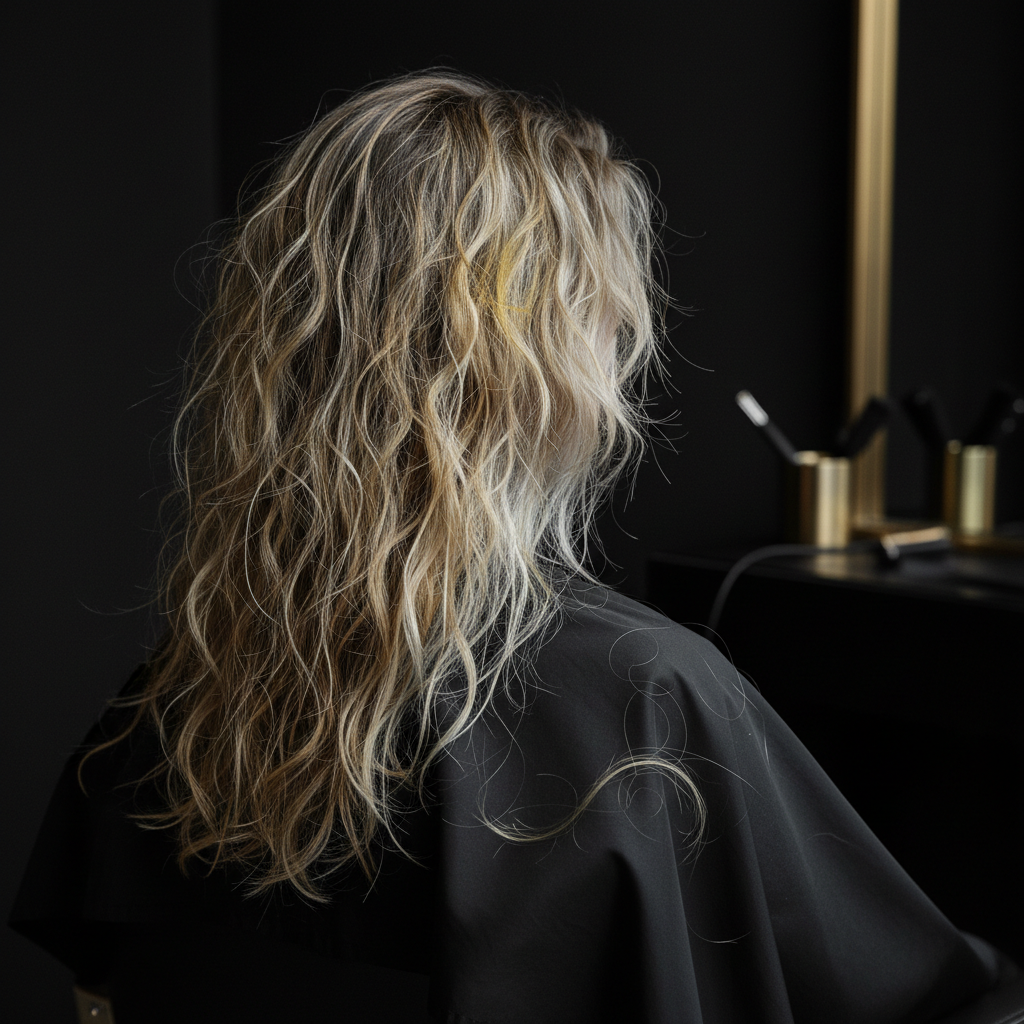
Quick answer: Identifying the Signs of Bleach and Chemical Overprocessing involves looking for structural breakdown in the hair shaft rather than natural shedding. Classic indicators include a gummy, elastic texture when wet, extreme porosity, matte tangling, split ends travelling up the shaft, and snapping during gentle styling. While cosmetic treatments and protein conditioners temporarily patch outer cuticles, biological hair fibre is dead tissue that cannot permanently regenerate once inner disulphide bonds are destroyed.
Key takeaways
- Loss of tensile strength: Overprocessed hair snaps under minimal tension because chemical treatments degrade cystine bonds within the cortex.
- Wet elasticity changes: Severely bleached strands stretch excessively when wet and fail to bounce back, feeling mushy or like chewing gum.
- Breakage versus shedding: Chemical damage causes fibre breakage along the shaft; it does not originate at the root unless chemical scalp burns occur.
- Permanent structural loss: Cosmetic conditioning agents can smooth cuticles and reduce friction, but they cannot biologically repair severed keratin matrices.
- Altered porosity: Lifted, missing cuticles cause hair to soak up water instantly, dry unevenly, and reject or grab artificial colour unpredictably.
Signs of Bleach and Chemical Overprocessing: what the evidence shows
Recognising the Signs of Bleach and Chemical Overprocessing requires understanding how alkaline chemicals and oxidising agents alter human hair. Healthy human hair has an isoelectric point around pH 3.67, with a natural surface cuticle intact and coated by 18-methyleicosanoic acid (18-MEA), a protective lipid layer. Bleaching compounds typically operate at an alkaline pH between 9.0 and 11.0, lifting the cuticle scales to allow hydrogen peroxide and persulphate salts to penetrate the cortex and oxidise natural melanin.
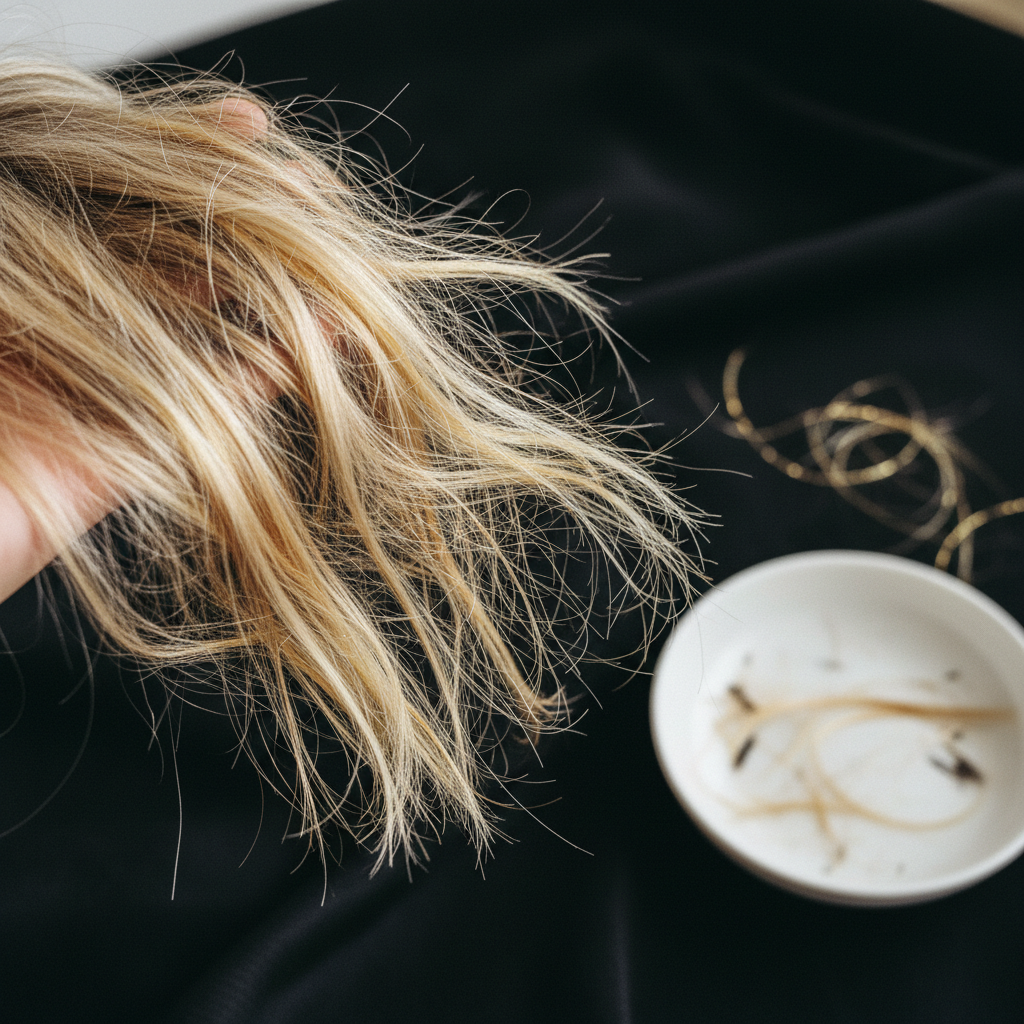
When processing times, chemical volumes, or repeated applications exceed what the fibre can tolerate, irreversible degradation occurs. The physical signs reflect this internal collapse:
- Extreme wet elasticity and a "chewing gum" feel: When hair loses its internal matrix of disulphide bonds, wet fibres lose their spring. Instead of returning to their original length after a gentle tug, they stretch abnormally, feel gummy between the fingertips, and disintegrate or snap.
- Immediate, severe matting: Without the hydrophobic 18-MEA lipid layer, cuticles remain open, rough, and jagged. Strands catch on each other, producing dense bird's-nest tangles during washing that resist comb-through even with heavy conditioner.
- White bulbs missing from shed strands: Broken hairs snap off cleanly or show jagged, frayed ends (trichoptilosis or trichorrhexis nodosa) with no white keratin bulb at the base. A white bulb indicates natural follicular shedding; a blunt or split tip indicates chemical breakage.
- Flash drying and rapid saturation: Extreme cuticle depletion creates high porosity. The hair absorbs water almost instantly in the shower, but struggles to retain balanced hydration, feeling parched within minutes of towel drying.
- Loss of curl pattern and shape: In textured, wavy, or curly hair, internal structural collapse causes curl elongation or completely limp, lifeless sections that refuse to hold a wave.
The chemical mechanism: how bleach destroys hair integrity
Chemical overprocessing is fundamentally a biochemical reaction gone too far. Alkaline hair lighteners rely on ammonium hydroxide or monoethanolamine to swell the strand, opening outer cuticle layers. Once inside, oxidising agents target melanin granules, but they also indiscriminately attack the amino acid cystine.
Cystine forms the disulphide cross-links that give alpha-keratin its mechanical strength, elasticity, and resilience. During heavy bleaching, cystine is irreversibly oxidised into cysteic acid. Studies show that aggressively bleached hair can lose over 15 to 45 percent of its native disulphide bonds. As cysteic acid levels rise, the hair fibre's net negative charge increases, cuticle scales lift permanently or break off, and the cortex loses its tensile resistance.
Simultaneously, the natural lipid layer on the epicuticle is stripped away. Without this natural wax coating, hair shifts from being naturally water-repellent (hydrophobic) to water-absorbing (hydrophilic). The swollen, porous cortex allows moisture, environmental pollutants, and heat to penetrate and escape unchecked, leading to brittle fibres prone to transverse fracture.
What the evidence does not show
There is no scientific evidence that topical shampoos, oils, or deep-conditioning masks can permanently rebuild broken disulphide bonds or restore natural hair architecture. While marketing claims frequently promise to "repair" or "heal" fried hair, keratin is non-living biological tissue.
Bond-building ingredients and hydrolysed proteins (such as hydrolysed wheat, soy, or keratin peptides) can temporarily adhere to porous voids, improve tensile resistance under lab conditions, and reduce friction. However, these effects wash out over time. No topical product can reverse severe trichorrhexis nodosa (node-like fracture swellings along the shaft). Once the hair fibre has split or formed fractures, the only permanent remedy is trimming away the compromised length.
Furthermore, bleach damage along the mid-lengths and ends does not cause telogen effluvium or pattern hair loss. Unless chemical burn occurs on the scalp tissue, bleaching does not halt follicular cycling beneath the skin.
Comparing healthy, processed, and overprocessed hair
| Characteristic | Healthy Hair | Chemically Treated (Within Limits) | Overprocessed Hair |
|---|---|---|---|
| Cuticle Condition | Smooth, flat, intact 18-MEA lipid layer | Mildly lifted, manageable surface friction | Stripped, chipped, or completely eroded |
| Wet Behaviour | Stretches up to 30% and bounces back | Stretches with normal recoil, softens | Stretches excessively, feels mushy, snaps |
| Dry Texture | Silky, reflective, moves freely | Requires leave-in moisture, slight frizz | Chalky, rough, brittle, matte appearance |
| Porosity | Low to medium; repels water initially | Medium; absorbs water and colour evenly | Extreme; absorbs water instantly, dries unevenly |
| Colour Retention | Holds artificial pigment predictably | Holds colour well with proper maintenance | Grabs pigment rapidly, fades within 1 to 2 washes |
| Tensile Strength | High resistance to brushing tension | Moderate resistance; minimal breakage | Snaps under gentle detangling or styling |
Practical steps: managing overprocessed hair
If you observe the classic signs of overprocessing, the priority shifts from styling to damage limitation and breakage prevention.
- Stop all chemical services: Halt bleach touch-ups, relaxers, perms, and oxidative dyes immediately. If new root growth requires attention, seek a salon professional who can apply barrier creams and avoid overlapping product onto previously processed lengths.
- Cut out high-heat styling: Heat tools operating above 150 degrees Celsius strip residual moisture from fragile hair and degrade whatever weakened keratin bonds remain. Air-dry hair gently using a soft microfibre towel or cotton T-shirt, avoiding vigorous rubbing.
- Introduce low-pH conditioning: Shampoos and conditioners formulated around pH 4.0 to 5.5 help contract the cuticle layer, reducing strand diameter and lowering friction. Look for formulations featuring amino acids, ceramides, and fatty alcohols.
- Incorporate protein and moisture cycling: Alternating between hydrolysed protein treatments (to temporarily reinforce weak spots) and emollient-rich conditioning masks (containing fatty acids and panthenol) helps restore flexibility and mitigate brittle snapping.
- Sleep on low-friction surfaces: Silk or satin pillowcases reduce shear stress on fragile hair fibres during the night, curbing mechanical breakage.
- Schedule strategic micro-trims: Removing 0.5 to 1 centimetre every six to eight weeks stops shaft splits from travelling upward into healthier regrowth.
When breakage is mistaken for other conditions
It is common to confuse chemical breakage with other hair issues. When overprocessed hair breaks close to the scalp, it can leave short, bristly patches that look superficially like alopecia areata. However, a dermatoscope or close visual examination will reveal broken, jagged shaft ends rather than the smooth, empty follicular ostia characteristic of autoimmune hair loss.
Similarly, post-bleaching shed during washing often causes panic. If you see high amounts of hair in the shower drain after a chemical service, examine the ends. If they lack the tiny white bulb of a resting telogen root, you are experiencing acute mechanical breakage caused by chemical weakening, not telogen effluvium.
Conversely, if the scalp itself is stinging, weeping, scabbing, or shedding clumps from the root after a service, an alkaline chemical burn or contact allergic dermatitis has occurred. In this scenario, the issue extends beyond simple fibre damage and warrants medical evaluation.
Supporting the scalp: Watermans cosmetic care
While severely overprocessed lengths require mechanical protection and trims, maintaining optimal scalp health ensures that new hair emerges undisturbed. Watermans GrowMe Shampoo is formulated to care for the scalp environment while cleansing without harsh sulphates. Enriched with ingredients like biotin, rosemary, caffeine, and hydrolysed lupin protein, it delivers a gentle, revitalising wash designed to keep the scalp clean and the emergence of new growth supported. Paired with Watermans ConditionMe Conditioner, which incorporates cholesterol and natural oils, it helps soften brittle textures and smooth damaged cuticles to visibly reduce friction-induced breakage along fragile lengths.
Frequently asked questions about Signs of Bleach and Chemical Overprocessing
How can you tell the difference between normal dryness and overprocessing?
Normal dryness responds rapidly to everyday conditioning masks, regaining suppleness and shine within one or two washes. With chemical overprocessing, the hair remains brittle, matte, and fragile regardless of how much oil or moisture is applied, because the internal disulphide framework and outer cuticle scales have suffered permanent structural erosion.
What are the earliest Signs of Bleach and Chemical Overprocessing during a salon appointment?
The earliest warning signs during a chemical service include hair feeling unusually slimy, spongy, or hot to the touch during the rinse. Stylists may notice hair stretching like elastic when testing strand tension at the backwash, or sudden resistance and matting as water hits the hair.
Can oligo-proteins or bond builders completely fix overprocessed hair?
No cosmetic bond builder can restore hair to virgin condition. While bis-aminopropyl diglycol dimaleate and hydrolysed proteins help create ionic cross-links and reinforce the hair shaft against immediate breakage, they act as temporary structural scaffolding. They cannot reverse lost cuticle layers or replace permanently degraded amino acids.
Why does overprocessed hair break when wet?
Wet hair naturally expands and weakens its temporary hydrogen bonds. In healthy hair, permanent disulphide bonds preserve structural integrity under water. In overprocessed hair, those disulphide bonds have been heavily degraded by oxidation, leaving the wet fibre structurally unsupported and prone to snapping under minimal tension.
Can chemical overprocessing cause permanent baldness?
Bleach applied exclusively along the hair shaft cannot cause baldness because the living follicle sits up to 4 millimetres beneath the scalp surface. However, if strong bleach or relaxers are left on the scalp long enough to cause severe chemical burns, follicular scarring (cicatricial alopecia) can occur, permanently destroying the hair-producing cells.
Recognising the Signs of Bleach and Chemical Overprocessing
Recognising the Signs of Bleach and Chemical Overprocessing early enables you to intervene before widespread fibre breakage occurs. Once keratin chains and disulphide bonds are destroyed by excessive pH shifts and aggressive oxidisers, no cosmetic treatment can permanently restore them. Managing damaged hair requires an honest shift in expectations: eliminating heat styling, avoiding chemical overlap, using pH-balanced conditioning products to minimise friction, and progressively trimming away split ends while supporting new root growth.
Sources and references
- Robbins, C. R. (2012). Chemical and Physical Behavior of Human Hair (5th ed.). Springer-Verlag.
- Swift, J. A. (1999). The mechanics of human hair: a review. International Journal of Cosmetic Science, 21(4), 227-239.
- Dawber, R. (1996). Hair: its structure and response to cosmetic preparations. Clinics in Dermatology, 14(1), 105-112.
- Cruz, C. F., et al. (2016). Human hair characteristics and methods to evaluate hair damage. Cosmetics, 3(3), 26.
- British Association of Dermatologists. (2020). Hair breakage and cosmetic damage guidelines.
Find these ingredients in Watermans products
- Biotin: you will find this ingredient in our Hair Growth Shampoo.
- Panthenol (Provitamin B5): you will find this ingredient in our Heat Protection Spray.