Managing Hair Cuticle Health: The Essential Guide
8 min read ·
Managing Hair Cuticle Health protects your hair's outer shield, reducing breakage and tangles through pH-balanced care, thermal defence, and friction control.
Quick answer: Managing Hair Cuticle Health requires protecting the overlapping dead keratin scales that form your hair fibre's outer shield from mechanical friction, excessive heat, and chemical erosion. Because hair is non-living tissue that cannot biologically heal once grown, managing cuticle condition relies entirely on preventative habits, acidic pH balance, and cosmetic conditioning agents to smooth raised scales. While you cannot truly regenerate destroyed cuticle cells, consistent care maintains structural integrity, reduces breakage, and locks moisture inside the inner cortex.
Key takeaways
- The hair cuticle consists of 5 to 10 overlapping layers of flattened, dead keratinised cells joined by a cell membrane complex.
- Alkaline chemical treatments, extreme heat above 185°C, and wet mechanical friction physically lift and chip these scales.
- Healthy cuticles lie flat, reflecting light for natural shine and preventing environmental moisture from causing swelling and frizz.
- Hair is biologically dead tissue; damaged cuticles cannot self-repair from within and require cosmetic maintenance to seal or protect.
- Maintaining a slightly acidic surface pH (between 4.5 and 5.5) keeps the cuticle layer tightened and resilient against daily wear.
Managing Hair Cuticle Health: what the evidence shows
Managing Hair Cuticle Health is fundamentally an engineering challenge rather than a biological one. Research published in dermatological literature confirms that the hair shaft is fully keratinised, non-living protein by the time it emerges from the scalp follicle. As a result, the outermost protective layer, the cuticle, has no cellular metabolism, no blood flow, and zero capacity for self-repair.
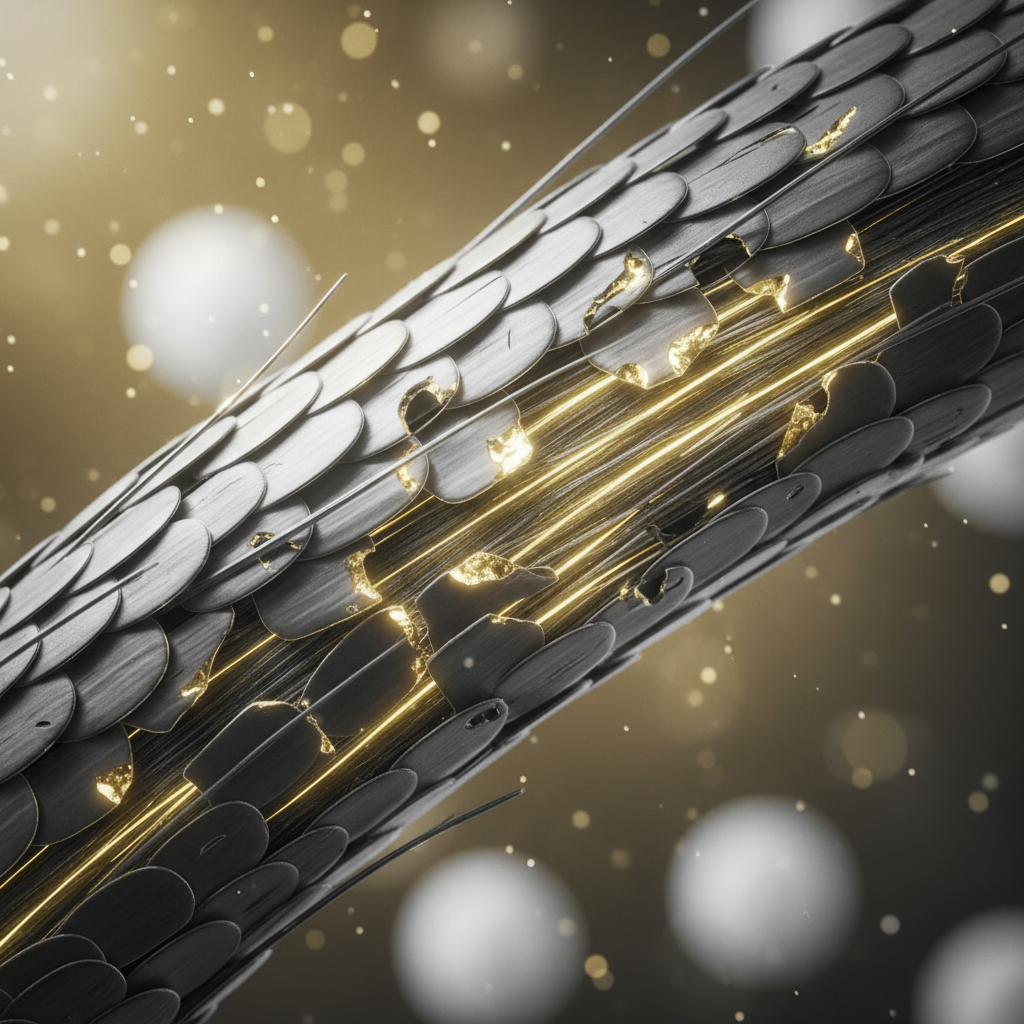
Studies evaluating hair fibre morphology demonstrate that a pristine cuticle functions like roof tiles. It forms a hydrophobic barrier that shields the inner cortex from mechanical strain and water saturation. Daily activities, such as rough towel-drying, brushing knots while damp, and using alkaline cleansers, gradually lift these tiles.
Evidence shows that cosmetic management can significantly preserve the cuticle's lifespan. Film-forming conditioning agents, cationic surfactants, and plant oils deposit a temporary lubricating layer over lifted cells. This reduces the coefficient of friction along the fibre by up to 50 percent, preventing the mechanical snapping often mistaken for hair shedding.
What the evidence does not show
Controlled research does not support the marketing claim that any shampoo, serum, or salon treatment can permanently "repair" or "heal" fractured cuticles. While hydrolysed proteins and silicone polymers can temporarily patch micro-cracks or cement split ends through cosmetic adhesion, these bonds wash away over successive cleansers.
Furthermore, evidence does not show that diet, collagen supplements, or internal vitamins can alter the cuticle structure of hair that has already emerged from the scalp. Nutrition strictly dictates the formation of new fibres inside the follicle matrix. Once the fibre clears the follicular pore, external physical management is the sole determinant of cuticle condition.
The biological mechanism of the hair cuticle
The human hair cuticle is an intricate composite structure made up of 5 to 10 overlapping cells, each roughly 0.3 to 0.5 micrometres thick. Each individual cuticle cell contains three distinct proteinaceous zones:
- The Epicaticle: A thin, hydrophobic membrane covered in 18-methyleicosanoic acid (18-MEA), a primary lipid that makes healthy hair naturally water-repellent.
- The Exocuticle: A rigid layer rich in cystine (roughly 12 percent), responsible for physical resilience against abrasions.
- The Endocuticle: An inner, low-cystine layer that swells substantially when absorbing water, creating internal pressure that can force the outer scales to lift.
Between each overlapping cell lies the cell membrane complex (CMC), a lipid-protein mortar. When hair is exposed to water with a high pH (above 7.0), the hair fibre swells, softening the endocuticle and lifting the scales. Acidic environments between pH 4.5 and 5.5 cause the hair fibre to shrink slightly toward its isoelectric point, encouraging the cuticle scales to lie flat against the cortex.
Signs of cuticle damage to look for
Identifying structural degradation early allows you to adjust your routine before deep cortical damage causes fibre breakage:
- High wet friction and tangling: Raised cuticles catch against neighbouring strands, causing persistent knots at the nape of the neck.
- Dullness and lack of shine: Ragged, lifted scales scatter light in multiple directions rather than bouncing it cleanly off a smooth surface.
- Excessive porosity: Damaged hair absorbs water instantly when submerged, swells rapidly, and takes hours to dry because the protective lipid barrier is depleted.
- Split ends (trichoptilosis): Complete erosion of the cuticle layer leaves the inner cortical fibres exposed, causing them to unravel like the ends of an old rope.
- Static electricity: The absence of natural protective surface lipids leaves the fibre prone to picking up negative surface charges.
Healthy vs damaged hair cuticles
| Feature | Intact, Healthy Cuticle | Damaged, Weathered Cuticle |
|---|---|---|
| Scale Orientation | Uniformly flat, overlapping tightly | Lifted, chipped, cracked, or missing |
| Surface Lipid (18-MEA) | Present; highly hydrophobic (repels water) | Depleted; hydrophilic (readily absorbs water) |
| Light Reflection | High specular reflection (glossy shine) | Diffuse reflection (dull, matte appearance) |
| Friction Level | Low; fibres glide past each other | High; fibres catch, tangle, and knot easily |
| Tensile Strength | Protected cortex; high resistance to snaps | Exposed cortex; vulnerable to mid-shaft breakage |
| Optimal Care Strategy | Acidic washing, lightweight lubrication | Cationic conditioners, protein bonding, lower heat |
What you can do: protective routines for your hair
Effective management comes down to reducing wet friction and minimising chemical stripping.
1. Match your hair washing to natural pH levels
Water alone has a neutral pH around 7.0, which is enough to mildly swell hair. Use shampoos and cleansing agents formulated near hair's natural isoelectric point (pH 4.5 to 5.5). Acidic environments prevent extreme swelling of the endocuticle and protect the delicate cell membrane complex.
2. Handle damp hair with extreme care
Hair can stretch up to 30 percent beyond its resting length when wet before permanent deformation occurs, but wet cuticles are soft and easily stripped by bristles. Never drag a stiff brush through soaking wet hair. Instead, apply a detangling product to lower surface tension, and gently work through lengths using a wide-toothed comb starting from the ends upward.
3. Cap thermal styling temperatures
Keratin begins to undergo structural breakdown above 155°C, while free water inside the hair shaft can flash to steam around 185°C to 200°C, producing internal fractures known as bubble hair. Always apply a silicone- or polymer-based heat protectant to buffer temperature transfer, and keep your styling irons below 180°C.
4. Reintroduce functional surface lubricants
Because daily washing and weathering strip the natural 18-MEA layer, replace it using conditioning formulations with cationic ingredients such as behentrimonium chloride or cetrimonium chloride. These positively charged molecules naturally bond to the negatively charged, damaged sites on lifted cuticles, smoothing the exterior shaft.
When the cause may be something else
It is vital to distinguish between hair fibre breakage and root shedding. If you notice shorter pieces of hair without a white bulb on your shoulders or bathroom floor, your cuticle has likely failed, leading to structural breakage along the shaft.
Conversely, if you find long strands complete with a small white keratin bulb at the root, you are experiencing follicular shedding (such as telogen effluvium or natural daily cycling of 50 to 100 hairs). Managing your cuticle will strengthen the hair fibre against snapping, but it will not stop hairs from shedding out of the follicle itself.
When to seek professional advice
Consult a registered trichologist or a dermatologist if your hair snaps effortlessly when dry, if you notice widespread thinning across the scalp, or if changes in texture happen rapidly without a history of heat or chemical processing. Scalp inflammation, intense itching, and patchy loss always warrant medical evaluation to rule out underlying autoimmune or dermatological conditions.
Supporting hair health with Watermans
When building a daily regimen that protects fibre integrity, choosing gentle products makes a measurable difference. Watermans focuses on scalp-first formulations that support healthy hair maintenance. By avoiding harsh sulfates that strip natural lipid layers, Watermans cleansers and conditioners provide gentle cleansing while depositing protective moisture onto the hair shaft. Pairing nutrient-dense scalp care with gentle washday practices helps minimise unnecessary cuticle friction, allowing your lengths to look smoother and feel substantially stronger over time.
Frequently asked questions about Managing Hair Cuticle Health
Can you permanently repair a lifted hair cuticle?
No, you cannot permanently repair a lifted cuticle. Because hair fibres consist of non-living, fully keratinised cells, they lack the cellular biological machinery required to rebuild themselves. Cosmetic conditioners, oils, and bond-building treatments can smooth, coat, and temporarily seal lifted scales, but these surface treatments gradually wash out and must be reapplied.
Does cold water really close the hair cuticle?
Cold water has a negligible physical effect on closing cuticles. The cuticle responds primarily to chemical changes such as pH rather than temperature. While a cool rinse will not harm your hair, lowering water pH between 4.5 and 5.5 is what truly prompts the cuticle layer to tighten and lie flat against the cortex.
Why is Managing Hair Cuticle Health so difficult on bleached hair?
Bleaching requires high-alkaline persulfates and hydrogen peroxide to open the cuticle scales and dissolve melanin within the cortex. This aggressive process permanently strips the hair's protective 18-MEA lipid layer, leaving cuticles fragile, permanently raised, and prone to breaking off completely under normal daily brushing.
What is the best comb or brush for cuticle protection?
Wide-toothed combs made from seamless, polished materials like carbon or wood provide the greatest protection for cuticles. Brushes with rough, molded seams or missing protective ball tips can catch and chip microscopic scale edges, accelerating surface erosion and worsening mid-shaft friction.
How often should you trim hair to manage cuticle health?
Trimming hair every 8 to 12 weeks removes older, highly weathered tips where cuticles have eroded entirely. Once split ends form, cortical unravelling naturally travels up the hair shaft. Regular dusting or micro-trims stop this mechanical breakdown before it compromises healthy sections of the fibre.
Summary
Managing Hair Cuticle Health demands a deliberate, protective routine that accounts for the non-living nature of the hair fibre. By respecting hair's natural acidic pH, guarding against aggressive thermal tools, and minimising wet friction, you prevent the progressive erosion of the hair's outer armor. While cosmetic products provide invaluable slip and short-term smoothing, consistent daily prevention remains the only true method for keeping the cuticle flat, reflective, and resilient against everyday wear.
Sources and references
- Journal of Cosmetic Dermatology, "Hair surface characteristics and the role of lipids in hair health," 2018.
- International Journal of Trichology, "Shampoo and conditioners: What a dermatologist should know?" 2015. Https://doi.org/10.4103/0974-7753.153450
- Robbins, C. R., "Chemical and Physical Behavior of Human Hair," 5th Edition, Springer, 2012.
- British Association of Dermatologists, "Hair structure and care guidelines," 2021.