Seborrhoeic Dermatitis and Hair Thinning: Causes, Evidence, and Management
10 min read ·
Explore the link between Seborrhoeic Dermatitis and Hair Thinning, including biological mechanisms, evidence-based treatments, and how to restore scalp balance.
Quick answer: The relationship between Seborrhoeic Dermatitis and Hair Thinning centres on scalp inflammation rather than direct destruction of hair follicles. Seborrhoeic dermatitis causes an overgrowth of Malassezia yeast, leading to sebum oxidation, scaling, erythema, and intense pruritus. While the condition does not permanently destroy follicles like scarring alopecia, chronic inflammation and mechanical damage from scratching can trigger premature telogen shedding and hair thinning. However, resolving the underlying inflammatory flare typically allows hair density to recover fully.
Key takeaways
- Seborrhoeic dermatitis does not destroy hair follicles, meaning associated thinning is usually reversible once inflammation subsides.
- The link between the condition and shedding stems primarily from severe scalp inflammation, oxidised sebum lipids, and physical trauma caused by scratching.
- Intense scaling and oiliness alter the follicular microenvironment, pushing anagen (growing) hairs prematurely into the telogen (shedding) resting phase.
- Medicated topical antifungals, such as ketoconazole or ciclopirox olamine, remain the clinical standard for restoring microbial balance.
- Persistent shedding that continues after the scalp clears often points to an overlapping condition, such as androgenetic alopecia or telogen effluvium.
Seborrhoeic Dermatitis and Hair Thinning: what the evidence shows
Clinical research shows that Seborrhoeic Dermatitis and Hair Thinning are connected through inflammatory pathways rather than follicle scarring. Seborrhoeic dermatitis is a chronic, relapsing inflammatory skin disorder that affects sebum-rich areas, predominantly the scalp, face, and chest. It affects an estimated 1% to 5% of the general adult population, with higher prevalence among men and individuals experiencing elevated stress levels.
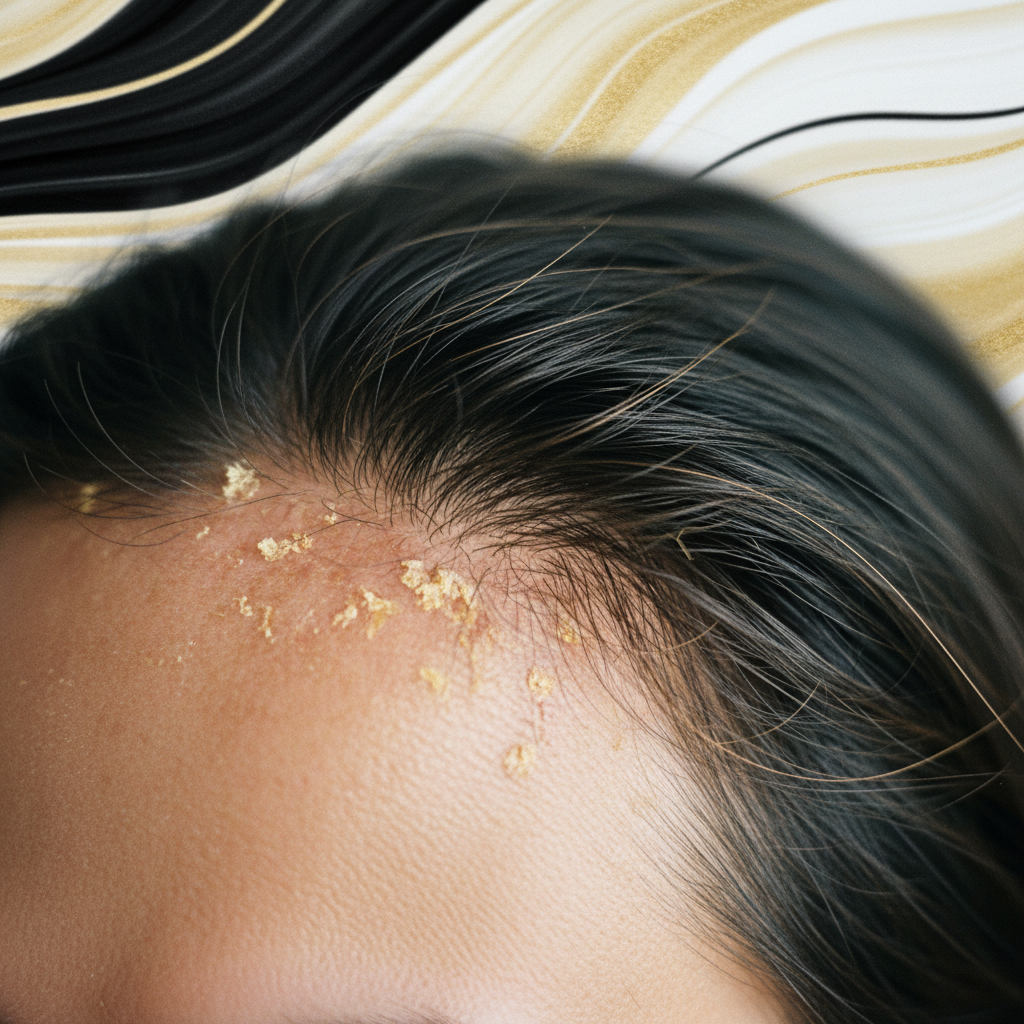
The condition is driven by a complex interplay between host immune response, sebaceous gland activity, and commensal lipophilic yeasts in the genus Malassezia (predominantly M. Globosa and M. Restricta). These yeasts consume triglycerides in human sebum, breaking them down into free fatty acids such as oleic acid and arachidonic acid. In sensitive individuals, these metabolic by-products penetrate the stratum corneum, compromising the skin barrier and initiating a cascade of inflammatory cytokines (including interleukin-1 alpha, interleukin-8, and tumour necrosis factor alpha).
When this inflammatory cascade reaches the infundibulum (the upper portion of the hair follicle), it disrupts regular cellular activity. Research published in dermatological literature indicates that severe perinfundibular inflammation can trigger premature catagen entry, leading to an increased proportion of hairs shifting into the telogen phase. This results in diffuse shedding. Furthermore, the intense itch (pruritus) associated with the condition leads to persistent scratching, which physically damages the hair shaft and uproots loose telogen fibres before their natural shed cycle.
What the evidence does not show
It is critical to separate established dermatological mechanisms from popular misconceptions regarding scalp disorders and hair density.
- It does not show permanent follicle scarring: Unlike cicatricial (scarring) alopecias such as lichen planopilaris or frontal fibrosing alopecia, seborrhoeic dermatitis does not obliterate the stem cell reservoir in the follicular bulge. The follicle remains intact beneath the surface.
- It does not prove Malassezia feeds on the hair fibre: The yeast relies purely on skin lipids and sebum, not the keratin protein of the hair shaft itself.
- It does not show that sebum alone causes genetic baldness: While sebum contains traces of dihydrotestosterone (DHT), greasy hair or excess sebum production does not cause androgenetic alopecia on its own. They are co-occurring phenomena driven by overlapping androgen sensitivity in the sebaceous glands and hair follicles.
- It does not demonstrate that cosmetic shampoos can replace medicated therapy: Gentle cosmetic cleansers help clear surface flakes, but clinical flares require active antifungal or anti-inflammatory agents to reduce microbial populations and control the immune response.
Biological mechanisms: how scalp inflammation disrupts hair growth
Understanding how scalp inflammation drives shedding requires a close look at the scalp microenvironment. Healthy hair growth relies on a stable barrier, balanced microflora, and an unhindered vascular supply to the dermal papilla.
1. Oxidative stress and lipid peroxidation
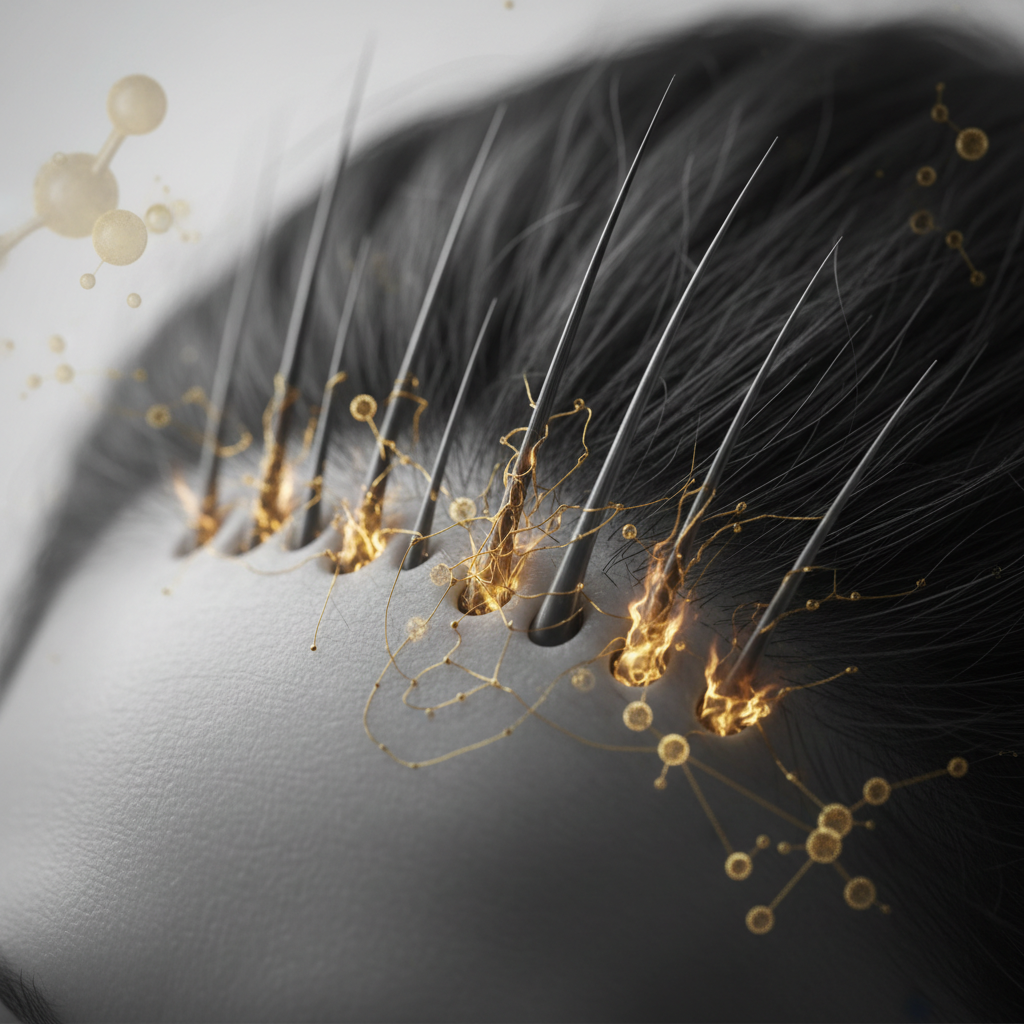
When Malassezia enzymes break down sebum, the resulting unsaturated free fatty acids undergo lipid peroxidation. This chemical process generates reactive oxygen species (ROS) that directly irritate the epithelial cells of the scalp. Elevated oxidative stress within the follicular niche destabilises the anagen anchoring mechanisms, prompting the hair to transition early into the catagen phase.
2. Physical excoriation and traction
The pruritus caused by histamine and cytokine release can be intense. Constant rubbing and scratching introduces mechanical traction. Hairs that are already loosely anchored in late anagen or early telogen are easily dislodged. Scratching can also introduce secondary bacterial infections (such as Staphylococcus aureus), which compounds local tissue inflammation and further weakens the hair root.
3. Altered stratum corneum cohesion
Seborrhoeic dermatitis disrupts the normal 28-day turnover of epidermal skin cells, shortening it to as few as 9 to 14 days. This accelerated transit prevents corneocytes from maturing properly, forming large, oily, yellowish clusters of flakes that cling to the base of the hair shaft. These dense accumulations can harbour microbial biofilms and create localized micro-occlusions around the infundibular opening.
Signs to look for: seborrhoeic dermatitis vs other scalp conditions
Because different scalp issues produce overlapping symptoms, diagnosing the exact cause of hair shedding is vital for appropriate care.
| Feature | Seborrhoeic Dermatitis | Pityriasis Capitis (Dry Dandruff) | Scalp Psoriasis | Androgenetic Alopecia |
|---|---|---|---|---|
| Flake appearance | Yellowish, greasy, thick, adherent plates | Small, white, dry, loose powder | Thick, silvery-white, well-demarcated plaques | None (unless co-existing) |
| Erythema (redness) | Prominent, pink to red patches on scalp margins | Absent or minimal | Intense, beefy red, sharp borders | Absent |
| Pruritus (itch) | Moderate to severe | Mild to moderate | Variable, often sore or burning | Absent |
| Shedding pattern | Diffuse, temporary telogen shedding | Minimal to none | Can cause telogen shedding if plaques are thick | Progressive miniaturisation at temples and crown |
| Follicle impact | Reversible; no structural miniaturisation | None | Reversible once plaque clears | Irreversible progressive miniaturisation without treatment |
Clinical and practical steps: managing the condition
Managing seborrhoeic dermatitis requires a consistent routine aimed at reducing yeast populations, clearing adherent scales, and soothing local tissue irritation.
1. Targeted antifungal therapy
The frontline medical approach involves topical antifungals. Active ingredients evaluated extensively in peer-reviewed trials include:
- Ketoconazole (2% prescription, 1% over-the-counter): An imidazole that disrupts fungal cell membrane synthesis. Used two to three times weekly, it significantly reduces Malassezia colonisation.
- Ciclopirox olamine (1%): A hydroxypyridone antifungal with broad anti-inflammatory properties, making it particularly helpful for irritated scalps.
- Zinc pyrithione (1% to 2%) and Selenium sulfide (1% to 2.5%): Non-specific antimicrobial agents that also slow down epidermal turnover.
When using medicated shampoos, leave the lather on the scalp for 3 to 5 minutes before rinsing. This contact time is essential to allow the active ingredient to penetrate the stratum corneum and follicular openings.
2. Keratolytic agents for descaling
Thick, sebum-bound flakes shield the yeast from antifungal washes. Keratolytic compounds such as salicylic acid (2% to 3%) or urea help break the protein bonds between cohesive scales, facilitating easy removal without aggressive combing or scratching.
3. Anti-inflammatory interventions
For acute, severe flare-ups marked by intense redness and swelling, a GP or dermatologist may prescribe a short course of mild-to-moderate topical corticosteroids (such as betamethasone valerate or hydrocortisone butyrate) or topical calcineurin inhibitors. These rapidly quieten the cytokine storm, halting downstream telogen shedding.
Watermans: supporting a balanced scalp environment
While active clinical flares require appropriate medical management, maintaining optimal scalp hygiene between flares supports a resilient follicular environment.
Watermans focuses on non-invasive cosmetic care designed to keep the scalp clean, fresh, and hydrated. Formulations such as Watermans Grow Me Shampoo incorporate ingredients like rosemary extract, biotin, niacinamide, and caffeine. These botanical and nutrient compounds help wash away excess surface sebum, refresh the scalp, and support stronger-feeling hair fibres, reducing mechanical breakage along the shaft. Using a well-balanced, non-stripping cleanser ensures that the hair remains supple and manageable while medical antifungals manage the underlying microbial population.
When the cause may be something else
If your scalp inflammation resolves completely but hair shedding persists for longer than two to three months, seborrhoeic dermatitis is unlikely to be the primary cause of your hair thinning.
- Androgenetic alopecia: Genetic pattern hair loss frequently co-exists with seborrhoeic dermatitis because both conditions are influenced by androgen activity. If hair thinning is concentrated specifically along the frontal hairline, temples, or crown, underlying miniaturisation is likely occurring.
- Telogen effluvium: A systemic shock, such as severe illness, rapid weight loss, high psychological stress, or hormonal shifts (such as postpartum recovery), can trigger sudden, widespread shedding across the entire scalp roughly two to three months after the triggering event.
- Nutritional insufficiencies: Deficiencies in ferritin (iron stores), vitamin D, or zinc can impair normal follicular cycling, mimicking the diffuse thinning seen during scalp inflammatory flares.
When to get professional advice
Consult a GP, dermatologist, or qualified trichologist if:
- The scalp develops yellow crusting, weeping fluid, or pustules, which can signify a secondary bacterial infection.
- Over-the-counter antifungal cleansers fail to improve flaking and redness after four weeks of consistent use.
- You experience intense burning, pain, or visible patchy hair loss with smooth, bare skin.
- Thinning continues to worsen despite your scalp feeling comfortable, clear, and flake-free.
A specialist can perform a dermoscopic scalp examination (trichoscopy) to inspect the follicular openings, differentiate between pure seborrhoeic shedding and androgenetic miniaturisation, and formulate a targeted treatment plan.
Frequently asked questions about Seborrhoeic Dermatitis and Hair Thinning
Can Seborrhoeic Dermatitis and Hair Thinning cause permanent baldness?
No, Seborrhoeic Dermatitis and Hair Thinning does not cause permanent baldness. The condition is non-scarring, meaning it does not destroy the hair follicle or the stem cells responsible for regeneration. Once scalp inflammation, yeast overgrowth, and physical itching are controlled, the hair cycle normally rebalances, allowing dormant follicles to re-enter anagen and regrow.
How long does hair take to regrow after clearing seborrhoeic dermatitis?
Once active scalp inflammation is brought under control, noticeable hair regrowth generally takes three to six months. Hair grows at an average rate of 1 to 1.25 centimetres per month. It takes time for resting telogen follicles to reset, re-enter the anagen growth phase, and produce visible fibres above the scalp surface.
Does washing your hair more often make seborrhoeic dermatitis worse?
No, washing infrequently often worsens seborrhoeic dermatitis. Because Malassezia feeds on the triglycerides found in natural skin oils, leaving excess sebum on the scalp allows the yeast population to multiply rapidly. Dermatologists generally recommend regular, frequent washing with suitable cleansers to lift excess oil, clear dead skin flakes, and minimise microbial food sources.
Can scratching your scalp from seborrhoeic dermatitis cause hair loss?
Yes, vigorous scratching causes mechanical hair loss and breakage. Repetitive trauma damages the hair cuticle, causing fibres to snap along the shaft. Scratching can also mechanically extract telogen hairs that are weakly anchored in the follicle, and break the delicate skin barrier, worsening inflammatory swelling around the roots.
What is the difference between ordinary dandruff and seborrhoeic dermatitis?
Dandruff (pityriasis capitis) is considered the mildest, non-inflammatory form of the same basic condition. It produces fine, dry, white flakes without visible redness or intense irritation. Seborrhoeic dermatitis is a more pronounced clinical state involving noticeable skin inflammation, pink or red patches, greasy yellow crusts, and moderate to severe itchiness.
Healthy scalp, healthy hair: resolving Seborrhoeic Dermatitis and Hair Thinning
Managing Seborrhoeic Dermatitis and Hair Thinning successfully requires patience and a clear focus on calming scalp inflammation. By using evidence-based antifungal shampoos, avoiding physical trauma from scratching, and identifying any co-existing hair loss conditions, you can protect your scalp barrier and support normal follicular cycling. Keep your scalp clean, seek professional guidance when flares persist, and remember that shedding tied to seborrhoeic dermatitis is almost always reversible once the skin heals.
Sources and references
- British Association of Dermatologists (BAD). Seborrhoeic Dermatitis Patient Information Leaflet. 2020.
- National Institute for Health and Care Excellence (NICE). Seborrhoeic dermatitis: Clinical Knowledge Summaries. 2022.
- Borda, L.J. And Wikramanayake, T.C. Seborrheic Dermatitis and Dandruff: A Comprehensive Review. Journal of Clinical and Investigative Dermatology, 2015.
- Piérard-Franchimont, C. Et al. Ketoconazole shampoo: effect of long-term use in androgenic alopecia. Dermatology, 1998.
- Trüeb, R.M. Scalp Condition Impacts Hair Growth and Retention via Oxidative Stress. International Journal of Trichology, 2018.
- Gupta, A.K. And Bluhm, R. Ciclopirox (Loprox) shampoo for treating seborrheic dermatitis. Skin Therapy Letter, 2004.
Find these ingredients in Watermans products
- Zinc: you will find this ingredient in our Hair Vitamins.
- Oleic Acid: you will find this ingredient in our Camellia & Black Castor Hair & Body Oil.
- Niacinamide: you will find this ingredient in our Hair Mask.