The Science of Scalp pH and the Acid Mantle
9 min read ·
Explore the science of scalp pH and the acid mantle, and discover how maintaining a 4.5 to 5.5 balance protects your skin barrier and prevents hair breakage.
Quick answer: The Science of Scalp pH and the Acid Mantle centres on the delicate biochemical barrier protecting your skin and hair follicles. A healthy scalp maintains a mildly acidic pH between 4.5 and 5.5, generated by sebum, sweat, and beneficial microflora. This acidity repels opportunistic pathogens, controls yeast overgrowth, and keeps the hair cuticle compact. However, while balancing pH resolves surface irritation and reduces mechanical breakage, it is not a direct cure for systemic hair loss conditions like androgenetic alopecia.
Key takeaways
- The scalp's natural surface pH is mildly acidic, sitting strictly between 4.5 and 5.5.
- The hair shaft itself has no metabolic capacity to regulate pH, relying entirely on the scalp's sebum and acidic products to stay smooth.
- Alkaline formulations with a pH above 6.0 cause the outer cuticle layers to swell, increasing friction, moisture loss, and hair breakage.
- Disrupting the acid mantle alters the scalp microbiome, allowing microbes like Malassezia restricta to trigger flaking, pruritus, and seborrhoeic dermatitis.
- Restoring barrier acidity promotes an optimal follicle environment, but cosmetic pH balancing cannot reverse hormonal or scarring alopecias.
The Science of Scalp pH and the Acid Mantle: what the evidence shows
The acid mantle is an ultra-thin physiological film on the surface of the stratum corneum, formed by free fatty acids from sebum, lactic acid from sweat, and amino acids from cornified cells. In dermatological research, normal adult scalp skin displays a mean surface pH of 4.5 to 5.5. In contrast, the hair fibre has an isoelectric point around pH 3.67, meaning it carries zero electrical charge in mildly acidic conditions and resists swelling.
When you wash your hair with an alkaline cleanser, the stratum corneum swells and lipid bilayers become disorganised. Research published in the International Journal of Trichology examined commercial shampoos and discovered that over 60% of salon and mass-market formulas had a pH greater than 5.5. Alkaline cleansing lifts the cuticle scales of the hair shaft. This process increases negative electrical charges on the hair fibre, leading to static, friction between fibres, and cuticle chipping. On the scalp itself, higher pH levels degrade the activity of ceramidases and beta-glucocerebrosidases, two enzymes essential for synthesising the skin's lipid barrier.
A compromised acid mantle also shifts the scalp microbiome. The resident scalp flora relies on an acidic niche to keep opportunistic micro-organisms in check. When scalp pH climbs past 6.0, Cutibacterium acnes and Malassezia yeasts proliferate or shift metabolic behaviours, metabolising sebum triglycerides into irritating unsaturated fatty acids (such as oleic acid). This process triggers local inflammation, redness, and accelerated epidermal turnover, presenting clinically as dandruff.
| pH Range | Surface Environment | Hair Shaft Impact | Scalp & Microbiome Effect |
|---|---|---|---|
| 3.5 to 4.5 | Strongly Acidic | Cuticle lies completely flat; maximum shine; lowest fibre swelling. | Can cause mild stinging on broken skin; inhibits most bacterial strains. |
| 4.5 to 5.5 | Ideal Physiological Acid Mantle | Optimal strength; smooth cuticle; minimal static and breakage. | Barrier enzymes function properly; Malassezia is naturally regulated. |
| 5.6 to 6.9 | Weakly Acidic to Neutral | Cuticle begins to lift; increased surface friction. | Barrier lipids weaken; trans-epidermal water loss (TEWL) increases. |
| 7.0 to 8.5 | Neutral to Mildly Alkaline | Cuticle swells significantly; porous, rough texture; fibre snaps easily. | Microbiome dysbiosis; increased susceptibility to irritation and flaking. |
| 9.0+ | Strongly Alkaline (e.g., Bleach/Perms) | Severe structural damage; disulfide bonds destabilise. | Chemical irritation, acute barrier breakdown, severe moisture depletion. |
What the evidence does not show
It is critical to distinguish between scalp barrier health and follicular hair loss. Popular cosmetic claims often imply that an alkaline scalp directly causes male or female pattern hair loss. There is no clinical evidence to support this claim.
Androgenetic alopecia is governed by genetic sensitivity to dihydrotestosterone (DHT) within the dermal papilla, deep inside the follicle. Telogen effluvium is triggered by systemic physiological stress, nutritional deficiencies, or hormonal fluctuations. An alkaline shampoo will roughen the hair shaft and cause cuticle breakage along the fibre, which mimics thinning, but it does not cause miniaturisation of the hair follicle. Correcting scalp pH will not halt genetic hair loss or awaken dormant follicles on its own.
The biological mechanisms: how the acid mantle defends your scalp
The human scalp produces a continuous stream of secretions that maintain chemical homeostasis:
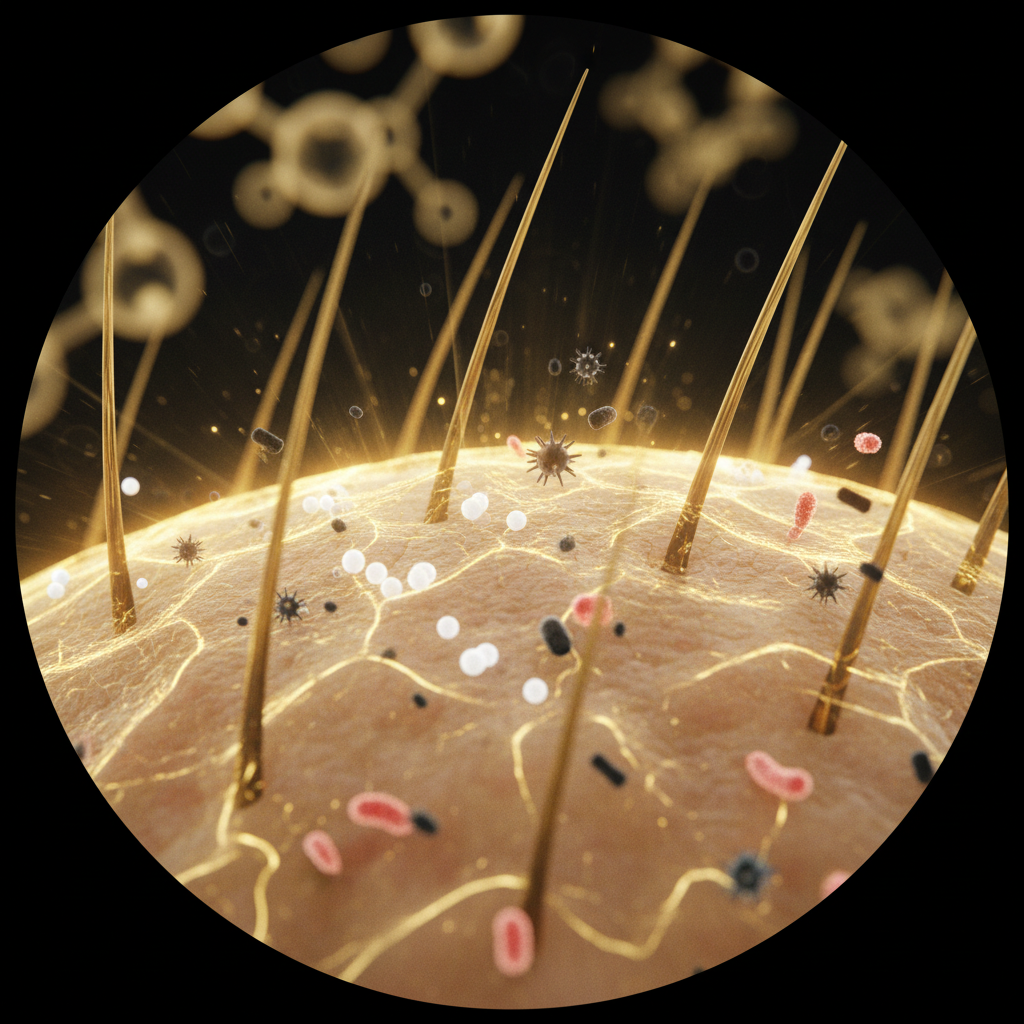
- Sebaceous lipids and free fatty acids: Sebaceous glands discharge squalene, wax esters, triglycerides, and free fatty acids. Specific fatty acids, notably sapienic acid, exert direct antimicrobial activity against gram-positive bacteria.
- The sodium-hydrogen antiporter (NHE1): Skin cells actively acidify the extracellular space by pumping out hydrogen ions via the NHE1 channel. This pump operates at peak efficiency when the surface environment is kept beneath pH 5.5.
- Endogenous antimicrobial peptides: Human beta-defensins and dermcidin (present in eccrine sweat) require an acidic substrate to disrupt pathogen membranes effectively.
- Enzymatic regulation of desquamation: Enzymes responsible for shedding dead skin cells (kallikreins) and enzymes responsible for barrier repair (acid sphingomyelinase) operate in a fine balance. Alkaline conditions over-activate kallikreins, causing rapid, uneven desquamation and visible flaking.
Signs of a disrupted scalp acid mantle
Recognising a damaged acid mantle allows you to intervene before chronic dermatitis develops. Common clinical and cosmetic signs include:
- Persistent tightness and dryness: The scalp feels stretched or uncomfortable within hours after washing, driven by elevated trans-epidermal water loss.
- Paradoxical oiliness: When the acid barrier is stripped, the skin compensates by producing excess sebum, leaving oily roots alongside a dry, irritated scalp.
- Increased hair breakage: The hair feels raspy, tangles easily when wet, and sheds short, snapped fragments rather than full-length strands with a white bulb attached.
- Pruritus (itching) and tenderness: Sub-clinical inflammation in the upper stratum corneum triggers nerve endings, causing a burning or itching sensation.
- Flaking without an active fungal infection: Micro-fissures in the stratum corneum cause fine, powdery dead skin cells to shed unevenly.
Practical steps to protect and rebalance scalp pH
Restoring the scalp's acidic barrier requires consistent, gentle daily habits:
- Choose pH-balanced shampoos: Look for hair cleansers formulated specifically within the pH 4.5 to 5.5 window. Avoid traditional bar soaps, which are inherently alkaline (often pH 9.0 to 10.0) due to the saponification process.
- Rinse thoroughly with lukewarm water: High-temperature water strips barrier lipids and temporarily raises the surface pH of the skin. Use water close to body temperature (37 degrees Celsius or below).
- Limit chemical processing exposure: Bleaching agents, permanent dyes, and chemical straighteners require high alkalinity (pH 9.0 to 11.0) to swell the cuticle and penetrate the cortex. Ensure your stylist applies a post-service acidic neutraliser to bring the hair and scalp back to physiological pH.
- Avoid aggressive clarifying washes: Cleansers formulated with harsh surfactants strip the natural lipids that form the baseline of the acid mantle. Limit clarifying products to once every two to four weeks.
Supporting barrier health with Watermans
If you want to maintain an optimal scalp environment, gentle formulation matters. Watermans designs its products around the physiological needs of the hair and scalp.
Watermans GrowMe Shampoo is formulated to be non-stripping and pH-balanced, preserving the delicate acid mantle while clarifying excess sebum and environmental debris. Its complementary blend of biotin, rosemary, caffeine, and argan oil provides external conditioning and delivers essential moisture to the surface layers of the scalp. Pairing it with Watermans ConditionMe Conditioner helps seal the outer cuticle layer, reducing friction and mechanical hair breakage without leaving heavy, pore-clogging residues.
When the cause may be something else
If your scalp remains inflamed, sore, or flaky despite using pH-balanced products, the root cause may be an underlying medical condition rather than simple barrier disruption:
- Psoriasis: Characterised by well-demarcated, raised red plaques covered with thick, silvery scales. This is an autoimmune condition driven by accelerated skin cell proliferation, not surface pH.
- Seborrhoeic Dermatitis: A severe, inflammatory reaction to Malassezia metabolites requiring targeted antifungal agents (such as ketoconazole or ciclopirox olamine) rather than simple cosmetic rebalancing.
- Folliculitis: Bacterial or fungal infection of the hair follicles that produces small, itchy pustules resembling acne.
When to seek professional advice
Consult a GP, dermatologist, or registered trichologist if you notice:
- Scalp redness accompanied by swelling, oozing, or yellow crusting.
- Sudden or diffuse hair shedding (more than 100 to 150 hairs daily over a prolonged period).
- Patchy hair loss leaving completely smooth, circular bare spots.
- Severe burning sensations that do not resolve with mild, fragrance-free products.
Frequently asked questions about The Science of Scalp pH and the Acid Mantle
Does tap water damage the scalp acid mantle?
Tap water typically sits between pH 6.5 and 8.5 depending on your local municipal supply and mineral content. While water alone can temporarily raise scalp pH during washing, a healthy skin barrier restores its native acidity within 30 to 90 minutes. However, repeatedly washing with hard, alkaline water without using pH-balancing conditioners can leave mineral salts on the fibre, making the cuticle rough and prone to breakage.
What is the core principle behind The Science of Scalp pH and the Acid Mantle?
The Science of Scalp pH and the Acid Mantle demonstrates that the scalp requires a mild acidic charge (pH 4.5 to 5.5) to keep skin-barrier enzymes functioning and control fungal flora. Disrupting this environment swells the hair cuticle and compromises the stratum corneum, leading to surface irritation and brittle strands.
Can apple cider vinegar safely restore scalp pH?
Diluted apple cider vinegar (ACV) can lower surface pH because raw vinegar typically has an acidic pH between 2.0 and 3.0. However, undiluted vinegar is an irritant and can cause chemical contact dermatitis. If you choose to use an ACV rinse, dilute it heavily (such as one part vinegar to eight parts water) to target a final pH between 4.0 and 5.0, and never apply it to cracked skin.
Why do alkaline hair products cause hair breakage?
Alkaline products force the hydrophobic outer cuticle scales to swell and stand open. This increases inter-fibre friction during brushing and everyday movement. It also allows water to evaporate rapidly from the cortex, leaving the structural keratin proteins dry, fragile, and prone to transverse fracture (hair breakage).
Can an unbalanced scalp pH cause permanent hair loss?
No. Scalp pH imbalances cause cuticle damage, hair fibre breakage, and superficial dermatological irritation like dandruff. They do not trigger permanent follicular miniaturisation or scarring. If you are experiencing systemic hair thinning or hair loss from the root, investigate hormonal, nutritional, or autoimmune causes with a clinician.
Maintaining scalp equilibrium
Mastering The Science of Scalp pH and the Acid Mantle provides a clear roadmap for long-term hair fibre resilience and a settled, comfortable scalp. Keeping products within the natural physiological window of pH 4.5 to 5.5 shields the cutaneous barrier from microbial overgrowth and minimises structural breakage across the hair shaft. While cosmetic pH regulation cannot alter genetic hair loss pathways, treating the acid mantle with care is one of the most reliable ways to maintain a calm, flake-free scalp and resilient hair.
Sources and references
- Gavazzoni Dias, M. F., et al. (2014). The Shampoo pH can Affect the Hair: Myth or Reality? International Journal of Trichology, 6(3), 95-99.
- Ali, S. M., & Yosipovitch, G. (2013). Skin pH: From Basic Science to Basic Skin Care. Acta Dermato-Venereologica, 93(3), 261-267.
- Lambers, H., et al. (2006). Natural skin surface pH is on average below 5, which is beneficial for its resident flora. International Journal of Cosmetic Science, 28(5), 359-370.
- Proksch, E. (2018). PH in nature, humans and skin. The Journal of Dermatology, 45(9), 1044-1052.
- British Association of Dermatologists. (2022). Seborrhoeic Dermatitis Patient Information Leaflet.
Find these ingredients in Watermans products
- Oleic Acid: you will find this ingredient in our Camellia & Black Castor Hair & Body Oil.