The Science of Hair pH Balance: The Complete Guide
8 min read ·
Discover The Science of Hair pH Balance, how acidity protects your cuticle and scalp, and why proper balance prevents breakage and boosts shine.
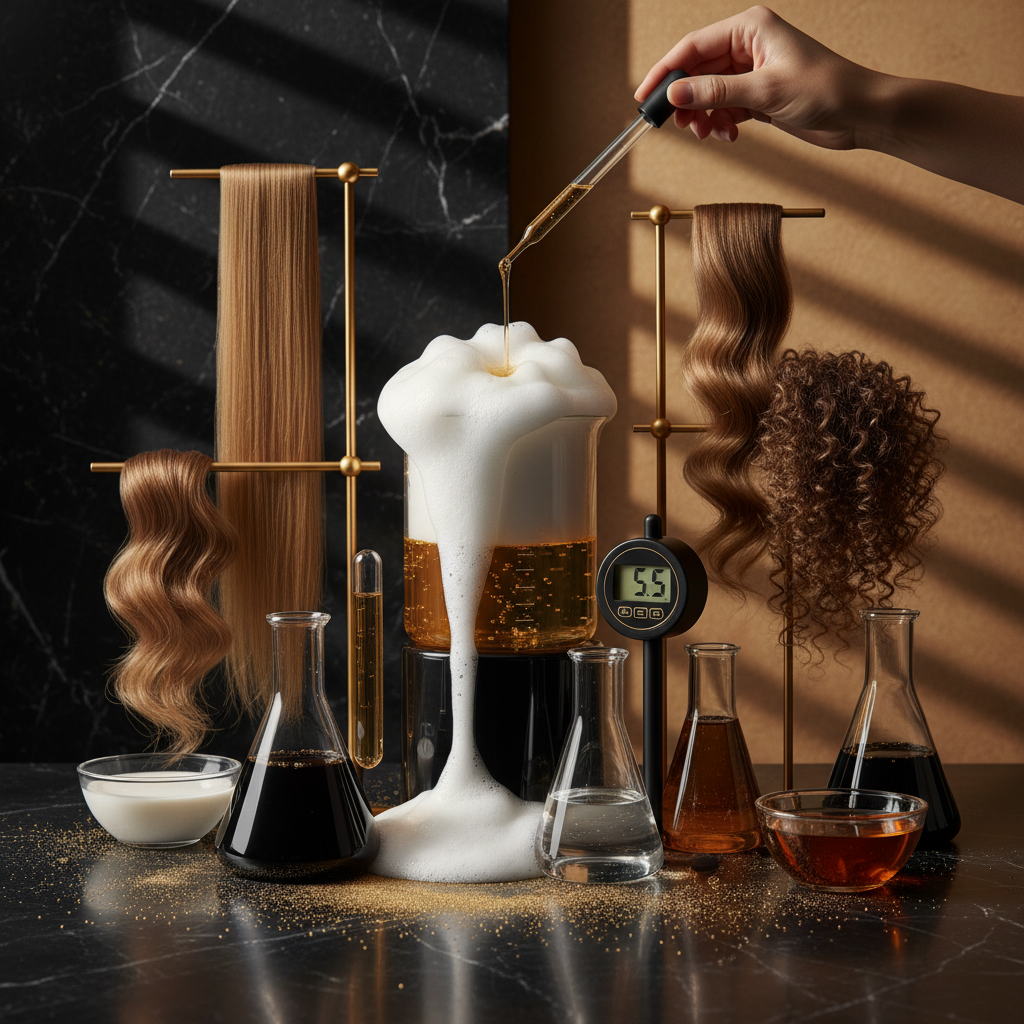
Quick answer: The Science of Hair pH Balance centres on the natural acidity of the scalp (pH 4.5 to 5.5) and the hair shaft (pH 3.67). Acidic products keep the protective cuticle flat, minimising friction, tangles, and fibre breakage. Alkaline solutions swell the hair shaft, lifting cuticle scales and accelerating protein loss. However, maintaining cosmetic pH balance only protects external fibre integrity; it cannot alter genetically driven follicular thinning or cure medical scalp disorders.
Key takeaways
- Healthy hair fibre has an isoelectric point around pH 3.67, while the scalp acid mantle sits between pH 4.5 and 5.5.
- Alkaline exposures, including tap water (pH 6.5 to 8.5) and basic cleansers, cause the hair cuticle to swell and flare.
- Raised cuticles lead to mechanical friction, surface dullness, colour washout, and increased fibre breakage.
- Maintaining an acidic routine seals the cuticle layer, preserves internal moisture, and supports scalp microbiome stability.
- Cosmetic pH adjustment prevents shaft snapping, but it does not treat follicular conditions such as androgenetic alopecia.
The Science of Hair pH Balance: what the evidence shows
The Science of Hair pH Balance explains how electrochemical charges dictate hair behaviour and physical appearance. The term pH stands for "potential of hydrogen", measuring the acidity or alkalinity of water-based solutions on a scale from 0 to 14. Pure water is neutral at pH 7.0. Values below 7.0 are acidic, while values above 7.0 are alkaline.
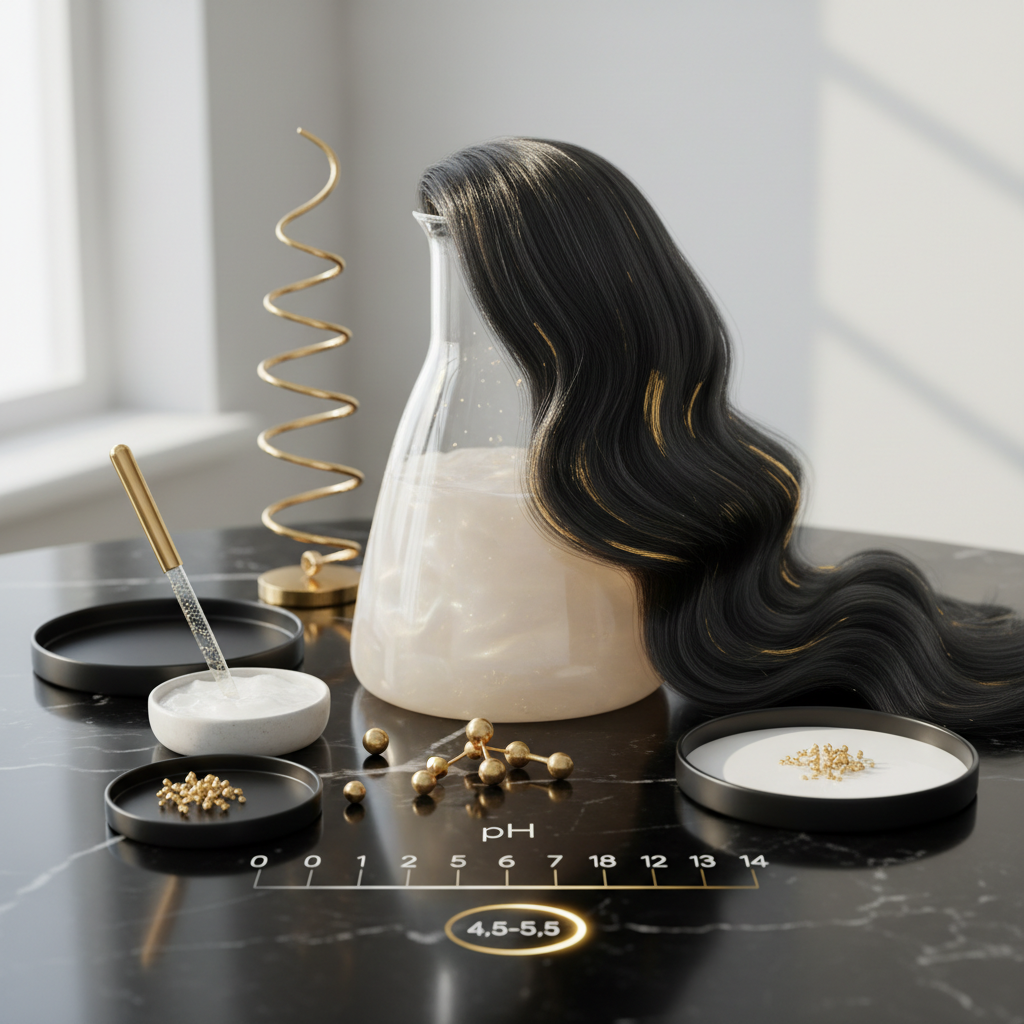
Because hair keratin contains both positive (amino) and negative (carboxyl) charges, the electrical charge of the fibre shifts based on the surrounding pH. At its natural isoelectric point of roughly pH 3.67, the hair shaft carries a neutral net charge. At this acidic level, the outer shingles of the cuticle lie flat, compact, and tight against the cortex.
When you apply solutions above pH 5.5, the cuticle accumulates a negative electrical charge. This causes the individual cuticle scales to repel one another and lift. Peer-reviewed investigations, including a widely cited 2014 study published in the International Journal of Trichology, evaluated 123 commercial shampoos and found that 61 percent had a pH higher than 5.5. The study established that alkaline shampoos significantly increase friction, provoke surface frizz, and lead to mechanical breakage compared to formula options balanced between pH 4.0 and 5.5.
Understanding the biological mechanisms
Every hair strand is protected by an exterior cuticle consisting of overlapping keratin scales, arranged like tiles on a roof. Underneath the cuticle lies the cortex, which provides tensile strength and holds moisture and pigment.
[Acidic Environment: pH 3.67 - 5.5]
 Cuticle Scales: Flat, compact, tightly closed
 Result: High light reflection, low friction, minimal water loss

[Alkaline Environment: pH > 6.0]
 Cuticle Scales: Lifted, swollen, ruffled
 Result: Dull appearance, high friction, protein erosion, tangling
When hair enters an alkaline environment, water easily penetrates the shaft, causing the cortex to swell. This swelling pushes the cuticle tiles upward. Once lifted, the rough edges catch against neighbouring strands, drastically raising combing force.
On the living tissue of the scalp, the acid mantle, a thin film composed of sebum, sweat, and lactic acid, preserves a steady pH of 4.5 to 5.5. This natural barrier inhibits pathogenic microbial overgrowth, such as excess colonies of Malassezia yeast, while supporting beneficial flora. Disruption of this barrier by high-pH cleansers impairs epidermal lipid synthesis, leading to trans-epidermal water loss, irritation, and flaking.
| Solution Type | Typical pH Range | Effect on Hair Shaft | Effect on Scalp Skin |
|---|---|---|---|
| Natural Isoelectric Hair | 3.67 | Cuticle fully compressed | Neutral / non-applicable |
| Healthy Scalp Acid Mantle | 4.5 to 5.5 | Tight cuticle, low friction | Healthy barrier, low irritation |
| Tap Water (Municipal) | 6.5 to 8.5 | Mild swelling, raised friction | Temporary neutralisation of barrier |
| High-pH Shampoos | 6.0 to 7.5 | Cuticle flaring, increased breakage | Stripped lipids, dry scalp, itching |
| Bleach / Relaxers | 9.0 to 12.0 | Severe swelling, protein cleavage | Chemical irritation, compromised barrier |
| Acidic Rinses / Sealers | 3.5 to 4.5 | Flattened cuticle, high gloss | Restores natural acid mantle |
What the evidence does not show
It is critical to separate cosmetic fibre preservation from follicular biology. Marketing often exaggerates the capabilities of pH balancing.

The evidence does not demonstrate that acidic shampoos, balancing tonics, or clarifying rinses can reverse patterned hair loss (androgenetic alopecia) or autoimmune conditions like alopecia areata. Follicles sit beneath the surface of the dermis, where systematic hormonal pathways and genetic sensitivities govern the hair growth cycle. Adjusting surface pH does not alter dihydrotestosterone (DHT) binding at the follicle receptor.
Furthermore, balancing your hair's pH cannot rebuild broken disulphide bonds that have been destroyed by heavy bleaching or heat damage. While an acidic pH contracts the cuticle and gives the illusion of a smoother fibre, the underlying structural voids in the cortex remain.
Signs your hair and scalp pH is off-balance
When hair products or environment skew too alkaline, the physical signs present quickly across both the scalp and lengths:
- Excessive tangling: Lifted cuticles catch on each other, producing stubborn knots after washing.
- Dullness and lack of shine: Rough, raised cuticle surfaces scatter light rather than reflecting it smoothly.
- Frizz and flyaways: Increased negative static electrical charge causes fibres to push away from one another.
- Rapid colour fade: Artificial dye molecules wash out rapidly through open cuticle layers.
- Fibre snapping: Elevated combing friction causes strands to break along the mid-lengths.
- Scalp tightness or flaking: High-pH soaps disrupt the acid mantle, allowing moisture to escape and encouraging dryness.
How to restore and support optimal pH balance
You can protect your hair fibre integrity through targeted, sensible adjustments to your wash routine:
- Select pH-balanced cleansers: Look for shampoos clearly stating a pH between 4.5 and 5.5. Avoid harsh bar soaps, which are naturally alkaline (often pH 9.0 to 10.0) due to saponification.
- Always follow with an acidic conditioner: Conditioners generally sit between pH 3.5 and 4.5. Their positive cationic charges and acidic base neutralise negative charges from washing, closing the cuticle firmly.
- Manage hard tap water: In areas with alkaline hard water, minerals like calcium and magnesium bind to the hair, compounding cuticle roughness. Chelating shampoos or acidic post-wash rinses can minimise mineral deposition.
- Be cautious with kitchen remedies: Pure apple cider vinegar has a harsh pH of around 2.0 to 3.0. Applying undiluted vinegar can irritate the scalp and cause brittle fibre contraction. Always dilute vinegar properly (one part vinegar to eight parts water) if using it as a rinse.
When the issue is something else
If your hair continues to thin, shed excessively, or show patches of loss despite adopting pH-balanced routines, the root cause sits beyond cosmetic acidity:
- Telogen effluvium: Sudden shedding across the entire scalp, often triggered by severe physiological stress, illness, iron deficiency, or rapid weight loss.
- Androgenetic alopecia: Progressive thinning along the crown and parting line, driven by genetics and androgens.
- Scalp dermatitis or psoriasis: Persistent thick scaling, intense erythema, or plaque buildup requiring targeted anti-fungal or anti-inflammatory treatment.
In these circumstances, cuticle management cannot resolve the underlying pathology.
When to seek professional advice
Consult a GP, dermatologist, or registered trichologist if you experience sudden or patchy hair shedding, persistent scalp itching with redness, burning sensations, or if hair density visibly declines.
A qualified professional can perform dermoscopic examinations, review blood panels (such as ferritin, thyroid profiles, and vitamin levels), and prescribe targeted medicinal therapies that no topical pH-balancing cosmetic can replace.
Supporting hair condition with Watermans
When formulating effective daily hair care, maintaining an optimal acidic environment is essential for fibre resilience. Watermans products are formulated with the delicate biological needs of the hair and scalp in mind.
Watermans GrowMe Shampoo is formulated to cleanse the scalp without stripping the natural moisture barrier, operating within an optimal pH range that supports the acid mantle. Paired with Watermans ConditionMe Conditioner, which delivers targeted hydration and an acidic surface closure, the routine keeps the cuticle smooth and flat. This significantly reduces combing friction and protects against everyday fibre breakage, promoting stronger-feeling, fuller-looking hair without disrupting your scalp's natural balance.
Frequently asked questions about The Science of Hair pH Balance
What is the natural pH level of human hair and scalp?
Healthy hair fibre has an isoelectric point around pH 3.67, while the skin surface of the scalp maintains an acidic mantle between pH 4.5 and 5.5. This natural acidity keeps the protective cuticle scales flat and defends the scalp against harmful bacterial or fungal overgrowth.
Can unbalanced pH cause hair loss?
No. An unbalanced, alkaline pH causes hair breakage along the shaft due to cuticle friction, but it does not cause follicular hair loss or alopecia. Follicular shedding originates beneath the scalp line, whereas pH changes primarily affect the dead keratin structure of the exposed hair shaft.
How does The Science of Hair pH Balance explain salon chemical damage?
The Science of Hair pH Balance explains that chemical treatments, such as bleaches, permanent tints, and chemical straighteners, use high-alkaline formulations (pH 9.0 to 12.0) to deliberately swell and burst open the cuticle. This allows active agents to penetrate the cortex, but it strips natural lipids and weakens fibre strength.
Does cold water close the hair cuticle like an acidic product does?
No, that is a common myth. Temperature does not alter the electrochemical charge of hair keratin. Cuticles close in response to acidic pH solutions (pH 3.5 to 5.5), which neutralise surface charges. Cold water alone cannot flatten a raised, alkaline-damaged cuticle.
Can hard water disrupt the pH balance of hair?
Yes. Hard water typically has an alkaline pH between 7.5 and 8.5 and contains high concentrations of calcium and magnesium ions. Washing with alkaline hard water lifts the cuticle and leaves mineral deposits on the shaft, making the hair feel dry, stiff, and prone to mechanical breakage.
Conclusion
Understanding The Science of Hair pH Balance empowers you to make informed decisions for your hair health. By recognising that the hair fibre thrives in an acidic state between pH 3.67 and 5.5, you can avoid alkaline products that provoke cuticle swelling, friction, and breakage. While balancing external pH cannot reverse internal follicular hair loss, selecting the correct acidic formulations preserves the structural integrity of the fibre, protects the scalp barrier, and ensures strands remain smooth, resilient, and glossy.
Sources and references
- Gavazzoni Dias, M. F., et al. (2014). The Shampoo pH Can Affect the Hair: Myth or Reality? International Journal of Trichology, 6(3), 95-99.
- Ali, S. M., & Yosipovitch, G. (2013). Skin pH: From Basic Science to Basic Skin Care. Acta Dermato-Venereologica, 93(3), 261-267.
- Robbins, C. R. (2012). Chemical and Physical Behavior of Human Hair. 5th ed. Springer-Verlag.
- British Association of Dermatologists. (2022). Hair Breakage and Cosmetic Damage Guidelines.
- World Health Organization. (2017). Guidelines for Drinking-water Quality: Fourth Edition Incorporating the First Addendum. World Health Organization.