Scalp Psoriasis Explained: Causes, Symptoms, and Proven Treatments
9 min read ·
Scalp Psoriasis Explained: discover the causes, symptoms, and evidence-based treatments for this chronic condition, plus how to distinguish it from dandruff.
Quick answer: Scalp psoriasis is a chronic, immune-mediated inflammatory skin condition characterised by rapid epidermal cell turnover, producing well-demarcated, erythematous plaques covered with thick, silvery-white scales. Having Scalp Psoriasis Explained clearly means understanding that it is systemic and non-contagious, not poor hygiene or simple dandruff. While topical treatments, keratolytics, and medical therapies can effectively clear plaques and manage inflammation, there is currently no permanent cure, and mechanical trauma from aggressive scratching or picking can worsen the condition through the Koebner phenomenon.
Key takeaways
- Scalp psoriasis affects up to 80 percent of people diagnosed with plaque psoriasis, causing excessive epidermal proliferation.
- Normal skin cell turnover takes roughly 28 to 30 days, but psoriatic skin accelerates this cycle to just 3 to 5 days.
- Classic signs include thick, silvery scales, sharp plaque borders, severe itching, and potential cracking or bleeding.
- Hair shedding can occur alongside active flares, but it is typically temporary telogen effluvium driven by inflammation rather than permanent follicular destruction.
- Differentiating psoriasis from seborrhoeic dermatitis is vital, as psoriasis presents with dry, silvery plaques, whereas dermatitis features greasy, yellowish flakes.
- Gentle handling, medical keratolytics, and targeted scalp care prevent the Koebner phenomenon, where physical irritation triggers new lesions.
Scalp Psoriasis Explained: what the evidence shows
When having Scalp Psoriasis Explained by a dermatologist, the primary focus is on an underlying dysregulation of the immune system. T-lymphocytes, particularly Th17 and Th1 cells, release pro-inflammatory cytokines such as interleukin-17 (IL-17), interleukin-23 (IL-23), and tumour necrosis factor-alpha (TNF-alpha). These chemical messengers trigger epidermal keratinocytes to multiply at an unnaturally rapid pace.
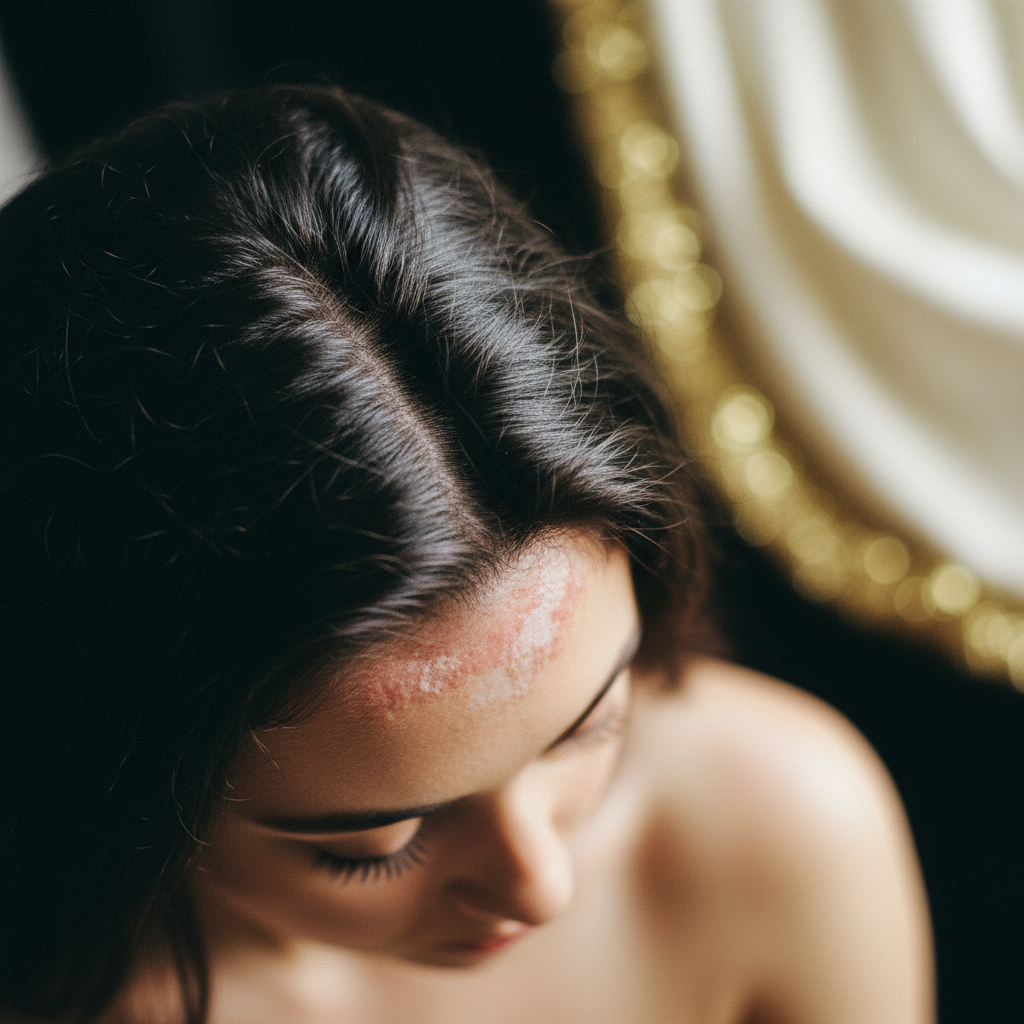
Instead of the standard 28-day shedding cycle, psoriatic cells mature and rise to the skin surface in 3 to 5 days. Because these immature cells cannot shed naturally, they build up into dense, cohesive plaques layered with dead stratum corneum cells. On the scalp, dense hair growth traps these scales, compounding accumulation, moisture loss, and discomfort.
Evidence published in clinical dermatology journals highlights that scalp involvement occurs in roughly 50 to 80 percent of all psoriasis patients. The severity ranges from mild, subtle scaling at the nape or hairline to thick, adherent "cast-like" helmets (pityriasis amiantacea) that cover the entire cranium. While genetic predisposition plays a significant role (notably the HLA-Cw6 allele), environmental factors such as emotional stress, skin trauma, dry climates, and systemic infections can trigger sudden flares.
What the evidence does not show
There is no clinical evidence to support the idea that scalp psoriasis is infectious or contagious. You cannot catch it from another person, nor can you spread it to other parts of your body through contact.
The research also refutes the myth that scalp psoriasis stems from inadequate washing or poor personal hygiene. Over-washing or scrubbing the scalp with harsh detergents actually damages the epidermal barrier, increasing transepidermal water loss and worsening inflammation. Furthermore, despite widespread internet claims, clinical trials have not demonstrated that common food eliminations or non-medical dietary supplements alone can cure the condition. Cosmetic shampoos cannot alter the systemic immune pathways driving the disease.
Biological mechanism: why the scalp is uniquely affected
The scalp features an exceptionally high concentration of terminal hair follicles, rich vascularisation, and abundant sebaceous glands. When T-cell signalling triggers local inflammation, cutaneous blood vessels dilate, producing the intense erythema (redness) characteristic of active plaques.
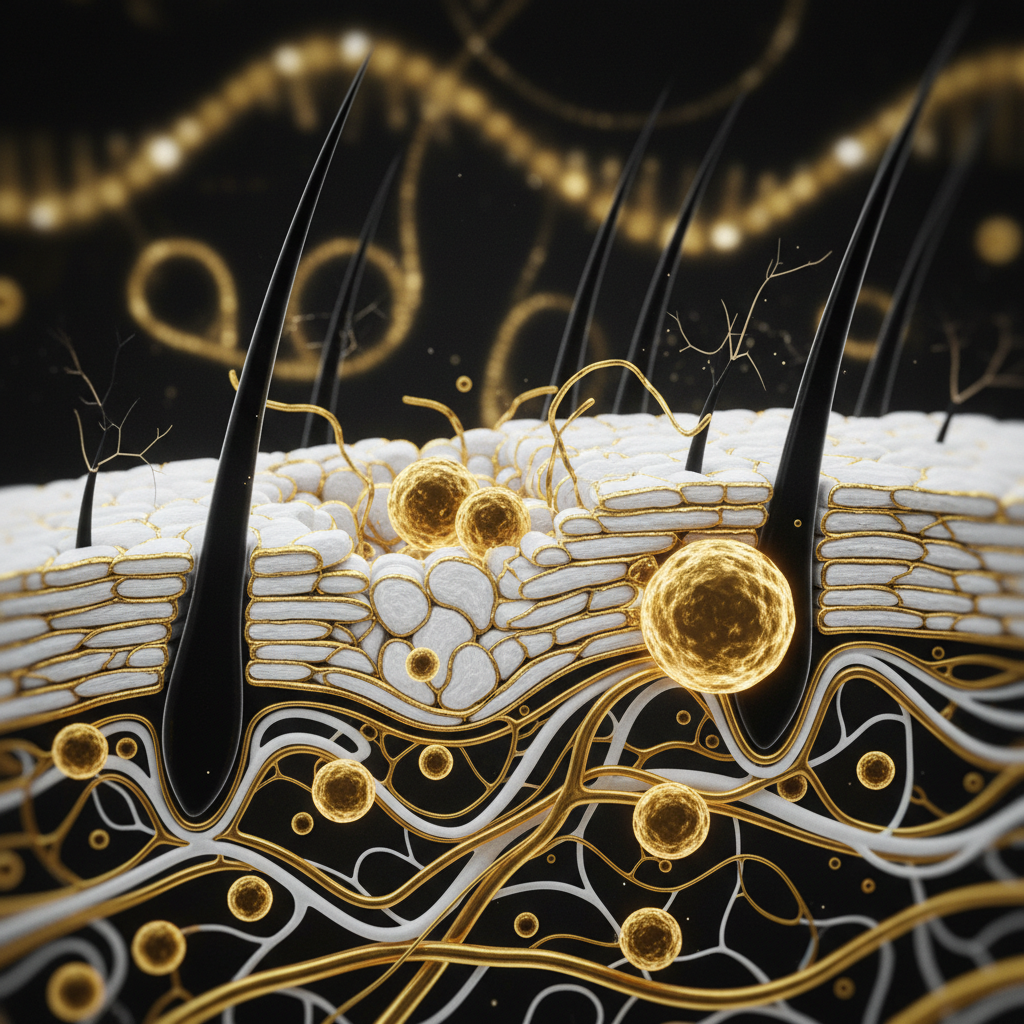
Because hair shafts act as physical barriers, normal friction cannot slough off dead cells. The rapid production of keratinocytes leads to parakeratosis, an abnormal maturation where cells retain their nuclei in the stratum corneum. This structural defect weakens the skin's moisture barrier, leading to deep cracking, pruritus (itching), and burning sensations.
Immune Trigger (IL-17 / IL-23 / TNF-alpha)
 │
 ▼
Rapid Keratinocyte Turnover (3 to 5 Days)
 │
 ▼
Defective Maturation & Nuclei Retention (Parakeratosis)
 │
 ▼
Impaired Barrier Function + Trapped Scales = Thick Silvery Plaques
Signs and clinical presentation
Identifying scalp psoriasis requires looking for key morphological markers that distinguish it from standard scalp irritation:
- Plaque appearance: Raised, red or salmon-pink patches on lighter skin tones; purplish, hyperpigmented, or grey patches on darker skin tones.
- Scale characteristics: Dry, compact, silvery-white or mica-like scales adhering tightly to the scalp surface.
- Distribution borders: Well-defined, sharp margins that frequently cross the hairline onto the forehead, behind the ears, and down the back of the neck.
- Sensory symptoms: Persistent, intense itching, soreness, tightness, and burning.
- Secondary signs: Fine bleeding points when scales are forcibly removed (known as Auspitz's sign), and localized hair thinning secondary to scalp stress.
Scalp psoriasis versus seborrhoeic dermatitis
Stylists and individuals often confuse scalp psoriasis with severe dandruff or seborrhoeic dermatitis. While both conditions cause scaling, their clinical features, histology, and management pathways differ markedly.
| Clinical Feature | Scalp Psoriasis | Seborrhoeic Dermatitis |
|---|---|---|
| Scale Texture | Dry, thick, compact, silvery-white | Oily, greasy, soft, yellowish-white |
| Plaque Margins | Well-demarcated, sharp borders | Indistinct, poorly defined borders |
| Common Locations | Often extends past hairline, behind ears, nape | Confined mainly to hair-bearing areas, eyebrows |
| Cell Turnover Rate | Accelerated to 3 to 5 days | Moderately elevated (roughly 7 to 14 days) |
| Underlying Driver | Autoimmune / T-cell mediated | Malassezia yeast overgrowth & sebum reaction |
| Auspitz's Sign | Frequently positive (pinpoint bleeding) | Absent |
| Primary Therapy | Corticosteroids, vitamin D analogues, keratolytics | Antifungals (ketoconazole, zinc pyrithione) |
Hair loss and the Koebner phenomenon
A common fear among individuals experiencing a flare is permanent alopecia. Scalp psoriasis itself does not destroy the hair follicle. The root sits deep in the dermis, far beneath the superficial plaque.
However, hair shedding can occur. When surrounding tissue suffers severe inflammation, follicles can prematurely enter the telogen (resting) phase, leading to telogen effluvium. More commonly, hair breakage and shedding occur when individuals scratch intensely or attempt to peel adherent scales away, pulling hairs out mechanically.
This aggressive removal also risks the Koebner phenomenon. First described by Heinrich Koebner, this dermatological reaction occurs when physical trauma to the skin, such as scratching, combing harshly, or picking plaques, triggers fresh psoriatic lesions in previously healthy tissue. Gentle care is therefore a medical necessity, not merely a cosmetic preference.
Evidence-based management strategies
Managing scalp psoriasis involves a dual approach: softening and clearing the thick keratin crust (descaling) so that active treatments can penetrate the skin, followed by anti-inflammatory therapy.
Topical medical treatments
- Keratolytics: Formulations containing salicylic acid (typically 2 to 10 percent) or urea work by breaking the bonds between corneocytes, softening scales so they wash away without force.
- Topical corticosteroids: Prescribed lotions, gels, or foams targeting inflammatory cascades. High-potency preparations are common for the thick scalp skin during acute flares, stepped down to lower potencies for maintenance.
- Vitamin D3 analogues: Calcipotriol slows down excessive keratinocyte proliferation and works well in combination with topical steroids.
- Coal tar: A traditional treatment that normalises keratinisation and reduces itching, though cosmetic acceptability can be lower due to odour and staining.
Gentle cosmetic care
Between medicated applications, the goal is maintaining barrier hydration and avoiding mechanical stress:
- Use lukewarm water instead of hot water, which strips protective lipids and worsens inflammation.
- Never use fine-toothed combs, fingernails, or abrasive brushes to lift scales off the scalp.
- Apply natural, non-comedogenic oils or hydrating scalp serums to ease tightness and soothe dryness.
- Pat hair gently with a soft microfibre towel instead of rubbing vigorously.
Systemic and biologic treatments
For moderate-to-severe scalp psoriasis that resists topical regimens, dermatologists may prescribe systemic therapies such as methotrexate, apremilast, or biologic injections targeting IL-17, IL-23, or TNF pathways.
Supporting the scalp environment with Watermans
While medicated topicals address the immunological roots of psoriasis, daily scalp comfort depends on non-stripping, nourishing cosmetic maintenance. Irritating cosmetic surfactants can compromise an already fragile scalp barrier.
Watermans Grow Me Shampoo offers a mild, revitalising cleanse designed to support the scalp ecosystem without harsh abrasion. Formulated with balancing ingredients such as rosemary extract, biotin, niacinamide, and allantoin, it provides a soothing touch that leaves the scalp feeling refreshed and hydrated. Paired with Watermans Condition Me Conditioner, it detangles fragile hair shafts gently, minimising mechanical friction and reducing breakage during routine washing. These cosmetic formulations help keep your hair soft and manageable between targeted dermatological treatments.
When to see a doctor
Home care alone is rarely sufficient for active scalp psoriasis. Seek a formal evaluation from a GP or dermatologist if you notice:
- Scalp plaques extending significantly down your face, neck, or ears.
- Intense itching or pain that disrupts sleep or daily activities.
- Signs of secondary bacterial infection, such as yellow crusting, pus, or extreme tenderness.
- Rapid hair shedding or noticeable thinning patches.
- Joint pain, stiffness, or swelling in your fingers, knees, or lower back, which can indicate psoriatic arthritis (present in up to 30 percent of people with psoriasis).
Frequently asked questions about Scalp Psoriasis Explained
Does scalp psoriasis cause permanent hair loss?
No, scalp psoriasis does not directly destroy hair follicles. The root remains intact deep within the dermis. Any hair loss is usually temporary telogen effluvium driven by intense inflammation, or mechanical breakage caused by scratching and pulling off scales. Once inflammation subsides and gentle handling is adopted, hair typically regrows over several months.
How does having Scalp Psoriasis Explained help distinguish it from dandruff?
Having Scalp Psoriasis Explained reveals that dandruff is a mild, non-inflammatory shedding linked to normal scalp yeast, whereas psoriasis is an autoimmune condition. Psoriasis features thick, dry, silvery plaques with sharp edges that often creep past the hairline, while dandruff presents as loose, translucent flakes without deep erythema or skin infiltration.
Can I dye or bleach my hair if I have scalp psoriasis?
You should avoid chemical processing during an active flare-up. Bleach, ammonia, and paraphenylenediamine (PPD) can penetrate cracked, compromised skin, triggering severe contact dermatitis or initiating new psoriatic plaques via the Koebner phenomenon. If your scalp is clear and healthy, consult a stylist experienced in sensitive scalps and perform a patch test 48 hours prior.
Should I pick or peel off the thick scales?
You must never pick or scratch scales away. Forcibly peeling plaques rips immature skin cells and surface capillaries, leading to pinpoint bleeding and worsening inflammation. Instead, use a medical keratolytic, such as salicylic acid or urea, to soften the scales chemically so they rinse away during gentle washing.
Does sunlight improve scalp psoriasis?
Natural ultraviolet (UV) light can reduce skin inflammation by slowing cell turnover, and many patients notice improvements during sunny months. However, hair blocks sunlight from reaching the scalp, and deliberate sunburn can trigger flares through the Koebner phenomenon. Dermatologists often use targeted narrow-band UVB phototherapy with special comb devices for safe, controlled scalp treatment.
Understanding your scalp journey
Navigating chronic skin conditions requires patience, realistic expectations, and scientific clarity. With Scalp Psoriasis Explained in an evidence-based context, it becomes clear that persistent flakes and itching are biological responses, not personal failures in hygiene. By combining dermatologist-prescribed medical treatments to quiet the underlying immune response with ultra-gentle, barrier-supportive cleansing routines, you can soothe irritation, protect your hair fibres, and regain long-term scalp comfort.
Sources and references
- British Association of Dermatologists. Clinical Guidelines for the Management of Psoriasis. 2020.
- National Institute for Health and Care Excellence (NICE). Psoriasis: Assessment and Management (Clinical Guideline CG153). 2017.
- World Health Organization. Global Report on Psoriasis. 2016.
- American Academy of Dermatology. Diagnosis and Management of Scalp Psoriasis. 2021.
- Journal of the European Academy of Dermatology and Venereology. European consensus on the treatment of scalp psoriasis. 2011; DOI: 10.1111/j.1468-3083.2010.03945.x.
- Griffiths, C. E. M., & Barker, J. N. Pathogenesis and clinical features of psoriasis. The Lancet, 2007; DOI: 10.1016/S0140-6736(07)61128-3.
Find these ingredients in Watermans products
- Niacinamide: you will find this ingredient in our Hair Mask.