Telogen Effluvium Causes: The Biology, Triggers, and Recovery
8 min read ·
Learn the real Telogen Effluvium Causes, from acute illness to nutritional deficiencies, how the shedding timeline works, and steps to support recovery.

Quick answer: Telogen Effluvium Causes refer to physiological or emotional stressors that abruptly shift active growing follicles into a premature resting phase. Typical triggers include acute illness, high fevers, childbirth, severe psychological stress, nutritional deficits, and rapid weight loss. Because hair follicles remain in this resting state for roughly two to three months before releasing the hair shaft, shedding occurs weeks after the inciting event, making identification difficult without a clear timeline of previous health disruptions.
Key takeaways
- Telogen effluvium is a reactive shedding disorder, not permanent follicle destruction or breakage along the hair shaft.
- Shedding typically appears two to three months after the triggering physiological or psychological shock.
- Major triggers include high fevers, systemic infection, childbirth, surgical trauma, severe psychological distress, and rapid weight loss.
- Nutritional deficiencies, especially insufficient ferritin or severe protein restriction, can initiate or prolong shedding episodes.
- Acute telogen effluvium usually resolves spontaneously within three to six months once the primary trigger is identified and corrected.
Telogen Effluvium Causes: what the evidence shows
Clinical dermatology classifies telogen effluvium as non-scarring, diffuse hair shedding resulting from an abrupt alteration in the normal follicular lifecycle. On a healthy scalp, approximately 85 to 90 percent of follicles exist in anagen (the active growth phase), while 10 to 15 percent occupy telogen (the resting phase). When a systemic shock strikes, up to 30 to 50 percent of growing hairs prematurely terminate anagen and move into telogen.
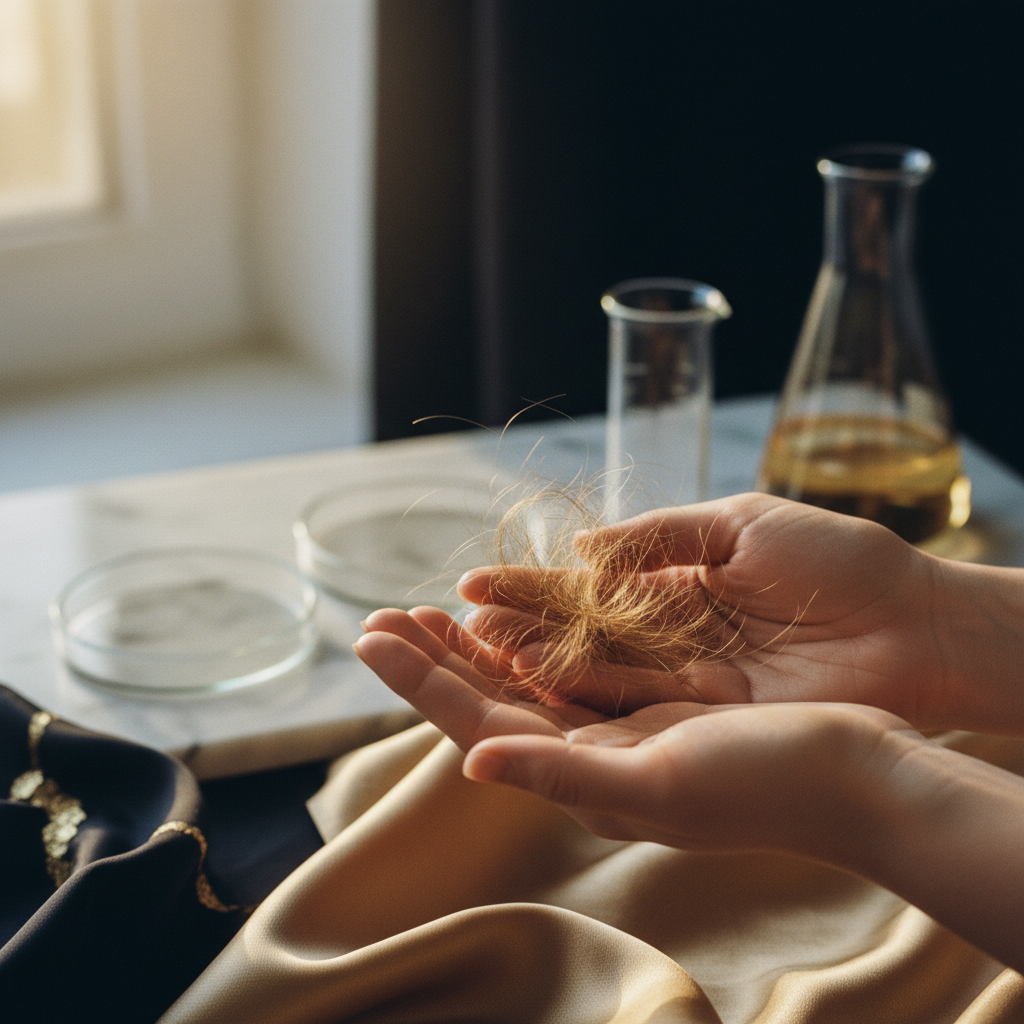
The primary Telogen Effluvium Causes documented in medical literature fall into distinct systemic categories:
- Systemic illness and febrile episodes: Severe infections, including influenza, pneumonia, and severe viral illnesses, frequently provoke shedding. A sustained body temperature above 39 degrees Celsius disrupts cellular division inside the hair matrix.
- Postpartum hormonal shifts: During pregnancy, elevated oestrogen levels extend the anagen phase, keeping hair from shedding. Following delivery, hormone levels drop steeply, sending large clusters of follicles into telogen simultaneously (telogen gravidarun).
- Severe psychological distress: Intense, sudden emotional trauma stimulates neuroendocrine pathways. Corticotropin-releasing hormone and substance P trigger local inflammation around the hair bulb, pushing follicles into early catagen and telogen.
- Surgical procedures and major trauma: General anaesthesia, significant blood loss, and the inflammatory load of tissue repair act as acute metabolic insults.
- Nutritional restriction and metabolic deficits: Crash diets, bariatric surgery, inadequate caloric intake, or severe protein starvation deprive rapidly dividing matrix cells of basic building blocks.
- Endocrine disruption: Hypothyroidism and hyperthyroidism disrupt normal follicular cycles, as thyroid hormones directly influence follicular stem cell activation.
The biological mechanism of premature shedding
The hair follicle possesses one of the highest cellular turnover rates in the human body. Because the dermal papilla and matrix cells divide continuously to produce the hair shaft, they depend on an uninterrupted supply of energy, amino acids, and micronutrients.
When the body encounters acute systemic stress, it initiates a survival-driven triage mechanism. Non-essential physiological processes, including hair production, are paused to preserve metabolic resources for vital organs like the heart, brain, and immune system.
Under this stress response, follicles exit anagen prematurely and enter catagen (a brief regression phase lasting two to three weeks), followed by telogen. A telogen hair rests quietly within the follicle for approximately 70 to 100 days. As the next growth cycle begins, a new hair shaft emerges from below, dislodging the club hair. This biological delay explains why a bout of severe illness in January typically results in heavy daily shedding in late March or April.
Signs to look for: identifying reactive shedding
Recognising telogen effluvium involves assessing specific clinical signs across the scalp and daily routines:

- Increased daily shed count: While losing 50 to 100 hairs daily is considered normal baseline physiology, individuals experiencing telogen effluvium often lose 200 to 400 or more hairs per day.
- Diffuse distribution: Thinning occurs evenly across the entire scalp, rather than concentrating in a widening part line, receding hairline, or isolated circular patches.
- Visible club hairs: Shed hairs consistently feature a small, white, bulb-like keratinised nodule at the root end. There is no surrounding gelatinous sheath.
- Positive hair pull test: A dermatologist gently tugs a cluster of 50 to 60 hairs from the scalp base. If more than 10 percent (roughly six hairs) release painlessly, it indicates active shedding.
- Scalp dysaesthesia: Some individuals report mild scalp tenderness, burning, or tingling sensations (trichodynia) alongside shedding, linked to neuropeptide release.
Distinguishing shedding from other hair conditions
Understanding Telogen Effluvium Causes requires separating true shedding from follicular miniaturisation and mechanical breakage.
| Feature | Telogen Effluvium | Androgenetic Alopecia | Hair Fibre Breakage |
|---|---|---|---|
| Primary Mechanism | Follicles prematurely enter resting phase | Progressive dihydrotestosterone (DHT) miniaturisation | Structural failure of the hair shaft cuticle/cortex |
| Onset | Abrupt, 2 to 3 months post-trigger | Gradual, progressive over years | Variable, follows chemical or physical trauma |
| Pattern | Diffuse across the entire scalp | Patterned (crown, temples, widening part) | Localised to treated or stressed sections |
| Root Appearance | White, rounded club root present | Miniaturised, thin hair with club root | No root present; fractured, split ends |
| Recovery Potential | Full recovery expected once trigger resolves | Requires ongoing intervention to maintain | Regrows normally from scalp; requires gentler care |
What the evidence does not show
There is no scientific backing for the idea that topical styling products, everyday shampoos, frequent washing, or hats trigger telogen effluvium. Shampoos cleanse the scalp surface and do not possess the systemic reach required to disrupt follicular biology. When people notice large clumps of hair collecting in the shower drain, they often blame the act of washing. In reality, mechanical friction during washing simply dislodges hairs that separated from their follicular anchors weeks earlier.
Similarly, everyday minor worries, short work deadlines, or brief emotional arguments do not produce the prolonged neuroendocrine disturbance needed to precipitate widespread shedding. True psychogenic telogen effluvium stems from profound, disruptive life events or severe clinical anxiety disorders.
Supporting the scalp during recovery
Recovery from acute telogen effluvium relies primarily on patience and systemic stabilisation. Because the hair cycle operates on a fixed timeline, shedding cannot be stopped overnight. However, you can support follicular health while waiting for the cycle to normalise:
- Optimise nutrition: Ensure daily intake includes adequate dietary protein (roughly 0.8 to 1.0 grams per kilogram of body weight) and complex carbohydrates.
- Verify iron parameters: Request a full blood panel evaluating serum ferritin rather than serum iron alone. Hair follicles demand adequate cellular iron storage; many dermatologists target a ferritin level above 50 micrograms per litre to support active anagen regrowth.
- Minimise mechanical tension: Avoid tight ponytails, tight braids, and vigorous brushing that apply physical traction to already vulnerable follicles.
- Adopt gentle cosmetic care: Use mild, pH-balanced cleansers (pH 4.5 to 5.5) that support scalp barrier function without stripping natural lipids.
Topical and cosmetic support: Watermans
During active shedding, cosmetic care shifts towards maintaining optimal scalp conditions and strengthening the visible length of regrowing fibres. Watermans Grow Me shampoo provides a revitalising wash designed to cleanse the follicular environment gently while delivering biotin, caffeine, rosemary extract, and argan oil. While cosmetic products do not cure internal medical conditions or reverse systemic telogen effluvium triggers, maintaining an unburdened, balanced scalp environment supports healthy-looking hair as your natural follicular rhythms recover.
When to seek medical advice
You should arrange an evaluation with a GP or consultant dermatologist if shedding persists beyond six months, which may indicate chronic telogen effluvium or an unresolved underlying medical issue.
Seek medical guidance immediately if hair loss presents with:
- Redness, scaling, burning, or pustules on the scalp surface.
- Smooth, round, completely bald patches (characteristic of alopecia areata).
- Noticeable widening of the central parting without excess daily shedding.
- Accompanying systemic symptoms such as extreme fatigue, unexplained weight fluctuations, joint pain, or irregular menstrual cycles.
Frequently asked questions about Telogen Effluvium Causes
Can a single stressful day trigger telogen effluvium?
No. Telogen Effluvium Causes require sustained or severe physiological shock to halt follicular division. Everyday short-term frustrations do not elevate systemic stress hormones or inflammatory neuropeptides long enough to force large percentages of follicles out of their active growth phase.
How long after a traumatic event does shedding begin?
Shedding typically starts two to three months (roughly 8 to 12 weeks) after the triggering event. This corresponds to the standard length of the catagen and telogen phases, during which the resting hair remains seated in the follicle before finally being pushed out.
Does low ferritin cause telogen effluvium?
Yes, depleted iron stores are among the most recognised metabolic Telogen Effluvium Causes. Ferritin serves as the body's primary iron storage protein. Matrix cells require iron for DNA synthesis and enzymatic action; when ferritin drops below optimal levels, follicles may struggle to maintain active anagen growth.
Can stopping hormonal contraceptives cause hair shedding?
Yes. Combined oral contraceptives maintain steady circulating hormone levels. When you discontinue them, the sudden drop in synthetic oestrogen can induce an acute shed identical to postpartum shedding, usually surfacing two to three months after cessation.
Will hair lost to telogen effluvium grow back?
Yes, in the vast majority of acute cases. Telogen effluvium does not damage or scar the follicular stem cells. As long as the inciting systemic issue has passed and nutritional reserves are replenished, the follicle resets itself and begins producing a new hair fibre.
Navigating recovery from Telogen Effluvium Causes
Pinpointing Telogen Effluvium Causes requires looking backward rather than evaluating your current week. Because the hair cycle incorporates a strict three-month resting interval, widespread shedding is an echo of a past physiological or emotional shock. Once you identify and resolve the underlying catalyst, whether it was an acute infection, a crash diet, or a major life event, your follicular clock will naturally reset. With consistent nutrition, gentle cosmetic handling, and patience, normal hair density typically returns over the subsequent six to twelve months.
Sources and references
- British Association of Dermatologists. Telogen Effluvium: Clinical Guidelines and Patient Information. 2021.
- National Institute for Health and Care Excellence (NICE). Alopecia - diffuse hair loss (Clinical Knowledge Summaries). 2022.
- Headington, J. T. "Telogen Effluvium: New Concepts and Review." Archives of Dermatology, 1993.
- Asghar, F., Shamim, N., Farooque, U., Sheikh, H., & Aqeel, R. "Telogen Effluvium: A Review of the Etiology and Pathogenesis." Cureus, 2020. DOI: 10.7759/cureus.8672.
- Malkud, S. "Telogen Effluvium: A Review." Journal of Clinical and Diagnostic Research, 2015. DOI: 10.7860/JCDR/2015/15219.6562.