Postpartum Hair Loss Guide: Causes, Timeline, and Recovery
8 min read ·
Explore our Postpartum Hair Loss Guide to understand the causes, timeline, and treatments for shedding after birth, and learn how to support healthy hair regrowth.

Quick answer: This comprehensive Postpartum Hair Loss Guide explains the temporary, physiological shedding known as postpartum telogen effluvium that affects many new mothers between two and four months after giving birth. Plunging oestrogen levels push resting follicles into an abrupt shedding phase simultaneously. While distressing, it is neither permanent nor true follicle-destroying alopecia, and hair cycles typically self-correct within six to twelve months, provided underlying nutritional deficiencies or thyroid dysfunctions do not complicate recovery.
Key takeaways
- Postpartum shedding is acute telogen effluvium, meaning excessive hair leaves the follicle; it is not follicle miniaturisation or permanent baldness.
- High oestrogen levels during pregnancy prolong the active anagen (growth) phase, while the rapid hormonal drop after delivery shocks those retained fibres into shedding at once.
- Onset typically occurs between 8 and 16 weeks postpartum, peaking around month four and usually resolving by the child's first birthday.
- Cosmetic care, gentle handling, and balanced nutrition support cosmetic fibre retention, but no topical product stops physiological hormonal shedding.
- Persistent shedding beyond 12 months warrants blood testing to exclude postpartum thyroiditis, low ferritin, or underlying vitamin deficiencies.
Postpartum Hair Loss Guide: what the evidence shows
This Postpartum Hair Loss Guide brings clarity to one of the most alarming physical changes new mothers encounter. Scientific literature documents that postpartum shedding, clinically termed telogen gravidarum or acute postpartum telogen effluvium, affects an estimated 40% to 50% of women.
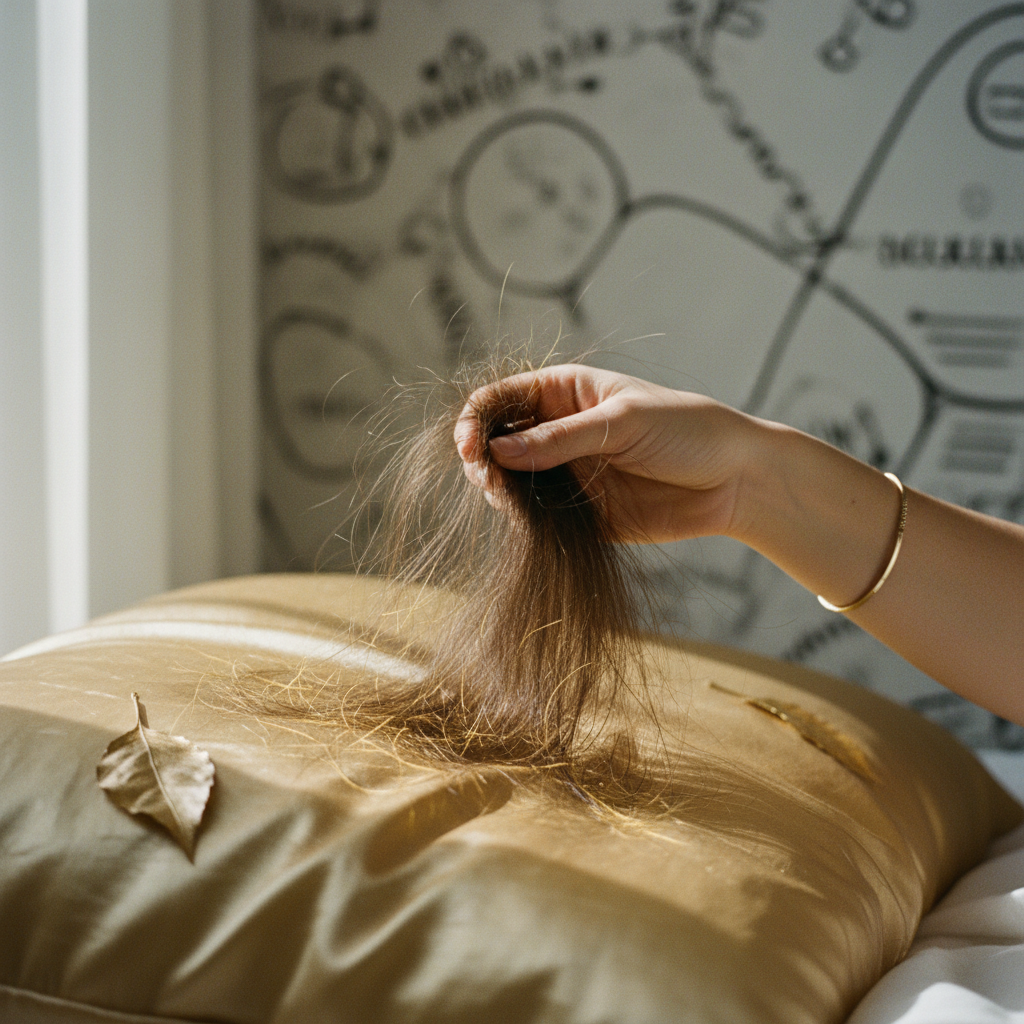
During pregnancy, particularly the second and third trimesters, circulating oestrogen and progesterone soar. High oestrogen prolongs the anagen (growth) phase of hair follicles, suppressing the normal transition into catagen (regression) and telogen (resting). A person typically sheds 50 to 100 hairs daily, but pregnant women shed significantly less, leading to thicker, fuller hair.
Following childbirth and the delivery of the placenta, systemic oestrogen levels plummet back to pre-pregnancy levels within days. This abrupt withdrawal shocks the disproportionate number of follicles held in extended anagen into telogen simultaneously. Because the resting phase lasts roughly 60 to 90 days, the physical shedding begins two to four months after delivery. It is a biological rebound, not a sign that your body is failing.
The biological mechanism of postpartum shedding
Understanding the hair cycle helps contextualise why this shedding occurs so abruptly. At any given moment on a healthy human scalp, roughly 85% to 90% of follicles are actively growing (anagen), 1% to 2% are regressing (catagen), and 10% to 15% are resting (telogen).
Anagen (Growth: 2-7 years)
 │
 ▼
Catagen (Transition: 2-3 weeks)
 │
 ▼
Telogen (Rest: 2-3 months) ──► Sudden drop in oestrogen triggers mass shift
 │
 ▼
Exogen (Shedding: hair falls out)
During late pregnancy, the proportion of anagen hairs can climb above 95%. When hormonal support withdraws, up to 30% to 50% of scalp follicles can shift into telogen collectively. Once the resting phase concludes, the newly forming hair underneath pushes the old club hair out (the exogen phase). You suddenly see handfuls of hair on your brush, in the shower drain, and on your clothing.
Signs to look for: normal shedding versus other conditions
Postpartum shedding follows distinct patterns. Recognising them prevents unnecessary panic while highlighting when an assessment is necessary.
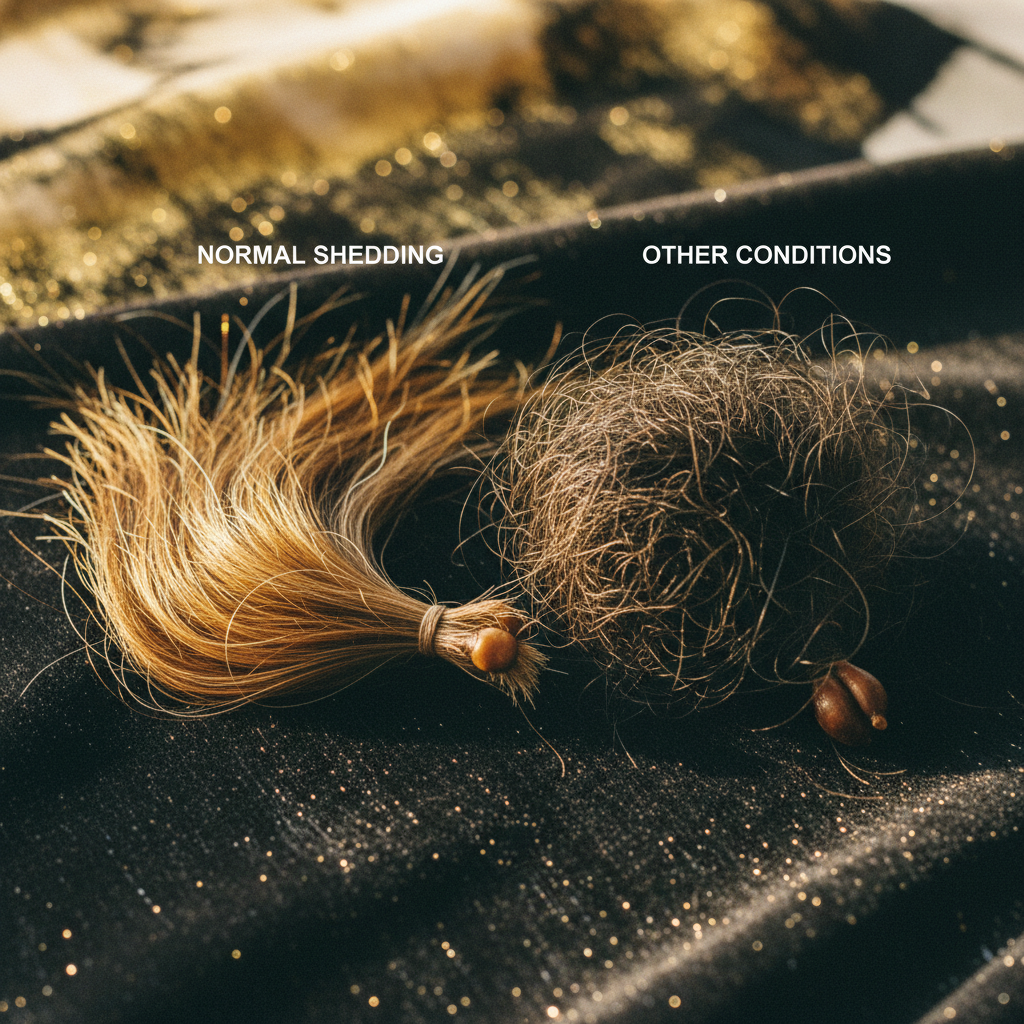
- Diffuse temporal thinning: Hair loss is most visible around the front hairline, temples, and crown. You might notice your ponytail feels half its normal thickness.
- Intact hair bulbs: Shed hairs typically have a tiny, hard white bulb at the root, confirming they are telogen hairs shed naturally from the base, rather than snapped fibres.
- Short regrowing fringe: Around four to six months postpartum, you will likely see a halo of short, upright baby hairs emerging along the hairline.
What the evidence does not show
The evidence does not show that breastfeeding causes hair shedding. While lactation hormones like prolactin remain elevated during nursing, clinical trials comparing bottle-feeding and breastfeeding mothers show no significant difference in the incidence, onset, or severity of postpartum shedding.
Furthermore, evidence does not show that postpartum shedding permanently damages follicles or alters hair texture permanently. Any changes in curl pattern or thickness are typically due to natural hormonal shifts affecting follicle shape over time rather than the shedding event itself.
Differentiating shedding, loss, and breakage
Managing expectations requires distinguishing between true loss, natural shedding, and mechanical breakage:
| Feature | Postpartum Shedding (Telogen Effluvium) | Hair Breakage | Female Pattern Hair Loss (Alopecia) |
|---|---|---|---|
| Primary Mechanism | Follicular cycle shift from anagen to telogen | Physical or chemical trauma snapping the fibre | Progressive follicular miniaturisation |
| Appearance of Fibre | Full length with a white keratin bulb attached | Uneven lengths, frayed ends, no root bulb | Thinning, wispy hairs of varying diameters |
| Common Location | Diffuse, pronounced at temples and frontal hairline | Mid-lengths, ends, or areas of high tension | Crown and widening central parting; hairline spared |
| Reversibility | Highly reversible; naturally resolves in 6 to 12 months | Reversible; stops once hair handling improves | Progressive; requires ongoing clinical intervention |
| Medical Triggers | Postpartum hormone drop, physiological stress | Bleaching, heat styling, friction, tight styles | Genetics, androgens, systemic endocrine factors |
What you can do during the shedding phase
While you cannot artificially alter the biological clock of a follicle already in telogen, you can prevent secondary breakage, support scalp health, and maximise aesthetic density.
1. Minimise mechanical stress
Telogen hairs are loosely anchored. Aggressive brushing or tight styling pulls them out prematurely and snaps fragile surrounding anagen fibres.
- Use a wide-toothed comb on wet hair, starting at the ends and working upward.
- Avoid tight buns, ponytails, or braids that generate traction.
- Switch to silk or satin pillowcases to lower overnight friction.
2. Adjust daily cosmetic habits
- Keep heat styling tools below 180°C and always apply a silicone- or polymer-based thermal protectant.
- Avoid harsh chemical processes such as bleaching, permanent waving, or chemical straightening until shedding stabilises.
- Use volumising shampoos containing lightweight proteins, which deposit microscopic structure along the fibre shaft to make hair look fuller without weighing down roots.
3. Maintain nutritional sufficiency
Growing new hair requires substantial metabolic energy. Postpartum recovery, blood loss during birth, and lactation place heavy demands on maternal nutrient stores.
- Ferritin (stored iron): Crucial for matrix cell division. Low ferritin can prolong telogen effluvium indefinitely.
- Protein intake: Hair fibres are composed of roughly 85% to 90% keratin. Aim for adequate dietary protein from eggs, legumes, lean meats, or tofu.
- Micronutrients: Ensure your diet covers zinc, vitamin D, and B vitamins. Continue taking a targeted postnatal multivitamin if your healthcare provider recommends it.
When shedding signals an underlying medical issue
If shedding continues at high volume past 12 months, or if you notice patchy circular bald spots or an itchy, inflamed scalp, the cause is likely not simple postpartum shedding.
- Postpartum thyroiditis: Between 5% and 10% of women develop inflammation of the thyroid gland in the first year after giving birth. Symptoms often mimic ordinary maternal exhaustion, including extreme fatigue, mood changes, weight fluctuations, and persistent hair shedding. A routine blood test for Thyroid Stimulating Hormone (TSH) and Free T4 quickly confirms or rules this out.
- Iron deficiency anaemia: If delivery involved heavy blood loss, your ferritin reserves may be depleted, keeping follicles in a resting state.
- Unmasked androgenetic alopecia: Occasionally, severe telogen effluvium reveals an underlying genetic predisposition to pattern thinning, where the frontal parting continues to widen rather than fill back in.
Consult your GP, dermatologist, or an accredited trichologist if shedding is accompanied by scalp pain, redness, scaling, or round patches of complete bareness.
Caring for your scalp with Watermans
Maintaining a balanced, clean scalp environment provides the ideal foundation while your internal hormone levels recalibrate. Watermans offers topically applied cosmetic formulations designed to support the appearance of stronger, thicker, and fuller hair.
Watermans GrowMe Shampoo delivers a blend of biotin, caffeine, argan oil, rosemary extract, and lupin protein directly to the scalp. While no topical shampoo halts the physiological hormonal shedding of internal telogen effluvium, regular use helps improve overall scalp hygiene, strengthens the hair fibre against everyday breakage, and gives fine, regrowing postpartum hair a denser, revitalised appearance. Following with a lightweight, moisturising conditioner ensures that delicate new baby hairs remain supple and protected from friction.
Frequently asked questions about Postpartum Hair Loss Guide
How long does postpartum shedding usually last?
Postpartum shedding typically begins around two to four months after delivery and peaks between four and five months. In most healthy individuals, shedding slows significantly by six to nine months, and overall hair density returns to normal within 12 months as the regular hair growth cycle stabilises.
Can vitamins stop postpartum hair shedding?
No vitamin or supplement can halt genuine postpartum telogen effluvium. Because the shedding is triggered by the drop in circulating oestrogen, follicles already in the resting phase must shed their club hairs. However, maintaining adequate iron, vitamin D, and protein levels ensures that the new growing phase (anagen) proceeds without delay.
Will cutting my hair short help with postpartum hair loss?
Cutting your hair will not change the biological hair cycle or reduce the number of hairs shed from the follicles. However, shorter styles often make hair appear visibly fuller, create less mechanical drag when detangling, and reduce the perceived volume of hair left behind in brushes and shower drains.
How does this Postpartum Hair Loss Guide recommend handling baby hairs?
This Postpartum Hair Loss Guide recommends treating regrowing fringe hairs gently with lightweight leave-in conditioners or natural plant oils to keep them flat without weighing them down. Avoid stiff holding gels, tight headbands, or high-heat flat irons, which snap delicate, newly formed anagen fibres.
Summary
Navigating the months following childbirth involves immense physical and emotional changes, and sudden hair shedding can feel particularly unsettling. As outlined in this Postpartum Hair Loss Guide, acute postpartum telogen effluvium is a temporary, self-limiting biological event rather than a permanent loss of hair. By maintaining gentle hair care practices, nourishing your body with balanced meals, and giving your scalp time to recalibrate, your regular growth cycle will naturally re-establish itself. If shedding extends well past the one-year mark, seek professional evaluation to check your iron and thyroid markers.
Sources and references
- British Association of Dermatologists (BAD): Telogen Effluvium Patient Information Leaflet, 2021.
- National Institute for Health and Care Excellence (NICE): Alopecia - female pattern and telogen effluvium clinical guidance, 2022.
- American Academy of Dermatology (AAD): Hair loss in new moms, 2023.
- Journal of the American Academy of Dermatology: Postpartum telogen effluvium: A comprehensive review, 2020.
- NHS: Women and hair loss, 2023.
- Endocrine Society: Postpartum Thyroiditis Clinical Practice Information, 2022.
Find these ingredients in Watermans products
- Zinc: you will find this ingredient in our Hair Vitamins.