Scalp Pruritus: Causes, Mechanisms, and Evidence-Based Management
10 min read ·
Scalp pruritus is the clinical term for an itchy scalp. Learn the evidence-backed causes, mechanisms, practical relief steps, and when to consult a specialist.
Quick answer: Scalp pruritus is the clinical term for an itchy scalp, an uncomfortable sensation that triggers an urge to scratch. It is a symptom rather than an independent disease, arising from inflammatory skin disorders, fungal overgrowth, nerve signalling dysfunctions, or systemic conditions. While mild cases often resolve with targeted topical hygiene and barrier support, scalp pruritus should never be ignored if accompanied by intense pain, patchy hair loss, or non-responsive scaling, as severe scratching can cause secondary bacterial infections and mechanical hair breakage.
Key takeaways
- Scalp pruritus describes an itchy sensation on the scalp, acting as a warning sign of an underlying barrier disruption, inflammatory dermatosis, or neurological firing issue.
- Common triggers include seborrhoeic dermatitis, scalp psoriasis, contact allergy from hair dyes or fragrances, and head lice (pediculosis capitis).
- Persistent scratching damages the hair cuticle, producing mechanical hair breakage and shedding, though the itch itself does not cause true follicular alopecia unless chronic scarring conditions are present.
- Management relies on identifying the exact trigger; antifungal shampoos, anti-inflammatory topical treatments, or gentle surfactant formulas are selected based on whether yeast, inflammation, or dryness predominates.
- You should consult a doctor, trichologist, or dermatologist when itching is accompanied by bleeding, pustules, patchy hair shedding, or failure to improve after two to three weeks of targeted care.
Scalp Pruritus: what the evidence shows
Scalp pruritus is one of the most frequent dermatological complaints reported in trichology clinics. Clinical data published in the International Journal of Trichology and the British Journal of Dermatology indicate that pruritus affects up to 25 to 30 percent of the adult population at varying intensities. Because the human scalp possesses an exceptionally dense network of sensory nerve endings, blood vessels, and sebaceous glands (roughly 400 to 900 glands per square centimetre), it responds rapidly to both external irritants and internal biochemical shifts.
The sensation of an itch travels along unmyelinated C-type nerve fibres and thinly myelinated A-delta fibres. These sensory nerves terminate in the upper dermis and epidermis, where they detect biochemical mediators such as histamine, substance P, interleukins (notably IL-4, IL-13, and IL-31), and proteases. Once triggered, these mediators send signals through the spinal cord to the brain's sensory cortex, which registers the discomfort and prompts the motor response to scratch.
Crucially, dermatological research separates scalp itching into two categories: pruritus with primary visible lesions (such as erythema, silvery scales, or follicular pustules) and pruritus sine materia (itching on an apparently normal scalp with no visible rash). Identifying which category you fall into is the foundation of effective management.
+--------------------------------------------------------------------------+
| Mechanisms of Scalp Pruritus |
+--------------------------------------------------------------------------+
 │
 ┌───────────────────────────┴───────────────────────────┐
 ▼ ▼
 Visible Lesions Pruritus Sine Materia
 (Inflammatory/Infectious) (Non-Lesional/Neuropathic)
 │ │
 • Seborrhoeic dermatitis • Trichodynia (nerve burning)
 • Scalp psoriasis • Cervical spine impingement
 • Allergic contact dermatitis • Systemic causes (iron deficiency
 • Malassezia overgrowth thyroid imbalance, renal stress)
 • Pediculosis capitis • Age-related barrier xerosis
What the evidence does not show
Dermatological literature is clear on what scalp pruritus does and does not do. It is vital to separate clinical facts from widespread myths:
- Itching does not automatically equal dandruff: While Malassezia yeast overgrowth causes classical dandruff and seborrhoeic dermatitis, many individuals with an itchy scalp have xerosis (plain skin dryness) or sensitive scalp syndrome, where heavy anti-dandruff shampoos only worsen the problem.
- Pruritus does not cause genetic hair loss: Scalp itching does not induce androgenetic alopecia. While inflammation around the hair follicle can elevate local shedding (telogen effluvium), male and female pattern hair loss is driven by dihydrotestosterone (DHT) sensitivity and genetic follicle miniaturisation, not pruritic nerve signals.
- Frequent washing does not automatically create an itch: The myth that washing hair three or four times a week strips all protective oils and causes itching is unfounded for most hair types. In seborrhoeic states, infrequent washing allows sebaceous lipids to oxidise into irritating free fatty acids, aggravating the itch.
The underlying mechanisms of an itchy scalp
Understanding the biological processes behind scalp pruritus helps clarify why a single treatment rarely works for everyone. The symptom generally stems from one of four primary pathways:
1. Microbial and barrier disruption
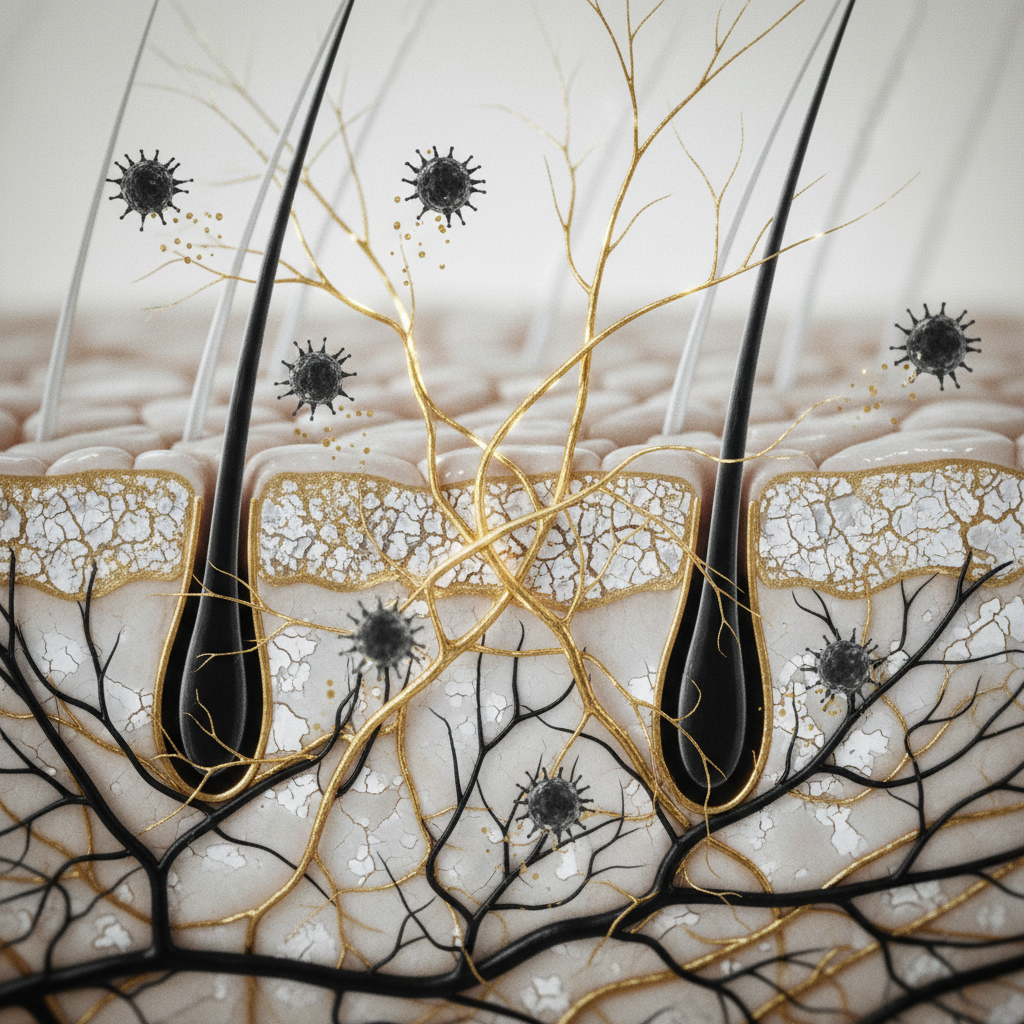
The scalp microbiome is dominated by Cutibacterium acnes, Staphylococcus epidermidis, and Malassezia yeasts. Malassezia restricta and Malassezia globosa feed on sebum, producing lipases that break triglycerides down into free fatty acids, specifically oleic acid. In susceptible individuals, oleic acid breaches the stratum corneum, inciting an inflammatory cascade, accelerated epidermal turnover, and intense itch sensations.
2. Contact sensitisation and chemical irritation
Hair cosmetics contain surfactants, preservatives (such as methylisothiazolinone), fragrances, and oxidative dyes (such as paraphenylenediamine, or PPD). These ingredients can cause either irritant contact dermatitis (a direct toxic disruption of the skin barrier) or allergic contact dermatitis (a delayed Type IV hypersensitivity response mediated by memory T-cells).
3. Neuropathic dysregulation
Not all scalp pruritus arises from skin inflammation. Neuropathic pruritus, often presenting alongside trichodynia (a painful, burning scalp sensation), occurs when sensory nerves become hyper-reactive. This can stem from nerve entrapment in the cervical spine (the C2 and C3 nerve roots that supply the scalp) or small-fibre sensory neuropathy.
4. Psychogenic and stress-induced pathways
The skin and the nervous system share an embryonic origin in the ectoderm. Psychological stress stimulates the release of corticotropin-releasing hormone (CRH) and substance P from cutaneous nerves, which degranulate mast cells and release histamine directly into scalp tissue, creating a genuine physical itch without an external pathogen.
Comparing common causes of scalp pruritus
| Condition | Visual Presentation | Primary Location | Accompanying Sensations | First-Line Approach |
|---|---|---|---|---|
| Seborrhoeic Dermatitis | Greasy, yellow flakes on mild to moderate erythema | Crown, frontal hairline, retroauricular folds | Burning itch, greasiness | Antifungals (ketoconazole, zinc pyrithione, piroctone olamine) |
| Scalp Psoriasis | Thick, well-demarcated silvery-white plaques | Occiput, hairline, behind ears | Tightness, severe itch, soreness | Keratolytics (salicylic acid), topical corticosteroids, coal tar |
| Contact Dermatitis | Patchy erythema, micro-vesicles, swelling | Anywhere dye or cosmetic was applied | Intense itching, stinging within 24 to 72 hours | Identifying allergen, mild topical steroids, gentle cleansing |
| Scalp Xerosis (Dryness) | Fine, dry, powdery white flaking; no severe redness | Diffuse across the entire scalp | Tightness after washing, mild itching | Gentle low-surfactant shampoos, barrier humectants, avoiding hot water |
| Pediculosis Capitis | Nits firmly glued to hair shafts, tiny bite marks | Nape of neck, behind ears | Tickling sensation, nocturnal itch | Mechanical wet-combing, pediculicide treatments (dimeticone) |
The link between scratching, breakage, and hair shedding
When dealing with scalp pruritus, the urge to scratch can feel impossible to resist. However, mechanical trauma from fingernails has direct consequences for your hair:
- Cuticle stripping: Aggressive scratching scrapes off the protective shingle-like cuticular scales of the hair shaft. This exposes the delicate cortex, leading directly to hair breakage along the mid-lengths. This is mechanical breakage, not follicular hair loss.
- Excoriation and secondary infection: Digging nails into the scalp introduces bacteria like Staphylococcus aureus, creating follicular pustules (folliculitis) that can damage the hair matrix if left untreated.
- Reactive shedding: Prolonged, severe inflammation can trigger micro-trauma to the dermal papilla, prematurely pushing hairs into the catagen and telogen phases. This results in temporary diffuse hair shedding (telogen effluvium) several weeks later.
Practical steps to soothe an itchy scalp
If you are experiencing persistent scalp itching, systematically adjusting your routine can restore barrier integrity:
- Optimise washing frequency: If your scalp is oily and itchy, wash more frequently (every 1 to 2 days) to eliminate oxidised sebum. If your scalp is parched and tight, adjust to every 2 to 3 days using lukewarm water, as hot water strips essential barrier ceramides.
- Use targeted active ingredients: Look for evidence-backed actives tailored to your diagnosis. Antifungals like ketoconazole (1% to 2%), piroctone olamine, or climbazole control yeast. Anti-itch agents like menthol, lauromacrogols (polidocanol), or bisabolol soothe hyperactive nerve endings without drying the skin.
- Introduce gentle exfoliation cautiously: Salicylic acid (0.5% to 2%) breaks down stubborn keratin build-up, allowing soothing topical agents to reach the epidermis. Avoid rough, granular physical scrubs, which cause micro-tears in an already sensitised barrier.
- Rinse thoroughly: Cosmetic residue from heavy conditioning agents or leave-in styling polymers can settle onto the scalp, forming an occlusive film that traps sweat and irritates follicles. Keep rich conditioning masks focused strictly on mid-lengths and ends.
- Check your styling tools: Sanitize brushes and combs weekly in warm soapy water to prevent the re-introduction of yeasts and bacteria to the scalp.
Supporting the scalp environment: The Watermans approach
Maintaining a balanced, resilient scalp barrier is central to keeping discomfort at bay. When scalp pruritus is driven by everyday environmental stressors, product build-up, or compromised barrier balance rather than an active infection requiring prescription medicine, adopting a nurturing, botanically balanced regimen makes a demonstrable difference.
Watermans GrowMe Shampoo and ConditionMe Conditioner are formulated to cleanse thoroughly without aggressively stripping natural protective lipids. By incorporating ingredients like rosemary, allantoin, and hydrolysed lupin protein, these formulas help refresh the scalp surface, soothe minor tightness, and support an optimal environment for hair follicles. For leave-in scalp nourishment, Watermans Grow More Elixir delivers targeted botanical extracts directly to the scalp, keeping the skin moisturised and comfortable without leaving greasy residues that could disrupt the natural microbiome.
When the cause may be systemic or neuropathic
If visible flakes, redness, and parasites have been ruled out, your doctor may investigate less obvious drivers:
- Nutritional deficiencies: Chronic iron deficiency (low ferritin), severe zinc depletion, or low vitamin D levels can impair skin barrier renewal and alter neurological itch thresholds.
- Endocrine disorders: Hypothyroidism leads to decreased sebum synthesis and marked xerosis, frequently manifesting as a chronically dry, itchy scalp.
- Cervical spine dysfunction: Notalgia paraesthetica and trichodynia can stem from pinched nerves in the neck, causing an intense, phantom itching sensation across the crown or nape that topical shampoos cannot resolve.
When to seek professional advice
While mild scalp pruritus responds well to over-the-counter adjustments, you should consult an NHS GP, dermatologist, or qualified trichologist if you encounter:
- Itching that interrupts your sleep or persists for longer than three consecutive weeks despite targeted anti-dandruff or hydrating care.
- Visible crusting, weeping fluid, or pus-filled blisters on the scalp.
- Focal, patchy hair loss where hair fails to regrow, which could point to an inflammatory scarring alopecia such as lichen planopilaris or frontal fibrosing alopecia.
- Severe pain, burning, or swelling radiating into the neck, ears, or forehead.
Frequently asked questions about Scalp Pruritus
Can scalp pruritus lead to permanent baldness?
In the vast majority of cases, scalp pruritus does not cause permanent baldness. Most itching stems from superficial issues like seborrhoeic dermatitis or dry skin, which can cause temporary shedding or mechanical breakage from scratching. However, rare inflammatory scarring alopecias (such as lichen planopilaris) present with persistent itching, burning, and permanent follicle destruction. If your itch is paired with smooth, bald patches, seek immediate dermatological assessment.
How do I know if my scalp pruritus is caused by dandruff or dry skin?
Dandruff is linked to oily skin and yeast overgrowth, producing larger, yellowish, greasy flakes alongside an inflamed, warm-feeling scalp. In contrast, dry scalp (xerosis) produces tiny, powdery, dry white flakes, feels tight rather than greasy, and often worsens after washing with hot water or during dry winter months.
Does hard water make scalp pruritus worse?
Yes, hard water contains elevated levels of calcium and magnesium ions. These minerals interact with surfactants in shampoo to form insoluble soap scum that clings to the scalp, weakening the skin's acidic mantle (which should sit around pH 4.5 to 5.5). Over time, this mineral residue breaks down the epidermal barrier, increasing irritation and triggering pruritus.
Can hair dye trigger severe scalp pruritus?
Yes. Hair dyes, particularly permanent formulations containing paraphenylenediamine (PPD) or resorcinol, are recognised triggers for allergic contact dermatitis. If you develop intense itching, redness, swelling, or small blisters along the scalp and hairline within 24 to 72 hours after colouring your hair, you may have developed a contact sensitisation requiring medical guidance.
Why does scalp pruritus often feel worse at night?
Itching naturally intensifies at night due to circadian shifts in skin physiology. Cutaneous blood flow and skin temperature increase in the evening, lowering the itch threshold. Concurrently, natural cortisol production (the body's anti-inflammatory hormone) drops, and skin water loss through the barrier rises. Reduced environmental distractions also heighten your sensory awareness of the discomfort.
Summary
Scalp pruritus is a widespread, treatable symptom that indicates your scalp barrier or its sensory nerves are under strain. Whether caused by yeast proliferation, product irritation, seasonal dryness, or systemic imbalances, relief begins with identifying the root cause rather than aggressively scratching the skin. By supporting the epidermal barrier, cleansing effectively, and seeking medical guidance whenever severe lesions or hair shedding arise, you can restore lasting comfort to your scalp.
Sources and references
- British Association of Dermatologists. Clinical Guidelines for the Management of Seborrhoeic Dermatitis and Psoriasis. bad.org.uk (2022).
- Misery, L., et al. "Sensitive scalp: does this condition exist? An epidemiological study." Contact Dermatitis, 58(4), 234 to 239 (2008).
- Borda, L. J., & Wikramanayake, T. C. "Seborrheic Dermatitis and Dandruff: A Comprehensive Review." Journal of Clinical and Investigative Dermatology, 3(2), 10 (2015).
- Bin Saif, G. A., et al. "Association of scalp pruritus with hair loss and scalp conditions: A clinical evaluation." International Journal of Trichology, 4(3), 160 to 165 (2012).
- National Institute for Health and Care Excellence (NICE). "Head lice: Scenario: Management." NICE Clinical Knowledge Summaries (2021).
Find these ingredients in Watermans products
- Zinc: you will find this ingredient in our Hair Vitamins.
- Oleic Acid: you will find this ingredient in our Camellia & Black Castor Hair & Body Oil.