Scalp Microneedling for Hair: Science, Protocol, and Safety
9 min read ·
Discover the evidence, mechanisms, safe depths, and clinical protocols behind Scalp Microneedling for Hair to encourage density and follicle vitality.
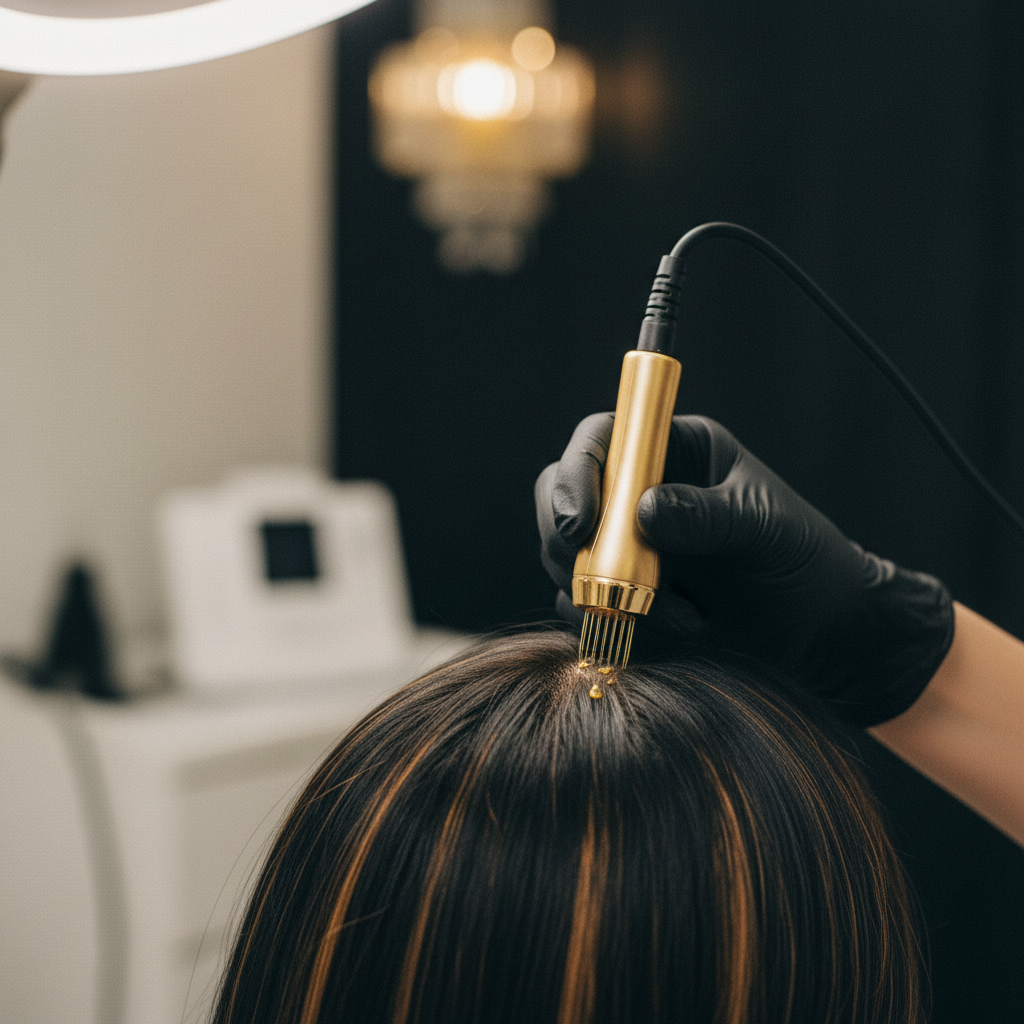
Quick answer: Scalp Microneedling for Hair is a minimally invasive cosmetic procedure that uses tiny, sterile needles to create micro-punctures in the skin of the scalp. These microscopic wounds trigger wound healing, stimulate growth factors, and enhance topical absorption to encourage hair follicle activity, primarily in androgenetic alopecia. However, its primary limitation is that it cannot revive completely dormant or scarred follicles, and improper technique or excessive needle depth can cause scarring, infection, and irreversible follicle damage.
Key takeaways
- Scalp microneedling stimulates blood circulation, platelet-derived growth factors, and collagen production around underperforming follicles.
- Clinical trials indicate that microneedling significantly improves hair density when combined with evidence-based topical treatments like minoxidil, compared to topical treatments alone.
- Needle depths between 0.5 mm and 1.5 mm are standard; depths exceeding 1.5 mm risk piercing the dermal papilla and causing permanent fibrosis.
- Overuse is counterproductive. Hair follicles require adequate recovery time between sessions, meaning treatments should occur once every 1 to 4 weeks, depending on needle depth.
- The technique cannot treat cicatricial (scarring) alopecia and should be avoided during active scalp infections, psoriasis flares, or severe inflammatory states.
Scalp Microneedling for Hair: what the evidence shows
Scalp Microneedling for Hair functions by activating the body's natural wound-healing cascade without creating open tissue wounds. In peer-reviewed literature, the most notable benchmark was established by Dhurat et al. (2013), published in the International Journal of Trichology. In this 12-week randomised controlled study of 100 men with mild to moderate androgenetic alopecia, the group receiving weekly microneedling (at 1.5 mm depth) combined with twice-daily 5% topical minoxidil achieved an average increase of 91.4 hairs per square centimetre, compared to 22.2 hairs per square centimetre in the group using minoxidil alone.
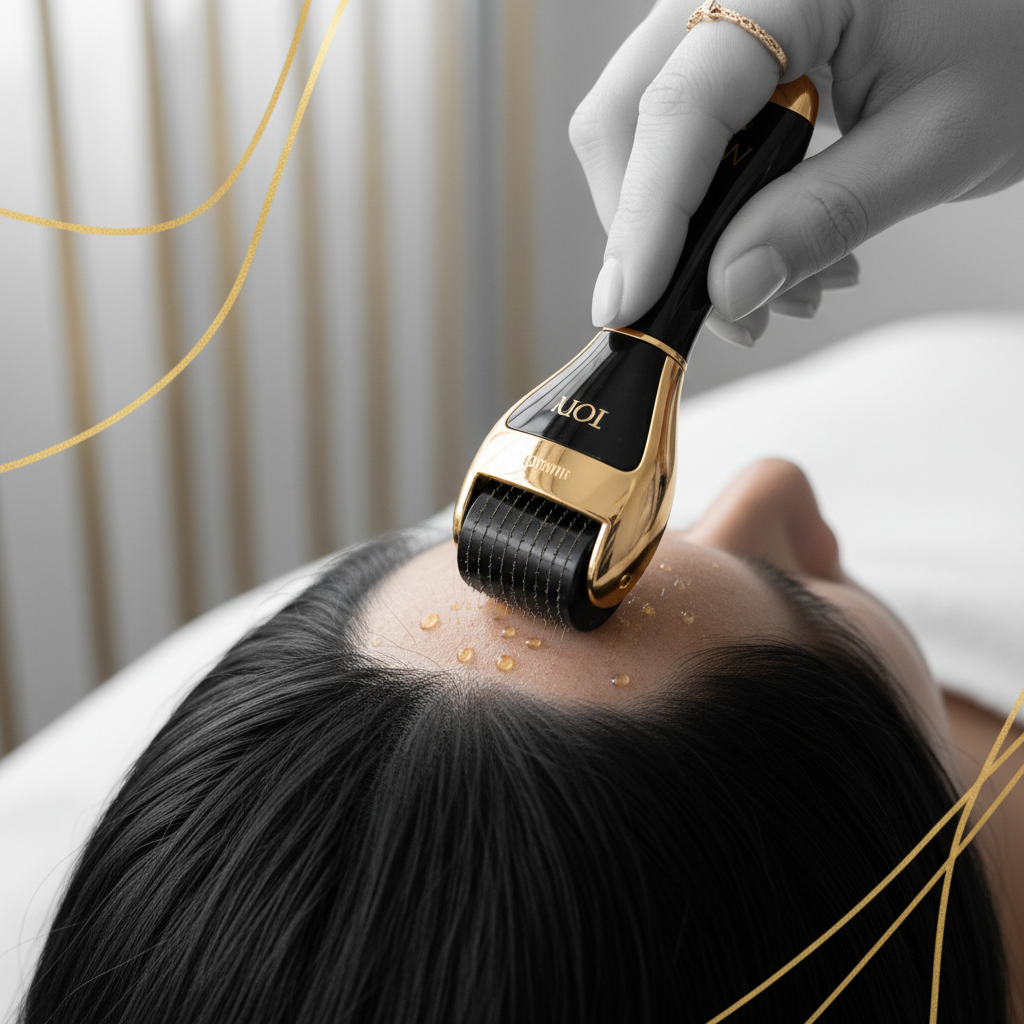
Subsequent investigations have corroborated these findings while exploring needle depths. A 2020 study published in the Journal of Cosmetic Dermatology demonstrated that shallower depths, specifically 0.6 mm, achieved comparable or superior outcomes to 1.2 mm depths when paired with topical minoxidil, while causing substantially less pain and tissue trauma. The scientific consensus indicates that the therapeutic window for follicular stimulation lies between 0.5 mm and 1.5 mm.
Beyond enhancing product absorption via micro-conduits, microneedling induces cellular regeneration. The mechanical puncture activates platelet-derived growth factor (PDGF), vascular endothelial growth factor (VEGF), and epidermal growth factor (EGF). It also upregulates Wnt/beta-catenin signalling pathways, which play a central role in initiating the anagen (growth) phase of the hair growth cycle.
What the evidence does not show
Clinical research does not support microneedling as a standalone cure for genetic hair loss. While it stimulates localised growth factors and blood flow, it does not alter underlying systemic genetics or neutralise the binding of dihydrotestosterone (DHT) to androgen receptors within the follicle.
Furthermore, evidence does not show that deeper needles or daily sessions yield better results. Puncturing the scalp daily disrupts the proliferative phase of wound healing and induces chronic inflammation. The literature also does not support using microneedling on scarring alopecias (such as lichen planopilaris or frontal fibrosing alopecia). In these conditions, mechanical trauma can trigger a Koebner phenomenon, accelerating inflammatory scarring and irreversible hair loss.
Biological mechanism: how micro-injuries affect the follicle
To understand why puncturing the scalp can help hair, you have to look at the three distinct phases of cutaneous wound healing:
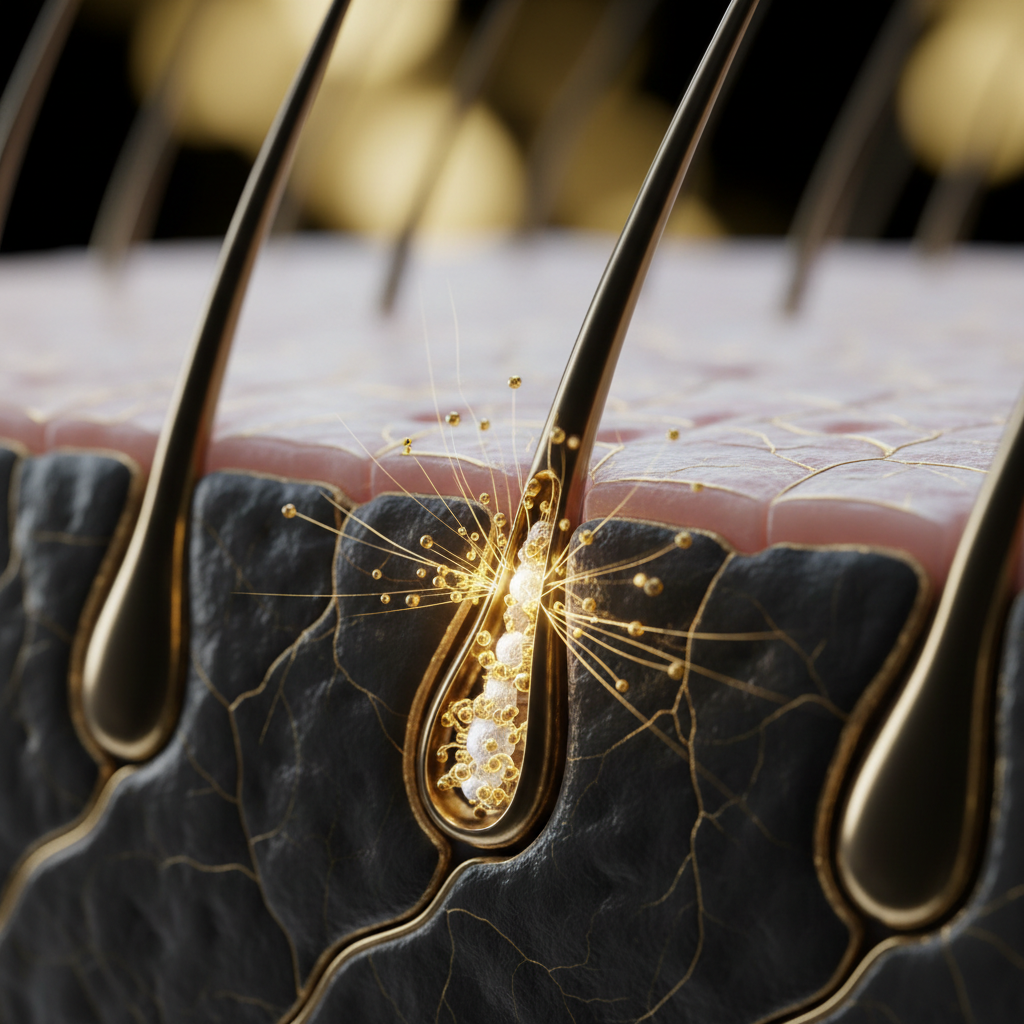
- Inflammation (Hours 0 to 48): The mechanical puncture ruptures tiny capillary beds, prompting platelet aggregation. Platelets release clotting factors alongside PDGF, transforming growth factor-beta (TGF-beta), and fibroblast growth factor (FGF). Neutrophils and macrophages clear debris while releasing cytokines that signal cellular repair.
- Proliferation (Days 2 to 14): Keratinocytes migrate to close the micro-punctures. Fibroblasts synthesise new type III collagen, elastin, and extracellular matrix components. Concurrently, neo-vascularisation occurs through VEGF release, restoring microcirculation around the hair bulb. Crucially, the activation of dermal papilla stem cells triggers downstream Wnt10b and beta-catenin pathways, nudging resting telogen follicles back into active anagen growth.
- Remodelling (Weeks 2 to 8): Type III collagen is gradually replaced by stronger type I collagen. The tissue tightens, blood supply stabilizes, and the follicle environment benefits from improved vascular support and structural architecture.
Micro-punctures (0.5 mm to 1.5 mm)
 │
 ▼
Platelet activation & growth factor release (VEGF, PDGF, EGF)
 │
 ▼
Upregulation of Wnt/beta-catenin signalling pathways
 │
 ▼
Telogen-to-anagen transition + Neovascularisation around dermal papilla
Professional clinical treatments versus at-home devices
Choosing how to perform Scalp Microneedling for Hair depends on needle stability, hygiene control, and procedural depth.
| Feature | In-Clinic Motorised Microneedling | At-Home Derma Stamp | At-Home Derma Roller |
|---|---|---|---|
| Needle Entry Angle | 90 degrees (vertical entry and exit) | 90 degrees (vertical entry and exit) | Angled (enters and exits at an angle) |
| Tissue Trauma Risk | Very low (clean vertical punctures) | Low (controlled stamping pressure) | Higher (can cause micro-tears as wheel rolls) |
| Usual Needle Depth | 0.5 mm to 1.5 mm (calibrated) | 0.5 mm to 1.0 mm (fixed or adjustable) | 0.25 mm to 0.5 mm (manual pressure varies) |
| Sterility | Single-use medical cartridges | Disinfected reusable or disposable heads | Disinfected reusable roller wheel |
| Typical Frequency | Once every 2 to 4 weeks | Once every 1 to 2 weeks | Once weekly |
| Best Used For | Targeted clinical alopecia therapy | Safe home maintenance and topical delivery | Surface absorption enhancement only |
Derma rollers enter the skin at an angle and exit at an opposing angle, which can produce a "trough" or micro-tear rather than a clean puncture. For at-home practice, adjustable derma stamps are widely considered safer because they deliver straight vertical impacts without dragging across delicate follicles.
Protocol, needle depth, and safety guidelines
Safe execution requires strict adherence to depth, sanitation, and post-procedure care:
- Depth selection: For product absorption without systemic side effects, stay between 0.25 mm and 0.5 mm. For direct collagen and dermal papilla stimulation, use 0.6 mm to 1.0 mm. Depths of 1.5 mm should generally be reserved for experienced clinical practitioners.
- Sanitisation: At-home tools must be soaked in 70% isopropyl alcohol for at least 10 to 15 minutes before and after every single use. Allow the device to air dry completely. Never use a device with bent, dull, or rusted needles.
- Scalp preparation: Wash your hair and scalp thoroughly with a clarifying shampoo prior to the session. Microneedling on a dirty scalp forces surface sebum, bacteria, and dead skin flakes directly into the dermis, increasing the risk of folliculitis.
- Topical application timing: Do not apply harsh chemical topicals or alcohol-heavy solutions immediately after deep microneedling (above 0.5 mm). Micro-punctures drastically increase systemic absorption, which can trigger side effects such as rapid heart rate or low blood pressure with pharmaceuticals like minoxidil. Wait 12 to 24 hours after deep sessions before reapplying potent topicals.
- Frequency: Allow the proliferative phase to complete. If using a 0.5 mm stamp, treat once every 7 to 10 days. If using 1.0 mm to 1.5 mm, treat once every 2 to 4 weeks. Daily rolling causes chronic inflammation and follicle fibrosis.
When the cause of thinning is something else
Microneedling targets non-scarring miniaturisation, particularly androgenetic alopecia. It is not suitable for all types of hair shedding or loss:
- Telogen effluvium: Caused by acute stress, nutritional deficits, illness, or hormonal shifts. Telogen effluvium resolves when the underlying trigger is addressed. Mechanical injury from microneedling will not halt this shedding and can irritate sensitive follicles.
- Alopecia areata: An autoimmune condition where T-cells attack the hair bulb. Needling can provoke an inflammatory reaction that worsens immune-mediated patchy shedding.
- Cicatricial (scarring) alopecias: Including lichen planopilaris, frontal fibrosing alopecia, and central centrifugal cicatricial alopecia. Trauma can trigger permanent destruction of stem cells in the follicle bulge.
- Hair breakage: If your hair feels dry, snaps during styling, or shows white dots along the shaft, you are dealing with structural fibre breakage rather than follicular loss. Microneedling treats the scalp, not mechanical or chemical damage along the hair shaft.
Scalp care and non-invasive support
A healthy scalp environment underpins any regenerative hair routine. Using harsh cleansers or skipping washes creates product build-up and encourages the overgrowth of Malassezia yeast, which drives micro-inflammation around the follicle collar.
To keep the scalp clean and nourished between microneedling sessions, consider supporting your routine with gentle, nutrient-dense products. Watermans Grow Me Shampoo offers a balanced, sulfate-free cleanse enriched with biotin, caffeine, argan oil, and rosemary. Paired with Watermans Condition Me Conditioner, it supports strand tensile strength and softens hair fibres without depositing heavy waxes or silicones on the scalp surface. For focused nourishment, topical treatments like Watermans Grow More Elixir deliver targeted scalp hydration and botanical extracts directly to the roots without requiring needle punctures, making it an excellent non-invasive daily option between recovery days.
Frequently asked questions about Scalp Microneedling for Hair
How long does it take to see results from Scalp Microneedling for Hair?
Hair grows slowly, typically around 1 cm per month. Because microneedling works by shifting follicles from the telogen phase back into anagen, visible improvements in hair density and thickness generally require 12 to 24 weeks of consistent, correctly spaced sessions. Expect early changes to manifest as reduced shedding before new terminal hair growth becomes noticeable.
Does microneedling hurt or cause bleeding on the scalp?
When performed at conservative depths of 0.5 mm to 0.8 mm, sensations range from mild tingling to light prickling, with minimal to no bleeding. Depths of 1.0 mm to 1.5 mm can produce pinpoint bleeding (petechiae) and moderate discomfort. Severe bleeding, bruising, or persistent soreness indicates excessive pressure or improper needle depth that could damage follicles.
Can I wash my hair immediately after a microneedling session?
You should avoid washing your hair with warm water or standard shampoos for at least 12 to 24 hours after a session. The micro-punctures remain open for several hours, leaving the scalp vulnerable to irritation from surfactants, perfumes, and water-borne pathogens. If necessary, rinse with cool sterile water, but leave thorough shampooing until the skin barrier has resealed.
How do I know if my needles need replacing?
Examine your device before every session under bright light. If needles appear bent, blunt, or uneven, discard the head immediately. Reusable derma stamps should be replaced after 8 to 12 uses, as microscopic needle blunting happens quickly through repeated skin punctures. Dull needles tear skin rather than puncturing cleanly.
Conclusion
Scalp Microneedling for Hair is a clinically validated, mechanically driven therapy that supports hair density by recruiting growth factors, promoting vascularisation, and increasing the uptake of topical treatments. While highly effective as an adjunctive measure for androgenetic thinning, it is not an overnight cure and demands strict hygiene, appropriate depth control, and measured frequency. By respecting tissue healing times and pairing scalp therapies with gentle everyday hair care, you can create the optimal environment for healthier, stronger hair growth.
Sources and references
- Dhurat, R., et al. (2013). A Randomized Evaluator Blinded Study of Effect of Microneedling in Androgenetic Alopecia: A Pilot Study. International Journal of Trichology, 5(1), 6-11.
- Starace, M., et al. (2020). Microneedling in hair disorders: A systematic review. Dermatologic Therapy, 33(2), e13264.
- Bao, L., et al. (2020). Randomized trial of electrodynamic microneedling combined with 5% minoxidil topical solution for the treatment of androgenetic alopecia. Journal of Cosmetic Dermatology, 19(7), 1699-1704.
- Fertig, R. M., et al. (2018). Microneedling for the treatment of hair loss? Journal of the European Academy of Dermatology and Venereology, 32(4), 564-569.
- British Association of Dermatologists. (2021). Hair Loss (Alopecia) Information and Clinical Guidelines. Bad.org.uk.