An Evidence-Based Guide to Scalp Microneedling
9 min read ·
Scalp Microneedling uses micro-punctures to stimulate blood flow and hair follicles. Discover the clinical evidence, correct needle depths, and practical risks.
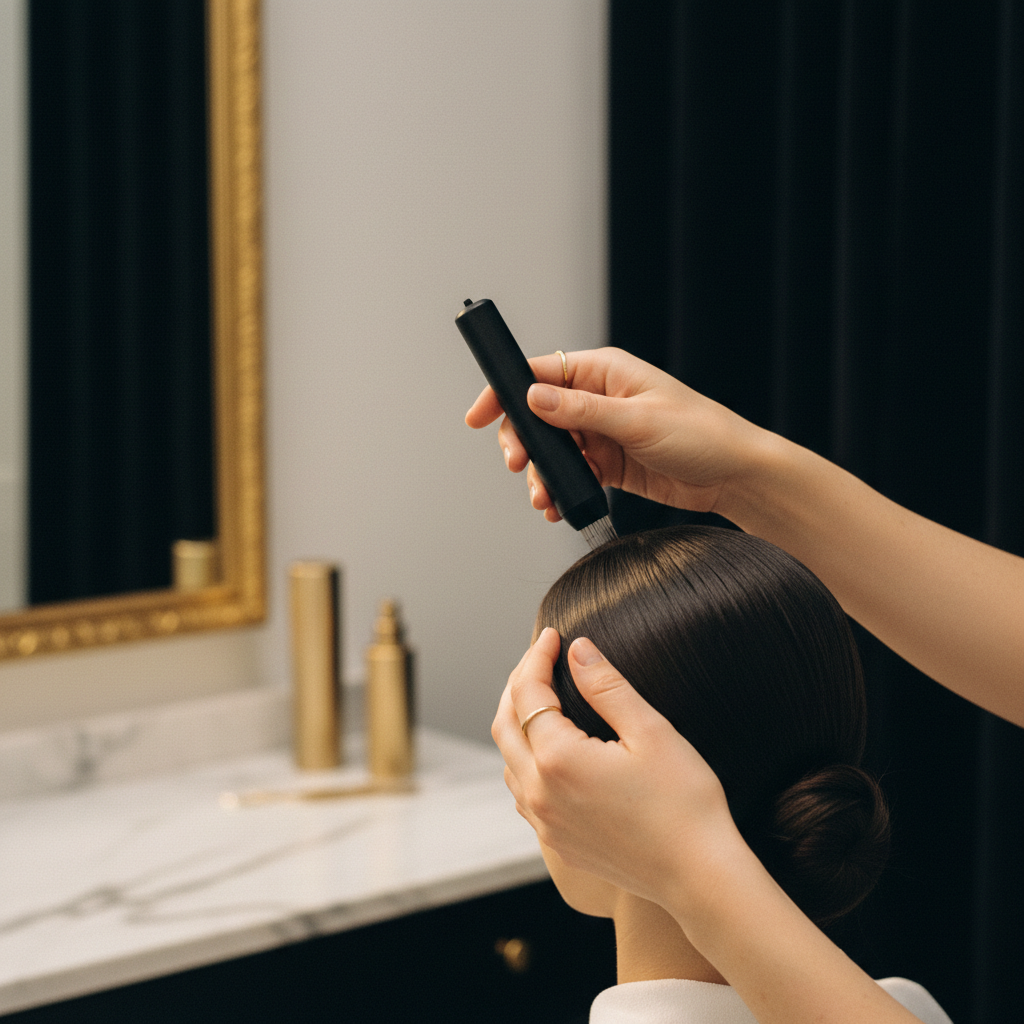
Quick answer: Scalp Microneedling is a minimally invasive dermatological procedure that uses microscopic needles to create controlled mechanical micro-punctures in the scalp. These micro-injuries stimulate local blood flow, trigger wound healing cascades, release growth factors, and temporarily enhance the absorption of topical treatments. While clinical trials demonstrate that it can improve hair count and hair thickness in conditions like androgenetic alopecia, its main limitation is that it does not halt genetic miniaturisation on its own and requires strict hygiene to avoid infection or scarring.
Key takeaways
- Mechanical stimulation: The procedure creates controlled epidermal and dermal punctures, triggering platelets, collagen production, and natural growth factors.
- Enhanced topical penetration: Micro-channels dramatically increase the transdermal delivery of topical therapies applied to the scalp.
- Needle depth matters: Depths between 0.5 mm and 1.5 mm are typical in clinical studies, with deeper needles carrying a higher risk of follicle damage if misused.
- Frequency and caution: Over-needling impairs healing; most clinical protocols space sessions between 7 and 21 days apart.
- Not a standalone cure: It can stimulate cellular activity, but it does not remove the systemic or hormonal drivers of progressive hair thinning.
Scalp Microneedling: what the evidence shows
Scalp Microneedling has moved from cosmetic facial care into clinical dermatology over the past decade. The primary body of clinical evidence focuses on its use as an adjunctive treatment for androgenetic alopecia (pattern hair loss). A landmark randomised controlled study published in the International Journal of Trichology by Dhurat et al. (2013) demonstrated that patients receiving microneedling alongside topical minoxidil experienced a significantly higher mean increase in hair count compared to those using topical minoxidil alone.
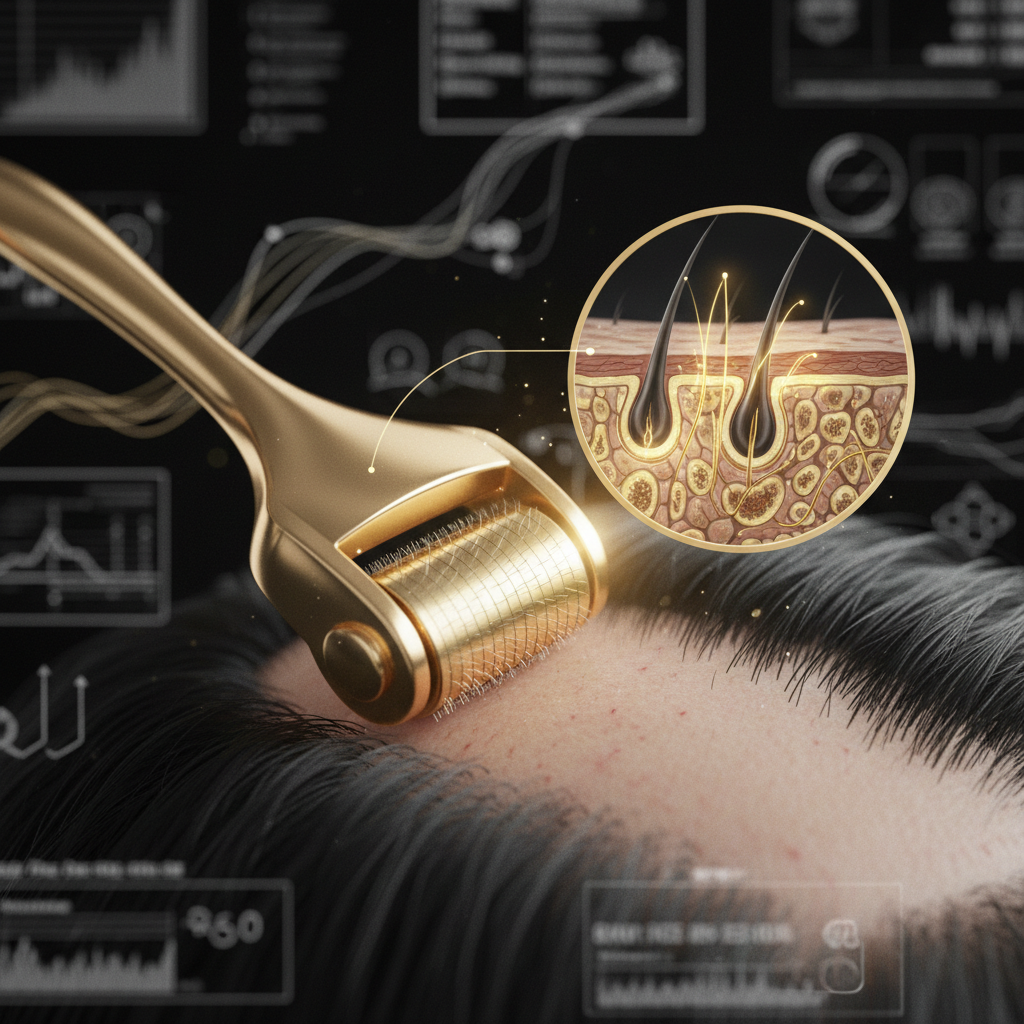
Subsequent trials and meta-analyses, including systematic reviews in Dermatologic Surgery, have replicated these findings. The evidence shows that the procedure:
- Activates wound-healing cascades: Physical micro-trauma stimulates platelets to release platelet-derived growth factor (PDGF) and epidermal growth factor (EGF).
- Induces Wnt/beta-catenin signalling: This specific pathway is crucial for stimulating hair follicle dermal papilla cells and driving follicles from the dormant telogen phase into the active anagen growth phase.
- Upregulates vascularisation: Increased vascular endothelial growth factor (VEGF) enhances microcirculation around the base of miniaturising follicles.
The therapy is also explored in treatment-resistant cases of alopecia areata, where it aids in delivering corticosteroids or other immunomodulators directly to the dermal layer.
What the evidence does not show
Despite promising clinical findings, research does not support several popular claims surrounding the practice.
First, the evidence does not show that microneedling can regenerate follicles that have undergone complete fibrosis. When a follicle has scarred over or completely atrophied, creating micro-wounds cannot bring it back.
Second, microneedling does not suppress dihydrotestosterone (DHT). Because it does not block 5-alpha reductase systemically or locally, follicles sensitive to androgens remain genetically programmed to miniaturise unless addressed with targeted interventions.
Third, clinical evidence does not support daily use. Aggressive, daily rolling causes chronic scalp inflammation and fibrotic scar tissue, which ultimately suffocates follicles and accelerates hair thinning.
| Parameter | At-Home Rollers (Cosmetic) | In-Clinic Devices (Medical) |
|---|---|---|
| Needle Depth | Typically 0.25 mm to 0.5 mm | Typically 0.75 mm to 1.5 mm (up to 2.5 mm) |
| Mechanism | Enhances product penetration; mild stimulation | Reaches dermal papilla; activates platelet cascades |
| Device Type | Manual dermarollers or silicone stamps | Motorised dermapens, automated microneedling |
| Angle of Entry | Angled (can cause skin drag or micro-tearing) | Vertical (clean, controlled punctures) |
| Sterility | User-cleaned (higher infection risk) | Single-use sterile cartridges |
| Frequency | Once every 7 to 14 days | Once every 2 to 4 weeks |
How the biological mechanism works
The human scalp possesses a dense network of blood vessels and nerve endings, with the dermal papilla resting roughly 1.0 mm to 2.0 mm beneath the epidermal surface depending on the anatomical area and the phase of the hair cycle.
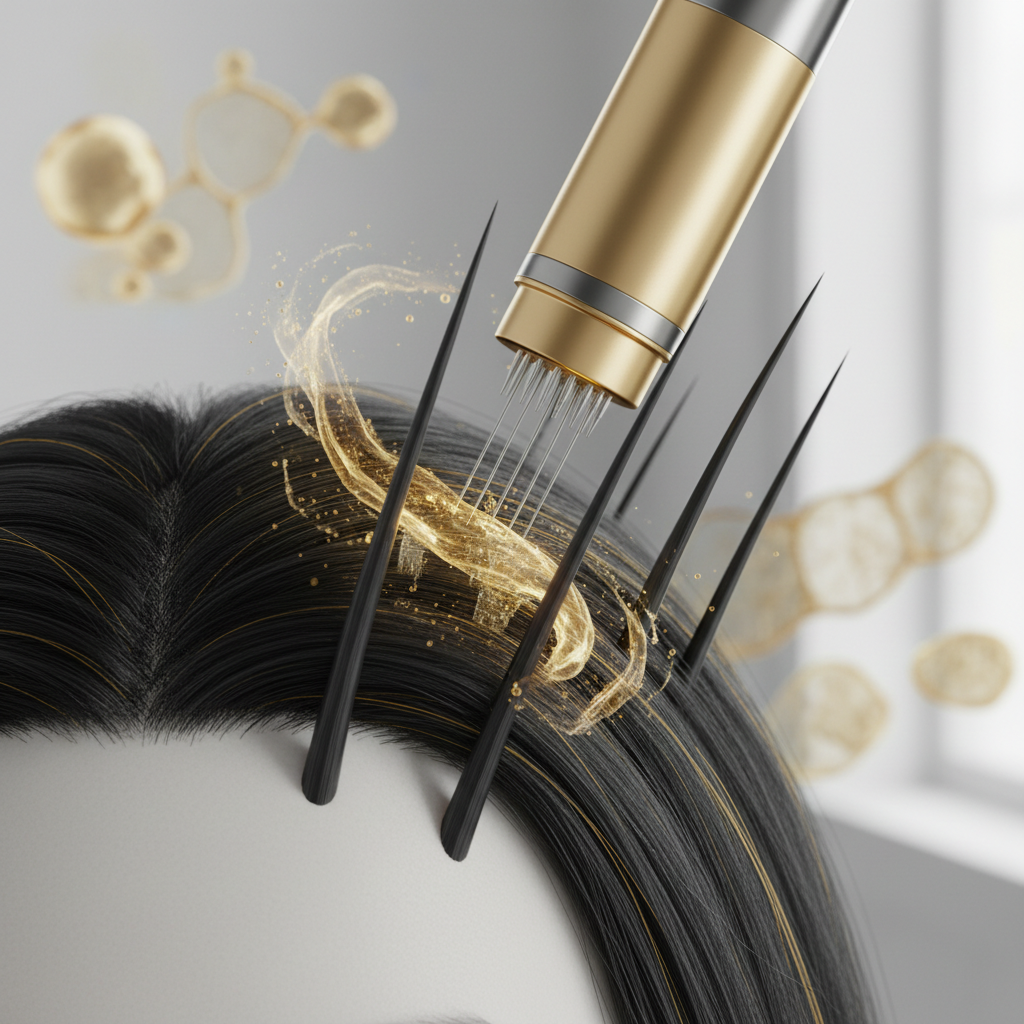
When microneedling punctures the stratum corneum and enters the upper dermis, it bypasses the scalp's formidable barrier layer. This physical injury initiates three primary biological stages:
- Inflammation (Days 1 to 3): Platelets aggregate at the puncture sites, releasing clotting factors alongside PDGF, transforming growth factor-alpha (TGF-alpha), and TGF-beta. Neutrophils and macrophages clear debris.
- Proliferation (Days 3 to 14): Fibroblasts produce new extracellular matrix, and angiogenesis leads to fresh capillary networks around the hair bulb. Keratinocytes migrate to seal the micro-punctures.
- Remodelling (Weeks to Months): Type III collagen is gradually converted into structured Type I collagen. Tissue strength and cellular turnover around the follicular stem cell niche improve.
Beyond mechanical regeneration, the micro-conduits stay open for a short window, allowing large-molecule cosmetic peptides, caffeine, and pharmaceutical actives to cross the stratum corneum at concentrations vastly higher than passive topical application allows.
Signs you are doing it incorrectly
Because microneedling pierces the skin barrier, errors in technique can cause noticeable problems:
- Persistent redness and pain: Normal erythema (redness) subsides within 24 to 48 hours. Redness that lasts several days suggests excessive depth or pressure.
- Folliculitis and pustules: Small yellow or white heads on the scalp indicate bacterial infection, often caused by rolling over an unwashed scalp or reusing non-sterile devices.
- Hair breakage: Manual rollers with curved needle paths can snag and snap hair shafts, causing mechanical breakage along the fibre.
- Post-inflammatory hyperpigmentation or scarring: Bleeding heavily during a session or using needle depths beyond 1.5 mm at home can trigger fibrotic scarring, permanently damaging the hair matrix.
Practical protocols and safety considerations
If you are incorporating this technique into your routine, strict protocols protect your scalp health:
- Sanitise everything: If using an at-home roller, soak the head in 70% isopropyl alcohol for at least 10 minutes before and after every session. Never share devices.
- Cleanse the scalp thoroughly: Wash the scalp immediately before needling using a gentle, clarifying shampoo to remove sebum, microbes, and residue.
- Avoid aggressive pressure: Let the needle weight do the work. Pressing down creates uneven, torn puncture wounds.
- Mind your post-care: Avoid harsh chemical treatments, artificial fragrances, heavy dry shampoos, and strenuous sweating for at least 24 hours post-procedure.
When the cause of hair shedding is something else
Microneedling targets chronic, non-scarring follicle miniaturisation. It is not an effective answer for every hair issue:
- Telogen Effluvium: Diffuse, rapid shedding across the entire head that begins two to three months after high physical stress, illness, crash dieting, or hormonal shifts. This is an internal shedding cycle, not an issue of poor dermal circulation.
- Cicatricial (Scarring) Alopecia: Conditions like lichen planopilaris or frontal fibrosing alopecia involve active immune system destruction of the hair follicle stem cells. Needling an inflamed scalp with scarring alopecia can aggravate autoimmune activity and accelerate permanent loss.
- Nutritional Deficiencies: Low serum ferritin (iron stores), vitamin D, or zinc starve the hair matrix of basic building blocks. Microneedling cannot compensate for systemic deficiencies.
Supporting scalp condition naturally
While microneedling focuses on physical stimulation, long-term hair quality depends on the environment of the scalp skin and the integrity of the hair fibre.
Cosmetic haircare can support the scalp ecosystem without puncturing the skin. Watermans Grow Me Shampoo and Conditioner are formulated with clean scalp-supportive ingredients, including biotin, caffeine, rosemary extract, niacinamide, and argan oil. Rather than treating clinical conditions, these formulations wash away follicle-clogging sebum, maintain an optimal scalp pH, and condition the hair fibre to prevent physical breakage. Using a nutrient-rich topical shampoo between microneedling cycles ensures the emerging hair fibre remains moisturised, supple, and resistant to environmental wear.
When to seek professional advice
Consult a GP, dermatologist, or registered trichologist before attempting scalp microneedling if you have:
- Unexplained patches of sudden, rapid hair loss.
- Signs of an active scalp skin condition, including psoriasis, seborrhoeic dermatitis, eczema, or active fungal infections (tinea capitis).
- A history of keloid scars or impaired wound healing.
- Scalp tenderness, burning, scaling, or pustules.
A qualified professional can carry out a dermoscopic examination (trichoscopy) to check whether your follicles are simply miniaturising or actively scarring, ensuring you do not use needles on tissue that requires medical management.
Frequently asked questions about Scalp Microneedling
What needle depth is best for Scalp Microneedling?
For at-home use, depths between 0.25 mm and 0.5 mm are safest to enhance product absorption and stimulate mild circulation without risking deep follicle injury. Clinical treatments performed by dermatologists typically use depths between 0.75 mm and 1.5 mm, which penetrate into the upper dermis where follicular stem cells reside. Depths exceeding 1.5 mm are rarely necessary on the scalp and increase the risk of scarring.
How often should Scalp Microneedling be performed?
Clinical studies generally evaluate protocols running once every 7 to 21 days. Needling every day or every other day does not give the scalp time to complete the inflammatory and proliferative phases of wound healing. Overuse leads to chronic inflammation, tissue breakdown, and mechanical hair breakage rather than healthy regrowth.
Can I apply regular hair products immediately after microneedling?
No. Because microneedling creates open micro-channels directly into your dermis, applying products with artificial fragrances, harsh preservatives, silicones, or alcohol can cause severe dermatitis, granulomas, or systemic toxicity. Only use products specifically formulated and clinically cleared for open-skin application immediately after a session. Wait at least 24 hours before returning to standard cosmetic leave-in treatments.
Does microneedling stop genetic hair thinning permanently?
No, Scalp Microneedling does not cure genetic pattern thinning. It activates local growth factors and stimulates the follicle environment, but it does not stop the underlying conversion of testosterone to DHT. If you discontinue treatments or fail to address the underlying hormonal and nutritional factors, follicles will eventually resume their genetically determined miniaturisation pattern.
Summary
Scalp Microneedling provides a scientifically supported method for stimulating local circulation, triggering restorative biological cascades, and improving the absorption of scalp-applied actives. However, it requires a balanced approach. Excessive frequency, poor hygiene, or improper needle lengths can cause scalp infections, fibre breakage, and scarring. When paired with a clean scalp environment, adequate systemic nutrition, and professional guidance, it serves as a valuable tool in modern hair management.
Sources and references
- Dhurat, R. Et al. (2013). "A Randomized Evaluator Blinded Study of Effect of Microneedling in Androgenetic Alopecia: A Pilot Study." International Journal of Trichology, 5(1), pp. 6 to 11.
- Starace, M. Et al. (2020). "Microneedling in alopecia: A review of the literature." Dermatologic Therapy, 33(2), e13269.
- Fertig, R. M. Et al. (2018). "Microneedling for the treatment of hair loss?" Journal of the European Academy of Dermatology and Venereology, 32(4), pp. 564 to 569.
- British Association of Dermatologists (BAD). "Telogen Effluvium and Pattern Hair Loss Guidelines." bad.org.uk.
- National Institute for Health and Care Excellence (NICE). "Alopecia androgenetica: Clinical knowledge summaries." nice.org.uk.
Find these ingredients in Watermans products
- Zinc: you will find this ingredient in our Hair Vitamins.
- Niacinamide: you will find this ingredient in our Hair Mask.