The Scalp Microbiome and Seborrheic Dermatitis: Causes, Science, and Solutions
9 min read ·
Explore the critical link between the Scalp Microbiome and Seborrheic Dermatitis, including fungal triggers, bacterial shifts, and evidence-based care.
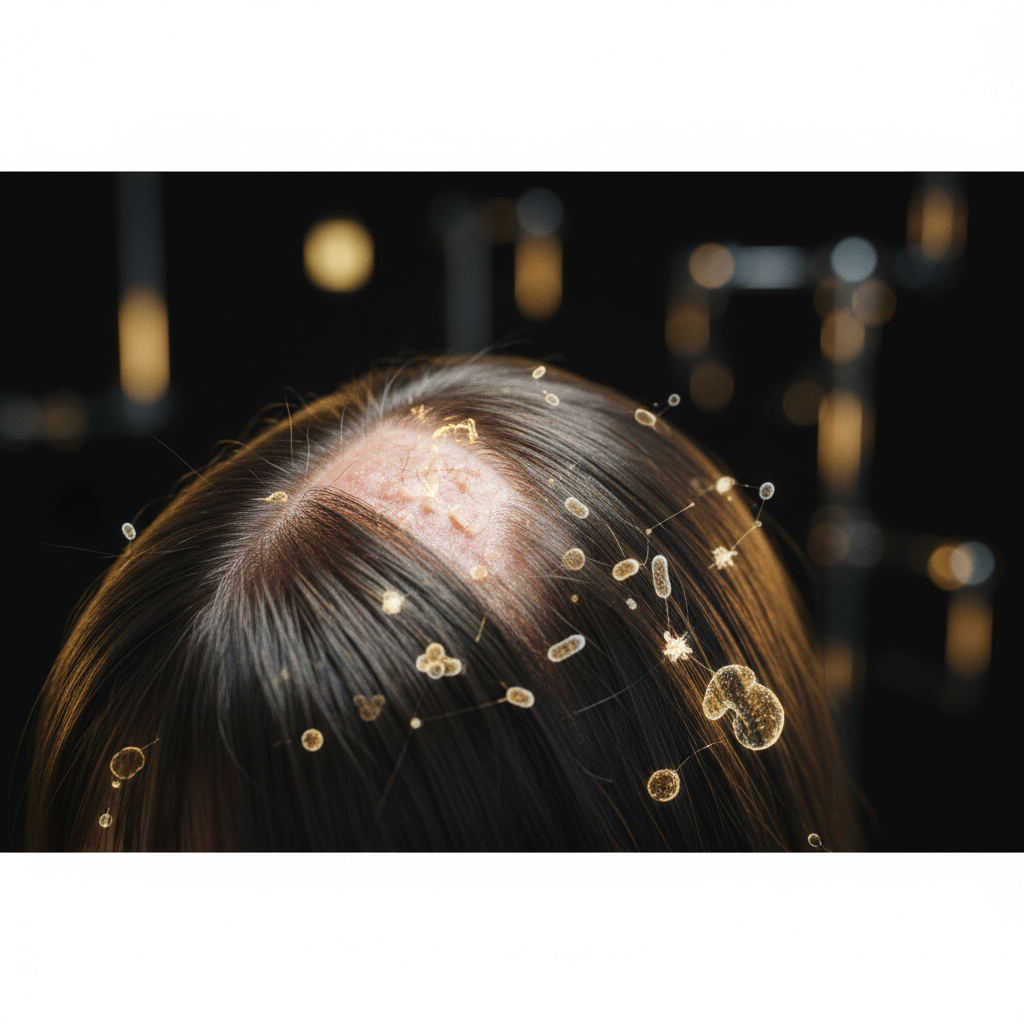
Quick answer: The relationship between the Scalp Microbiome and Seborrheic Dermatitis centres on an ecological imbalance between resident commensal fungi (principally Malassezia species) and cutaneous bacteria like Cutibacterium acnes and Staphylococcus epidermidis. When Malassezia consumes scalp sebum, it releases irritating free fatty acids that trigger inflammation, barrier breakdown, and rapid flaking. While rebalancing microbial populations helps relieve symptoms, the underlying condition remains a chronic, relapsing disorder driven by individual immune sensitivity rather than an outright curable infection.
Key takeaways
- Seborrheic dermatitis is not caused by poor hygiene or an infectious pathogen, but by an inflammatory reaction to normal fungal metabolic by-products.
- The lipophilic yeast Malassezia globosa and Malassezia restricta metabolise human sebum, producing oleic and arachidonic acids that disrupt the stratum corneum.
- Bacterial diversity shifts significantly during active flare-ups, typically showing an overgrowth of Staphylococcus species alongside suppressed Cutibacterium acnes.
- Physical flakes stem from hyperproliferation of keratinocytes reacting to inflammation, which differs fundamentally from dry scalp desquamation.
- Chronic inflammation can weaken the hair follicle anchor, causing temporary shedding (telogen effluvium) or exacerbating underlying pattern hair loss if left unmanaged.
Scalp Microbiome and Seborrheic Dermatitis: what the evidence shows
Clinical dermatology and genomic sequencing confirm that the Scalp Microbiome and Seborrheic Dermatitis are fundamentally intertwined. The human scalp is densely populated with sebaceous glands, providing a lipid-rich habitat for billions of micro-organisms. Under healthy conditions, these organisms exist in a stable equilibrium, maintaining a mildly acidic barrier with a pH between 4.5 and 5.5.
In seborrheic dermatitis, this equilibrium breaks down. The primary culprit is not merely the quantity of Malassezia yeast present, but how an individual's immune system responds to its activity. Malassezia species lack the genes required to synthesise their own fatty acids. They rely entirely on human sebum, producing extracellular lipases that break down triglycerides into saturated and unsaturated free fatty acids.
The yeast consumes the saturated fats it needs for survival and leaves behind unsaturated fats, notably oleic acid. In susceptible individuals, these free fatty acids penetrate the compromised skin barrier, triggering an inflammatory cascade. Keratinocytes replicate at an accelerated rate, moving to the surface in roughly 7 to 14 days rather than the normal 28-day turnover cycle. These immature cells clump together with lipids, shedding as visible, greasy, yellowish flakes.
Research using 16S rRNA gene sequencing has revealed that bacteria play an equally crucial role. Healthy scalps maintain a dominant population of Cutibacterium acnes, which helps preserve skin acidity. During active flares of seborrheic dermatitis, C. Acnes levels drop while Staphylococcus epidermidis and Staphylococcus aureus proliferate. This bacterial shift further compromises epidermal barrier integrity, creating a persistent inflammatory feedback loop.
What the evidence does not show
Scientific research has dismantled several persistent myths surrounding the scalp ecosystem and chronic flaking:
- It is not an infection you can catch. Malassezia species are natural commensals found on virtually every adult human scalp. Seborrheic dermatitis is an inflammatory reaction to normal flora, not a contagious illness.
- Fungal overgrowth is not always present. Studies measuring microbial load show that people with severe flares do not always have higher absolute numbers of yeast than healthy individuals. Susceptibility depends heavily on epidermal barrier permeability and innate immune reactivity.
- Dietary sugar does not directly feed the yeast. Malassezia feeds exclusively on lipids, not carbohydrates. While systemic metabolic health and diet can indirectly influence sebum composition, simple sugars do not travel through the bloodstream to feed scalp fungi directly.
- Dandruff and seborrheic dermatitis are not completely distinct diseases. Dermatological consensus views mild dandruff and seborrheic dermatitis as ends of the same disease spectrum. Dandruff represents non-inflammatory or subclinical flaking, whereas seborrheic dermatitis involves visible erythema (redness), exudation, and sensory irritation.
Biological mechanism of the flare cycle
Understanding the biological sequence behind a flare-up highlights why targeting both microbes and the skin barrier is necessary:
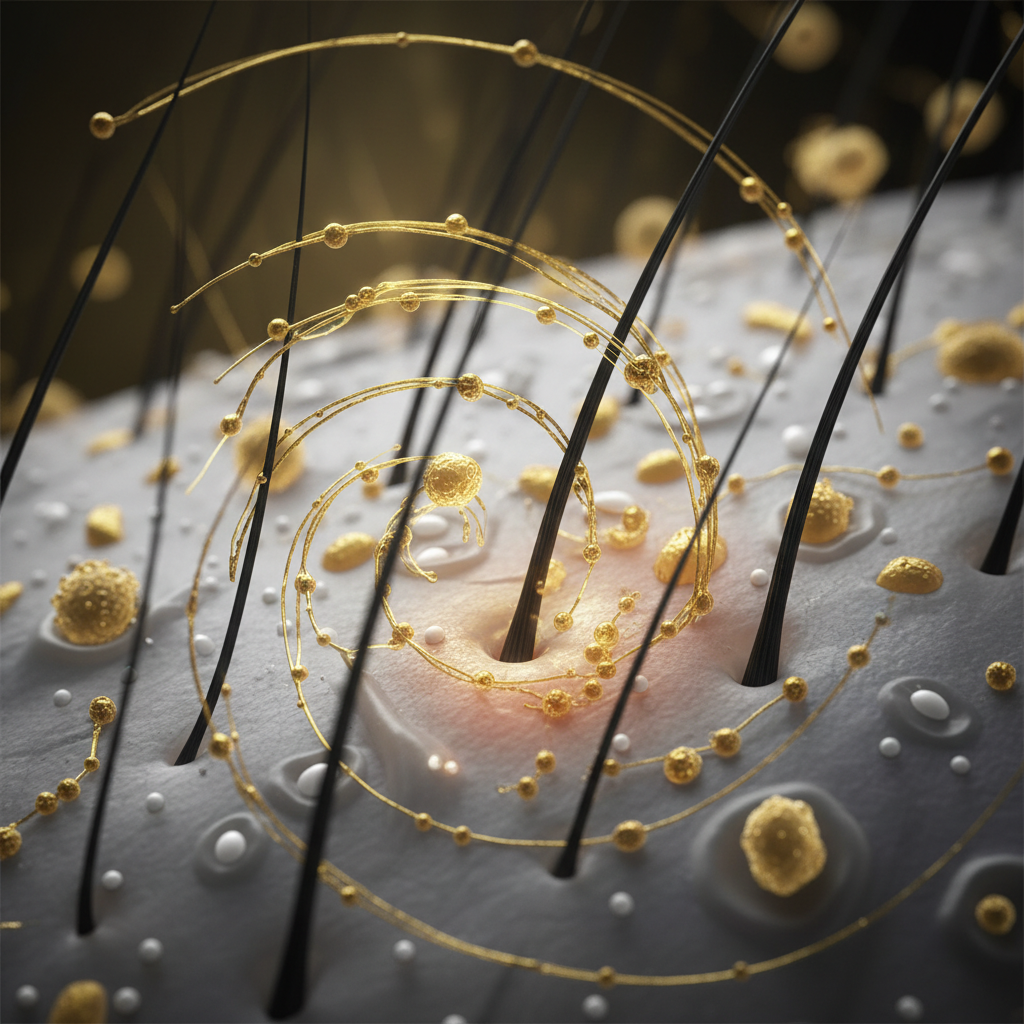
- Sebum secretion: Androgens stimulate sebaceous glands to produce lipid-dense sebum composed of squalene, wax esters, triglycerides, and cholesterol.
- Lipase enzymatic breakdown: Malassezia restricta and Malassezia globosa secrete lipases that cleave triglycerides, freeing oleic, linoleic, and arachidonic acids.
- Barrier penetration: The irregular molecular structure of unsaturated fatty acids disrupts the stratum corneum lipid matrix, creating microscopic fissures.
- Immune activation: Epithelial cells release pro-inflammatory cytokines, including interleukins IL-1α, IL-6, and IL-8, alongside tumour necrosis factor-alpha (TNF-α).
- Hyperkeratosis: In an effort to repair the damaged barrier, epidermal turnover accelerates. Cells fail to undergo complete cornification, retaining their nuclei (parakeratosis) and sticking together as noticeable flakes.
- Bacterial shift: The inflammatory exudate and elevated scalp pH encourage Staphylococcus species to outcompete beneficial Cutibacterium, cementing the cycle.
+-----------------------------------------------------------+
| Sebaceous Gland Hyperactivity |
+-----------------------------------------------------------+
 |
 v
+-----------------------------------------------------------+
| Malassezia Lipases Cleave Sebum into Free Fatty Acids |
+-----------------------------------------------------------+
 |
 v
+-----------------------------------------------------------+
| Oleic Acid Disrupts Stratum Corneum Barrier Matrix |
+-----------------------------------------------------------+
 |
 v
+-----------------------------------------------------------+
| Immune Activation: Release of IL-1α, IL-8, & TNF-α |
+-----------------------------------------------------------+
 |
 v
+-----------------------------------------------------------+
| Rapid Keratinocyte Turnover (Parakeratosis) + Dysbiosis |
+-----------------------------------------------------------+
Differentiating seborrheic dermatitis from other scalp conditions
Misidentifying scalp disorders leads to counterproductive treatments, such as applying heavy oils to a fungal-driven condition.
| Clinical Feature | Seborrheic Dermatitis | Dry Scalp | Scalp Psoriasis | Contact Dermatitis |
|---|---|---|---|---|
| Flake appearance | Greasy, yellowish, large clusters | Small, white, dry, powdery | Thick, silvery-white, adherent plaques | Variable, often micro-vesicular crusting |
| Scalp redness | Mild to intense erythema, ill-defined | Usually absent | Sharply defined, deep red borders | Intense, localised to contact area |
| Microbiome state | High Staph, depleted C. Acnes, Malassezia irritation | Normal flora, low moisture levels | Altered flora secondary to autoimmune drive | Variable, inflamed barrier |
| Common triggers | Stress, cold weather, humidity, excess sebum | Low humidity, harsh detergents, hot water | Systemic immune triggers, physical trauma | Allergens, fragrances, chemical dyes |
| Itch severity | Moderate to severe, burning sensation | Mild, tight pulling feeling | Moderate, can be painful or bleeding | Severe, acute itching |
Practical steps to restore scalp balance
Managing the condition involves reducing yeast metabolites, restoring bacterial diversity, and soothing inflammation without stripping the scalp.
Active antimicrobial management
- Rotate proven antifungal washes containing ketoconazole (1% to 2%), selenium sulfide (1% to 2.5%), zinc pyrithione, or piroctone olamine.
- Allow active shampoos to remain on the scalp for 3 to 5 minutes before rinsing. Contact time is vital for antimicrobial agents to penetrate the lipid film and sebum pools.
- Use active washes 2 to 3 times weekly during flares, tapering to once weekly for maintenance.
Restoring barrier lipids and pH
- Avoid raw botanical oils rich in oleic, palmitic, or stearic acids (such as olive oil, coconut oil, and shea butter). These feed Malassezia lipases directly, worsening the flare.
- If moisturisation is needed, select non-lipid or squalane-based formulas that fungal species cannot metabolise.
- Maintain an acidic scalp wash routine (pH 4.5 to 5.5). Alkaline soaps elevate scalp pH, encouraging Staphylococcus aureus colonization and inhibiting skin desquamation enzymes.
Watermans scalp support approach
When managing sensitive or flaking scalps, mechanical hygiene and follicle stimulation must be balanced carefully. Watermans Grow More Shampoo and Condition Me Conditioner provide a supportive cosmetic environment for the hair and scalp. Formulated with revitalising botanicals, biotin, rosemary, and niacinamide, the system helps keep the scalp surface clean of excess debris, dead keratinocytes, and residual oils. While not a medicated antifungal treatment for diagnosed seborrheic dermatitis, keeping the follicular openings free of sebum accumulation creates an inhospitable terrain for microbial dysbiosis while strengthening hair against breakage.
When the cause may be something else
If your symptoms resist standard antimicrobial and anti-dandruff regimens, consider alternative diagnoses:
- Tinea capitis: A true dermatophyte fungal infection common in children. It invades the hair shaft, causing circular patches, swollen lymph nodes, and broken "black dot" hairs. It requires oral antifungals, not topical washes.
- Scalp psoriasis: Involves autoimmune T-cell overactivity rather than a primary microbial trigger. Plaques are well-demarcated and often extend past the hairline onto the forehead or behind the ears.
- Atopic eczema: Marked by profound barrier failure, extreme itch, and a personal or family history of asthma and allergies. Lesions are typically dry rather than greasy.
When to seek professional advice
Consult a GP, dermatologist, or qualified trichologist if:
- Over-the-counter active agents produce no visible improvement after 4 weeks of consistent use.
- You experience sudden, widespread hair shedding across the scalp. While seborrheic dermatitis does not cause scarring hair loss, chronic follicular inflammation can accelerate shedding (telogen effluvium).
- Erythema spreads to the face, eyelids, or chest, or fluid weeps from the lesions.
- Signs of secondary bacterial infection appear, such as golden crusting, severe swelling, throbbing pain, or swollen lymph nodes.
Frequently asked questions about Scalp Microbiome and Seborrheic Dermatitis
Can an unbalanced Scalp Microbiome and Seborrheic Dermatitis cause permanent baldness?
No. An imbalance involving the Scalp Microbiome and Seborrheic Dermatitis does not destroy hair follicles or cause scarring alopecia. However, heavy inflammation and aggressive scratching can disrupt follicular anchorage, triggering temporary shedding (telogen effluvium) or worsening pre-existing androgenetic alopecia. Once the microbiome stabilizes and inflammation subsides, normal hair growth cycles typically resume.
Does washing your hair daily make seborrheic dermatitis worse?
Regular washing generally helps rather than hurts. Daily or alternate-day cleansing removes excess sebum, depriving Malassezia of its primary food source. The key is using gentle, pH-balanced formulas that cleanse without stripping the epidermal barrier, saving medicated treatments for 2 to 3 times per week.
Can probiotics cure seborrheic dermatitis?
There is currently insufficient evidence to conclude that oral or topical probiotics can cure the condition. While some preliminary trials show that certain strains (such as Lactobacillus paracasei) may modulate systemic inflammation and improve skin barrier resilience, they do not replace topical antifungals during an active flare.
Why do cold winter months trigger microbiome-related flares?
Cold weather brings lower outdoor humidity and dry indoor central heating, which accelerates epidermal water loss. A dehydrated stratum corneum cracks easily, letting Malassezia by-products penetrate deeper. Stress and reduced UV radiation in winter also alter local immune responses, allowing microbial imbalances to flourish.
Is seborrheic dermatitis linked to gut health?
Emerging research highlights a gut-skin axis, where systemic inflammation originating from gut dysbiosis can influence skin barrier function and sebum production. However, seborrheic dermatitis remains primarily driven by local events on the scalp surface: sebum secretion, yeast lipases, and cutaneous barrier sensitivity.
Restoring harmony to the scalp ecosystem
Managing the Scalp Microbiome and Seborrheic Dermatitis requires shifting your perspective from total eradication to thoughtful equilibrium. Malassezia and cutaneous bacteria are permanent residents of your biology; attempting to sterilise the scalp with harsh detergents only strips critical barrier lipids and triggers rebound sebum production.
Long-term success rests on consistency: using targeted antimicrobial agents to keep fungal activity in check, maintaining an acidic pH, clearing follicular debris, and supporting overall barrier repair. When you work with your scalp's natural ecosystem instead of fighting it, you reduce flare frequency and create the ideal foundation for healthy, resilient hair.
Sources and references
- British Association of Dermatologists (BAD). Seborrhoeic Dermatitis Patient Information Leaflet. 2022.
- National Institute for Health and Care Excellence (NICE). Seborrhoeic Dermatitis: Clinical Knowledge Summaries. 2023.
- Journal of Investigative Dermatology. The Scalp Microbiome and Its Association with Dandruff and Seborrheic Dermatitis. 2018.
- Medical Mycology. Malassezia species and their role in seborrheic dermatitis: Pathophysiology and treatment targets. 2020.
- Experimental Dermatology. Bacterial and fungal dysbiosis in the scalp microbiome of patients with seborrheic dermatitis. 2021.
Find these ingredients in Watermans products
- Zinc: you will find this ingredient in our Hair Vitamins.
- Oleic Acid: you will find this ingredient in our Camellia & Black Castor Hair & Body Oil.
- Niacinamide: you will find this ingredient in our Hair Mask.
- Shea Butter: you will find this ingredient in our Curly Hair Conditioner.