How to Balance Scalp pH: An Evidence-Based Guide
8 min read ·
Learn how to balance scalp pH to protect your acid mantle, reduce breakage, and prevent flaking with evidence-based tips and practical care routines.
Quick answer: Learning how to balance scalp pH means restoring the skin surface to its natural, slightly acidic state between 4.5 and 5.5. This natural acidity, known as the acid mantle, keeps the skin barrier intact, protects against microbial overgrowth such as Malassezia, and seals the hair cuticle. You can maintain this balance by using pH-optimised, sulphate-free cleansers, avoiding alkaline soaps or harsh chemical processing, and using dilute acidic rinses carefully. However, topical pH adjustments cannot cure underlying medical dermatoses like psoriasis or chronic seborrhoeic dermatitis.
Key takeaways
- A healthy scalp is naturally acidic, sitting at a pH between 4.5 and 5.5, while hair fibres hover around pH 3.7.
- Alkaline products (pH above 7.0) lift the hair cuticle, cause friction, and disrupt the acid mantle, allowing opportunistic microbes to thrive.
- Using an alkaline bar soap or high-pH clarifying shampoo strips sebum and can trigger dryness, irritation, and secondary oil overproduction.
- Simple habits such as washing with pH-balanced shampoos, rinsing with lukewarm water, and avoiding extreme kitchen remedies restore balance effectively.
- Severe redness, persistent thick scaling, or hair shedding require a clinical evaluation rather than cosmetic pH management.
How to Balance Scalp pH: what the evidence shows
Understanding how to balance scalp pH starts with dermatology research into the stratum corneum. The skin across your body produces an acidic film called the acid mantle, composed of sebum, sweat, and breakdown products of keratinocytes. A landmark 2014 study published in the International Journal of Trichology examined 123 commercial shampoos and found that 61.8 percent had a pH greater than 5.5, with some alkaline products reaching pH 7.0 or higher. The study demonstrated that alkaline cleansers increase negative electrical charges on the hair shaft, leading to cuticle swelling, friction, and fibre breakage.
On the skin itself, maintaining a pH of 4.5 to 5.5 preserves the lipid lamellae and regulates skin microflora. When your scalp environment shifts above pH 6.0, the enzymes responsible for shedding dead skin cells (desquamation) function abnormally. At the same time, opportunistic microorganisms such as Malassezia restricta and Malassezia globosa multiply. These yeasts hydrolyse triglycerides in sebum, releasing irritating free fatty acids that trigger inflammation, itching, and flaking.
Evidence shows that using a formulation close to the scalp's physiological pH supports barrier recovery, lowers transepidermal water loss (TEWL), and reduces frizz. The scalp can re-acidify itself after washing, but repeated exposure to high-pH agents slows this recovery, leaving the scalp vulnerable to irritation for hours after every wash.
What the evidence does not show
There is no evidence that balancing your scalp pH will reverse genetic hair thinning (androgenetic alopecia) or autoimmune conditions like alopecia areata. Hair growth occurs deep within the dermal papilla inside the follicle, shielded from mild surface pH fluctuations. While an inflamed, unbalanced scalp can contribute to shedding (telogen effluvium) or cuticle breakage, pH adjustments alone do not stimulate dormant follicles to produce new hair.
Furthermore, laboratory evidence does not support using neat, unbuffered kitchen acids on your head. Applying undiluted lemon juice (pH around 2.0) or straight apple cider vinegar (pH 2.0 to 3.0) can cause chemical burns, severe skin dehydration, and contact dermatitis. Acidic rinses must be heavily diluted and formulated properly to avoid damaging the very barrier you are trying to soothe.
The biological mechanism: why pH matters
The scalp surface relies on a balance between acidity and biochemical defence:
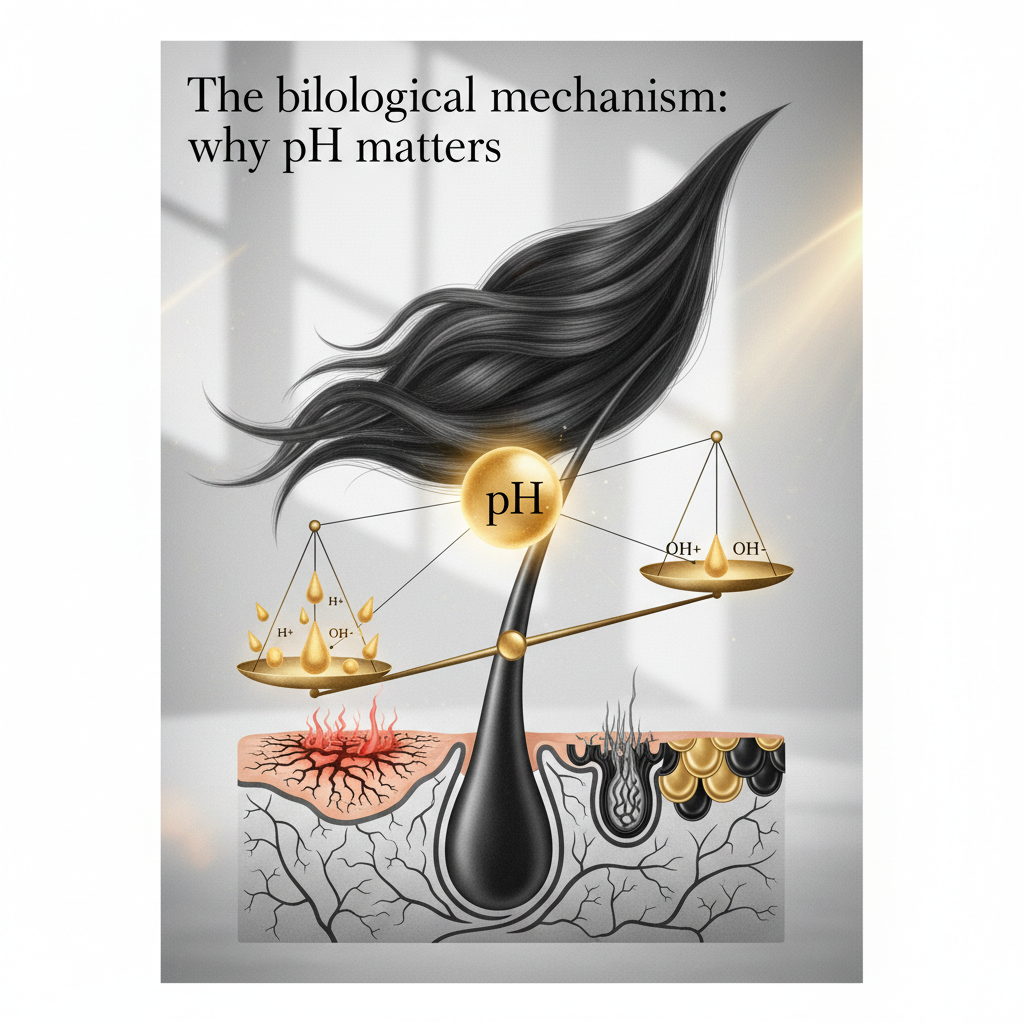
- The acid mantle and antimicrobial defence: Free fatty acids from sebum (such as sapienic acid) and lactic acid from eccrine glands create an acidic environment. This shields the scalp against pathogenic bacteria like Staphylococcus aureus, which thrives in neutral or slightly alkaline conditions (pH 7.0 to 7.5).
- Cuticle contractility and structural integrity: Hair fibres are composed of keratin. The isoelectric point of hair keratin sits around pH 3.67. At this pH, hair fibres carry no net electrical charge. When the scalp and hair are washed with an acidic formula (pH 4.5 to 5.5), the hair shaft carries minimal charge, keeping the imbricated cuticle scales flat, smooth, and resistant to mechanical damage.
- Enzymatic activity in the stratum corneum: Skin barrier lipids require an acidic pH to synthesise ceramides properly. If the pH rises, beta-glucocerebrosidase and acid sphingomyelinase enzymes lose activity, weakening the skin barrier and allowing environmental allergens to penetrate.
| Scalp State | Typical pH Range | Cuticle Behaviour | Scalp Barrier Status | Common Symptoms |
|---|---|---|---|---|
| Optimal physiological state | 4.5 to 5.5 | Cuticles lie flat and smooth | Barrier lipids intact; normal flora | Soft hair, comfortable scalp, zero flakes |
| Slightly alkaline disruption | 6.0 to 7.0 | Cuticles flare open slightly | Mild lipid depletion; TEWL rises | Dullness, mild tangling, slight itch |
| High alkaline damage | 7.5 to 9.0+ | Extreme cuticle swelling, high friction | Acid mantle stripped; Malassezia blooms | Dryness, frizz, breakage, scalp flaking, redness |
| Excessive acid exposure | Below 3.5 | Protein denaturation over time | Chemical irritation, micro-erosion | Stinging, burning, dry and brittle strands |
Signs of an unbalanced scalp pH
When your scalp shifts away from its ideal acidic baseline, you will generally notice distinct cosmetic and physical cues:
- Excessive dryness and tight sensation: An alkaline shift damages the lipid matrix, allowing moisture to evaporate rapidly.
- Dull, tangled hair that breaks easily: Raised cuticle scales hook onto neighbouring hairs, increasing knotting and mechanical breakage during brushing.
- Stubborn flaking paired with itchiness: If the acid mantle fails, yeast overgrowth can trigger inflammation that manifests as visible dandruff.
- Rebound oiliness: Paradoxically, an aggressively stripped scalp often compensates by overproducing sebum, resulting in an oily root accompanied by dry, irritated skin underneath.
Practical steps: how to rebalance your scalp
To restore equilibrium, adopt simple, targeted adjustments to your routine:
- Choose cleansers formulated at pH 4.5 to 5.5: Check product labels for claims stating "pH balanced". Avoid solid bar soaps or traditional saponified soaps, which are naturally alkaline (often pH 9.0 to 10.0).
- Avoid high-alkalinity salon chemical overlap: Bleaches and permanent hair colours require an alkaline pH (often 9.0 to 11.0) to swell the cuticle and penetrate the cortex. If you colour your hair, ensure your stylist applies an acidic post-colour treatment to neutralise the chemical residue.
- Use diluted apple cider vinegar with caution: If you choose a natural clarifying rinse, dilute it thoroughly. Mix one tablespoon of vinegar with 250 ml of water (a 1:16 ratio) to bring the solution close to pH 4.5. Never apply raw vinegar directly to your roots.
- Rinse with lukewarm water: Very hot water melts away protective sebum lipids and exacerbates barrier impairment.
- Protect against hard water minerals: High concentrations of calcium and magnesium carbonate in hard tap water can elevate the local pH on your scalp during washing. A clarifying wash or a chelating treatment once every two weeks helps remove these alkaline mineral residues.
When an unbalanced scalp is actually something else
Not all scalp irritation stems from a disrupted pH. You should distinguish surface imbalance from deeper medical conditions:
- Seborrhoeic dermatitis: While worsened by an alkaline shift, seborrhoeic dermatitis is a chronic inflammatory condition requiring medicated antifungals like ketoconazole or ciclopirox olamine rather than simple pH adjustments.
- Scalp psoriasis: Characterised by well-demarcated, thick, silvery-white plaques and underlying erythema. It is an autoimmune disorder that cosmetic rinses cannot resolve.
- Allergic contact dermatitis: Reactions to fragrances, preservatives (such as methylisothiazolinone), or hair dye components (PPD) cause intense itching, swelling, and weeping, irrespective of the formula's pH.
If your scalp shows signs of infection, oozing, painful pustules, or sudden patchy hair shedding, arrange a consultation with a registered trichologist, GP, or dermatologist.
Supporting scalp health with Watermans
If you want a dependable daily routine that respects your skin barrier, Watermans offers targeted formulations designed to keep your scalp clean, calm, and balanced. Watermans Grow Me Shampoo is formulated to cleanse the hair and roots thoroughly without stripping essential moisture or leaving an alkaline residue.
Paired with Watermans Condition Me Conditioner, which smooths the cuticle layer and replenishes essential hydration, this routine helps maintain a comfortable environment on the scalp while improving hair strength and reducing breakage from daily styling.
Frequently asked questions about How to Balance Scalp pH
What is the natural pH of a healthy scalp?
A healthy scalp typically sits between pH 4.5 and 5.5. This slight acidity keeps the protective acid mantle intact, preventing harmful bacteria and fungi from multiplying while allowing epidermal cells to renew without irritation.
Can baking soda be used to clean hair?
No. Baking soda (sodium bicarbonate) has an alkaline pH around 8.3 to 9.0. Washing with baking soda disrupts the acid mantle, causes cuticles to swell, and makes hair strands brittle and prone to breakage.
How does knowing how to balance scalp pH improve hair appearance?
Understanding how to balance scalp pH keeps cuticles smoothed against the hair cortex. This alignment minimises friction, prevents moisture loss, enhances natural light reflection for added shine, and significantly cuts down on mechanical breakage.
Does apple cider vinegar permanently fix scalp pH?
No, it is only a temporary aid. A diluted vinegar rinse can help dissolve alkaline mineral buildup and close cuticles, but your scalp continuously secretes sweat and sebum to re-establish its own baseline. Routine use of balanced cosmetic products is far more reliable.
Will balancing my scalp pH stop my hair from falling out?
Balancing your scalp pH protects hair fibres from snapping and soothes superficial irritation, but it cannot stop genetic or hormonal hair loss. If you are experiencing sudden, diffuse shedding or patchy loss, consult a healthcare provider for an accurate medical diagnosis.
Achieving lasting equilibrium
Learning how to balance scalp pH is one of the most effective ways to support both hair quality and cutaneous comfort. By avoiding harsh alkaline surfactants, steering clear of aggressive DIY remedies, and respecting the acid mantle's delicate chemistry, you allow the skin to protect itself naturally. Focus on gentle, pH-appropriate care to maintain a calm, nourished scalp and resilient hair fibres.
Sources and references
- International Journal of Trichology: "The Shampoo pH can Affect the Hair: Myth or Reality?" (Gavazzoni Dias et al., 2014).
- British Journal of Dermatology: "Natural skin surface pH is on average below 5, which is beneficial for its resident flora" (Lambers et al., 2006).
- Acta Dermato-Venereologica: "The concept of the acid mantle of the skin: Its origin and dermatological relevance" (Ali and Yosipovitch, 2013).
- National Health Service (NHS): "Dandruff and Seborrhoeic Dermatitis: Overview and Management" (2022).
- Journal of Cosmetic Dermatology: "Evaluation of pH and its influence on hair surface properties and barrier recovery" (2018).