Scalp Microbes: The Complete Guide to Your Scalp Microbiome
9 min read ·
Learn how Scalp Microbes shape skin barrier health, balance sebum, and influence conditions like dandruff, along with evidence-based tips to keep flora balanced.
Quick answer: Scalp Microbes are the diverse communities of bacteria, fungi, and viruses that naturally colonise the human scalp surface and hair follicles. Dominated by species such as Cutibacterium acnes, Staphylococcus epidermidis, and Malassezia yeasts, these microorganisms protect the skin barrier and regulate local immunity. However, maintaining balanced Scalp Microbes does not prevent genetic hair loss, and microbial shifts are often secondary responses to changes in sebum levels, pH, or immune function rather than standalone root causes.
Key takeaways
- The scalp microbiome consists primarily of two bacterial genera (Cutibacterium and Staphylococcus) and one dominant fungal genus (Malassezia).
- Beneficial microbes produce antimicrobial peptides and maintain an acidic surface pH between 4.5 and 5.5, warding off opportunistic pathogens.
- Microbial dysbiosis is strongly associated with conditions like dandruff and seborrhoeic dermatitis, where Malassezia consumes sebum triglycerides and releases irritating free fatty acids.
- Topical haircare products, cleansing frequency, and environmental factors directly influence the composition of your microbial flora.
- While an unbalanced scalp environment can trigger inflammatory shedding or exacerbate thinning, microbes alone do not cause androgenetic alopecia.
Scalp Microbes: what the evidence shows
Research into Scalp Microbes demonstrates that the head is a specialised ecological niche with higher humidity, higher sebum levels, and greater follicular density than almost anywhere else on the body. Genomic sequencing (such as 16S rRNA bacterial profiling and ITS fungal sequencing) reveals that a healthy human scalp is not sterile. Instead, it relies on a delicate equilibrium between commensal bacteria and fungi.
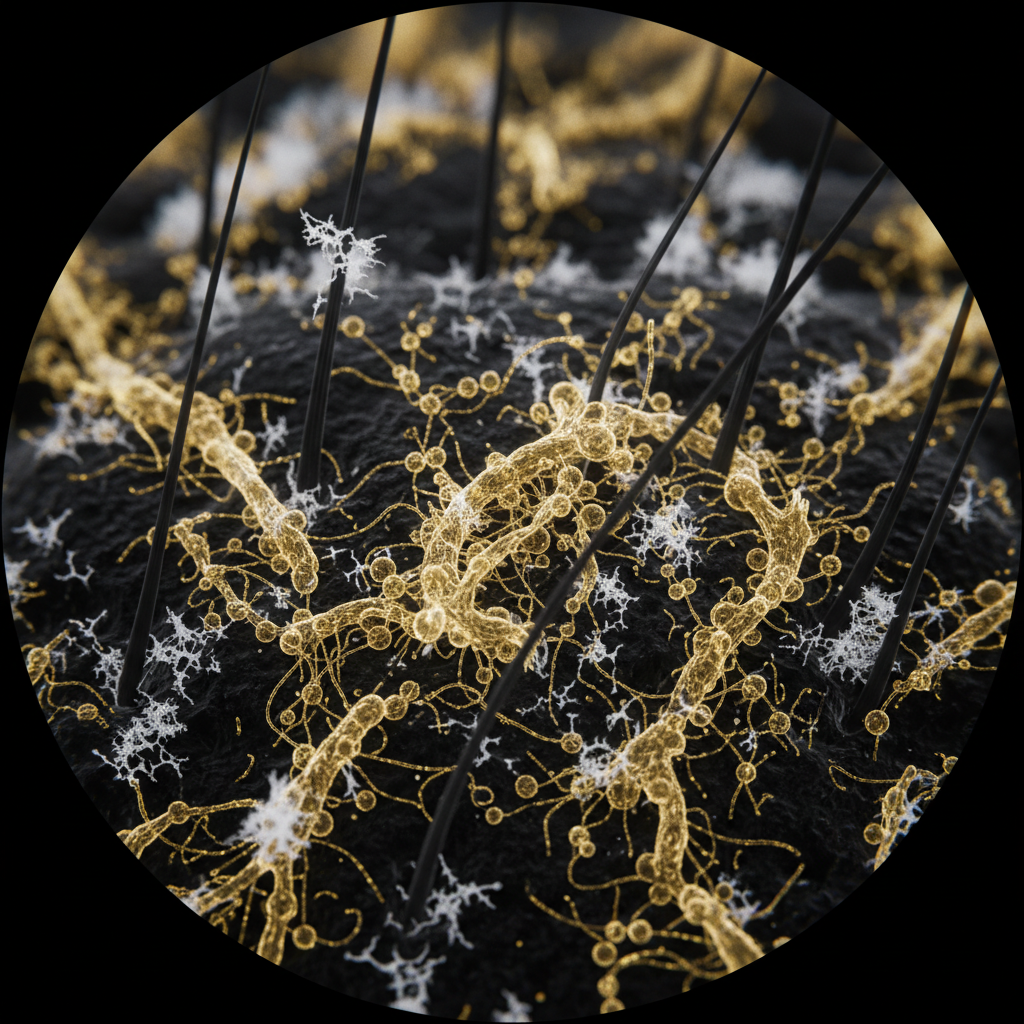
The bacterial landscape is heavily dominated by Cutibacterium acnes (formerly Propionibacterium acnes), which thrives inside the anaerobic conditions of the pilosebaceous unit, and Staphylococcus epidermidis, which occupies the more aerobic outer surface of the stratum corneum. Together, these two species frequently account for upwards of 90 percent of the bacterial population on a typical scalp.
On the fungal side, the genus Malassezia represents over 80 to 90 percent of all fungal organisms present. Specifically, Malassezia restricta and Malassezia globosa dominate. These fungi are lipid-dependent; they lack the genes necessary to synthesise their own fatty acids and must rely entirely on human sebum for survival. In a balanced state, these organisms live symbiotically with human tissue, breaking down lipids and releasing metabolites that deter foreign pathogens.
| Microbe Group | Dominant Species | Primary Niche | Key Role / Effect |
|---|---|---|---|
| Actinomycetota (Bacteria) | Cutibacterium acnes | Deep inside hair follicles, sebaceous glands | Breaks down sebum lipids, maintains follicle acidity, suppresses pathogens |
| Bacillota (Bacteria) | Staphylococcus epidermidis | Scalp surface, inter-follicular epidermis | Produces antimicrobial peptides, regulates surface barrier, limits S. Aureus |
| Opportunistic Bacteria | Staphylococcus aureus | Surface lesions, broken skin | Colonises during severe barrier breakdown; linked to folliculitis and inflammation |
| Basidiomycota (Fungi) | Malassezia restricta & M. Globosa | Upper follicular infundibulum, sebum-rich areas | Metabolises triglycerides into oleic acid; triggers flaking if barrier is permeable |
Biological mechanisms: how the ecosystem operates
The relationship between Scalp Microbes and human skin relies on biochemical feedback loops involving sebum, surface acidity, and the innate immune system.
Sebaceous glands secrete sebum, an oily blend composed of triglycerides (roughly 30 to 50 percent), wax esters (20 to 30 percent), squalene (10 to 15 percent), and free fatty acids. Cutibacterium acnes and Malassezia secrete lipase enzymes that hydrolyse these triglycerides. In doing so, they consume the saturated fatty acids they need to survive, leaving behind unsaturated free fatty acids, most notably oleic acid and arachidonic acid.
In individuals with an intact skin barrier, these free fatty acids help preserve the scalp acid mantle, keeping surface pH between 4.5 and 5.5. This low pH inhibits transient, pathogenic bacteria from gaining a foothold.
Problems emerge when this process goes out of step. If the stratum corneum barrier is naturally permeable or mechanically disrupted, oleic acid penetrates the upper layers of skin cells. This triggers an inflammatory cascade, accelerating keratinocyte turnover from the standard 28-day cycle down to as few as 7 to 14 days. The resulting clumps of immature, nucleated corneocytes shed as visible flakes, commonly identified as dandruff or seborrhoeic dermatitis.
Furthermore, competition between C. Acnes and S. Epidermidis maintains balance. Studies show that when the ratio of C. Acnes to S. Epidermidis decreases significantly, flaking and erythema tend to rise. Commensal microbes effectively police one another; any external factor that eliminates one species can allow another to multiply unchecked.
What the evidence does not show
It is tempting to blame microbial imbalance for every scalp complaint, but scientific literature urges caution:
- Microbes do not directly cause male or female pattern hair loss: Androgenetic alopecia is driven by genetic sensitivity of hair follicles to dihydrotestosterone (DHT). While micro-inflammation involving follicle flora may run parallel to miniaturisation, microbes are not the primary driver.
- Microbes cannot be permanently "sterilised": Using aggressive antibacterial or antifungal agents to sterilise the scalp is impossible and counterproductive. Eliminating your natural flora strips the acid mantle and invites resistant, opportunistic pathogens to colonise.
- Dandruff is not caused by poor hygiene alone: Dandruff stems from an interaction between sebum production, Malassezia metabolites, and individual skin barrier susceptibility. Washing less frequently can worsen symptoms by allowing sebum to accumulate, but the condition is not a sign of poor personal cleanliness.
Signs of microbial dysbiosis on the scalp
When the ecosystem falls out of balance, your scalp typically displays visible physical signs and sensory changes:
- Persistent itching and tightness: Low-grade inflammation triggered by microbial byproducts irritates local nerve endings.
- Greasy or dry flakes: Yellowish, oily flakes indicate seborrhoeic dermatitis, whereas fine, white, dry flakes typically indicate barrier dehydration, both of which correlate with altered fungal-to-bacterial ratios.
- Follicular pustules or redness: Small, tender red bumps around hair shafts (folliculitis) often point to overgrowth of Staphylococcus aureus or Malassezia within the follicular pore.
- Unpleasant odour: Distinct, sour scalp odours often arise when high concentrations of cutaneous bacteria oxidise apocrine sweat and sebum into volatile organic compounds.
Managing your scalp flora: practical steps
Supporting healthy Scalp Microbes does not require complicated routines; it requires steady barrier preservation:
- Cleanse consistently: Wash your scalp at intervals that suit your sebum production rate. Leaving excess sebum sitting on the scalp provides surplus substrate for Malassezia, while under-washing lets inflammatory fatty acids linger.
- Respect the acid mantle: Choose shampoos formulated around pH 5.0 to 5.5. Alkaline cleansers (such as traditional bar soaps with a pH of 8.0 to 10.0) swell the hair cuticle and disrupt bacterial homeostasis by neutralising the protective acid mantle.
- Use targeted antifungals when indicated: If flaking and redness occur, ingredients like piroctone olamine, ketoconazole, and zinc pyrithione bring Malassezia populations back down to baseline levels without sterilising the tissue.
- Avoid heavy, occlusive oils if prone to flaking: Applying pure olive oil or coconut oil to a flaking scalp can feed lipid-loving yeast species, worsening inflammation.
- Rinse thoroughly: Product residue left on the scalp can trap moisture and sebum, creating an anaerobic pocket that encourages selective bacterial blooms.
When hair loss or shedding is involved
It is vital to distinguish between hair breakage, temporary hair shedding, and progressive follicular hair loss.
Severe microbial dysbiosis and intense scratching can damage the hair cuticle, leading to mechanical breakage along the fibre. Chronic, untreated inflammation from conditions like severe seborrhoeic dermatitis can also shock follicles, triggering telogen effluvium (diffuse shedding across the scalp).
However, neither bacteria nor fungi cause true androgenetic alopecia (pattern hair loss), which causes progressive follicle miniaturisation at the temples and crown. If you notice structural thinning, widening part lines, or patchy, coin-sized bare spots, microbes are unlikely to be the primary cause.
Watermans: supporting a balanced scalp environment
Maintaining a calm, clean scalp provides the biological foundation for healthy hair growth. Watermans approaches scalp care from an evidence-informed perspective, formulating products that respect the skin barrier rather than stripping it bare.
Watermans Grow Me Shampoo is formulated with functional ingredients such as biotin, rosemary extract, caffeine, and niacinamide. It effectively clarifies excess sebum, sweat, and environmental residue without the harsh, alkaline surfactants that disrupt surface pH. By keeping the follicular openings clear of lipid build-up while supporting normal moisture balance, it fosters an optimal environment where natural flora can remain in healthy equilibrium, helping hair feel stronger and look noticeably thicker.
When to seek professional advice
While everyday flaking often resolves with cosmetic care, certain symptoms require assessment by a doctor, dermatologist, or trichologist:
- Thick, silvery scales adhering firmly to the scalp (indicative of scalp psoriasis).
- Tender, pus-filled lesions, crusting, or honey-coloured discharge.
- Noticeable hair shedding accompanied by scalp pain, burning, or rapid patchy loss.
- Symptoms that do not improve after four weeks of consistent, over-the-counter therapeutic shampoo use.
A medical professional can perform scalp scrapings, dermoscopy, or bacterial cultures to differentiate between simple dysbiosis, autoimmune conditions, and fungal infections like tinea capitis.
Frequently asked questions about Scalp Microbes
Can you wash away your Scalp Microbes permanently?
No, you cannot wash away your Scalp Microbes permanently. Commensal bacteria and fungi reside not just on the surface of the skin, but deep within the infundibulum of hair follicles and sebaceous glands. While washing removes surface debris, excess oils, and temporary contaminants, the core microbial population rapidly repopulates the skin surface from these deeper follicular reservoirs within hours.
Does diet influence the composition of Scalp Microbes?
Diet indirectly influences your Scalp Microbes by altering sebum output and systemic inflammation. Diets with a high glycaemic index can elevate insulin levels, which stimulates androgen production and increases sebaceous gland activity. Because Malassezia and C. Acnes feed directly on sebum components, dietary shifts that change lipid volume or composition can alter microbial balance.
Is dandruff caused by an infection of Scalp Microbes?
No, dandruff is not an infection. It is an inflammatory reaction to normal Scalp Microbes, specifically Malassezia yeasts. These fungi live naturally on almost all adult heads. Dandruff only occurs when an individual's skin barrier is susceptible to oleic acid, causing an accelerated shedding response to the fungus's standard metabolic byproducts.
Can natural oils disrupt my scalp microbiome?
Yes, certain natural oils can disrupt the microbiome. Lipophilic fungi such as Malassezia thrive on specific fatty acids. Applying plant oils rich in oleic or palmitic acid directly to an irritated scalp provides food for these organisms, potentially triggering flare-ups of flaking, redness, and itching in susceptible people.
Conclusion
The vast ecosystem of Scalp Microbes plays an indispensable role in maintaining skin barrier integrity, regulating surface pH, and defending against opportunistic pathogens. Far from being contaminants that need to be scrubbed away, these commensal organisms work in partnership with your skin. By understanding how cleansing, sebum levels, and product pH interact with your microbial flora, you can build a balanced routine that calms irritation, preserves the skin mantle, and provides a clean, resilient environment for hair to thrive.
Sources and references
- Grice, E. A., & Segre, J. A. (2011). The skin microbiome. Nature Reviews Microbiology, 9(4), 244 to 253.
- Saxena, R., et al. (2018). Comparison of healthy and dandruff scalp microbiome reveals the role of commensals in scalp health. Frontiers in Cellular and Infection Microbiology, 8, 346.
- Dawson, T. L. (2007). Malassezia globosa and restricta: breakthrough understanding of the etiology and treatment of dandruff and seborrheic dermatitis through whole-genome analysis. Journal of Investigative Dermatology Symposium Proceedings, 12(2), 15 to 19.
- Xu, Z., et al. (2016). Dandruff is associated with the conjoined interactions between host and microorganisms. Scientific Reports, 6, 24877.
- British Association of Dermatologists. (2020). Seborrhoeic Dermatitis Clinical Guidelines. bad.org.uk.
Find these ingredients in Watermans products
- Zinc: you will find this ingredient in our Hair Vitamins.
- Oleic Acid: you will find this ingredient in our Camellia & Black Castor Hair & Body Oil.
- Niacinamide: you will find this ingredient in our Hair Mask.